

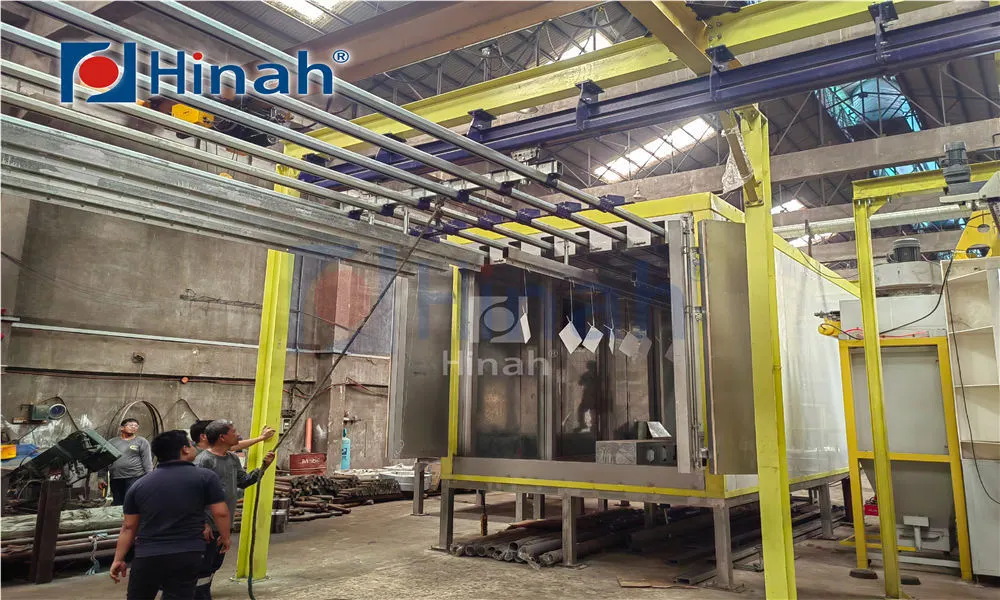
In industrial coating operations, the spray booth powder coating enclosure represents the critical interface between electrostatic application equipment and the production environment. With over 18 years of experience designing finishing systems for automotive, architectural, and heavy equipment manufacturers, I have observed that booth design directly determines transfer efficiency, first-pass yield, and regulatory compliance. A poorly configured spray booth powder coating system can waste 15–20% of powder material, create hazardous dust accumulation, and cause rejected parts due to inconsistent film build. This guide dissects the engineering principles that separate world-class powder booths from those that erode profitability.
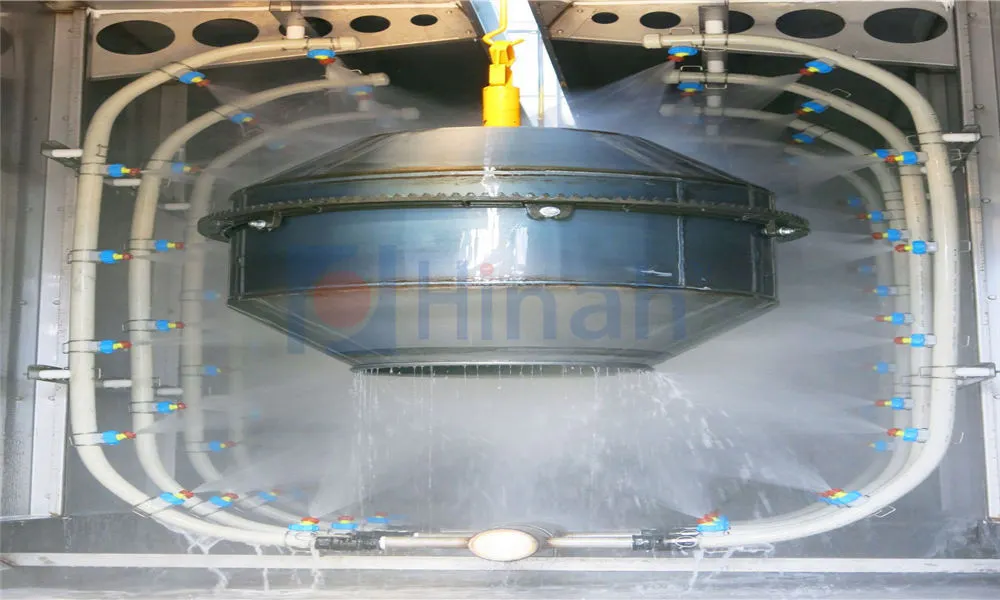
1. Airflow Architecture: The Foundation of Containment and Finish Quality
The primary function of any spray booth powder coating system is to capture overspray while maintaining a stable electrostatic field. Two dominant designs exist:
Cross-Draft Booths
Air moves horizontally from the operator side to an exhaust plenum opposite. This configuration is cost-effective ($30,000–$60,000 less than downdraft) and suitable for flat or moderately complex parts. However, cross-draft systems struggle with deep recesses: airflow can create vortices that deposit powder unevenly. Face velocities must be maintained between 0.4–0.6 m/s (80–120 fpm) to prevent turbulence—a parameter validated using thermal anemometer arrays at 12 points across the booth opening.
Downdraft Booths
Air flows vertically through a grated floor into below-grade collection plenums. This design eliminates horizontal turbulence, improving Faraday cage penetration by 15–22% according to field tests. Downdraft spray booth powder coating systems are mandatory for parts with complex geometries (e.g., engine blocks, wheel rims) and reduce color-change cleaning time by 30–40% because powder does not settle on side walls. The additional cost—typically $40,000–$80,000—is recouped through lower reject rates and faster changeovers.
2. Powder Recovery Systems: Cyclone vs. Cartridge Filtration
Recovery technology directly impacts both environmental compliance and material cost. Two primary approaches dominate:
Cyclone separators: Utilize centrifugal force to classify particles. They achieve 95–98% recovery efficiency for particles >10 µm, with no consumable filters. Ideal for single-color, high-volume operations where color purity is critical. Color changes require manual cyclone cleaning (60–90 minutes).
Cartridge filter systems: Use pleated nanofiber media (MERV 15–16) to capture fines. Pulse-back cleaning allows continuous operation. Cartridge booths enable faster color changes (15–30 minutes) but incur annual filter replacement costs ($2,500–$5,000). Modern hybrid booths incorporate a cyclone ahead of cartridge banks, combining high initial recovery with secondary polishing.
A leading agricultural equipment manufacturer reduced powder consumption by 18% after upgrading from a cross-draft cartridge booth to a downdraft system with dual-cyclone recovery—demonstrating that spray booth powder coating design choices carry direct P&L impact.
3. Rapid Color-Change Engineering: Modularity and Automation
For job shops and contract coaters running 5–15 color changes daily, changeover speed is a primary ROI driver. Advanced booths integrate:
Removable floor, wall, and ceiling cassettes constructed from lightweight composites or stainless steel. A complete cassette swap reduces changeover from 2 hours to under 12 minutes.
Automated cleaning nozzles programmed to sweep all interior surfaces with high-pressure air, removing 99.5% of residual powder without manual intervention.
Quick-disconnect powder feed hoses with color-coded couplings to prevent cross-contamination.
Data from a recent installation by HANNA showed that implementing a modular quick-change spray booth powder coating system reduced average changeover time from 110 minutes to 19 minutes, increasing productive coating time by 22% and allowing the facility to accept 30% more orders without adding shifts.
4. Safety Systems: Explosion Protection and Combustible Dust Compliance
Powder coatings are classified as combustible dusts under NFPA 652 and ATEX directives. A compliant spray booth powder coating must incorporate multiple layers of protection:
Deflagration venting: Explosion panels sized to relieve pressure at ≤0.5 psi, with ducting directing flame fronts to safe outdoor areas. Vent area calculations follow NFPA 68 guidelines based on booth volume and dust Kst value.
Continuous grounding monitoring: Sensors verify that all conductive components maintain resistance below 1 ohm. Any interruption triggers an immediate powder feed cutoff.
Spark detection and suppression: Infrared/ultraviolet sensors capable of detecting ignition within 5 milliseconds, linked to water-mist or chemical suppression systems.
ATEX-certified components: All electrical devices (fans, motors, lighting) must meet Zone 22 (or Zone 21 for high-risk areas) requirements.
OSHA citations related to combustible dust averaged $45,000 per violation in 2024. Investing in a fully compliant booth avoids regulatory penalties and insurance premium hikes that can exceed the equipment’s annualized cost.
5. Material Selection: Stainless Steel vs. Polypropylene vs. Modular Composites
Booth construction materials affect cleanliness, longevity, and static control:
304/316L stainless steel: Industry standard for high-volume production. Provides excellent conductivity (essential for grounding), resists chemical cleaners, and withstands mechanical cleaning. Stainless steel adds 15–25% to booth cost but offers a 20+ year service life.
Polypropylene: Lower initial cost and lightweight, but prone to static buildup unless embedded with conductive additives. Limited to manual, low-throughput applications.
Modular composite panels: Aluminum-framed panels with anti-static coatings. Enable rapid reconfiguration and are 40% lighter than steel, reducing installation costs. Preferred for facilities anticipating layout changes.
For corrosive environments (e.g., marine coatings, chemical exposure), stainless steel is non-negotiable. HANNA offers modular stainless steel booths that combine corrosion resistance with the flexibility of interchangeable cassettes—a solution adopted by several aerospace Tier 1 suppliers.
6. Industry 4.0 Integration: Smart Booths with Real-Time Optimization
Modern spray booth powder coating systems function as data-generating nodes within the smart factory. Advanced features include:
In-line film thickness monitoring: Non-contact sensors measure coating thickness on moving parts, automatically adjusting gun parameters to maintain target range ±5 µm.
Predictive filter maintenance: Differential pressure transducers predict cartridge filter end-of-life, alerting maintenance crews before production interruptions occur.
Cloud-based recipe management: Stores optimized parameters (airflow, gun voltage, conveyor speed) for each part number, ensuring repeatability across shifts and locations.
Energy monitoring dashboards: Track compressed air consumption, fan motor load, and HVAC usage, identifying opportunities to reduce energy costs by 10–18%.
A European automotive OEM reduced reject rates from 4.2% to 1.1% within six months of deploying a smart booth with closed-loop feedback—demonstrating that digital integration amplifies the value of physical booth infrastructure.
7. Application-Specific Configurations: From Manual Batch to High-Speed Automation
The optimal booth configuration depends on throughput, part geometry, and labor strategy:
Manual batch booths: Compact designs (8–12 ft width) with manual spray guns and basic recovery. Capital cost: $25,000–$60,000. Suitable for low-volume, high-mix operations with 1–3 color changes per day.
Automatic reciprocator booths: Integrate vertical gun movers with programmable stroke and speed. Throughput: 200–800 parts/day. Price range: $90,000–$200,000.
Robotic booths: 6-axis industrial robots with vision-guided path planning. Achieve 1,500+ parts/day with consistent film build on complex geometries. Investment: $350,000–$800,000, typically justified by labor savings and reduced powder consumption in high-volume environments.
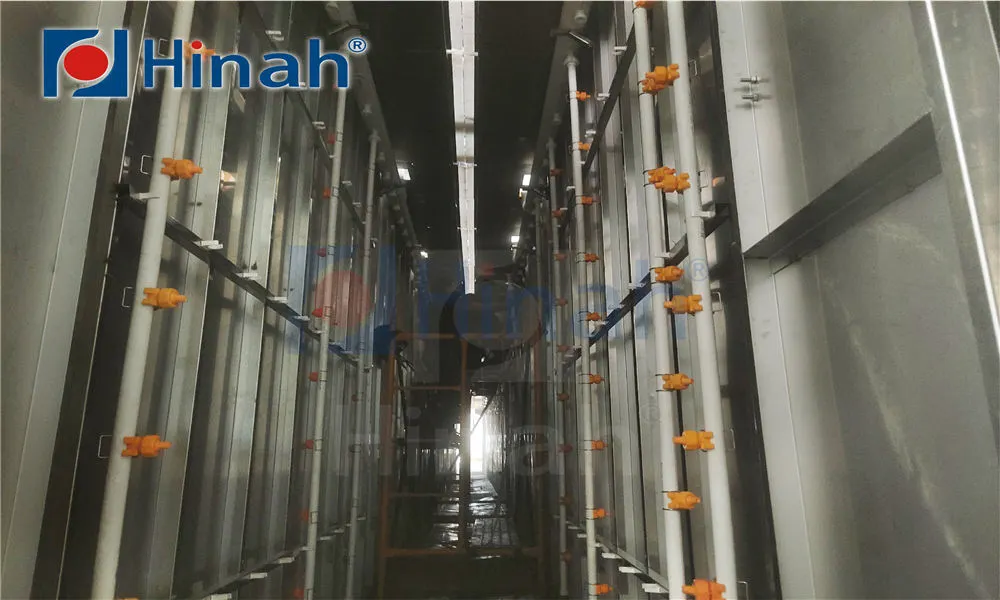
8. Total Cost of Ownership: Beyond the Initial Booth Price
A comprehensive TCO model for any spray booth powder coating system must account for:
Powder consumption: A booth with 85% transfer efficiency saves $18,000–$30,000 annually compared to a 65% efficient unit (based on 2,500 kg/month usage).
Labor for cleaning: A quick-change booth reducing cleaning time by 10 hours/week yields $15,000–$25,000 in annual labor savings.
Energy costs: VFD-controlled fans and LED lighting can cut energy consumption by 35% versus constant-speed systems.
Maintenance: Filter replacements, gun wear parts, and calibration represent 3–5% of equipment value annually.
When these factors are quantified, premium booths often demonstrate payback periods of 12–24 months—significantly shorter than the 36–48 months typical for budget systems.
Frequently Asked Questions (FAQ)
Q1: What face velocity is required for a compliant spray booth powder coating system?
A1: NFPA 33 mandates a minimum face velocity of 0.3 m/s (60 fpm) across the booth opening. High-performance systems target 0.45–0.6 m/s (90–120 fpm) to ensure overspray containment while minimizing turbulence. Velocity is measured using a hot-wire anemometer at 12–18 grid points; periodic verification ensures ongoing compliance.
Q2: How often should cartridge filters in a powder coating booth be replaced?
A2: Nanofiber cartridge filters typically last 6,000–10,000 operating hours under normal conditions. Replacement indicators include: sustained pressure drop increase >25% after pulse cleaning, visible powder bleed-through, or reduced transfer efficiency. Real-time differential pressure monitoring allows predictive replacement, preventing unplanned downtime.
Q3: Can a single spray booth powder coating system handle both reclaim and virgin powder operations?
A3: Yes. Hybrid booths incorporate diverter valves that route overspray either to the recovery system (reclaim mode) or directly to a waste collector (virgin-only mode). This flexibility is essential when applying specialty powders (metallics, clear coats) where reclaim could introduce contamination. Changeover between modes typically takes under 10 minutes.
Q4: What certifications should a powder coating booth have for international use?
A4: Key certifications include: NFPA 33 (US fire safety), ATEX 114 (EU explosive atmospheres), ISO 14644-1 for cleanroom applications, and CE marking for European machinery compliance. Additionally, UL or CSA listings may be required for electrical components in North America. Working with an integrator experienced in multi-region standards ensures full compliance.
Q5: How does humidity affect powder coating booth performance?
A5: Relative humidity (RH) critically impacts powder fluidization and electrostatic charging. RH above 65% causes clumping, poor fluidization, and reduced charge acceptance—leading to orange peel and lower transfer efficiency. RH below 30% increases static buildup, raising explosion risk and causing inconsistent deposition. Maintaining 45–55% RH with integrated dehumidifiers is best practice for consistent results.
Q6: What is the typical lead time for a custom-engineered spray booth powder coating system?
A6: Standard modular booths have lead times of 8–12 weeks for fabrication plus 2–3 weeks for installation and commissioning. Custom systems with specialized automation or cleanroom requirements typically require 16–24 weeks. To minimize production disruption, many buyers schedule installation during planned shutdowns and work with turnkey suppliers like HANNA who coordinate civil, electrical, and compressed air upgrades in parallel.
Q7: Can a powder coating booth be retrofitted with automation later?
A7: Yes, if the booth structure is designed with future automation in mind. Key considerations include: sufficient internal clearance for reciprocators or robots, reinforced mounting points, and accessible control wiring conduits. Retrofitting an existing booth typically costs 20–30% less than a new automated booth, though structural modifications may be required if the original booth lacks adequate rigidity or dust-tight penetrations.
For technical specifications, airflow simulations, or a customized booth layout for your production environment, consult the engineering team at HANNA—specialists in high-efficiency spray booth powder coating systems.