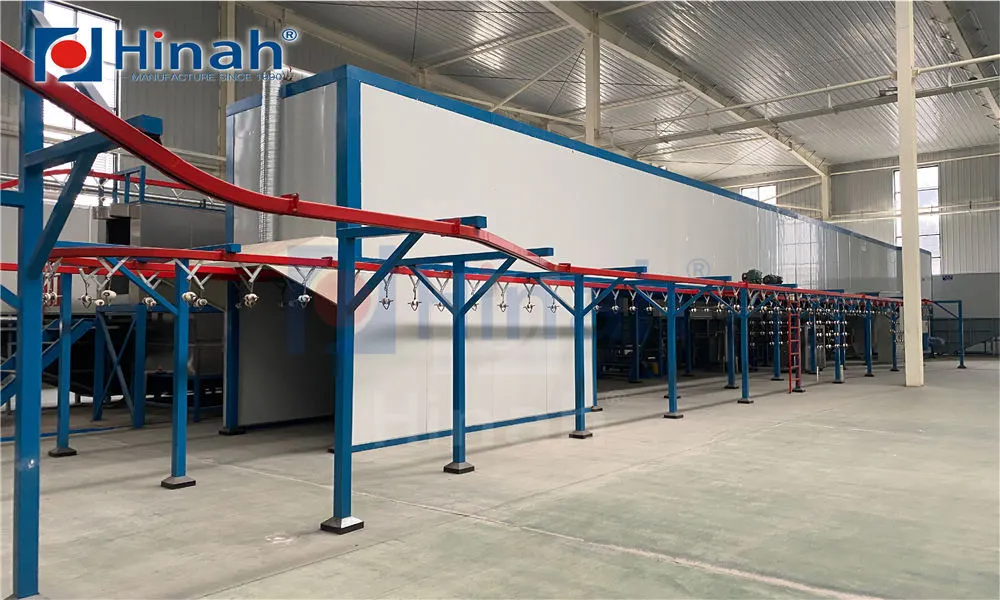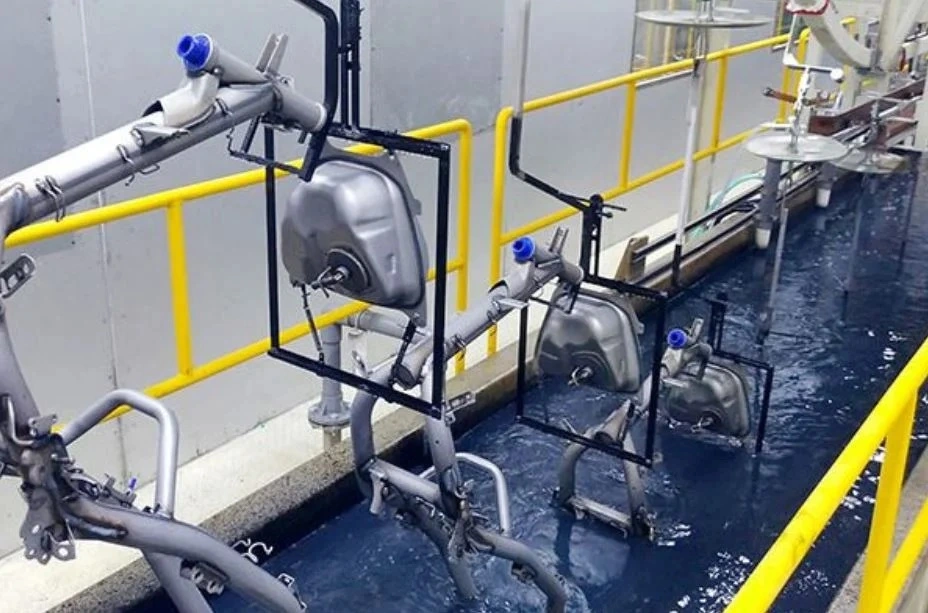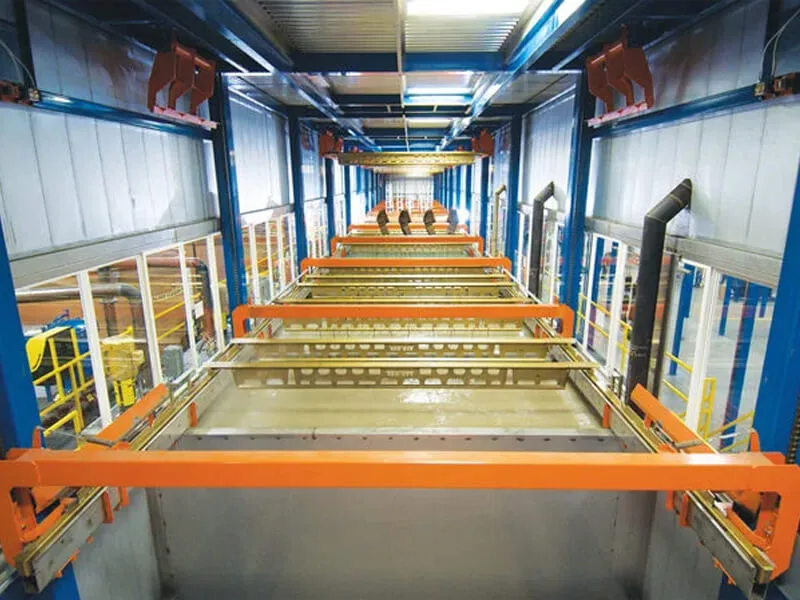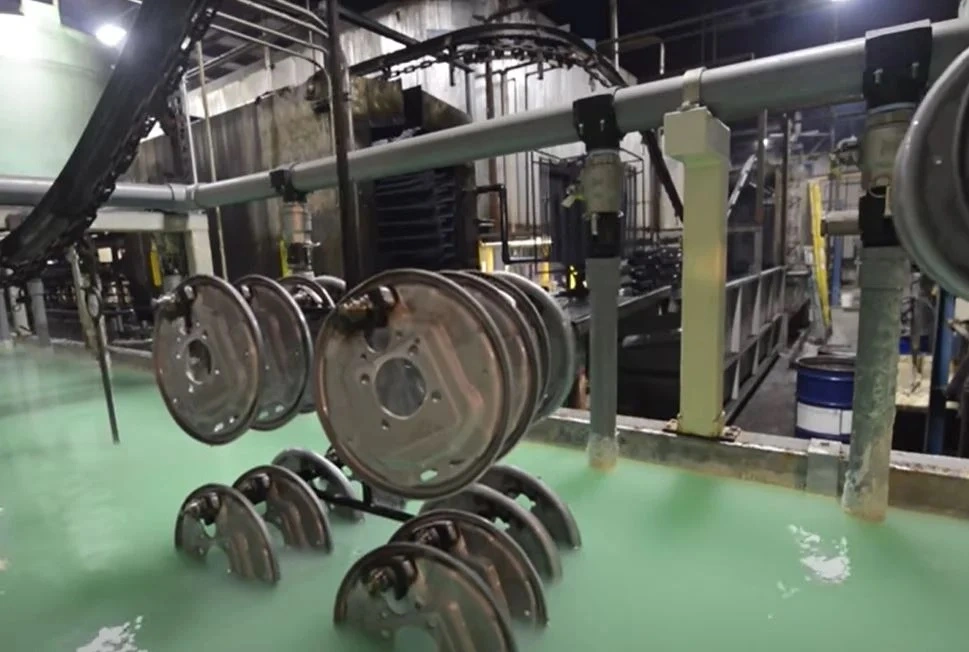
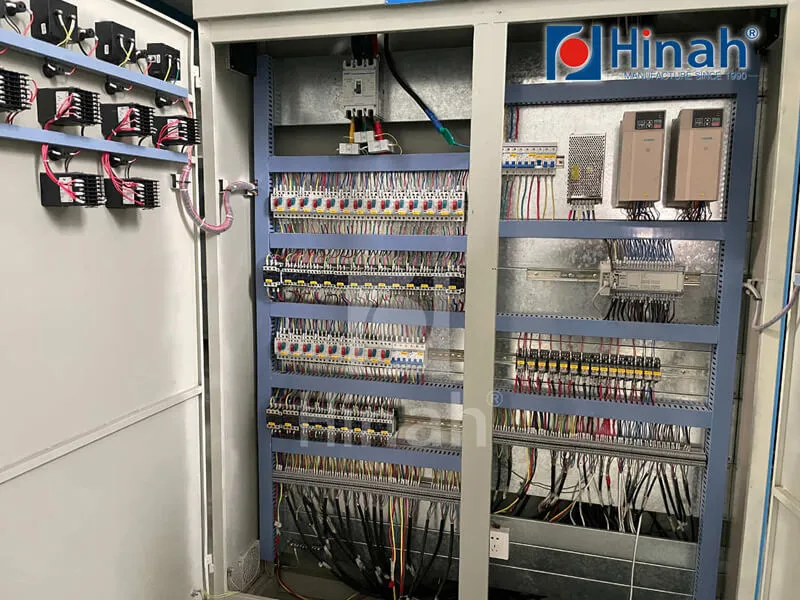

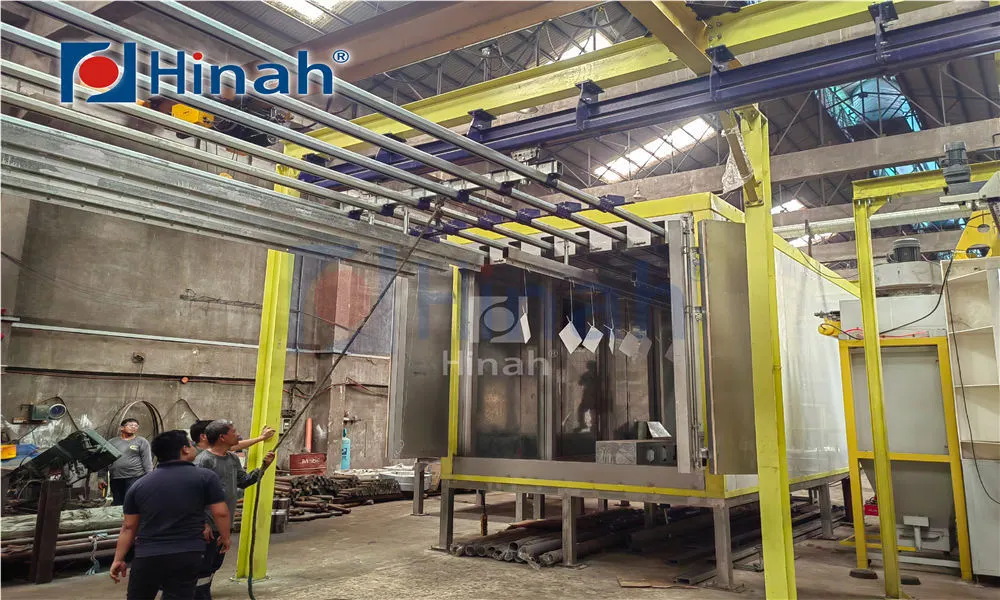
In a modern finishing line, the powder coating booth and oven do not operate as independent stations—they form a tightly coupled thermal and aerodynamic system. The booth captures overspray and controls humidity to ensure consistent electrostatic charging, while the oven must accept a coated part without disturbing the uncured powder layer. Mismatches between booth air velocity and oven air curtain settings lead to surface defects, increased rework, and elevated energy use. This article provides a component-level view of integrated powder coating booth and oven design, covering extraction rates, conveyor transitions, cure profiling, and retrofit economics. Real-world data is drawn from HANNA installations across the automotive, architectural, and heavy equipment sectors.
The five meters between a spray booth exit and an oven entrance might seem trivial, but it is where many coating defects originate. An powder coating booth and oven line must control three factors in this zone:
Air velocity gradient: Booth extraction typically moves air at 0.6–0.9 m/s across the opening. Oven air curtains project at 8–12 m/s. The sudden change can blow off non-gelled powder if not managed.
Temperature stratification: Ambient plant air (20–25°C) meets oven spill heat (40–60°C). This creates convective currents that can deposit airborne dust onto wet powder.
Conveyor chain contamination: Powder that settles on the conveyor hangers can flake off inside the oven, causing craters.
Engineering solutions include a staging tunnel (a 2–3 meter enclosed vestibule with independent air makeup and gentle exhaust) that decouples booth and oven pressures. HANNA has successfully deployed this design in 14 projects, reducing transition-zone defects by over 70%.
Not every spray booth works well with a given oven. The booth's powder coating plant layout must consider the following technical parameters to ensure smooth integration.
Booths are either open-face (crossdraft) or closed (downdraft). For lines with a downstream oven, downdraft booths are superior because they pull powder downward onto floor filters, minimizing powder migration toward the oven entrance. Crossdraft booths, unless equipped with a pressurized ceiling, tend to push fine powder dust toward the oven, where it can settle on hot parts and cause specks. Critical specifications:
Face velocity: 60–80 ft/min (0.3–0.4 m/s) for downdraft; 80–100 ft/min for crossdraft.
Filter efficiency: Use certified H13 HEPA after cyclones when recycling air back to plant.
Humidity control: Maintain 45–55% RH; outsides this range, powder resistivity changes by up to 40%, affecting transfer efficiency.
If your line runs multiple colors per shift, the booth must be able to clean quickly. However, the oven must also accommodate the color sequence. Dark colors (black, blue) absorb infrared radiation faster than light colors (white, light gray). In a hybrid IR/convection oven, the dark part reaches gel temperature sooner, potentially over-curing. The solution is a recipe-driven oven that automatically adjusts conveyor speed or zone setpoints based on the scanned color code. HANNA integrates booth barcode readers with oven PLCs to execute these dynamic changes, reducing color-related cure rejects by 65%.
Powder coating relies on electrostatic attraction. The conveyor chain must be grounded through slip rings or carbon brushes, and the booth floor should be conductive (e.g., static-dissipative epoxy) with a resistance to ground < 1 MΩ. Poor grounding leads to back-ionization – visible as “stars” or craters in the cured film. Verify grounding continuity weekly using a megohmmeter.
While the booth applies powder, the oven must preserve that application. The powder coating booth and oven system requires the following oven capabilities to avoid undoing booth work.
Convection ovens use high-velocity impingement for heat transfer, but directly at the entrance, this can blow off powder from delicate edges. Install a pre-heat zone with slot nozzles angled at 30° from horizontal, producing gentle air movement (≈2 m/s) that only warms the air, not disturbs the powder stack. After the first 1.5 meters, transition to standard (5–8 m/s) nozzles.
Parts with varying cross-sections (e.g., a tubular frame with solid plates) will heat unevenly. A fixed oven temperature profile will either under-cure thick sections or over-cure thin ones. Use a multi-zone oven with independent burner modulation and thermocouples placed directly on representative parts. The control system adjusts each zone’s temperature target every 60 seconds. This method keeps all part areas within ±4°C of the target cure temperature.
After exiting the oven, parts are too hot to touch (60–80°C) for at least 20 minutes. If you immediately move them to a packaging or assembly station, operators burn gloves, and soft powder may still be susceptible to mechanical damage. An ambient-air cooling tunnel (length 4–6 meters, with 2.5 m/s crossflow) brings part surface temperature down to <40°C, allowing downstream handling without waiting. The cooling tunnel also prevents heat migration back into the booth area via the return conveyor.
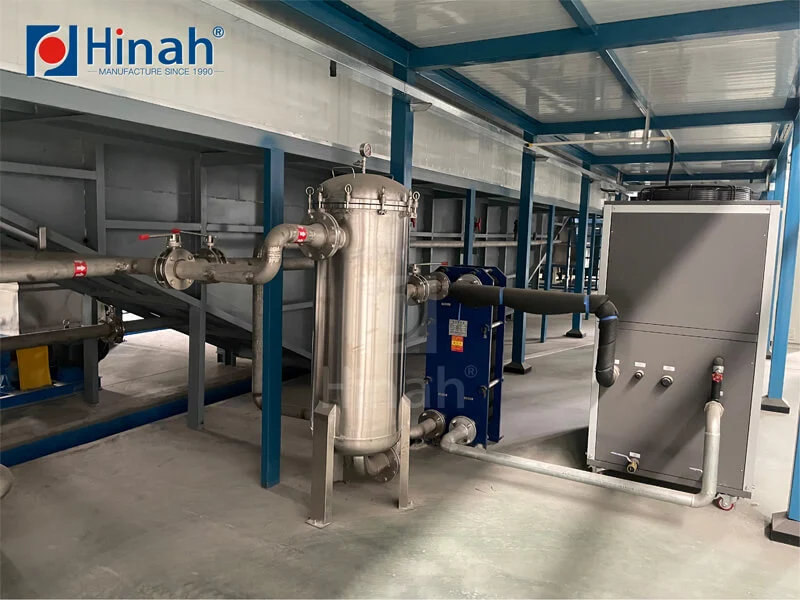
A typical powder coating plant exhausts warm air from both the booth (to capture overspray) and the oven (to remove volatile compounds). Without recovery, this represents a significant energy loss. Smart integration includes:
Air-to-air plate heat exchanger: Transfer heat from oven exhaust (150–180°C) to fresh plant air needed for booth makeup. Recover 40–50% of exhaust enthalpy.
Heat wheel (rotary regenerator): For larger lines (>10,000 m³/h), a slowly rotating metal matrix transfers both sensible and latent heat. Efficiency reaches 75%.
Direct recirculation of oven exhaust into booth (only for electric IR ovens without combustion products): This pre-heats booth air, reducing the need for in-booth gas heaters during winter. Ensure the exhaust is free of powder particles (filters ≤1 µm).
A HANNA client coating agricultural implements reduced combined natural gas use by 38% after retrofitting a cross-flow heat exchanger between oven exhaust and booth supply.
Field data from over 200 line audits show that 45% of coating defects can be traced to the transition between booth and oven. Use this diagnostic table to identify root causes.
Cratering (small round depressions): Contamination from conveyor lubricant vaporizing in the oven. Solution: Install a vapor extraction at the booth exit or use high-temperature grease on chain bearings.
Pinholes in the film: Moisture condensation on the part between booth and oven. Occurs when a warm, humid booth environment meets a cold conveyor section. Solution: Extend the oven's pre-heat zone backward or add infrared lamps at the booth exit to maintain part temperature above dew point.
Lifting/flaking (poor adhesion): The powder cured before it could flow, because the oven temperature ramp rate exceeded 4°C per second. Solution: Reduce IR density or increase pre-heat zone length to allow a gentler ramp.
Specks/dirt inclusions: Powder dust from the booth settling on a part after it exits the booth but before entering the oven. Solution: Increase the hood exhaust at the booth exit or install a positive pressure air knife to blow dust away from the part's surface.
Non-uniform gloss on one side: Asymmetric oven airflow – typically the side facing the duct has higher velocity. Solution: Adjust damper positions and re-measure air velocity at the part location using a thermal anemometer.
Different production environments require tailored powder coating booth and oven combinations. Below are three examples with quantifiable benefits.
High volume, continuous monorail. Use a downdraft booth with cartridge filters and a multi-zone IR/convection hybrid oven. The IR zone (4 m length, medium-wave emitters) brings the powder to gel point within 45 seconds, preventing blow-off. Then a 12 m convection zone at 190°C completes the cure. Throughput: 600 parts/hour. Reject rate: <1.8%.
Parts up to 7 m long. Use a side-draft booth with reciprocating guns and a horizontal convection oven with side-to-side airflow. Because aluminum heats and cools quickly, the oven must have rapid-response burners (10:1 turndown). A cooling tunnel is mandatory to prevent distortion when parts exit. Typical cure: 200°C metal temperature for 10 minutes. Energy consumption: 0.9 kWh/m².
Batch or indexed production. Use a walk-in batch booth (manual or robotic) and a box-type convection oven with recirculated air. The key challenge is part thermal mass variation. Install a “load compensation” feature: the oven control system measures the weight of each rack via load cells on the conveyor, then calculates the required soak time. This avoids under-cure of heavy sections without over-curing lighter attachments.
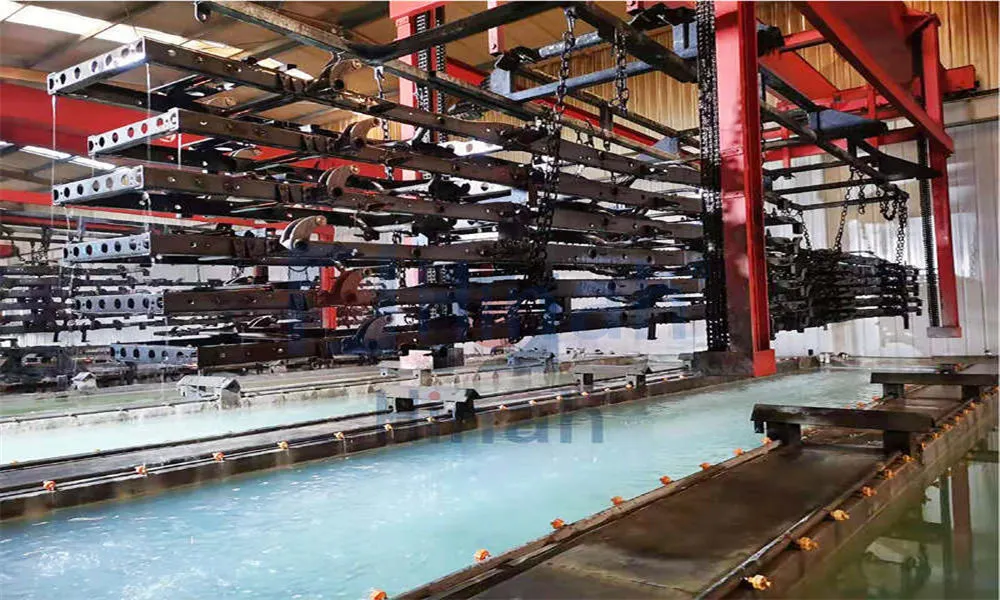
Many finishers already own a standalone booth and an oven, but they were purchased at different times. The following retrofits deliver immediate improvement in first-pass yield.
Install an infrared “booster” module at the oven entrance: A 2-meter IR tunnel gels the powder surface before it hits convection airflow. Cost: $18,000–$25,000. ROI typically 6–9 months from reduced blow-off rework.
Add a dynamic air seal at the booth exit: A low-velocity (1 m/s) wide-slot air knife angled away from the part prevents powder dust from following the part into the oven.
Upgrade oven controls to closed-loop part temperature feedback: Install one thermocouple on a sacrificial part that travels with each rack. The oven modulates zone temperatures to keep that part’s surface within ±3°C of the target cure profile. Complete kit (4 sensors + PLC module): $22,000. Energy savings typically pay back in 14 months.
HANNA offers a free transition zone audit that uses thermal imaging and air velocity mapping to identify specific losses in your existing line.
Q1: What is the optimal distance between the spray booth exit and
oven entrance?
A1: For most conveyor speeds (2–4 m/min), a distance
of 4–6 meters is recommended. This allows enough time for the powder to settle
on the part (reduce “orange peel” from air movement) but not so long that
airborne dust lands on the uncured film. If your floor space is limited, use a
sealed tunnel with positive air pressure to keep the zone clean.
Q2: Can I use the same exhaust fan for both the booth and the
oven?
A2: No, because booth exhaust contains powder particulates,
while oven exhaust contains combustion byproducts (CO₂, NOx) and outgassed
volatiles. Combining them would contaminate the booth filter with organics and
risk fire if powder dust reaches hot oven ductwork. Use separate duct systems
and fans.
Q3: How do I validate that the oven does not create static discharge
that damages the uncured powder layer?
A3: Static charges can
accumulate on non-conductive parts (plastic, rubber-coated) as they travel on a
conveyor through dry oven air. Install static eliminator bars (ionizing bars)
just before the oven entrance and again inside the oven after the first zone.
Measure surface potential with a handheld electrostatic field meter; target
<500 V. HANNA includes this validation in its commissioning
protocol.
Q4: What is the typical pressure differential between a downdraft
booth and a convection oven?
A4: The booth should be maintained at a
slightly negative pressure (-10 to -20 Pa relative to the surrounding plant) to
contain powder. The oven should be at a slightly positive pressure (+5 to +10
Pa) to prevent cold air infiltration. This creates a pressure gradient across
the transition zone. Without a vestibule, you will feel airflow from oven to
booth, which can carry heat and potential fumes into the booth – not allowed by
NFPA 33. The correct design uses a pressure-neutral vestibule.
Q5: How often should I clean the transition zone between booth and
oven?
A5: Powder dust that settles on the floor, conveyor rails, or
ceiling of the transition zone can become partially cured if exposed to oven
spill heat, then detach as hard granules causing craters. Clean daily with a
HEPA vacuum. For high-volume lines (≥16 hours/day), install an automatic
sweeping system (a conveyor-mounted brush that sweeps powder into a side
gutter).
Q6: Our oven is undersized for our new booth’s throughput. Can I
increase oven length without replacing the booth?
A6: Yes, by adding
a modular oven extension (usually 3‑ or 6‑meter sections). However, ensure the
booth’s conveyor drive has enough torque to pull through the longer oven; you
may need to upgrade the drive motor. Also, the booth’s air makeup system must
compensate for any additional oven exhaust if you add a cooling tunnel.
HANNA provides modular oven sections that bolt directly to
existing units.
Selecting and integrating a powder coating booth and oven requires balancing extraction efficiency, thermal uniformity, transition handling, and energy recovery. HANNA engineers offer a complete design and audit service, including:
3D CFD modeling of booth-to-oven airflow.
Real-time part thermal profiling for 48 hours of production.
Energy consumption baselining with sub-metering.
Custom retrofit packages with guaranteed payback under 2 years.
Request a technical consultation and a detailed
proposal:
https://www.autocoatinglines.com/contact
Direct line for
process engineers: +86 186 3393 1770(ask for finishing systems division)