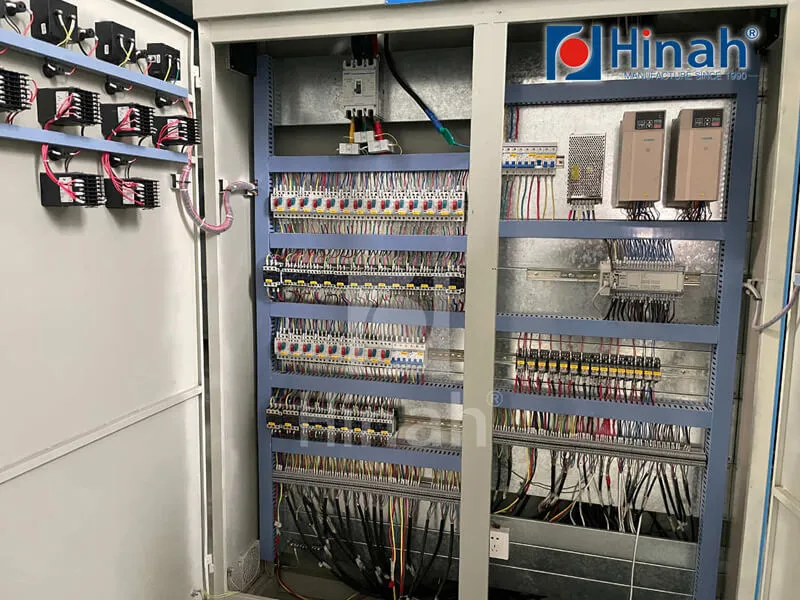

The performance of any finishing line depends on the spray booth powder coating enclosure. This component controls overspray, determines transfer efficiency, and directly affects operator safety. Poorly designed booths lead to powder drift into the plant, frequent filter clogging, and cross-contamination during color changes. This article provides a component-level analysis of modern spray booth powder coating systems, referencing proven configurations from HANNA. We will examine airflow patterns, recovery technologies, explosion mitigation, and integration with upstream pretreatment and downstream curing ovens.
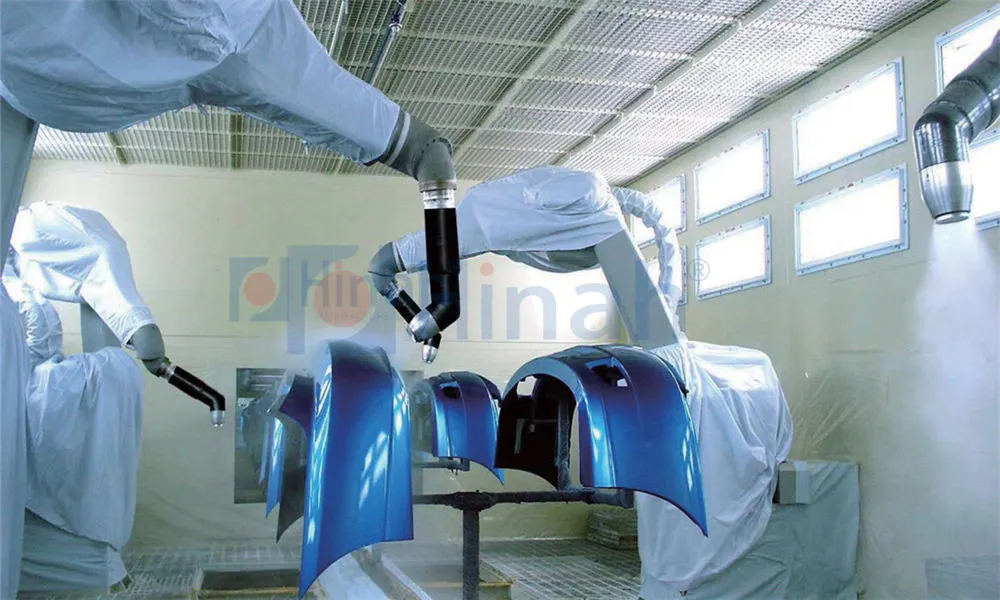
A properly engineered spray booth powder coating unit performs four essential tasks:
Overspray capture: Induced airflow draws airborne powder away from the operator and toward filtration.
Powder recovery: Collected overspray is returned to the feed system, reducing virgin powder consumption.
Contamination prevention: Segregates different powder chemistries (epoxy, polyester, hybrid) to avoid finish defects.
Explosion risk reduction: Maintains powder concentration below the minimum explosive limit (MEL) and provides pressure relief.
According to industry data from modular powder coating plants, a well-designed booth can achieve first-pass transfer efficiency of 70–85% for automatic systems, compared to 45–60% for poorly configured units. This directly lowers material cost per square meter.
The single most critical parameter in any spray booth powder coating system is the controlled airflow velocity across the operator opening. Standard recommended face velocities range from 0.3 to 0.6 m/s (60–120 fpm). Below this range, powder escapes the booth; above it, turbulence pulls heavy particles into exhaust ducts prematurely, increasing filter loading.
Cross-draft booths: Air moves horizontally from the front opening to the rear exhaust plenum. Common for manual operations and smaller parts. Lower initial cost but may create dead zones near side walls.
Semi-downdraft booths: Air enters from the ceiling at the front and exits through rear floor grates. Preferred for automatic lines with reciprocators. Provides more uniform powder cloud extraction.
Full downdraft: Air flows vertically through grated floors. Highest containment quality but requires deeper pit construction and higher fan static pressure.
Computational fluid dynamics (CFD) simulations are now used to optimize airflow patterns. A HANNA case study for an automotive supplier showed that modifying baffle positions reduced powder escape by 37% without increasing fan energy consumption.
Every spray booth powder coating unit requires a method to separate overspray powder from the exhaust air. Two dominant technologies exist, each with distinct cost and performance profiles.
Operation: Powder-laden air passes through pleated cellulose/polyester cartridges. Pulse-jet cleaning blows compressed air backward to dislodge powder into a collection hopper.
Advantages: Compact footprint, fast color change (15–20 minutes), high reclaim efficiency (88–94% with nanofiber coatings).
Disadvantages: Cartridges require replacement every 800–1200 hours ($3,000–$5,000 annual cost for medium usage). Sensitive to humidity above 60% RH.
Operation: Centrifugal force spins powder outward against the cyclone wall, where it drops into a bin. Fine dust passes to a secondary HEPA or cartridge filter.
Advantages: No disposable filter elements (only final HEPA), better for high-volume single-color lines, handles abrasive powders well.
Disadvantages: Larger footprint, longer color change time (45–90 minutes), lower reclaim efficiency (75–85%) for fine particles.
For job shops with 5–10 color changes per day, cartridge booths are generally recommended despite higher consumable costs, because reduced downtime provides better ROI. For dedicated lines spraying one color 20+ hours per week, a cyclone system minimizes long-term filter expenses.
In high-mix low-volume (HMLV) manufacturing, the spray booth powder coating system’s ability to switch colors quickly is a primary productivity driver. Key design features that reduce changeover time:
Quick-release floor grates and wall panels: Tool-less removal allows access to all interior surfaces. Stainless steel or static-dissipative polypropylene liners prevent powder adhesion.
Integrated blow-off lances: High-velocity air jets (20–30 m/s) remove residual powder from corners and conveyor hangers. Automatic purge cycles reduce manual cleaning.
Cascading airflow zones: Separate compartments for each color family (e.g., dark vs. light) prevent cross-contamination without full cleaning.
Dedicated feed hoppers and reclaim circuits: Quick-disconnect couplings allow swapping powder supply without cross-mixing.
HANNA’s fast-change modular booths have demonstrated color change times under 8 minutes for experienced operators, compared to 35–40 minutes for conventional designs. This improvement allows a job shop to process 6–8 more color batches per shift.
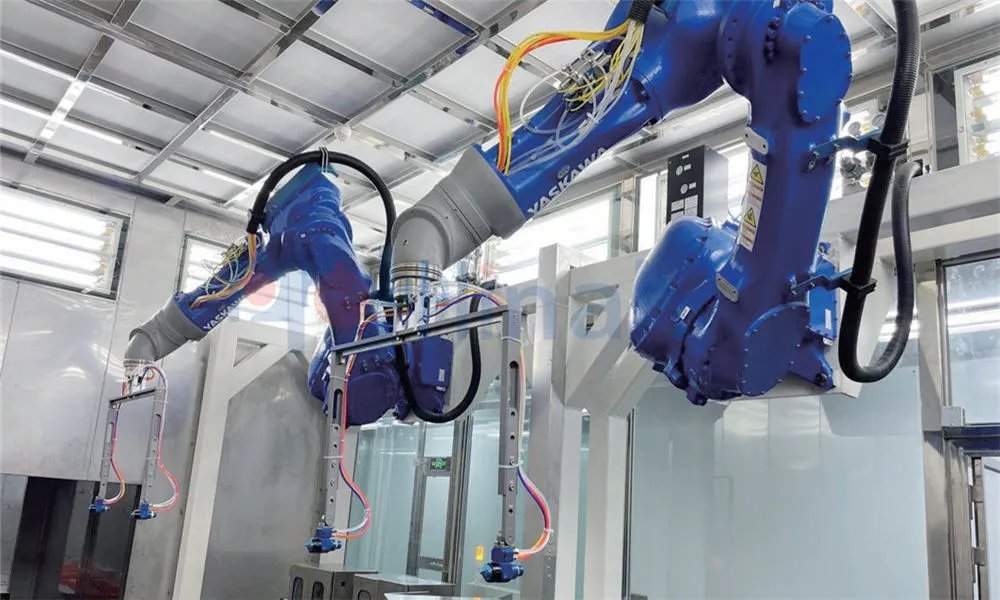
Powder coating materials are combustible dusts. Any spray booth powder coating enclosure must comply with NFPA 33 (USA) or ATEX 137 (Europe) standards. Minimum requirements include:
Construction materials: Non-combustible steel (minimum 1.6 mm thickness). For ATEX Zone 21/22, stainless steel with anti-static coating.
Explosion venting: Total vent area = 1 ft² per 15 ft³ of booth volume (0.093 m² per 4.25 m³). Vents must discharge to safe outdoor location.
Grounding and bonding: All conductive components (booth walls, hoppers, gun bodies) bonded to true earth ground with resistance < 1 ohm. Continuous monitoring systems shut down powder feed if grounding fails.
Spark detection and suppression: Infrared sensors in exhaust ducts detect ignition sources and trigger water mist or chemical suppression within 100 milliseconds.
Failure to meet these codes not only risks catastrophic incidents but also voids insurance coverage. When purchasing a spray booth powder coating system, always request third-party certification documents (e.g., FM Global, CSA, or ATEX Notified Body report).
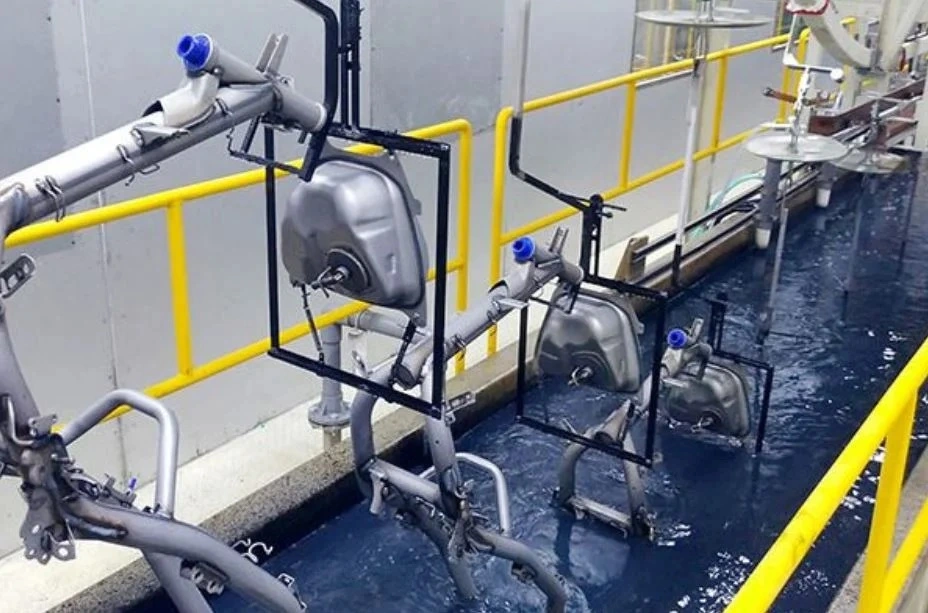
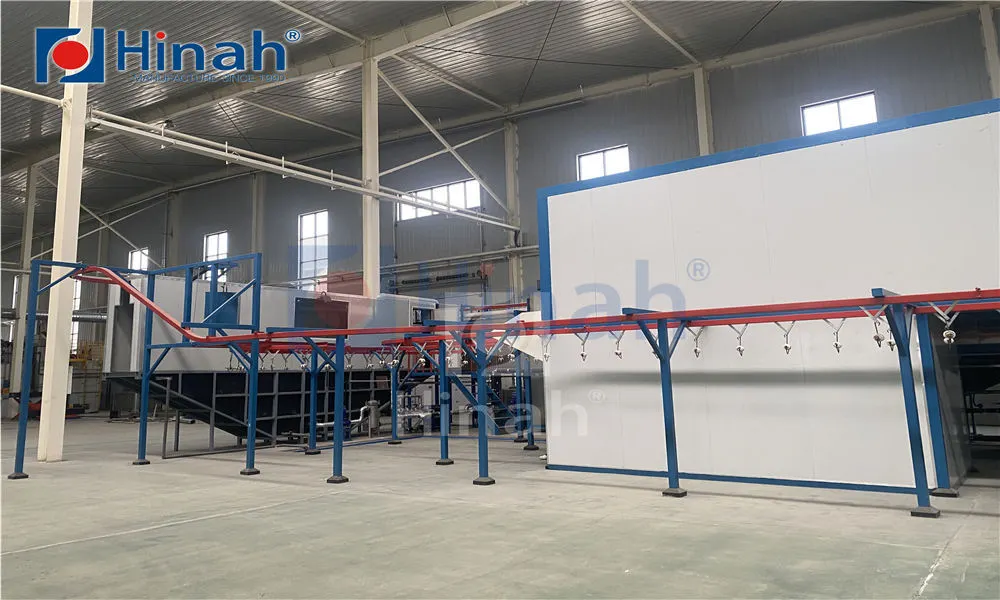
The booth does not operate in isolation. Its interfaces with upstream washers and downstream ovens must be carefully managed.
Adjustable baffles at the entrance and exit of the spray booth powder coating enclosure minimize air leakage. Recommended gap around the conveyor chain and hangers is ≤ 50 mm. Larger gaps allow untreated air to enter, disrupting face velocity, and allow powder to escape into the plant.
A 2–3 meter unheated tunnel between the booth and oven allows excess air to separate before parts enter the curing chamber. This prevents powder blow-off caused by high-velocity oven air currents. Some lines incorporate a heated flash-off zone (40–60°C) to promote powder flow before gelation.
Differential pressure between the booth and the oven should be maintained at -5 to +5 Pa. Positive pressure pushes powder out of the booth; negative pressure pulls oven fumes into the work area. Variable frequency drives on both booth exhaust and oven make-up air fans allow dynamic balancing.
HANNA provides turnkey integration drawings that specify all interface dimensions and pressure requirements, ensuring no field modifications are needed during installation. Their lead time for a custom spray booth powder coating system typically ranges from 8 to 16 weeks, depending on complexity.
Even the best-engineered booth requires regular attention. Below is a maintenance schedule based on HANNA’s field service records.
Daily: Clean floor grates and hopper screens; inspect gun nozzles for wear; check differential pressure across filters (should be <1.0 kPa when clean).
Weekly: Pulse-jet cleaning system test; inspect conveyor chain lubrication; verify grounding continuity (measure resistance).
Monthly: Replace pre-filters if used; inspect explosion vent panels for damage; calibrate airflow sensors.
Quarterly: Deep clean interior walls with non-abrasive wipes; check fan belt tension and bearing vibration; test spark detection system.
Common failure modes and solutions:
Filter blinding: Caused by high humidity or fine powder. Solution: Install dew-point controlled compressed air for pulse cleaning; maintain booth temperature >18°C, RH <55%.
Poor powder cloud formation: Often due to worn electrodes or incorrect gun-to-part distance. Replace electrodes every 500 hours of operation.
Excessive powder on floor: Indicates airflow imbalance or clogged floor grates. Check fan speed and clean perforated panels.
When comparing spray booth powder coating suppliers, the lowest purchase price rarely yields the lowest total cost over five years. Key expense categories to evaluate:
Energy consumption: A booth with inefficient fan and pulse-jet system can consume $4,000–$8,000 more electricity annually than a high-efficiency design.
Filter replacement: Cartridge booths: budget $3,000–$6,000 per year. Cyclone booths: $500–$1,000 (only final HEPA).
Powder waste: A booth operating at 65% transfer efficiency wastes 35% of powder. Increasing to 80% efficiency saves $15,000 per year on a line spraying 30,000 kg annually at $5/kg.
Labor for cleaning: Fast-color-change booths reduce cleaning labor by 4–6 hours per shift, potentially saving $20,000–$30,000 per year in operator wages.
Using a total cost of ownership (TCO) calculator is recommended. HANNA provides a free TCO analysis for any proposed spray booth powder coating configuration.
Q1: What is the typical lead time for a custom spray booth powder
coating system?
A1: Based on HANNA’s project data,
lead times range from 8 to 16 weeks for a custom-engineered booth. Standardized
modular booths may ship in 4–6 weeks. Factors affecting lead time include
automation level, recovery type, and explosion certification requirements.
Q2: Can a spray booth powder coating unit handle both manual and
automatic spraying?
A2: Yes, hybrid designs include
operator access doors and mounting rails for reciprocators or robots. The booth
control system must allow switching between manual and automatic modes,
adjusting exhaust airflow accordingly (lower velocity for manual to reduce
operator fatigue).
Q3: How often must cartridge filters be replaced in a powder coating
booth?
A3: Replacement interval is typically
800–1200 operating hours. However, real-time differential pressure monitoring is
a better indicator. When pressure drop exceeds 1.2 kPa (4.8 inH₂O) after pulse
cleaning, efficiency declines. In high-humidity environments or with fine
powders, change every 600 hours.
Q4: Is explosion venting always required for a powder coating
booth?
A4: NFPA 33 and ATEX require explosion
venting for all booths where combustible powder can accumulate. Even outdoor
booths must have vents directed away from walkways and equipment. The only
exception is if the booth is located in a building that itself has explosion
relief, but that is rare.
Q5: Can I integrate an existing conveyor with a new spray booth
powder coating unit?
A5: Yes, most suppliers design
booths to match existing conveyor heights and chain types. You must provide the
conveyor’s centerline height, hanger spacing, and maximum part dimensions.
HANNA’s engineering team can retrofit a booth to any overhead monorail or
power-and-free system.
Q6: What is the maximum part size that can be processed in a standard
powder coating booth?
A6: Standard modular booths
accommodate parts up to 2.5 m width × 2.5 m height × 3 m length. For larger
parts (e.g., structural beams, agricultural equipment), custom walk-in booths
with dimensions exceeding 5 m × 5 m are available. The spray booth
powder coating width must be at least 1.5× the part width to allow gun
access.
Selecting the correct spray booth powder coating system requires detailed analysis of your part geometry, production volume, color change frequency, and facility constraints. Generic quotations often miss critical factors like local climate (affecting humidity control) or future expansion plans.
HANNA offers a complimentary engineering consultation including:
CFD airflow simulation for your specific booth size and part shape.
Total cost of ownership comparison between cartridge and cyclone recovery.
Explosion safety assessment and code compliance checklist.
Integration drawing with your existing conveyor and oven.
Submit your inquiry today – provide your part drawings, desired output, and any existing equipment specifications. Our team will respond within 2 business days with a preliminary design and budget range. Click here to contact HANNA’s powder coating specialists or call+86 186 3393 1770 for immediate assistance.