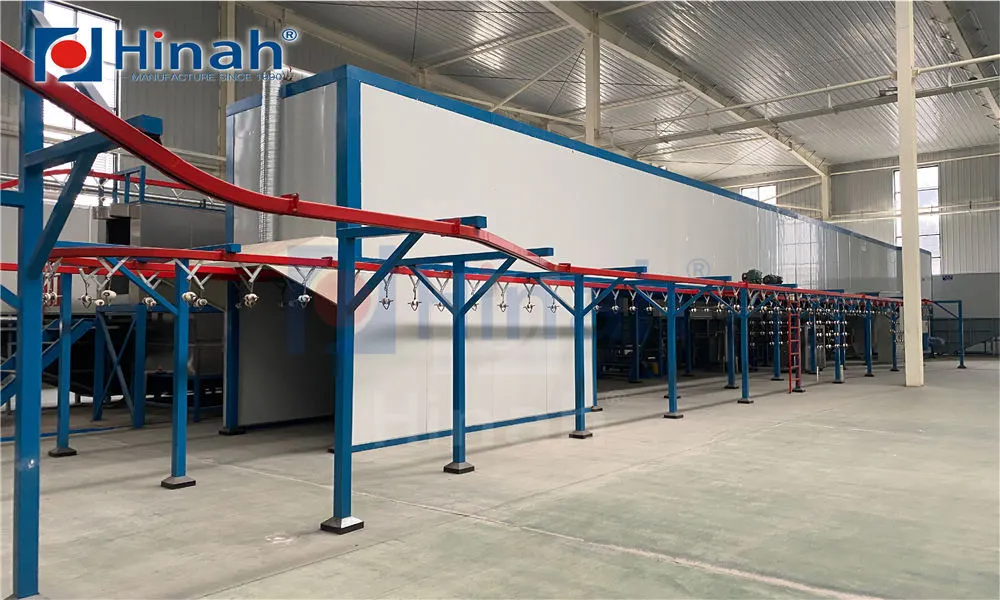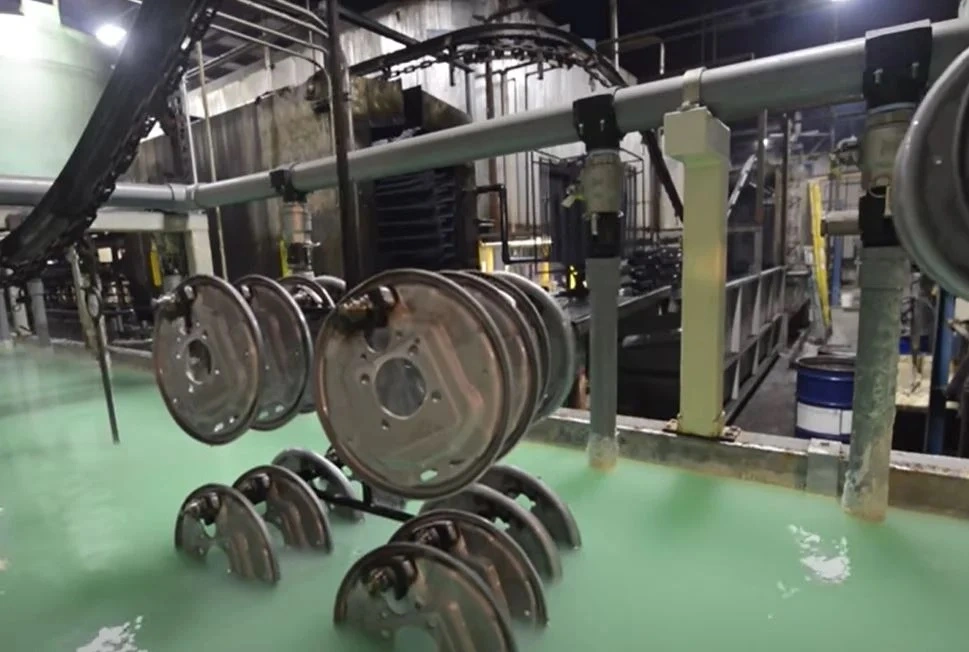

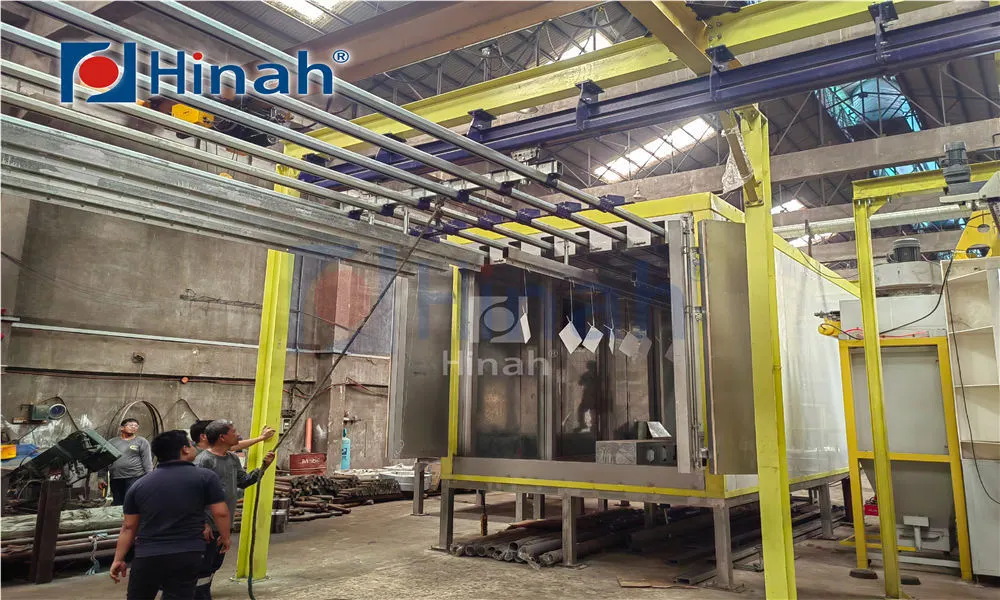
For high-volume finishing operations, the industrial powder coating oven is the single most energy-intensive and quality-determining asset in the line. Unlike batch ovens used in small shops, industrial systems must cure parts continuously at line speeds of 2–6 m/min, handle mixed product geometries, and maintain thermal uniformity within ±5°C across a 2‑meter-wide conveyor. Selecting or retrofitting an oven requires detailed analysis of heat source type, airflow architecture, zoning strategy, and integration with upstream powder application. This article provides a component-level breakdown of industrial curing systems, diagnostics for common defects, and methods to reduce energy intensity. Data is drawn from HANNA installations in automotive, architectural, and heavy equipment sectors.
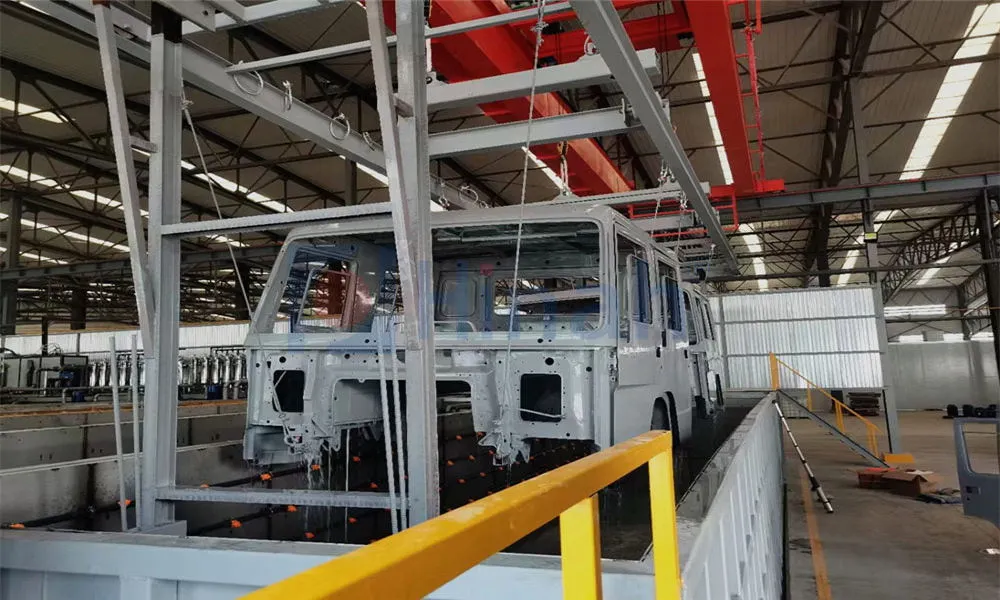
Three dominant technologies power industrial powder coating oven lines. Each has specific advantages based on part geometry, throughput, and available plant utilities.
These ovens use a burner to heat air, which is then circulated by fans through ducts and nozzles. They represent roughly 70% of industrial installations. Key engineering parameters include:
Air turnover rate: 12–20 volume changes per minute ensures temperature uniformity of ±3°C across the working zone. Lower turnover risks stratification.
Burner modulation: Modern units use proportional gas valves with 10:1 turndown to prevent temperature overshoot during low production periods.
Insulation: 150–200 mm of mineral wool (density ≥128 kg/m³) to keep shell temperature below ambient +15°C.
Convection ovens excel for mixed loads with varying mass because the air circulates around all surfaces, avoiding line-of-sight limitations. However, they require longer oven lengths (typically 12–24 m) due to slower heat transfer rates compared to IR.
Medium-wave IR emitters (2.5–3.5 µm) are most common for powder coating because their wavelength matches powder absorption peaks. Short-wave (1.0–1.5 µm) is used for thin sheet metal. IR ovens offer:
Response time: 10 seconds to full power, enabling rapid start/stop and zone control.
Footprint: Typically 1/3 the length of a convection oven for the same throughput.
Limitation: Line-of-sight heating creates cold spots on complex geometries (e.g., inside flanges).
Hybrid designs place IR modules at the convection oven entrance to quickly gel the powder surface, preventing blow-off, then convection completes the cure. A HANNA hybrid system for agricultural equipment reduced total oven length from 18 m to 11 m while maintaining 2.5 m/min line speed.
Used where gas lines are unavailable or for low-temperature cures (<150°C). Electric ovens have lower capital cost but higher operating cost (typically 2.5x natural gas per kWh of heat). They are preferred for small batch lines or when exhaust air cannot be recirculated due to solvent regulations.
A single-zone industrial powder coating oven cannot handle varying part masses efficiently. Multi-zone design is standard for lines with mixed production. Typical zones:
Pre-heat zone (zone 1): Temperature set 30–50°C below cure target. Raises part surface temperature gradually to avoid outgassing and allows powder to flow before cross-linking begins. Length: 3–5 m.
Gel zone (zone 2): High-velocity impingement (8–12 m/s) to quickly bring thin sections to cure temperature. IR emitters are often added here.
Soak zone (zone 3): Lower air velocity (3–5 m/s) with precise temperature control to complete the cross-linking reaction without overheating. Typically the longest zone.
Cool-down tunnel (optional): Ambient or slightly cooled air to bring part temperature below 40°C before handling. Prevents burn injuries and allows immediate packaging.
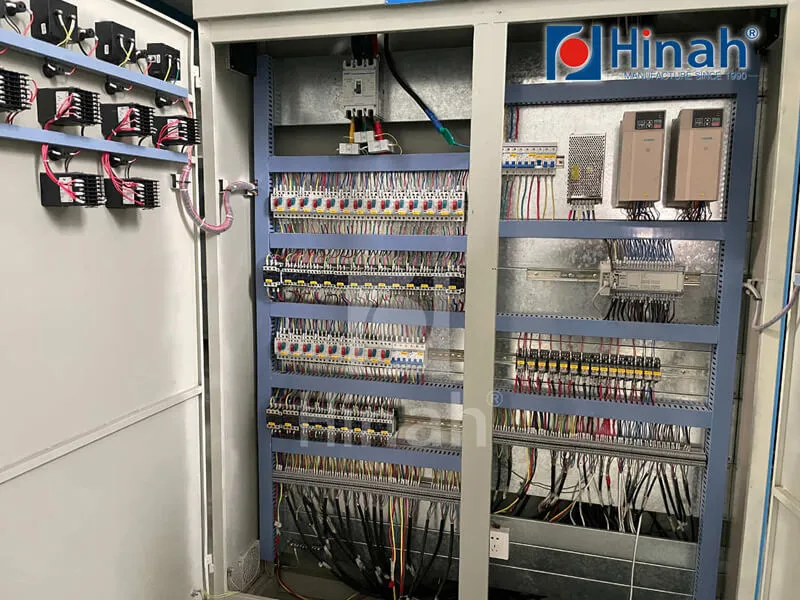
Each zone has independent burners, fans, and temperature sensors. The control system uses a PID loop with feed-forward from the conveyor encoder. When a heavy part enters, the pre-heat zone burner fires earlier to compensate.
An industrial powder coating oven typically consumes 60–75% of a powder coating plant’s total energy. The following retrofits offer rapid payback.
Exhaust heat recovery with a plate heat exchanger: Transfer heat from oven exhaust (150–200°C) to fresh combustion air or to plant makeup air. Efficiency: 45–55% recovery. Payback: 12–18 months.
Variable frequency drives (VFDs) on all circulation fans: Reduce airflow by 30% during low-production shifts. Fan power follows affinity law: a 20% speed reduction cuts power by about 50%.
High-velocity air curtains at entrance and exit: Reduce cold air infiltration. Typical savings: 8–12% of fuel.
Oven pressure control: Maintain slight positive pressure (+5 to +10 Pa) inside the oven relative to plant ambient. This prevents cold air from being sucked in through gaps but does not push heat out excessively.
Insulation upgrades: Adding 50 mm of ceramic fiber blanket over existing 100 mm rockwool can reduce shell losses by 35%.
A HANNA client coating steel frames reduced gas consumption from 5.2 to 3.1 m³/m² after implementing heat recovery and VFDs, saving $47,000 annually with a 14-month payback.
The conveyor system directly influences oven performance. Key specifications for industrial lines:
Chain speed: Must be synchronized with oven controller. A typical setup uses a 485‑kHz incremental encoder on the drive sprocket.
Hanger design: Heavy sections conduct heat away from parts, creating "heat sinks." Use thin-wire hangers with minimal mass. For example, replace 10 mm rod with 6 mm stainless steel.
Part spacing: Maintain at least 200 mm between parts in all directions to allow airflow. Closer spacing creates shadows and uneven cure.
Every industrial oven must undergo thermal profiling at commissioning and annually thereafter. Procedure:
Attach six thermocouples to a representative part: three on thin sections, three on heavy sections.
Install a data logger on the conveyor that travels through the oven.
Record temperature vs. time for a full production load cycle.
Compare to powder manufacturer’s cure schedule (e.g., 190°C metal temperature for 12 minutes).
If a part's heavy section stays below cure temperature for the required time, increase oven setpoint or add an IR booster. If thin sections exceed the maximum temperature (often 220°C), reduce setpoint and extend soak time.
Based on HANNA field audits of 300+ ovens, the following defects correlate directly with oven parameters.
Under-cure (poor adhesion, fails MEK rub test): Part temperature never reached required value due to conveyor speed too fast, or oven setpoint too low. Check profiler data. Solution: reduce line speed by 15% or increase setpoint by 10°C.
Over-cure (yellowing, brittle film, loss of gloss): Part soaked too long or temperature too high. Often occurs near the oven exit where radiation from walls raises part temperature above setpoint. Solution: add a cooling zone before exit or lower setpoint and increase convection fan speed for better uniformity.
Orange peel (excessive texture): Incomplete flow due to ramp rate too fast (powder gelled before leveling). Solution: lower the temperature of the first zone to allow 2–3 minutes of slow heating before reaching gel.
Pinholes / blisters: Moisture or volatiles expanding rapidly. Typically from powder stored in humid conditions or part outgassing. Solution: add a 2-minute pre-heat at 120°C to drive off moisture before the cure zone.
Non-uniform gloss across the conveyor width: Air velocity maldistribution. Use an anemometer to map the oven cross-section. Adjust damper vanes to equalize flow within ±15%.
To avoid under-sizing, use the following formula:
Required oven
length (m) = (Conveyor speed (m/min) × Cure time (min)) + 2 m (for entrance and
exit transitions)
For example, a line speed of 3 m/min and required cure time of 12 minutes
needs:
3 × 12 + 2 = 38 meters.
If floor space is limited, consider:
Multi-pass oven: The conveyor stacks parts vertically or uses a switch-back layout to fit 40 m of heated length into a 12 m floor footprint.
IR boosters: Reduce required cure time by 30–40% (from 12 minutes to 7–8 minutes) because IR heats the coating directly, not the substrate. However, verify the powder formulation is IR-compatible.
Higher convection velocity: Increasing air speed from 5 m/s to 10 m/s reduces cure time by approximately 20% but may blow off powder from delicate edges.
HANNA provides a free "oven sizing calculator" that accounts for part thickness, material specific heat, and desired throughput.
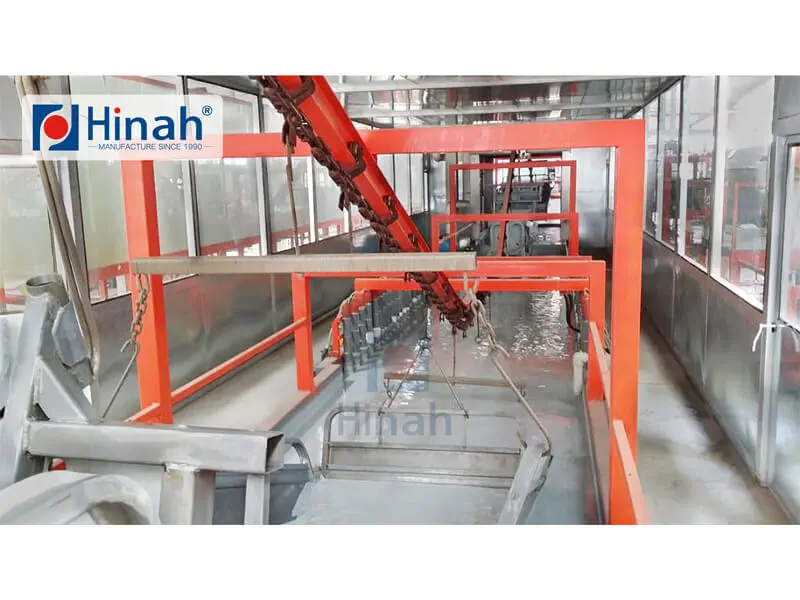
Industrial industrial powder coating oven installations must adhere to NFPA 86 (Standard for Ovens and Furnaces) and local codes. Key requirements:
Over-temperature limit controls: A secondary thermostat that shuts off all heat inputs if oven temperature exceeds setpoint by 25°C. Required annually tested.
Combustion air proving: The burner cannot fire unless a minimum airflow is proven (typically by a differential pressure switch).
Explosion venting: For gas ovens, explosion relief panels must be installed on the roof or walls, sized to 1 ft² per 15 ft³ of oven volume.
Interlocked access doors: Any man door or maintenance panel that opens into the oven must shut off the burner and fans if opened during production.
Regular inspection intervals (monthly, quarterly, annual) are mandatory for insurance compliance. HANNA offers a complete compliance audit and certification for existing ovens.
Q1: What is the typical temperature uniformity required for an
industrial powder coating oven?
A1: Most powder manufacturers
specify a tolerance of ±5°C measured at the part surface across the entire load.
For high-gloss architectural finishes, ±3°C is recommended. Uniformity is
verified by a temperature uniformity survey (TUS) with at least 12 thermocouples
placed at different heights and conveyor positions.
Q2: How often should I recalibrate my oven's
thermocouples?
A2: Type K thermocouples drift over time, especially
in industrial environments. Calibrate annually using a dry-block calibrator. If
any thermocouple reads more than 3°C off at 200°C, replace it. Many
HANNA customers schedule calibration during their annual plant
shutdown.
Q3: Can I use a batch oven for continuous production?
A3:
Batch ovens are designed for intermittent loading – they have high thermal mass
and slow response. For continuous production above 2,000 m²/week, you need a
continuous monorail or walking-beam oven. Attempting to run a batch oven
continuously leads to overheating of the structure and inconsistent cure as
parts wait for the oven to recover temperature.
Q4: What is the effect of part color on cure time in an IR
oven?
A4: Dark colors (black, dark blue, red) absorb IR radiation
30–50% faster than light colors (white, light gray). In a pure IR oven, this
means dark parts may over-cure while light parts remain under-cured. The
solution is to use a hybrid design with IR only for the first gel zone, then
convection for the soak – convection does not see color differences.
Q5: How do I reduce natural gas consumption in my existing oven
without major capital investment?
A5: The highest ROI low-cost
measures are: (1) Seal all leaks around access doors and conveyor slots with
high-temperature silicone gaskets; (2) Reduce the oven exhaust damper to the
minimum required to remove volatiles – many operators leave it fully open; (3)
Install a simple timer that lowers the temperature setpoint by 40°C during
unproductive breaks (lunch, shift change). These three steps alone can cut gas
use by 15–20%.
Q6: What is the expected service life of an industrial powder coating
oven?
A6: With regular maintenance (quarterly fan bearing greasing,
annual burner cleaning, every‑5‑years insulation replacement), a gas-fired
convection oven can last 20–25 years. Major components that typically need
replacement after 10–12 years include circulation fan impellers (wear from
thermal cycling) and burner flame rods.
Whether you are specifying a new industrial powder coating oven or looking to improve an existing one, HANNA provides full engineering support. Our services include:
On-site thermal profiling and energy audit (delivers a detailed report with specific recommended actions).
Turnkey supply of modular oven sections (convection, IR, or hybrid) that bolt onto your current line.
PLC controls upgrade to enable part-specific cure recipes via barcode scanning.
Operator and maintenance staff training with certification.
Request a free preliminary assessment: Send your current oven specifications (length, fuel type, line speed, part size/mass) to our engineering team. We will provide a custom improvement proposal with guaranteed payback figures.
Inquiry form: https://www.autocoatinglines.com/contact
Technical hotline: +1 (312) 555-8200 – Ask for the thermal
processes division.