
When procurement managers evaluate a Powder coating machine price, the initial quotation often misrepresents total expenditure. A USD 35,000 manual booth may end up costing twice that within two years due to low transfer efficiency, while a USD 120,000 automated line with high-reclaim could pay back in 14 months. This guide dissects the engineering variables that influence Powder coating machine price – from conveyance type to filtration architecture – and provides a decision matrix for buyers. HANNA has supplied over 240 finishing lines globally, and our cost data shows that understanding these factors reduces over-specification waste by 30–40%.
The final Powder coating machine price is the sum of five interdependent subsystems. Each module has distinct cost drivers:
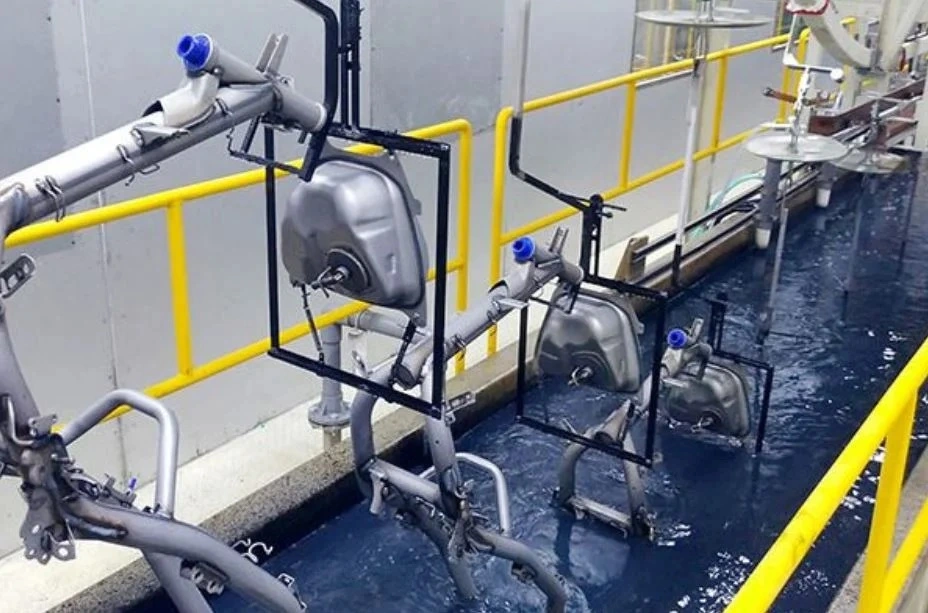
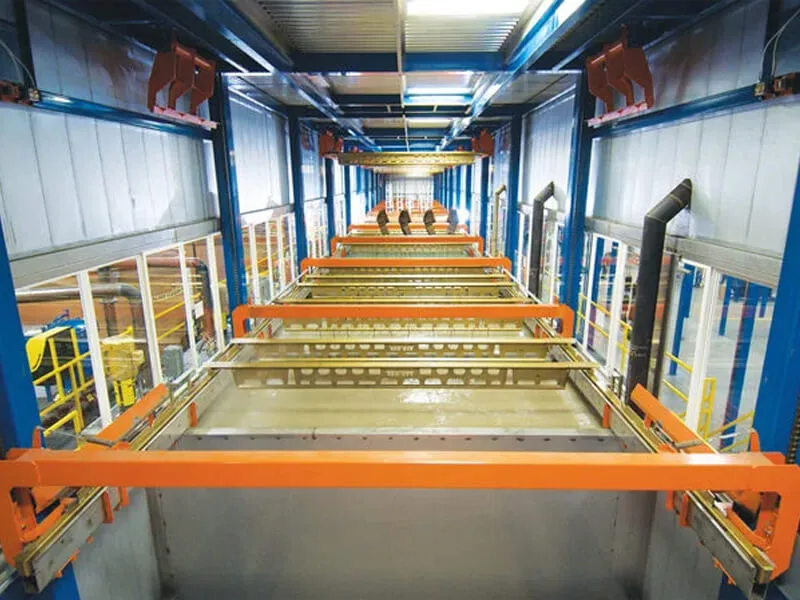
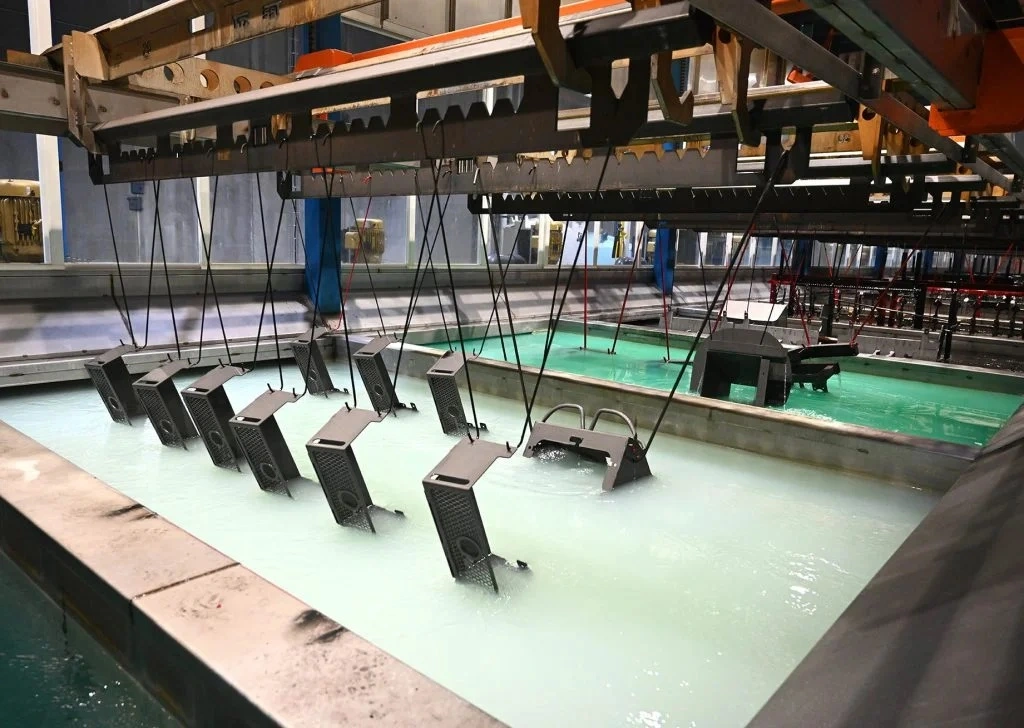
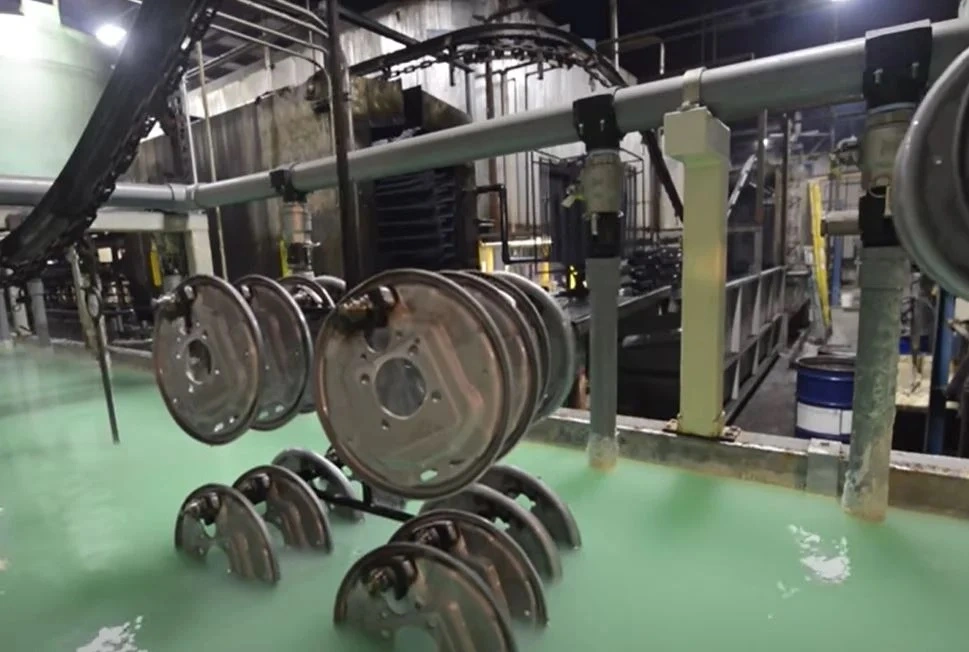
Pretreatment station: Washer type (tunnel vs. batch), chemical application method, and drying tunnel length. A 5-stage zirconium pretreatment adds $18,000–$25,000 compared to a simple iron phosphate washer.
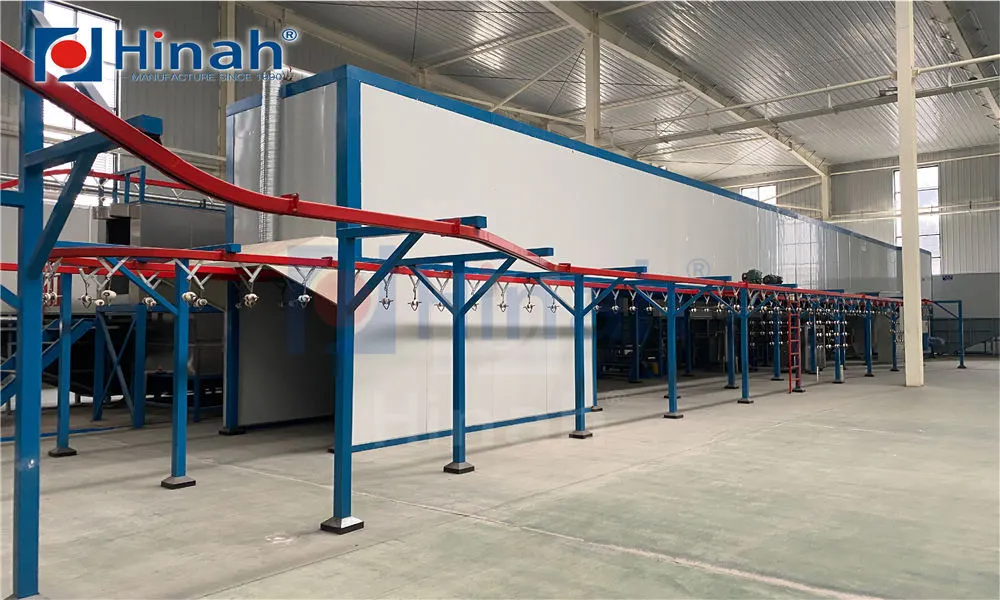
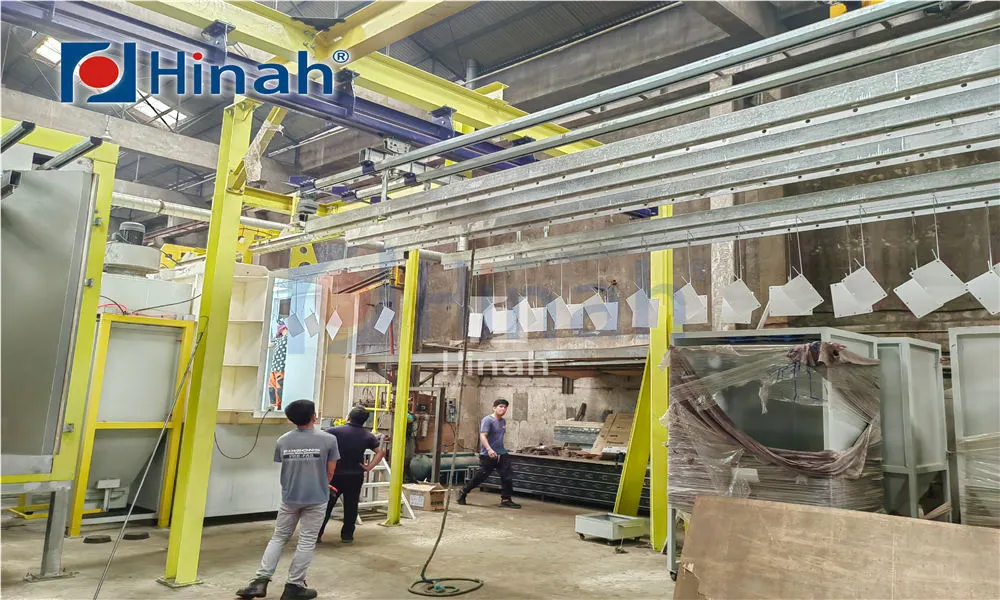
Conveyor system: Monorail overhead (lowest initial cost), power-and-free (higher flexibility), or inverted floor conveyor. Variable speed drives and chain lubrication systems further affect pricing.
Spray booth (coating room): Manual vs. automatic guns, cartridge vs. cyclone recovery, explosion venting, and color-change speed. A fast-color-change booth can double the base price but reduces downtime.
Curing oven: Indirect gas-fired, electric infrared, or hybrid. Convection ovens require more insulation and air recirculation fans, raising the powder coating machine price by $30,000–$70,000 over IR-only designs.
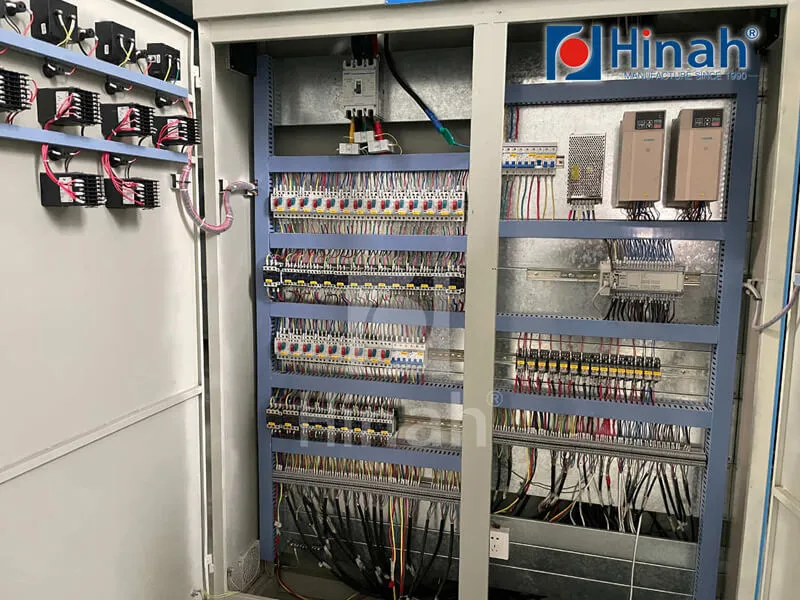
Control and automation: PLC with HMI, remote monitoring, recipe storage, and data logging. A basic relay-logic panel costs $4,000; a full Industry 4.0 ready system exceeds $22,000.
Many suppliers offer base configurations, but customization for part geometry (e.g., heavy W-beams vs. small aluminum extrusions) directly impacts final costs. Modular powder coating plant designs from HANNA allow buyers to phase investments, starting with a manual booth and later adding automatic guns and a reclaim system without replacing existing equipment.
The most significant lever on powder coating machine price is the number and type of spray applicators. Below is a breakdown based on 2024 industrial pricing (USD, ex-works).
Price range: $18,000 – $45,000 (single booth, cyclone, 2 manual guns).
Throughput: 80–200 parts per shift (depending on size).
Transfer efficiency: 45–65% typical – higher powder waste.
Best for: Job shops with <50 color changes per week and parts under 1.5 m length.
Price range: $85,000 – $280,000 (incl. reciprocators, 4–12 guns, cartridge filters, PLC).
Throughput: 400–1,200 parts per shift.
Transfer efficiency: 70–88% with proper gun positioning and booth airflow.
Best for: High-volume manufacturing (e.g., automotive, appliances, fencing).
Although the initial Powder coating machine price for an automatic line is 3–5x higher, the material savings alone (reducing powder consumption from 25% overspray loss to 12% loss) typically returns the differential within 18 months. For a line spraying 60,000 kg of powder annually at $6/kg, a 13% reduction in waste saves $46,800 per year – enough to justify the higher upfront cost.
Many buyers compare powder coating machine price tables without realizing what is omitted. Common exclusions that add 20–35% to the final bill:
Installation & rigging: $8,000–$25,000 – especially if the booth must be assembled inside an existing building.
Electrical work: Running 480V 3-phase lines, disconnects, and grounding. Often $5,000–$15,000.
Compressed air system: Dryer, filters, and piping for gun atomization and pulse cleaning. A 50 CFM rotary screw compressor with dryer adds $7,000–$12,000.
Exhaust ductwork and roof penetration: For explosion venting and air make-up units – up to $18,000.
Operator training and spare parts kit: Typically $3,000–$6,000 but rarely included in base pricing.
Professional manufacturers like HANNA provide a detailed cost breakdown before contract signing, listing all auxiliary equipment required for a turnkey installation. Always request a “total installed cost” (TIC) quotation when comparing suppliers.
Choosing between cartridge collectors and cyclones dramatically changes both initial price and consumable expenses. Below is a comparison for a medium-volume line (300 kg powder/week).
| Recovery type | Initial cost adder vs. basic booth | Powder reclaim rate | Annual filter replacement cost | Color change time |
|---|---|---|---|---|
| Single cyclone + secondary cartridge | +$14,000 | 75–85% | $2,800 (cartridges 2x/year) | 45 min |
| High-efficiency cartridge (nanofiber) | +$8,500 | 88–94% | $4,200 (cartridges 3x/year) | 15 min (quick-release) |
| Double cyclone with sieve | +$32,000 | 85–90% | $600 (only final HEPA) | 90 min (hard to clean) |
While the double cyclone raises the powder coating machine price significantly, it is justified for single-color, high-volume lines where filter downtime is unacceptable. Conversely, job shops with 5–10 color changes per day should prioritize fast-change cartridge booths despite higher annual filter costs, because reduced cleaning labor provides better ROI.
Curing ovens typically represent 25–40% of the total powder coating machine price for a complete line. Three common technologies with 2024 cost estimates (for a 6 m x 2.5 m x 2.5 m chamber):
Electric infrared (IR): $28,000–$45,000 – Fast ramp-up, low thermal mass, but limited to simple part geometries (line-of-sight heating). Electricity cost per kg of cured powder: $0.12–0.18.
Indirect gas-fired convection: $52,000–$89,000 – Uniform heating, suitable for complex parts, but slower to reach setpoint. Gas cost per kg: $0.07–0.11.
Hybrid IR + convection: $75,000–$120,000 – Best of both: IR for gel stage, convection for flow-out. Reduces cure time by 30% and energy use by 15–20%.
Prospective buyers often overlook that a low-powder coating machine price oven may have poor insulation (100 mm vs. 150 mm mineral wool), leading to surface temperatures above 45°C and higher shop cooling costs. Request thermal imaging reports or energy consumption guarantees from suppliers.
Regional regulations can add compliance costs that alter the effective powder coating machine price by 8–25%.
NFPA 33 / ATEX: Explosion relief panels, spark detection, and grounding monitoring – add $9,000–$18,000.
Local emission limits: If particulate matter must be below 5 mg/m³, secondary HEPA filters or wet scrubbers are required (+$12,000).
Worker safety: Downdraft tables for manual booths or breathing air systems (+$4,000).
Shipping and customs: Overseas delivery of a 2,500 kg powder coating line can cost $6,000–$15,000 depending on container size and port duties.
HANNA’s global installation records show that lines shipped to EU or North America typically require 12–18% more safety equipment than identical lines for Southeast Asian markets. Always specify your local code requirements when requesting a quote.
Instead of comparing bottom-line prices, calculate cost per coated square meter or cost per part. For a manual line at $35,000 vs. an automatic line at $125,000:
Manual: coats 40 m²/hour at 55% efficiency, powder cost $0.32/m², labor $0.58/m², total $0.90/m².
Automatic: coats 140 m²/hour at 82% efficiency, powder cost $0.21/m², labor $0.15/m², total $0.36/m².
At 2,000 operating hours per year, the automatic line processes 280,000 m² vs. 80,000 m² manually. The annual operating cost advantage of automatic ($0.54/m² saved × 280,000 m² = $151,200) pays back the $90,000 price difference in just 7 months. Therefore, the higher powder coating machine price is not a liability but an investment.
Q1: What is the typical lead time for a custom powder coating line,
and does it affect price?
A1: Standard lead time
ranges from 8 to 16 weeks according to HANNA's project data. Expedited delivery
(4–6 weeks) adds 15–25% to the base powder coating machine
price due to overtime and air freight of components. We recommend
planning orders 4–5 months ahead of line startup to avoid premium charges.
Q2: Can I reduce the initial powder coating machine price by buying a
used or refurbished system?
A2: Used systems cost
40–60% less upfront, but hidden risks include worn filters, outdated control
systems, and non-compliant safety features. A 2015-era booth may not meet
current NFPA 33 standards, requiring $12,000–$20,000 in retrofits. For critical
production, new equipment with warranty is often more cost-effective over five
years.
Q3: Does a higher powder coating machine price always mean better
quality and efficiency?
A3: Not necessarily – some
premium-priced lines include unnecessary features like excess conveyor capacity
or oversized recovery systems. The optimum is a line matched to your part size,
annual volume, and color change frequency. A value-engineered solution from an
experienced integrator like HANNA often provides better ROI than a high-end
brand with standard configurations.
Q4: How does powder type (epoxy, polyester, etc.) influence equipment
pricing?
A4: Aggressive powders (e.g.,
anti-corrosion epoxies) require stainless steel booth liners and
chemical-resistant hoses, adding $4,000–$7,000. High-texture or metallic powders
also demand special nozzle sets and densified powder feed systems (+$3,500).
Always disclose your powder portfolio when requesting a quote to avoid
under-specification.
Q5: Are there financing options available for the powder coating
machine price?
A5: Many industrial equipment
suppliers, including HANNA, partner with leasing companies to offer 12–60 month
terms. Operating leases keep the equipment off balance sheets, while capital
leases allow eventual ownership. Typical interest rates range from 5–12%
depending on credit and down payment (10–30%). Request a financing proposal
alongside your quotation.
Q6: What maintenance costs should I expect annually as a percentage
of the purchase price?
A6: For a properly
maintained line, budget 5–8% of the original powder coating machine
price per year. This includes filter cartridges, gun wear parts
(electrodes, nozzles), conveyor chain lubricants, and oven thermocouple
calibration. High-utilization lines (over 4,000 hours/year) may reach 10%.
Because powder coating machine price is so dependent on your part mix, existing utilities, and future production targets, generic price lists are misleading. HANNA offers a three-step consultation:
Send us your top 5 part drawings, desired output (parts/hour), and color change frequency.
Our engineers prepare a line layout with CFD airflow simulation and total installed cost estimate.
We provide a fixed-price proposal including all mechanical, electrical, and safety components.
Start your inquiry now – click below to submit your production data and receive a detailed ROI analysis within 5 business days. No obligation, only engineering-grade recommendations.
Request your customized quotation: Contact HANNA’s powder coating specialists or call+86 186 3393 1770 for immediate assistance.