

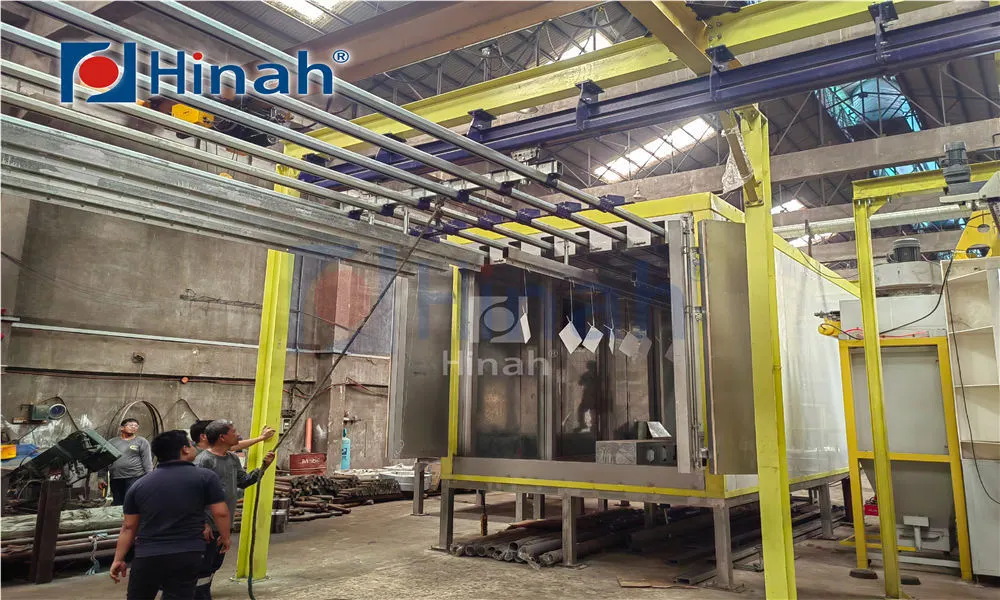
For any high-volume coating operation, the conveyor paint line serves as the central nervous system—dictating throughput capacity, process consistency, and the spatial efficiency of the entire finishing department. With over two decades of experience designing integrated coating systems for automotive, appliance, and heavy equipment manufacturers, I have witnessed how conveyor design choices directly impact first-pass yield, energy consumption, and labor productivity. A poorly engineered conveyor paint line creates bottlenecks, uneven coating thickness, and excessive maintenance downtime. This technical guide dissects the engineering principles that separate world-class material handling systems from those that erode profitability.
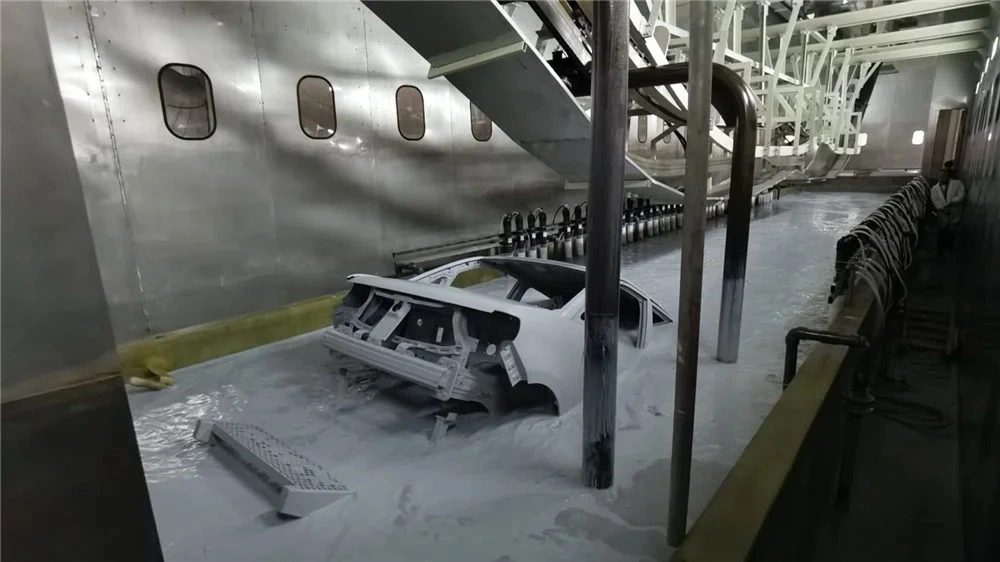
1. Conveyor Type Selection: Overhead Monorail vs. Power-and-Free vs. Floor Systems
The foundation of any conveyor paint line is the material handling architecture. Three dominant configurations exist, each with distinct operational characteristics:
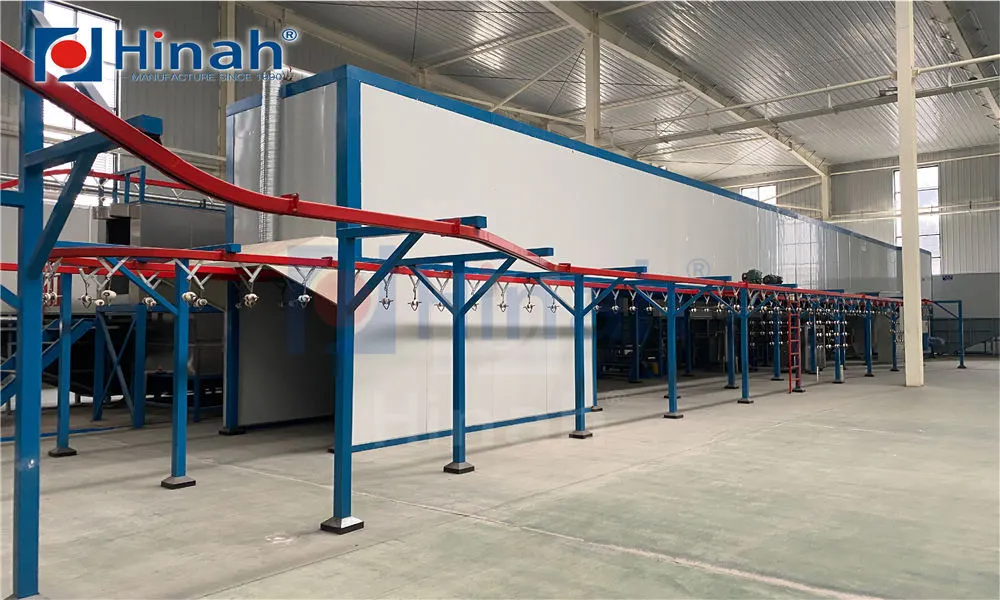
Overhead Monorail Conveyors
These systems utilize a continuous chain running through an enclosed track, with carriers suspended via trolleys. Monorail designs represent 65% of industrial finishing lines due to their simplicity and low initial cost ($150–$300 per linear foot). They accommodate parts up to 500 lb per carrier and allow 180-degree turns. However, monorail systems do not permit accumulation; if any process station stops, the entire line halts. For high-reliability environments, this limitation necessitates buffer zones or redundant drive systems.
Power-and-Free Conveyors
This dual-track design separates the drive chain (power track) from the load-carrying trolleys (free track). Carriers can be stopped, accumulated, or routed to spurs independently while the main chain continues moving. Power-and-free systems add 40–60% to initial conveyor cost but enable:
In-line accumulation buffers (critical for oven zoning and cooling sections).
Automated carrier routing for different product families.
Maintenance without production stoppage (isolated sections can be bypassed).
Inverted Floor Conveyors
Used for extremely heavy parts (e.g., engine blocks, construction machinery) where overhead loading is impractical. Inverted systems keep the conveyor at floor level, simplifying fixture design but requiring more floor space. They are typically 20–30% more expensive per linear foot than overhead equivalents.
2. Speed, Indexing, and Throughput Calculations
Conveyor speed directly determines production capacity. For a continuous conveyor paint line, throughput (parts/hour) is calculated as:
Throughput = (Conveyor Speed (ft/min) × 60) / (Part Pitch (ft))
Where part pitch includes the carrier length plus spacing required between parts to prevent overspray interference. Typical conveyor speeds range from 10–30 ft/min for manual coating operations, and 30–60 ft/min for automated lines. Indexing (stop-and-go) conveyors are used when stationary processing is required (e.g., robotic coating or manual touch-up). Indexing reduces mechanical wear but introduces acceleration/deceleration forces that can affect part stability—critical for delicate components.
Data from recent HANNA installations show that optimizing conveyor speed and pitch reduced cycle time by 22% in one automotive supplier facility, increasing daily output from 1,200 to 1,560 parts without additional labor.
3. Carrier and Fixture Engineering: The Hidden Driver of Quality
Carriers are often underestimated, yet they account for up to 15% of total line investment and directly affect coating uniformity. Key considerations:
Grounding integrity: Powder coating requires electrical continuity from the conveyor chain to the part. Rotating contacts and conductive hangers must maintain <1 ohm resistance to prevent Faraday cage defects. Automated carrier cleaning stations (burn-off ovens or media blasters) should be integrated to remove accumulated coating that insulates hangers.
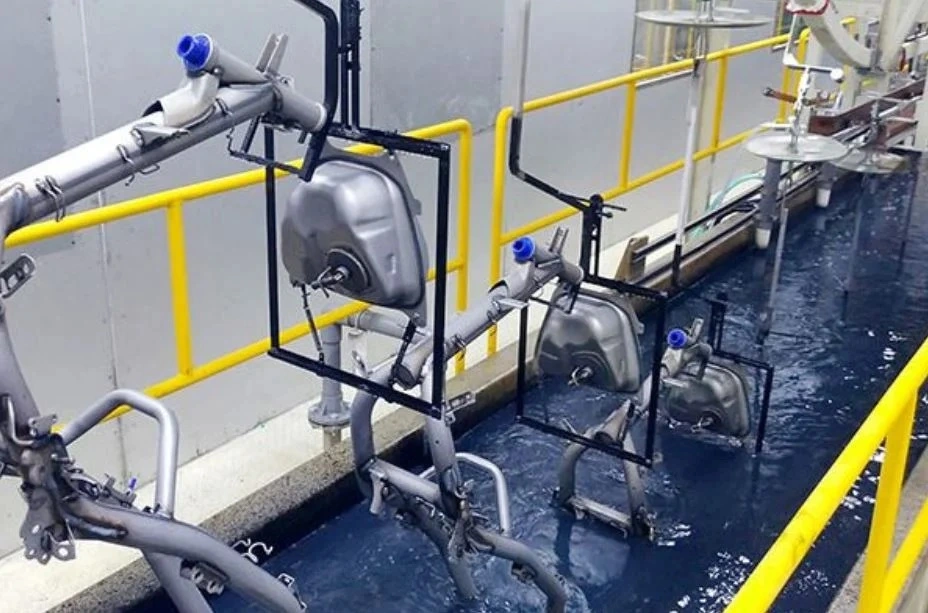
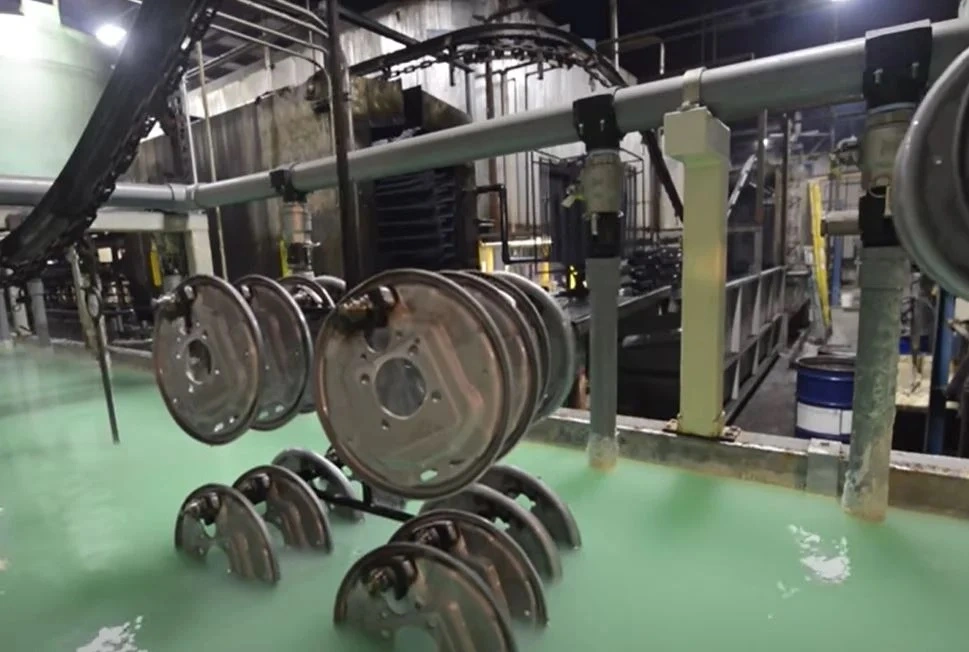
Drainage design: For liquid paint lines, carriers must allow complete drainage of pretreatment chemistries. Improper drainage causes chemical carryover, leading to adhesion failures and bath contamination. Sloped carriers with strategic openings reduce drag-out by 40–60%.
Modularity: Quick-change tooling enables rapid product changeovers. A well-designed carrier system can reduce changeover time from 2 hours to under 20 minutes.
Advanced lines now incorporate RFID tags on carriers, allowing the control system to automatically select coating parameters based on part identity—a feature that eliminates manual recipe selection errors.
4. Zone Integration: Pretreatment, Coating, and Curing Synchronization
A conveyor paint line must maintain precise timing across pretreatment washers, dry-off ovens, coating booths, and curing ovens. Common synchronization challenges:
Washer-to-dryer transition: Parts must enter the dry-off oven within 3–5 minutes of leaving the final rinse to prevent flash rust. Accumulation zones (power-and-free) provide buffer capacity to maintain timing during upstream stoppages.
Coating booth conveyor speed: Must match gun traverse speeds to achieve target film thickness. For reciprocating guns, conveyor speed and reciprocator stroke frequency are interdependent. Modern systems use synchronized variable-frequency drives (VFDs) to maintain optimal coating parameters across variable line speeds.
Curing oven residence time: Ovens require precise time-at-temperature profiles. Conveyor speed variations directly affect cure quality; sophisticated lines use multiple oven zones with independent temperature controls to compensate for speed changes.
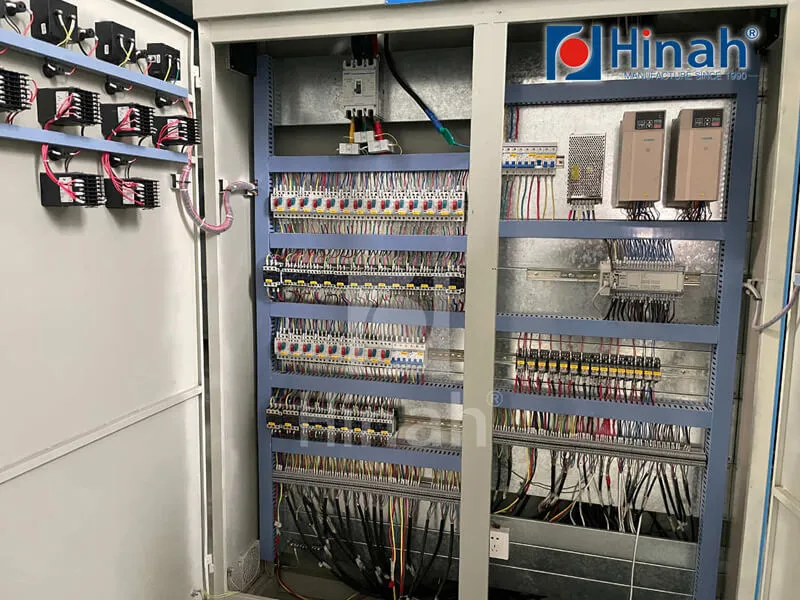
HANNA specializes in turnkey integration, providing unified control platforms that synchronize all zones—ensuring that conveyor speed changes automatically adjust oven temperature profiles to maintain consistent metal temperature.
5. Energy Efficiency and Drivetrain Design
Conveyor systems can consume 10–20% of a finishing line’s total energy. Opportunities for optimization:
VFD-controlled drive motors: Reduce energy consumption by 30–50% compared to constant-speed systems, particularly during idle periods.
Low-friction chain materials: Nylon wear strips and self-lubricating bearings decrease rolling resistance, lowering motor horsepower requirements.
Regenerative braking: In indexing lines, regenerative drives capture energy during deceleration, feeding it back into the facility grid.
A 2023 study of 50 industrial finishing lines found that energy-optimized conveyor systems achieved average annual savings of $12,000–$18,000 per line, with payback periods under 2 years.
6. Maintenance Strategies and Conveyor Longevity
Conveyor reliability is paramount; unplanned downtime costs average $2,500–$5,000 per hour in high-volume operations. Effective maintenance programs include:
Chain elongation monitoring: Chains stretch over time; when elongation exceeds 3% of original length, wear increases exponentially. Automated lubrication systems with programmable cycles extend chain life by 40–60%.
Thermal imaging inspections: Quarterly thermal scans detect overheating bearings and drive units before catastrophic failure occurs.
Carrier track cleaning: Automated track scrapers prevent powder and overspray accumulation that can cause jams.
Predictive maintenance programs reduce conveyor-related downtime by 70% compared to reactive approaches, according to industry benchmark data.
7. Automation and Industry 4.0 Integration
Modern conveyor paint line systems function as fully integrated manufacturing cells. Advanced capabilities:
Real-time production tracking: Photoelectric sensors and encoders provide precise part location data to the supervisory control system, enabling automated quality data logging per individual part.
Predictive maintenance dashboards: Machine learning algorithms analyze vibration, temperature, and current draw to predict failures with 90% accuracy up to 30 days in advance.
Digital twin simulation: New lines are simulated virtually to optimize layout, throughput, and bottleneck elimination before physical installation—reducing commissioning time by 40%.
One HANNA client achieved a 28% increase in OEE after implementing a fully connected conveyor system with real-time data analytics and automated work order dispatching.
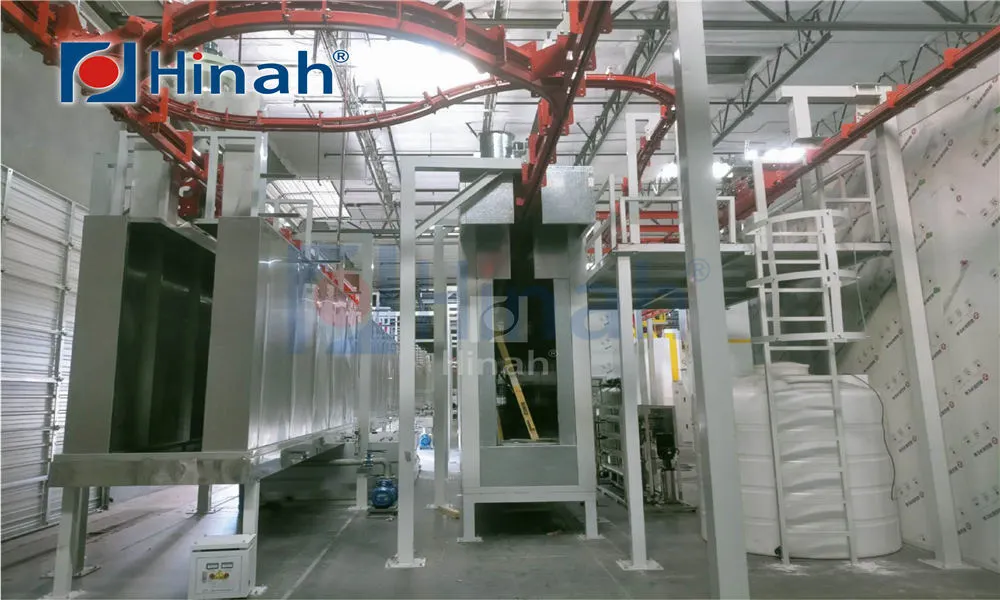
8. Total Cost of Ownership: Evaluating Conveyor Investments
Initial conveyor capital cost ranges from $200,000 for small monorail systems to over $2 million for large power-and-free lines with automated carrier routing. TCO analysis must consider:
Energy consumption: $8,000–$25,000 annually depending on drive efficiency and operating hours.
Maintenance and spare parts: 2–4% of initial investment per year for chain, bearings, and drive components.
Downtime cost: Premium conveyor designs with redundancy (dual drives, spare chain sections) add 15–25% to upfront cost but reduce downtime risk by 60–80%.
Labor efficiency: Automated carrier routing and accumulation reduce material handling labor by 30–50%.
When quantified, premium conveyor systems typically demonstrate payback periods of 18–36 months, with superior long-term reliability.
Frequently Asked Questions (FAQ)
Q1: What is the typical conveyor speed range for an automated powder coating line?
A1: Automated lines typically operate between 12–30 ft/min for reciprocating gun systems and 20–50 ft/min for robotic systems. Slower speeds (8–12 ft/min) are used for manual coating booths to allow operators sufficient application time. The optimal speed is determined by required film thickness, gun traverse rate, and oven cure schedule.
Q2: How often should overhead conveyor chain be lubricated?
A2: Automatic lubrication systems should apply high-temperature chain lubricant at intervals of 2–4 operating hours for continuous lines. Manual lubrication intervals range from weekly to monthly depending on chain load and operating temperature. Over-lubrication attracts dust and overspray, while under-lubrication accelerates wear. Many modern systems use consumption-based lubrication triggered by chain elongation sensors.
Q3: What is the maximum part weight that can be handled on a standard overhead monorail conveyor?
A3: Standard monorail systems with 3/4-inch to 1-inch pitch chain accommodate individual carrier loads up to 500 lb. Heavy-duty designs with 2-inch to 4-inch pitch chain can handle 1,000–2,000 lb per carrier. For loads exceeding 2,000 lb, inverted floor conveyors or monorail systems with multiple parallel chains are required. Load capacity must also account for carrier fixture weight.
Q4: How does conveyor design affect powder coating Faraday cage penetration?
A4: Conveyor design influences part orientation relative to spray guns. Rotating carriers (spindles) allow 360-degree access, improving coverage on complex geometries. Additionally, conveyors that maintain consistent grounding continuity are essential—any intermittent grounding caused by worn hangers or dirty track can cause electrostatic field distortion, exacerbating Faraday cage defects. Conductive hangers and periodic carrier burn-off are critical mitigations.
Q5: Can a conveyor paint line be retrofitted with accumulation zones?
A5: Retrofitting accumulation to a monorail line requires conversion to power-and-free, which involves replacing the chain and adding second tracks—a major project costing 50–70% of a new system. However, strategic installation of manual bypass spurs or off-line buffer carts can provide partial accumulation at lower cost. For new lines, specifying power-and-free from the outset is recommended if accumulation is a requirement.
Q6: What are the signs that a conveyor chain needs replacement?
A6: Key indicators include: chain elongation exceeding 3% of original length (measured over 10-foot sections), visible wear on link pins and bushings, frequent carrier jams, erratic speed (jerky motion), and audible grinding during operation. Chain replacement typically requires 1–3 days of downtime and should be planned during scheduled maintenance periods.
Q7: How does conveyor speed affect curing oven energy consumption?
A7: Conveyor speed directly impacts oven residence time. At slower speeds, parts remain in the oven longer, requiring lower temperatures to achieve cure—which can reduce energy consumption. However, slower speeds reduce throughput. Advanced ovens with multi-zone temperature control and VFD-driven recirculation fans can maintain energy efficiency across variable conveyor speeds. Typically, optimizing speed for maximum throughput yields the lowest energy cost per part.
For comprehensive conveyor paint line design, simulation, and integration services, contact the engineering team at HANNA—specialists in high-efficiency material handling for industrial coating operations.