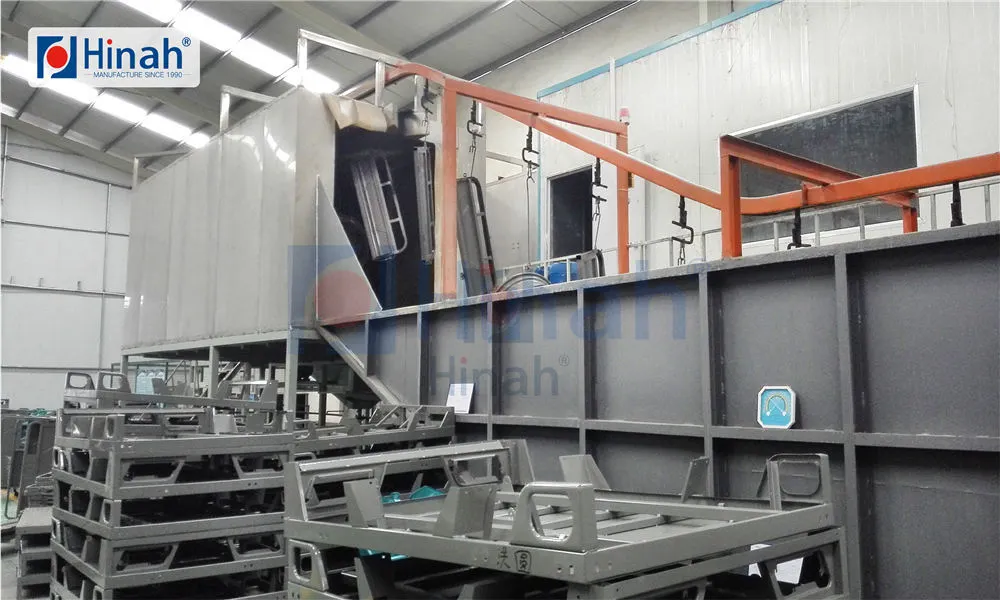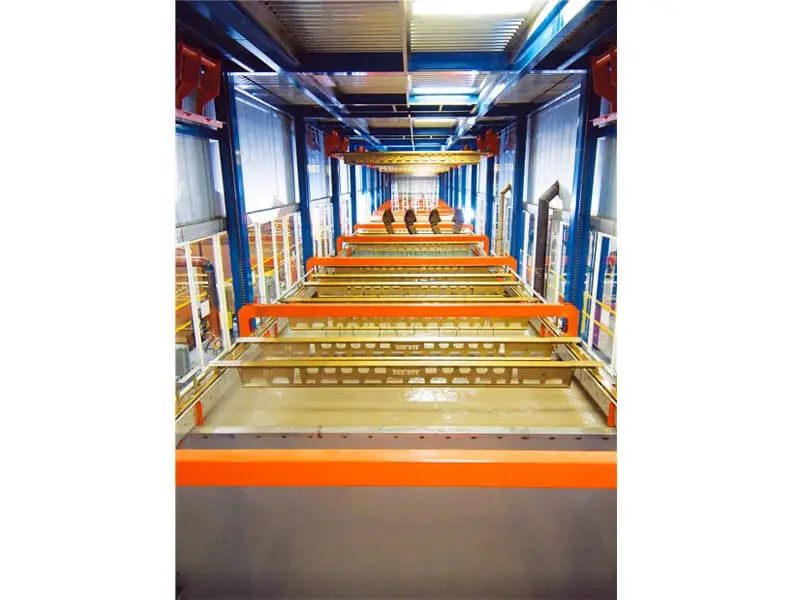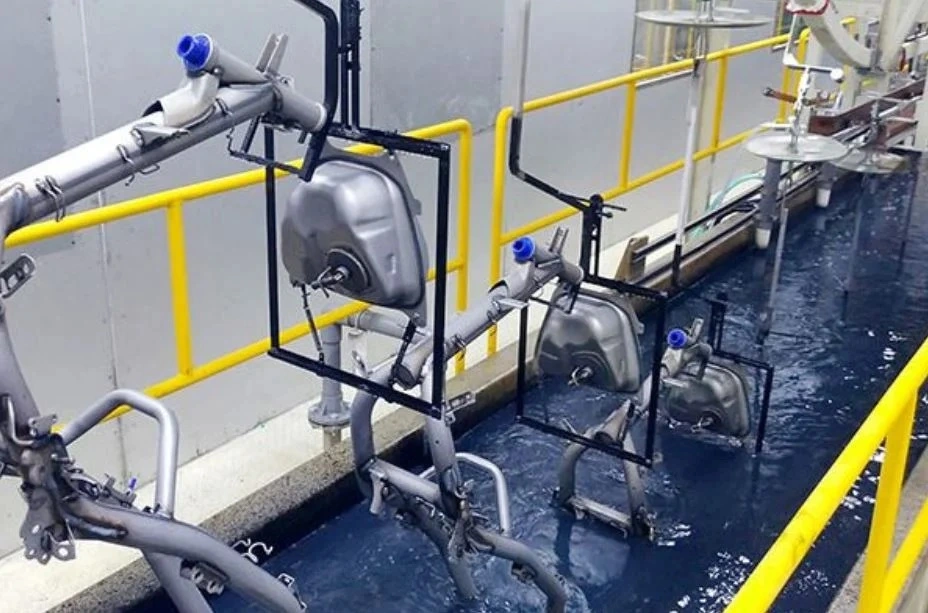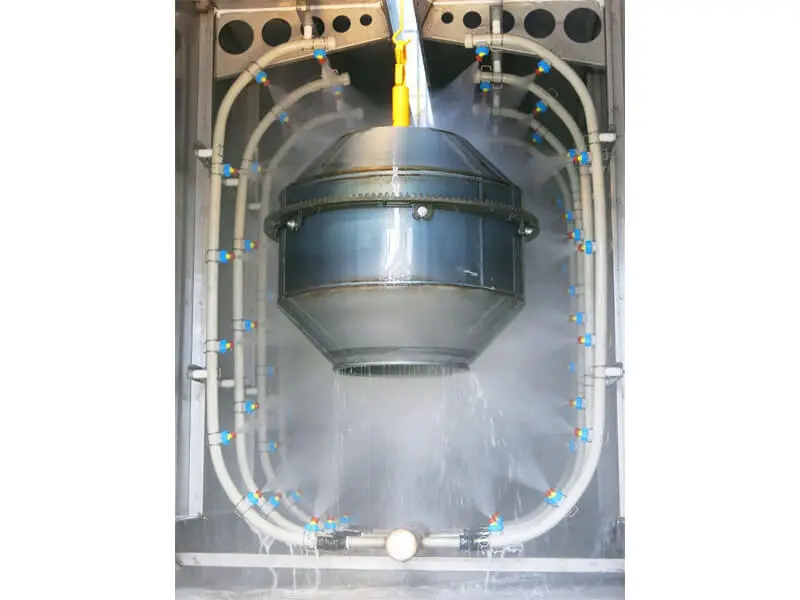
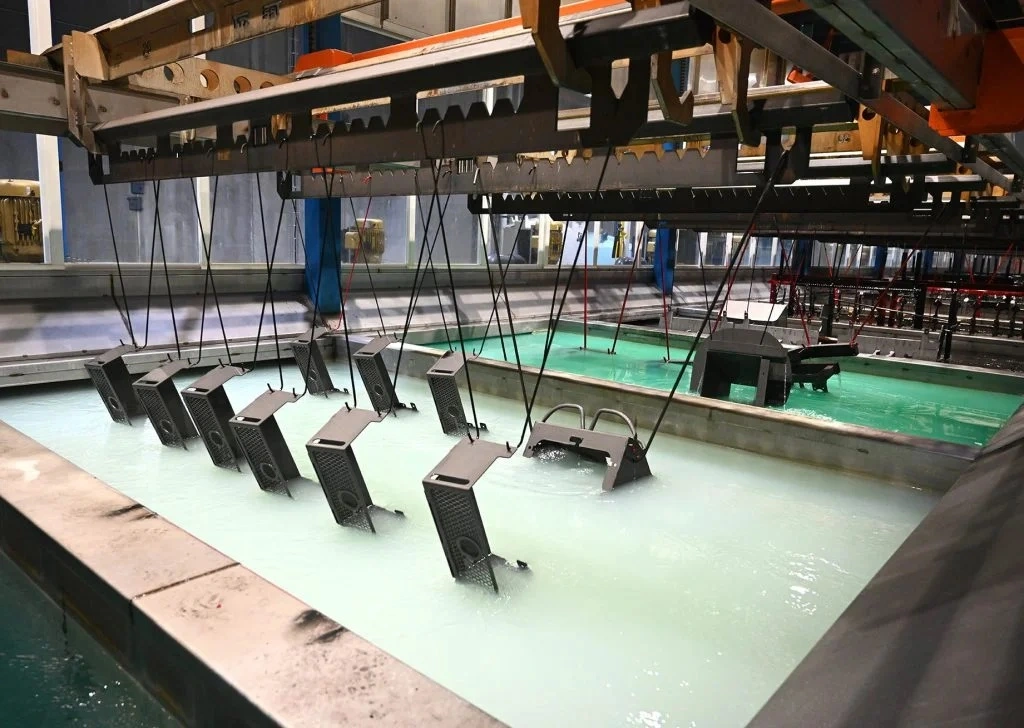
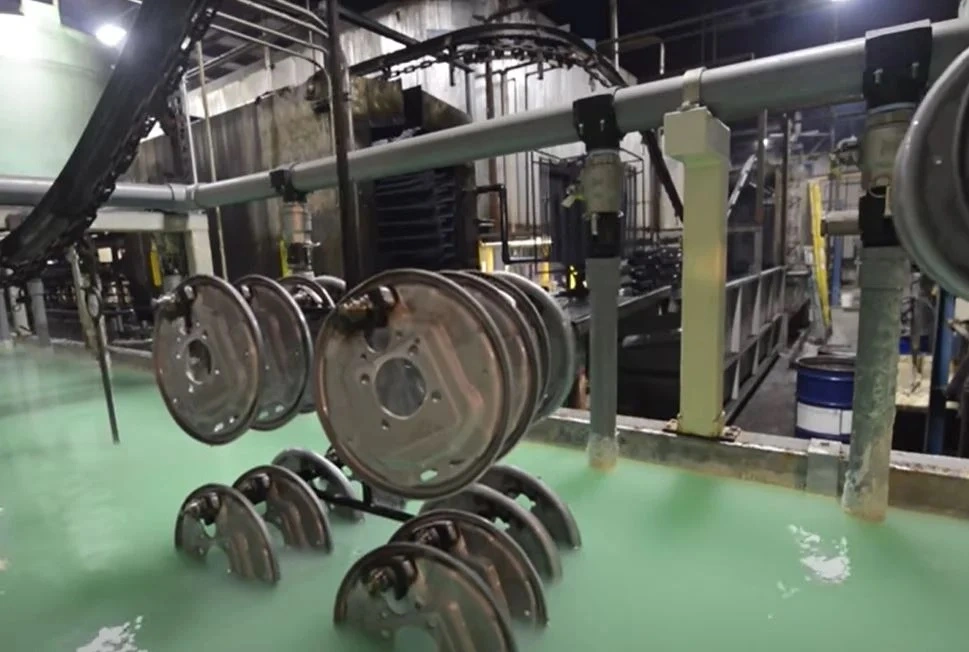
For any powder coating line, the oven is the final critical step that determines adhesion, corrosion resistance, and appearance. Curing ovens must bring the part metal to a precise temperature (typically 180–200°C) and hold it for a specified dwell time to fully crosslink thermoset polymers. Variations of just ±5°C can lead to under-cured patches (poor mechanical properties) or over-cured areas (discoloration, loss of gloss). This article provides a technical analysis of curing ovens for industrial powder finishing, covering heat transfer methods, zoning strategies, energy optimization, and process validation. Written for plant engineers and finishing line managers, this guide references real-world specifications and compliance standards.
Powder coating is applied electrostatically to a grounded substrate. The coated part then enters a curing oven where the powder particles melt, flow, and chemically react (crosslinking) to form a continuous, durable film. The reaction is time-temperature dependent: for TGIC polyester, typical cure is 190°C for 10 minutes at metal temperature; for epoxy-polyester hybrids, 160°C for 15 minutes. Inadequate cure leads to failed tape tests, poor impact resistance, and early coating failure in weathering. Over-cure causes brittleness and color shift. Therefore, modern powder coating plants invest heavily in precise oven control and thermal profiling.
Three main technologies dominate industrial curing ovens: convection, infrared (IR), and hybrid systems. Selection depends on part geometry, thermal mass, throughput, and energy source.
Convection ovens heat air via gas burners or electric elements, then recirculate hot air at high velocity (10–20 m/s) across the part surface. They are the most common type for general-purpose powder curing, especially for heavy steel parts with complex shapes. Advantages include uniform heating of irregular geometries and the ability to handle high thermal mass loads. Modern designs feature multi-zone temperature control with independent recirculation fans, achieving uniformity of ±3°C across the entire workspace. Typical operating range: 120–250°C. Energy efficiency: 65–80% for gas-fired indirect systems (heat exchanger separates combustion products from oven atmosphere).
Infrared ovens use medium-wave (MWIR) or short-wave emitters to directly heat the part surface without heating the surrounding air. They offer rapid response (seconds to reach temperature) and low thermal inertia, making them ideal for thin aluminum, plastic, or heat-sensitive substrates. However, IR curing is line-of-sight; shadowed areas may not cure fully. For complex parts, multiple emitter arrays and rotating mechanisms are required. Typical power density: 15–50 kW/m². Energy efficiency can exceed 85% when matched to high-absorption wavelengths of the powder (most powder coatings absorb strongly in the 2–5 μm range).
Hybrid curing ovens combine a short IR boost zone followed by a convection hold zone. The IR stage rapidly gels the powder (prevents sagging on vertical surfaces) and brings the surface to melt temperature. The convection zone then evenly heats the part core to complete crosslinking. This reduces total oven length by 30–50% compared to pure convection, while maintaining uniformity. Many automotive and architectural finishers adopt this configuration.
When specifying a curing oven, these technical parameters directly affect quality and operating cost:
Temperature uniformity – expressed as maximum deviation from setpoint across the usable load zone. Spec: ≤ ±5°C (standard), ≤ ±3°C (precision). Measured by 9–16 point thermal mapping during empty and loaded conditions.
Ramp-up rate – how quickly the oven reaches setpoint from cold start (affects shift startup energy). For gas ovens, typical 5–8°C/min; electric IR, 15–30°C/min.
Recovery time – after loading cold parts, the time to return to setpoint. Should be < 5 minutes for continuous ovens.
Air change rate – fresh air replacement to remove volatiles from outgassing. Typically 4–8 air changes per hour. Too low leads to contamination; too high increases energy loss.
External surface temperature – must not exceed ambient +15°C to meet safety and energy efficiency standards (measured with infrared thermometer).
Industrial curing ovens for high throughput incorporate several engineering enhancements:
Modular panel construction – 100–150mm thick mineral wool insulated panels with tongue-and-groove joints prevent thermal bridging. Stainless steel interior liners resist corrosion from outgassed organics.
Adjustable air nozzles and dampers – allow field balancing of airflow to eliminate dead zones. Computational fluid dynamics (CFD) simulation is used during design to optimize nozzle placement.
Variable frequency drives (VFDs) on recirculation fans – reduce air velocity during dwell periods, saving electricity and reducing dust pickup.
Slot seals and vestibules – for continuous belt or monorail ovens, labyrinth seals at the entrance/exit reduce infiltration of ambient air, cutting heat loss by up to 25%.
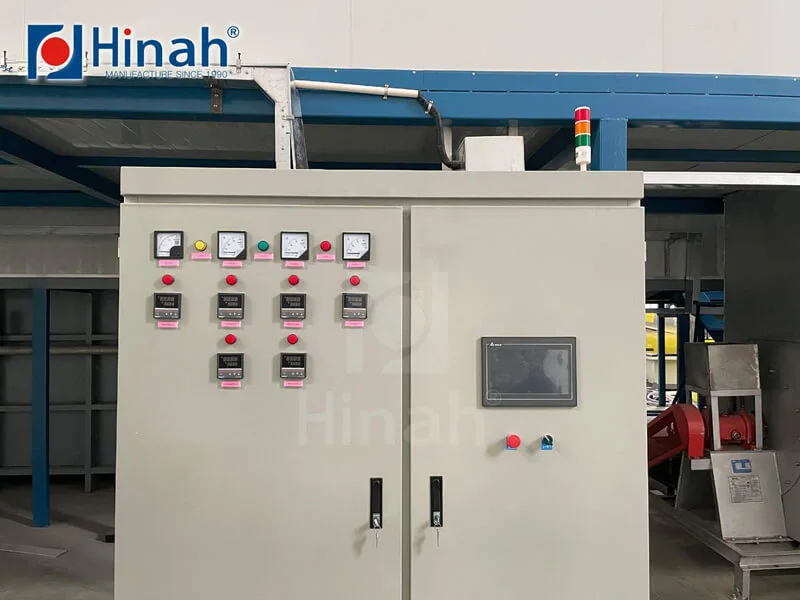
Data logging and recipe management – PLC-based systems store up to 100 curing profiles, track part temperature via wireless dataloggers, and generate batch reports for ISO compliance.
HANNA integrates these features into custom-engineered complete finishing systems, including wash tunnels, dry-off ovens, and cure ovens with centralized control architecture.
Powder coating curing ovens are often the largest energy consumer in a finishing line. Typical energy use: 0.8–1.5 kWh per square meter of coated surface. Effective reduction measures:
Exhaust heat recovery – install a gas-to-air plate heat exchanger to preheat fresh combustion air or plant make-up air. Recoverable heat: 40–60% of exhaust stream, reducing gas consumption by 12–18%.
Insulation upgrades – adding 50mm of ceramic fiber blanket to existing ovens can cut heat loss by 30–40% with payback under 18 months.
Oven zoning and scheduling – batch ovens can be switched to standby temperature (80°C) during breaks, reducing energy use by 50–60% compared to maintaining full setpoint.
Low-emissivity coatings on interior walls – reflect radiant heat back to parts, improving efficiency by 5–8%.
For new installations, HANNA performs an energy modeling to optimize insulation thickness, burner sizing, and heat recovery integration, often achieving 25% lower operating costs than conventional designs.
All industrial curing ovens must conform to NFPA 86 (Standard for Ovens and Furnaces). Key safety requirements:
Combustion safeguards – flame monitoring with ultraviolet or flame rod sensors, 10-second prepurge before ignition, and high-limit shutoff.
Explosion relief panels – required for gas-fired ovens; at least 1 ft² per 300 ft³ of oven volume, vented to a safe outdoor area.
Interlocked access doors – opening a door during operation stops heating and recirculation fans, and activates purge cycle upon restart.
Automatic fire suppression – dry chemical or CO₂ nozzles inside the oven, tied to thermal detectors. Manual pull stations at each entry point.
High-temperature limit controllers – independent of the main thermostat, with manual reset to prevent runaway heating.
Routine inspections (quarterly) include gas line leak tests, thermocouple calibration, and verification of door interlock functionality.
Even the best designed curing oven requires periodic validation. Thermal profiling with a 6- or 12-channel data logger and thermocouples attached to production parts provides:
Actual part metal temperature throughout the oven (air temperature is not sufficient).
Identification of cold spots or overheating near door edges and corners.
Verification of dwell time at required temperature (e.g., 10 minutes > 190°C).
Basis for adjusting conveyor speed or zone setpoints.
Best practice: profile every new part family and repeat quarterly for high-volume lines. Modern systems from HANNA include wireless data loggers that transmit real-time part temperature to the PLC, allowing closed-loop adjustment of zone power to maintain cure throughout the run.
Q1: What is the difference between a dry-off oven and a curing
oven?
A1: A dry-off oven operates at lower temperatures (typically
80–120°C) to remove moisture from parts after washing, before powder
application. A curing oven operates at 160–220°C to
crosslink the powder coating. Separate ovens are recommended because dry-off
oven residues can contaminate the curing atmosphere.
Q2: How do I calculate the required oven length for a continuous
powder coating line?
A2: Length (m) = (required dwell time at
temperature in minutes) × (conveyor speed in m/min). For example, if cure time
is 12 minutes and conveyor speed 1.5 m/min, minimum heated length = 18 meters.
Add 1–2 meters for heat-up zone and heat soak zone. HANNA's engineering team provides
detailed sizing using part-specific heat transfer modeling.
Q3: Can I use a curing oven for both powder and liquid
paint?
A3: Not recommended. Liquid paints release solvent vapors
that can accumulate and create explosion hazards if the oven is not ATEX rated.
Powder curing ovens have lower ventilation requirements and different safety
systems. Dedicated ovens per coating type are standard practice.
Q4: What is the typical lifespan of a gas-fired curing
oven?
A4: With proper maintenance, the insulated shell lasts 20+
years. Burners and heat exchangers typically need replacement every 8–12 years.
Recirculation fans (motors and bearings) last 5–8 years. Control components
(PLC, thermocouples) are updated every 10–15 years. Regular cleaning of heat
exchanger surfaces from powder residue extends life significantly.
Q5: How do I fix uneven curing on heavy steel parts?
A5:
Uneven cure often results from inadequate airflow around thick sections.
Solutions: (1) increase nozzle velocity to 15 m/s, (2) add recirculation fans
dedicated to the lower part of the oven, (3) use a dual-zone profile with higher
temperature in the lower zone, (4) extend dwell time by 20–30% for parts above
150 kg. A thermal profile will pinpoint the exact location of under-cure.
Q6: What emissions control is required for a curing
oven?
A6: Powder curing emits negligible VOCs compared to liquid
paint. However, some outgassing of blocking agents (e.g., for polyurethane
powders) may need afterburners or catalytic oxidizers if local air permits
require it. Most jurisdictions exempt powder curing ovens from abatement due to
low emissions (< 5 mg/m³ total organics).
Selecting or upgrading a curing oven requires precise calculations of heat load, part geometry, and production cadence. HANNA provides free preliminary engineering analysis, including thermal simulation and 3D layout, based on your part drawings and throughput targets. To receive a detailed proposal and energy savings estimate, submit the following information:
Maximum part dimensions (L×W×H) and material thickness
Production volume: parts/hour or racks/hour
Current powder type and cure schedule
Heating utility: natural gas, propane, or electric
Existing oven specifications (if retrofitting)
Send your inquiry using the contact form below. A project engineer will respond within 24 hours with a preliminary design, budgetary pricing, and references from similar installations. For urgent requests, call the HANNA finishing systems hotline.
Submit your curing oven inquiry now – include part photos or CAD files for a precise configuration.