
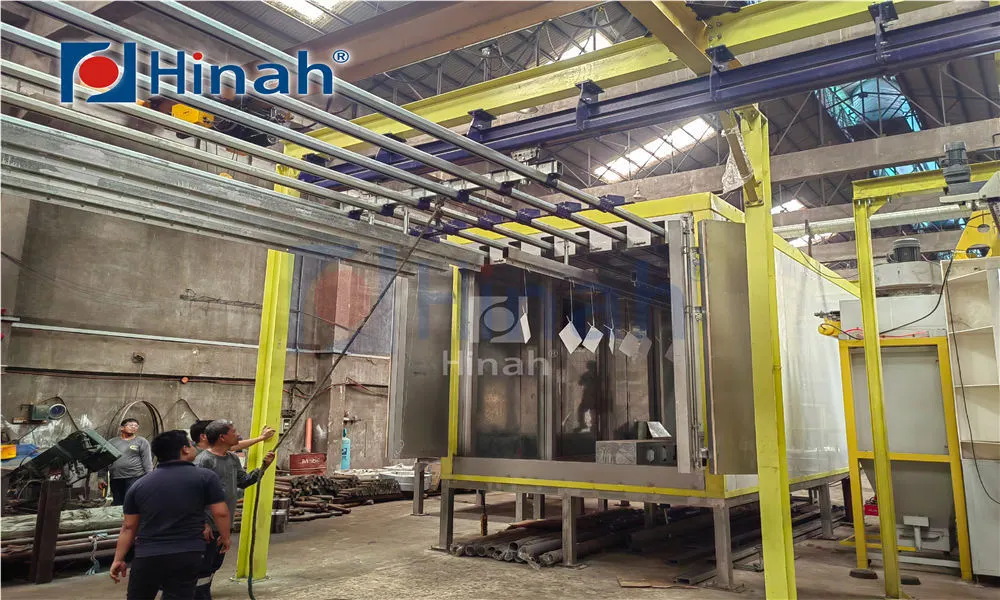
When procurement teams evaluate a powder coating machine price, the initial quotation often obscures the true engineering complexity behind industrial finishing systems. Having engineered over 200 automated coating lines across automotive, aerospace, and architectural sectors, I have observed that a simplistic focus on upfront cost frequently leads to operational inefficiencies, unplanned downtime, and hidden expenses that double the total cost of ownership within three years. This guide dissects the powder coating machine price structure into seven measurable components, providing a framework to evaluate proposals through the lens of throughput, energy efficiency, and process stability—critical metrics for any B2B capital equipment investment.
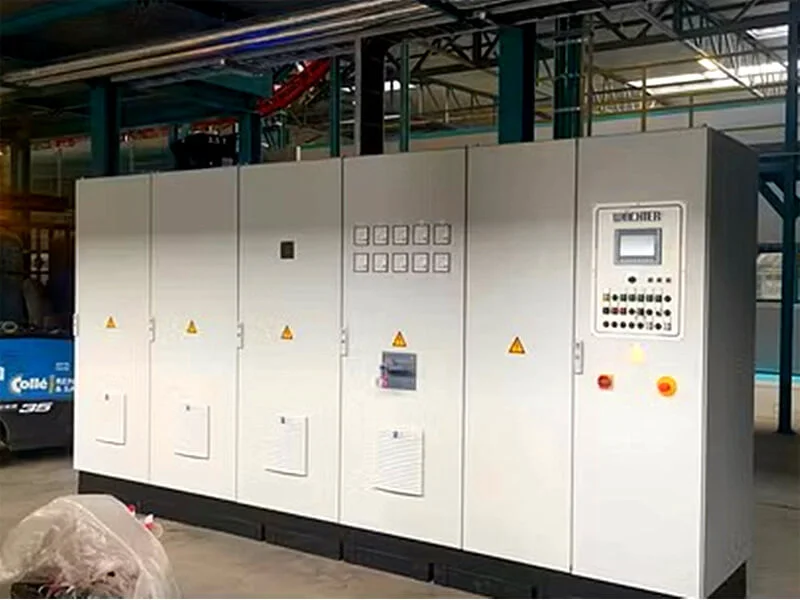
1. The Total Cost of Ownership (TCO) Framework: Why the Initial Powder Coating Machine Price Is Misleading
Industry data from the Powder Coating Institute indicates that the purchase price accounts for only 30–40% of a system’s five-year cost. The remainder is distributed across powder consumption, maintenance labor, rework rates, and energy. A comprehensive TCO analysis for powder coating machine price must factor:
Transfer efficiency: A machine delivering 65% first-pass transfer efficiency vs. 85% will waste $15,000–$25,000 annually in powder costs for a medium-volume facility (2,000 kg/month).
Color-change downtime: Manual changeover systems costing $50,000 less upfront can incur $30,000/year in lost production hours if changeovers exceed 45 minutes per color.
Energy consumption: Compressed air usage for powder fluidization and booth ventilation can vary by 40% between entry-level and premium systems.
Therefore, any serious evaluation of powder coating machine price should request detailed TCO projections, not just a capital expenditure quote.
2. Core Variables That Directly Influence Powder Coating Machine Price
Prices for complete systems (including guns, booth, recovery, and controls) range from $80,000 for a manual batch setup to over $1.2 million for high-speed automated lines. The primary technical variables are:
Automation Level & Conveyor Integration
Manual systems with reciprocators typically start at $80,000–$150,000. Fully automated lines with PLC-controlled gun movers, part recognition, and integrated pretreatment increase the powder coating machine price to $350,000–$800,000. High-speed lines exceeding 12 parts/minute with 6-axis robots and vision systems command $900,000–$1.5M. The deciding factor is throughput: a plant coating 500 parts/day can justify semi-automation; 2,500+ parts/day demands full automation to maintain consistent film build and labor efficiency.
Booth Architecture: Downdraft vs. Crossdraft
Downdraft powder booths, which pull overspray downward through a floor grid, offer superior containment and color-change speed but add $40,000–$80,000 compared to crossdraft designs. However, the increased reclaim efficiency (typically 3–5% higher) and reduced cleaning time often pay back the premium within 18 months.
Powder Recovery System Type
Cyclone-only systems: Lower initial cost ($15,000–$25,000), but color-change requires full cyclone cleaning (1–2 hours).
Cartridge filter systems with automatic pulse-back: Mid-range ($30,000–$60,000), enabling faster color changes but with ongoing filter replacement costs ($2,000–$4,000/year).
Modular quick-change cassettes: Highest upfront impact ($70,000–$120,000), but reduce color-change to under 10 minutes, ideal for job shops with 5+ color changes daily.
3. Application-Specific Price Drivers: When Standard Configurations Fail
Certain industries demand specialized engineering that substantially affects the powder coating machine price:
Aerospace & military: Require Class 100,000 cleanroom booths with HEPA filtration and validated cleanliness protocols. Add $50,000–$100,000 for certification and material tracking systems.
Food-contact coatings: Demand stainless steel construction (316L) and FDA-compliant seals, increasing material costs by 25–35%.
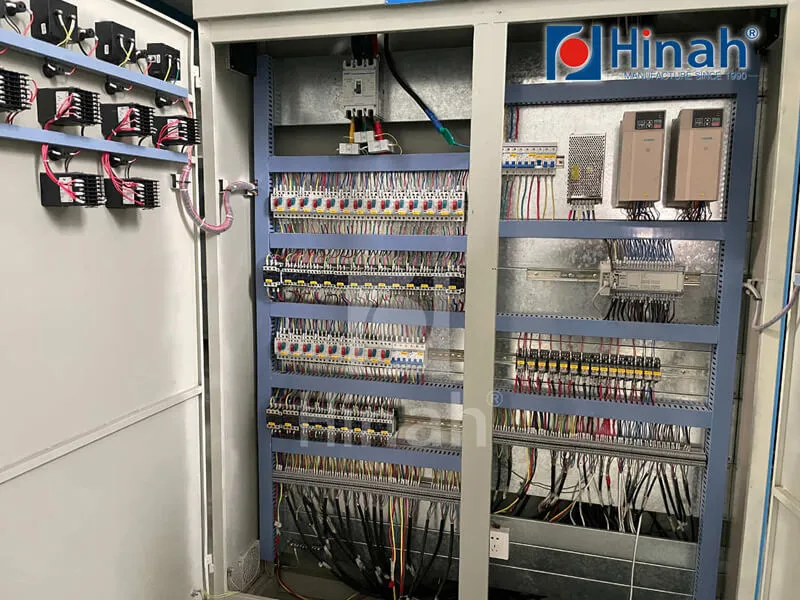
Explosive atmospheres (ATEX Zone 21): All electrical components must be explosion-proof, adding $30,000–$70,000 depending on the control panel complexity.
Experienced integrators like HANNA provide modular designs that incorporate these specialty requirements without forcing customers to over-engineer beyond their actual certification needs.
4. Hidden Costs Often Excluded from Powder Coating Machine Price Quotations
Many buyers compare base equipment prices only to face unforeseen expenditures during installation. Common exclusions include:
Site preparation: Concrete reinforcement, electrical service upgrades (200–600 amps), compressed air lines – typically $15,000–$40,000.
Climate control: Dehumidifiers and HVAC for the coating room (essential for powder flow consistency) add $10,000–$25,000.
Commissioning & training: Premium suppliers include 2–3 weeks of on-site commissioning; discount suppliers may charge $1,500/day for this service.
Spare parts kits: A recommended first-year spare parts package (nozzles, injectors, filter cartridges) costs 3–5% of equipment value.
A transparent quotation from HANNA always itemizes these categories, preventing budget overruns that can reach 25% of the initial machine price.
5. Cost-Saving Technologies That Justify a Higher Upfront Powder Coating Machine Price
Advanced systems incorporate features that directly reduce operational costs, making a higher initial investment fiscally superior:
Closed-loop powder feed control: Using load cells and automated valves to maintain a constant powder-to-air ratio. This technology reduces powder consumption by 8–12% compared to manual regulation, saving $8,000–$15,000/year.
Intelligent gun controllers: Systems that automatically adjust KV/µA based on part geometry and distance. They reduce faraday cage rejects by 30–40% and cut powder usage by 6–10%.
Energy recovery ventilators (ERVs): Capturing thermal energy from exhausted booth air to pre-heat incoming makeup air, slashing HVAC costs by 15–25% in climates with extreme temperatures.
When these technologies are included, the payback period on a higher powder coating machine price is typically 12–24 months, after which the facility enjoys sustained lower operating expenses.
6. New vs. Refurbished Equipment: A Risk-Adjusted Price Analysis
Refurbished powder coating machines sell for 40–60% of new equipment prices. However, the risk profile differs substantially:
New equipment: Warranty (typically 12–24 months), guaranteed transfer efficiency, and access to modern control networks (OPC-UA, MQTT) for Industry 4.0 integration.
Refurbished equipment: Potential for obsolete spare parts (especially for proprietary gun components), higher maintenance frequency, and no manufacturer performance guarantee. For low-volume, non-critical applications, refurbished can be viable. For high-volume, high-reliability lines, the total cost of downtime often exceeds the initial savings.
Leading manufacturers like HANNA offer certified pre-owned programs that include new wear parts and a limited warranty, mitigating the risk associated with used equipment.
7. Regional Price Variations & Global Sourcing Considerations
Powder coating machine price differs significantly by region due to local content requirements, import tariffs, and service network maturity. For US and European buyers, sourcing from Asian manufacturers may show 20–30% lower upfront costs but often incurs:
Freight & import duties: 10–15% of equipment value.
Delayed technical support (24–48 hours response vs. 2–4 hours locally).
Compatibility issues with local electrical codes (NEC, CE).
Domestic or regionally-based suppliers generally deliver lower total cost of ownership despite a slightly higher machine price, particularly when factoring in on-site commissioning and spare parts availability.

8. Calculating ROI: From Powder Coating Machine Price to Financial Justification
A disciplined ROI model should anchor any capital request. Using real-world data from a recent HANNA installation for an agricultural equipment manufacturer:
Initial investment (fully automated line): $620,000.
Annual labor savings: $78,000 (reduced from 4 to 1 operator per shift).
Powder savings (improved transfer efficiency 68% → 84%): $42,000.
Rework reduction (reject rate 5.2% → 1.8%): $35,000.
Energy savings (VFD-controlled fans): $11,000.
Total annual benefit: $166,000.
Payback period: 3.7 years, with a 10-year lifecycle IRR of 19%.
This demonstrates that a competitive powder coating machine price is only one variable; the real metric is how quickly the machine generates positive cash flow.
Frequently Asked Questions (FAQ)
Q1: What is the typical price range for a basic manual powder coating machine versus a fully automated system?
A1: A manual starter system (spray gun, small cyclone booth, and manual controls) typically ranges from $25,000 to $45,000. Semi-automated systems with reciprocators and cartridge recovery fall between $80,000 and $150,000. Fully automated high-production lines with PLC integration, quick-color-change booths, and 6-axis robots generally start at $350,000 and can exceed $1.2 million depending on throughput and part complexity.
Q2: How does the number of colors used affect the powder coating machine price?
A2: Each additional color adds cost for dedicated feed hoppers, hoses, and potentially a separate booth cassette. For facilities running 5+ colors daily, a modular booth with quick-change cassettes may add $70,000–$100,000 but eliminates cross-contamination and reduces changeover time from hours to minutes. For 2–3 colors, a single booth with a thorough cleaning protocol is more economical.
Q3: Are used powder coating machines a good investment to lower initial price?
A3: Used equipment can reduce upfront capital by 40–50%, but buyers must verify the condition of wear parts (guns, pumps, filters) and availability of spares. It is advisable to have a condition audit performed by a third-party engineer. For critical production lines, the risk of unplanned downtime usually outweighs the savings, whereas for secondary or low-volume lines, refurbished units can be cost-effective.
Q4: What hidden maintenance costs should be budgeted after purchasing a powder coating machine?
A4: Annual maintenance costs typically represent 3–6% of the equipment price. Key items include: cartridge filter replacements ($2,000–$6,000/year), powder pump venturi nozzles ($800–$1,500), gun electrode maintenance, and compressed air dryer desiccant. Automated lines also require annual PLC/electrical panel inspections and recalibration of sensors.
Q5: How does powder coating machine price differ for high-volume automotive lines vs. job shops?
A5: Automotive lines prioritize high speed, redundancy, and rapid color change; they typically invest $800,000–$1.5M in a dual-booth setup with robotic guns and integrated fault diagnostics. Job shops require maximum flexibility; they often invest $200,000–$400,000 in a modular system that can be reconfigured for different part sizes and colors without sacrificing reclaim efficiency.
Q6: Can I finance a powder coating machine to manage cash flow impact?
A6: Yes, most industrial equipment suppliers work with financing partners offering terms of 24–60 months. Capital leases or equipment loans allow businesses to preserve working capital. Some manufacturers, including HANNA, provide in-house financing programs that bundle installation, training, and extended warranty into a single monthly payment, simplifying budgeting.
Q7: What is the typical lead time from purchase to production for a powder coating system?
A7: Standard modular systems have lead times of 8–12 weeks for manufacturing plus 2–3 weeks for installation and commissioning. Custom-engineered lines with specialized automation often require 16–24 weeks. To minimize production disruption, many buyers schedule installation during planned plant shutdowns. Suppliers offering turnkey project management help coordinate civil works, electrical, and compressed air upgrades in parallel.
For a detailed capital expenditure analysis tailored to your production volumes and coating specifications, consult the engineering team at HANNA—specialists in aligning machine investment with long-term operational efficiency.