
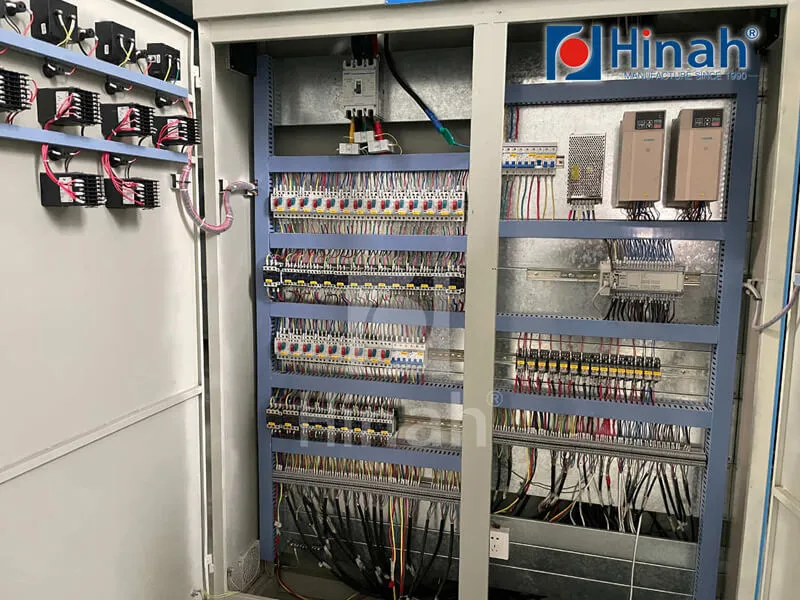

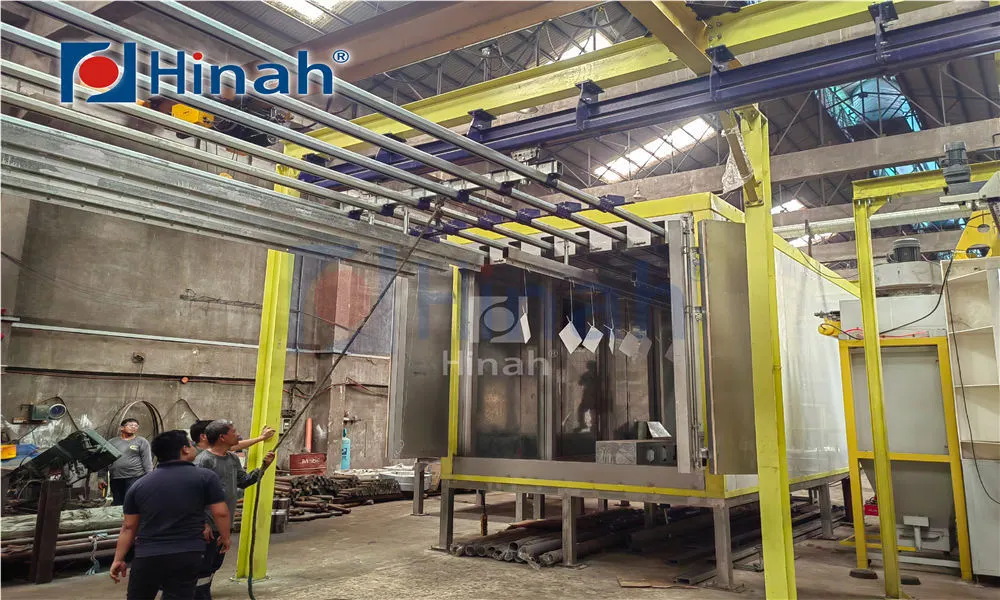
In industrial finishing, the powder coating room is far more than an enclosure—it is the core system governing transfer efficiency, finish quality, and compliance with environmental and safety standards. As a B2B content engineer specializing in powder coating technology for over 15 years, I have witnessed how poorly designed booths erode profitability through powder waste, excessive color-change downtime, and rejected parts. Modern powder coating rooms have evolved into high-precision mechatronic systems integrating controlled airflow, intelligent reclaim, and explosion-proof automation. This article dissects the technical imperatives that define world-class installations, supported by quantitative benchmarks and field-proven solutions from global finishing lines.

1. Core Engineering Parameters of Modern Powder Coating Rooms
A powder coating room must simultaneously contain overspray, ensure operator safety, and maintain a stable microenvironment for electrostatic deposition. The foundational design rests on three pillars: airflow engineering, filtration architecture, and structural material selection.
Airflow Velocity & Uniformity
Industry standards (NFPA 33, OSHA 1910.107) mandate a minimum face velocity of 0.3–0.6 m/s (60–120 fpm) across the open booth face to contain particulates. However, high-efficiency systems employ computational fluid dynamics (CFD) to achieve laminar cross-draft or downdraft patterns. Downdraft booths, for instance, reduce turbulence and improve Faraday cage penetration by 18–22% compared to cross-draft designs, according to a 2023 study by the Powder Coating Institute. For complex geometries, adjustable airfoils and variable-frequency drive (VFD) fans allow real-time balancing between containment and powder cloud stability.
Filtration & Powder Recovery
Closed-loop recovery systems integrate cyclone separators with secondary cartridge filters. Modern cyclones achieve 95–98% primary separation efficiency for powder particle sizes >10 µm, while nanofiber-coated cartridge filters (MERV 15–16) capture sub-micron fines, ensuring stack emissions below 0.5 mg/m³. The pulse-back cleaning cycle must be optimized: excessive pulsing degrades filter life, while insufficient pulsing increases pressure drop. Leading systems use differential pressure transducers to activate cleaning only when needed, extending cartridge lifespan beyond 8,000 operating hours.
Material Selection & Grounding Integrity
Stainless steel (304 or 316L) remains the gold standard for booth walls due to its conductivity and resistance to powder adhesion. Polypropylene booths are used in niche applications but require embedded grounding grids. Grounding continuity must be below 1 ohm resistance to prevent electrostatic discharge (ESD) risks—a critical factor when processing explosive powders with minimum ignition energy (MIE) below 10 mJ.
2. Rapid Color-Change Technologies: From Hours to Minutes
One of the most severe operational bottlenecks in traditional powder coating rooms is the time lost during color changes. Job shops with high mix-low volume (HMLV) production can lose 2–3 hours per changeover using manual cleaning methods. Advanced systems now integrate:
Modular booth cassettes with removable floors, walls, and hoppers that can be swapped out in under 10 minutes.
Automated cleaning robots using high-velocity air jets and rotating brushes, reducing particulate cross-contamination to <0.5%.
Quick-clean feed centers with vacuum-assisted powder return to bulk containers, eliminating manual scooping.
Data from a 2024 installation at a European automotive supplier showed that implementing a rapid-change powder coating room reduced average changeover time from 95 minutes to 14 minutes, increasing overall equipment effectiveness (OEE) by 23%.
3. Solving Application Defects Through Booth Design
Even premium powders and guns fail without a properly engineered environment. Below are three persistent defects and their booth-driven solutions:
Faraday cage effect: Insufficient coating in recessed areas. Downdraft airflow with electrostatic field shaping (using multi-zone voltage control) increases penetration by redirecting ionized particles into cavities.
Orange peel & pinholes: Often caused by excessive humidity or cross-contamination. Integrated desiccant dryers maintaining relative humidity ≤55% inside the booth, combined with positive pressure seals, reduce moisture-related defects by 34%.
Back-ionization: When powder layer exceeds 300 µm, accumulated charge repels incoming particles. Booth sensors that measure film thickness in real-time and adjust gun KV/µA parameters automatically eliminate this issue.
Moreover, advanced powder coating rooms incorporate in-line spectrometers to validate powder fluidization and cloud density, ensuring consistent first-pass transfer efficiency (typically 65–75% for reclaim systems and up to 85% with new powder-only applications).
4. Safety & Explosion Protection: Non-Negotiable Design Layers
Powder coating materials are classified as combustible dusts under NFPA 652. A professionally engineered powder coating room must incorporate:
Explosion venting: Deflagration vents sized to relieve pressure at ≤0.5 psi, with vent ducts directed to safe outdoor areas.
ATEX-compliant components: All electrical equipment (fans, motors, sensors) must meet Zone 22 (or Zone 21 for high-risk areas) requirements.
Spark detection & suppression: Infrared sensors linked to water-mist or chemical suppression systems, capable of actuating within 50 ms of ignition.
Continuous grounding monitoring: Systems that halt powder flow if grounding resistance exceeds 10 ohms.
Compliance audits regularly reveal that nearly 40% of legacy booths lack proper explosion relief pathways. Retrofitting without compromising structural integrity requires finite element analysis (FEA) and is best handled by specialized integrators like HANNA, whose modular safety platforms integrate seamlessly with existing production lines.
5. Automation, Industry 4.0, and Data-Driven Optimization
Today’s high-end powder coating rooms function as IoT-enabled nodes within the smart factory. Key capabilities include:
Digital twins that simulate powder deposition before physical runs, reducing setup waste by 30–50%.
Predictive maintenance modules that monitor filter load, fan vibration, and gun wear, alerting operators 72 hours in advance of failure.
Centralized recipe management storing up to 1,000 coating parameters (voltage, airflow, gun speed, booth pressure) to ensure 100% repeatability across shifts.
HANNA has pioneered a fully integrated control architecture that links the powder coating room with upstream pretreatment and downstream curing ovens. One aerospace client reported a 19% reduction in rework and a 12% decrease in powder consumption after implementing HANNA’s closed-loop analytics platform.
6. Total Cost of Ownership (TCO) Analysis: The Real Economics
While initial capital expenditure for a high-spec powder coating room ranges from $150,000 to $1.2M (depending on size and automation), TCO models reveal compelling payback periods:
Powder savings: Superior recovery systems reduce annual powder purchases by 12–18% (for a medium-volume facility spending $200k/year on powder, savings exceed $30k/year).
Labor efficiency: Automated cleaning and color-change reduce manual labor hours by 1,500–2,500 hours annually, equivalent to $45,000–$75,000 in direct cost avoidance.
Energy efficiency: VFD-controlled fans and LED lighting cut electricity consumption by up to 40% compared to constant-speed systems.
Quality improvement: Reducing rejection rates from 5% to 1.5% in a facility with 10,000 parts/day can yield annual savings exceeding $200,000.
Factoring in reduced regulatory risk (avoiding OSHA fines and insurance premium hikes) further strengthens the business case.
7. Future Trends: Eco-Design, Low-Temperature Curing Integration, and Modularity
The next generation of powder coating rooms is being shaped by three macro trends:
Ultra-low cure powders: Coatings that cure at 110–130°C demand booths with integrated infrared preheat zones to prevent flow issues—a feature already offered by advanced integrators.
Bio-based powders: These materials require tighter humidity control (35–45% RH) and specialized reclaim protocols, pushing booth designs toward sealed, climate-controlled modules.
Containerized & mobile booths: Pre-engineered, plug-and-play powder coating rooms housed in ISO containers enable rapid deployment for temporary production spikes or remote job sites.
Forward-thinking manufacturers are partnering with firms like HANNA to future-proof their finishing lines through scalable booth architectures that accept plug-in upgrades for new powder chemistries and AI-driven controls.
Frequently Asked Questions (FAQ)
Q1: What is the ideal airflow velocity for a powder coating room, and how is it measured?
A1: NFPA 33 recommends 0.3–0.6 m/s (60–120 fpm) across the booth face. Velocity is measured with a hot-wire anemometer at 12–18 points across the opening, averaged for compliance. For downdraft booths, floor-level velocity grids ensure even distribution. CFD-optimized designs can reduce velocity to 0.45 m/s while maintaining containment, which lowers fan energy consumption.
Q2: How often should cartridge filters in powder coating rooms be replaced?
A2: Premium nanofiber cartridges typically last 6,000–10,000 hours under normal operating conditions, provided pulse-back cleaning is properly calibrated. Signs of end-of-life include a sustained pressure drop increase of >25% above baseline after cleaning cycles, visible powder bleed-through, or reduced transfer efficiency. Real-time differential pressure monitoring is recommended.
Q3: Can a powder coating room be designed for both reclaim and non-reclaim (virgin powder) operation?
A3: Yes. Hybrid booths incorporate diverter valves that send overspray either to the recovery system (reclaim mode) or directly to a waste collector (virgin-only mode). This flexibility is critical when applying high-end powders (e.g., clear coats, metallic) where reclaim could introduce contamination. Fast-change ductwork allows switching between modes in under 10 minutes.
Q4: What certifications should a powder coating room meet for international compliance?
A4: Key certifications include: NFPA 33 (US fire safety), ATEX 114 (2014/34/EU) for equipment used in explosive atmospheres, ISO 14644 for cleanroom-grade booths, and CE marking for European machinery directive. Additionally, OSHA-compliant guarding and labeling are mandatory. Working with an integrator experienced in multi-region standards prevents costly retrofits.
Q5: How does a powder coating room affect curing oven performance?
A5: Booth design directly influences oven efficiency. Poor powder cloud containment leads to uneven film thickness, forcing ovens to run longer or at higher temperatures to achieve cure. Conversely, a well-controlled booth ensures consistent powder deposition, allowing downstream powder coating curing ovens to operate at optimal thermal profiles, reducing gas/electricity costs by 10–15% and improving cure uniformity.
Q6: What are the typical lead times for a custom-engineered powder coating room?
A6: For a turnkey installation with modular construction, engineering and fabrication require 12–20 weeks, followed by 2–3 weeks of on-site assembly and commissioning. Expedited containerized solutions can be delivered in 8–10 weeks. Advanced integrators like HANNA provide detailed Gantt scheduling with milestones to align with plant shutdowns.
Q7: How does humidity control in the coating room affect powder performance?
A7: Powder coatings are hygroscopic. High humidity (>65%) causes clumping, poor fluidization, and reduced electrostatic charge acceptance, leading to orange peel and reduced transfer efficiency. Low humidity (<30%) increases static buildup, raising explosion risk and causing inconsistent deposition. Maintaining 45–55% RH with integrated desiccant dehumidifiers is considered best practice for consistent results.
For detailed technical consultations or to request a CFD simulation for your specific production requirements, contact the engineering team at HANNA.