

For job shops, R&D facilities, and manufacturers running high-mix, low-volume production, the choice of a small powder coating booth directly impacts operational flexibility, material efficiency, and first-pass yield. Unlike massive high-volume lines designed for millions of square feet annually, compact booths must balance rapid color change capability with effective overspray recovery—all within a footprint that fits existing facilities. This article provides a technical examination of small booth engineering, covering airflow dynamics, filtration systems, reclaim efficiency, and integration with manual or automated application equipment. We also explore how HANNA engineers these systems to deliver industrial-grade performance in space-constrained environments.
Defining the Small Powder Coating Booth: Applications and Configurations
A small powder coating booth is typically characterized by a working width of 4 to 8 feet and a depth of 5 to 10 feet, designed for parts up to 5–6 feet in maximum dimension. Common applications include:
Job shops and contract finishers: Handling hundreds of different parts per week with frequent color changes.
In-house manufacturing cells: Automotive, aerospace, and electronics suppliers coating proprietary components.
Research and development: Powder formulation testing, process validation, and pilot production.
Short-run production: Specialty products, prototypes, and replacement parts.
These booths are often paired with manual spray guns or reciprocators, and they rely on cartridge filter or cyclone-based recovery systems sized to handle typical powder output of 5–30 kg per hour. The compact nature demands careful attention to airflow velocity, filter loading, and reclaim purity—all factors that distinguish engineered systems from generic enclosures.
Critical Engineering Parameters for Small Powder Coating Booths
Performance in a small powder coating booth is governed by three interdependent variables: airflow management, filtration efficiency, and color change speed. Each parameter must be optimized within the constraints of limited floor space.
Airflow Design and Containment
Proper airflow ensures that overspray is captured before it settles on booth walls or escapes into the plant. For compact booths, industry best practices specify face velocities of 80–100 feet per minute (fpm) across the operator opening. Achieving this with limited depth requires careful plenum design:
Downdraft vs. crossdraft: Downdraft configurations pull air through grated floors, offering superior containment for complex parts but requiring raised platforms. Crossdraft booths pull air horizontally from back to front, simplifying installation but demanding precise alignment with the operator position.
Exhaust fan sizing: Fans must be matched to filter loading profiles to maintain constant velocity as cartridges load. Variable frequency drives (VFDs) automatically adjust fan speed to compensate for pressure drop, ensuring consistent capture efficiency throughout the shift.
Makeup air integration: Conditioned makeup air (temperature and humidity controlled) prevents plant drafts from disrupting booth balance and improves powder fluidization in humid environments.
Engineered booths from manufacturers like HANNA incorporate computational fluid dynamics (CFD) modeling to optimize these parameters, delivering containment that exceeds OSHA and NFPA 33 requirements while maintaining operator comfort.
Filtration and Reclaim Systems
For small booths, cartridge filter systems dominate due to their compact footprint and ability to achieve 99.9% collection efficiency on particles down to 0.5 microns. Key selection criteria include:
Cartridge media: Nanofiber or cellulose/polyester blends. Nanofiber cartridges provide higher initial efficiency and longer pulse intervals, reducing compressed air consumption by 30–40% compared to standard media.
Pulse cleaning: Reverse-jet pulse systems with differential pressure controllers automatically clean cartridges when pressure drop exceeds setpoint (typically 1.5–2.0 inches water column). Timed cleaning cycles should be avoided as they waste compressed air and shorten cartridge life.
Reclaim vs. single-use: For high-mix operations, many finishers prefer “single-use” booths where overspray is collected as waste to avoid cross-contamination. However, small booths with dedicated color modules can reclaim 95–98% of overspray, reducing material costs by 40–60% for high-volume colors.
When reclaim is required, a dedicated cyclone or sieve station ensures that recovered powder maintains proper particle size distribution. Sieves with 150–200 mesh screens remove agglomerates and contamination, preventing nozzle clogging and film defects.
Rapid Color Change Engineering
In job shop environments, a small powder coating booth may undergo 10–20 color changes per day. Downtime directly impacts profitability. Modern designs accelerate changeover through:
Quick-release filter modules: Entire cartridge banks that slide out for cleaning or replacement in under 5 minutes.
Seamless booth interiors: Stainless steel or polypropylene walls with radiused corners prevent powder accumulation, allowing fast manual blow-down or automated purge cycles.
Modular powder feed systems: Dedicated feed centers with quick-disconnect hoses and color-dedicated fluidizing hoppers that can be pre-loaded offline.
Integrated sieve stations: For reclaim systems, automated sieve cleaning and magnetic separation reduce cross-contamination risk.
Engineered booths reduce color change time from 30–45 minutes (typical for conventional designs) to under 10 minutes, allowing finishers to accept more orders without expanding floor space.
Application Technology: Manual vs. Automated in Compact Booths
While many small booths are designed for manual spraying, integration with automation can dramatically improve consistency and material efficiency.
Manual spray booths: Offer maximum flexibility for complex parts and low volumes. Advanced manual guns with programmable voltage (60–100 kV) and adjustable powder output give operators precise control. Booth-mounted control panels store parameters for different colors and part types, reducing setup errors.
Reciprocator systems: For high-volume colors or repetitive parts, compact vertical or horizontal reciprocators can be integrated without expanding booth footprint. Oscillating gun movers maintain consistent gun-to-part distance, achieving transfer efficiencies (TE) of 85–95% compared to 60–70% for manual spraying.
Part rotation devices: Turntables or rotating hooks improve coverage on cylindrical or symmetrical parts, often doubling throughput without increasing booth size.
HANNA offers modular automation packages that retrofit into existing small booths, enabling finishers to scale productivity without replacing the booth structure.
Overcoming Common Operational Pain Points
Operators of compact booths frequently encounter challenges related to powder reclaim purity, electrostatic wrap, and workspace ergonomics. Engineered solutions address these directly:
Cross-contamination in reclaim: Using dedicated cyclone/reclaim modules for specific color families, combined with thorough purge sequences, reduces the risk of color streaking. For critical applications, HANNA’s small booths can be configured with independent powder circuits that isolate reclaim by color, eliminating contamination risk altogether.
Faraday cage penetration: Complex parts with recessed areas often suffer from poor coverage. Small booths equipped with multi-axis gun movers or programmable voltage controls (automatically reducing voltage in recesses) achieve uniform film thickness without manual touch-up, cutting rework by 50–80%.
Ergonomic limitations: Tight booth interiors can strain operators. Features such as adjustable-height turntables, ergonomic gun hangers, and ambient lighting reduce fatigue and improve coating consistency. OSHA-compliant access platforms and sliding doors further enhance usability.
Regulatory Compliance and Safety Integration
Small booths must meet the same safety standards as their larger counterparts. NFPA 33 (Standard for Spray Application Using Flammable or Combustible Materials) applies, requiring:
Explosion venting or deflagration panels on filter housings.
Grounding verification systems for guns and booths.
Interlocked exhaust fans that prevent operation without adequate airflow.
Electrical components rated for Class II, Division 2 hazardous locations.
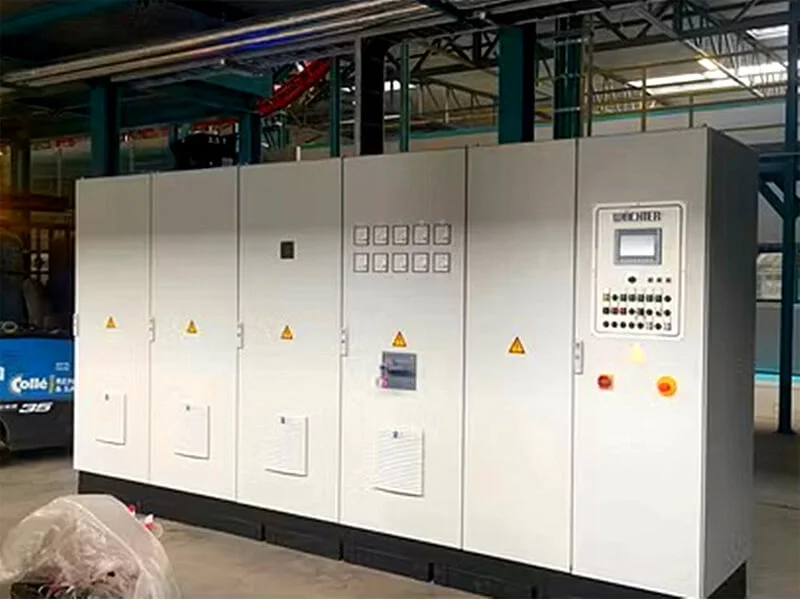
Reputable small powder coating booth suppliers provide full documentation to assist with permitting and insurance inspections. HANNA integrates these safety features as standard, with control panels that include airflow interlock, spark detection readiness, and emergency stop circuits distributed throughout the booth perimeter.
Why HANNA Excels in Compact Powder Booth Engineering
With over two decades of finishing line integration, HANNA has developed a specialized product line for small powder coating booths that combines industrial-grade filtration, rapid color change features, and modular automation options. Their CompactPro™ series exemplifies this approach: booths constructed from 2.5 mm stainless steel with seamless welding, pre-wired control cabinets, and pre-assembled cartridge banks that reduce on-site installation time by 40% compared to field-assembled alternatives. In a recent installation for a Midwest custom coater, HANNA’s small booth with integrated reclaim system reduced powder consumption by 52% and cut average color change time from 35 minutes to 8 minutes, enabling the shop to increase daily batch count by 30% without expanding square footage. By combining robust construction with smart controls, HANNA ensures that compact booths deliver the durability and efficiency required for continuous industrial use.
Evaluating Small Powder Coating Booth Manufacturers: Selection Criteria
When selecting a small powder coating booth, procurement should consider:
Construction quality: Is the booth fabricated from continuous-welded steel with powder-coated finishes, or bolted panels that can leak powder over time? Welded construction provides longer service life and easier cleaning.
Filter access and maintenance: Can cartridges be changed without entering the booth? Top-load or side-access doors minimize downtime and safety risks.
Integration capability: Does the supplier offer compatible application equipment, reclaim systems, and controls, or will multiple vendors need to be coordinated?
After-sales support: Availability of replacement cartridges, gun parts, and technical support directly impacts uptime. Leading manufacturers maintain regional service networks.
HANNA’s turnkey approach includes site layout support, installation supervision, and operator training—ensuring that the booth integrates seamlessly with existing curing ovens, pretreatment, and material handling equipment.
Frequently Asked Questions (FAQ)
Q1: What is the typical footprint of a small powder coating booth suitable for manual operation?
A1: A standard manual small powder coating booth with integrated cartridge filter module occupies approximately 8–10 feet in width and 8–12 feet in depth, including space for operator access and powder feed equipment. For maximum flexibility, compact models with rear-access filter housings can reduce depth to 6 feet, fitting into tight production cells. HANNA offers free layout assistance to optimize booth placement within existing shop floors.
Q2: Can a small powder coating booth be used for both manual and automated spraying?
A2: Yes, many compact booths are designed with modular openings that accommodate reciprocators or fixed gun mounts alongside manual stations. HANNA’s small booths include pre-drilled mounting points for automation and can be configured with dual-mode control panels that switch between manual and automated operation, allowing finishers to start with manual spraying and add automation as volume grows.
Q3: How frequently do cartridge filters need to be replaced in a small powder coating booth?
A3: Cartridge life depends on usage, powder type, and maintenance. For typical job shop operations (8–12 hours/day, 5 days/week), quality nanofiber cartridges last 12–24 months when cleaned properly by the pulse system. Indicators of needed replacement include inability to maintain face velocity (below 80 fpm) after pulse cleaning, visible powder escaping from the exhaust, or differential pressure exceeding 3.0 inches water column. HANNA provides filter monitoring as part of their control interface, alerting operators when cartridges approach end-of-life.
Q4: Is reclaim economically viable for small booths with frequent color changes?
A4: For colors used frequently (more than once per week), reclaim is highly cost-effective. However, for high-mix operations where a color is sprayed only a few times per month, the cost of storing and managing reclaim may outweigh material savings. Many finishers use a hybrid approach: reclaim for high-volume colors and single-use for specialty or infrequent colors. HANNA’s modular booth designs accommodate quick conversion between reclaim and single-use modes without tools.
Q5: What electrical and compressed air requirements are typical for a small powder coating booth?
A5: Most compact booths require 208–480 VAC, 3-phase power for the exhaust fan and control panel, typically 5–10 amps depending on fan size. Compressed air requirements range from 10–30 CFM at 80–100 PSI for pulse cleaning and gun operation. HANNA provides detailed utility requirement diagrams during the quoting phase, ensuring that installation can proceed without electrical or pneumatic upgrades.
Investing in a well-engineered small powder coating booth is a strategic decision for manufacturers seeking to bring coating in-house or expand job shop capabilities. By focusing on airflow precision, rapid changeover engineering, and modular automation readiness, finishers can achieve the same quality standards as high-volume lines while maintaining the flexibility required for today’s dynamic production environment. Partnering with experienced suppliers like HANNA ensures that the booth delivers consistent performance, low operating costs, and a rapid return on investment.