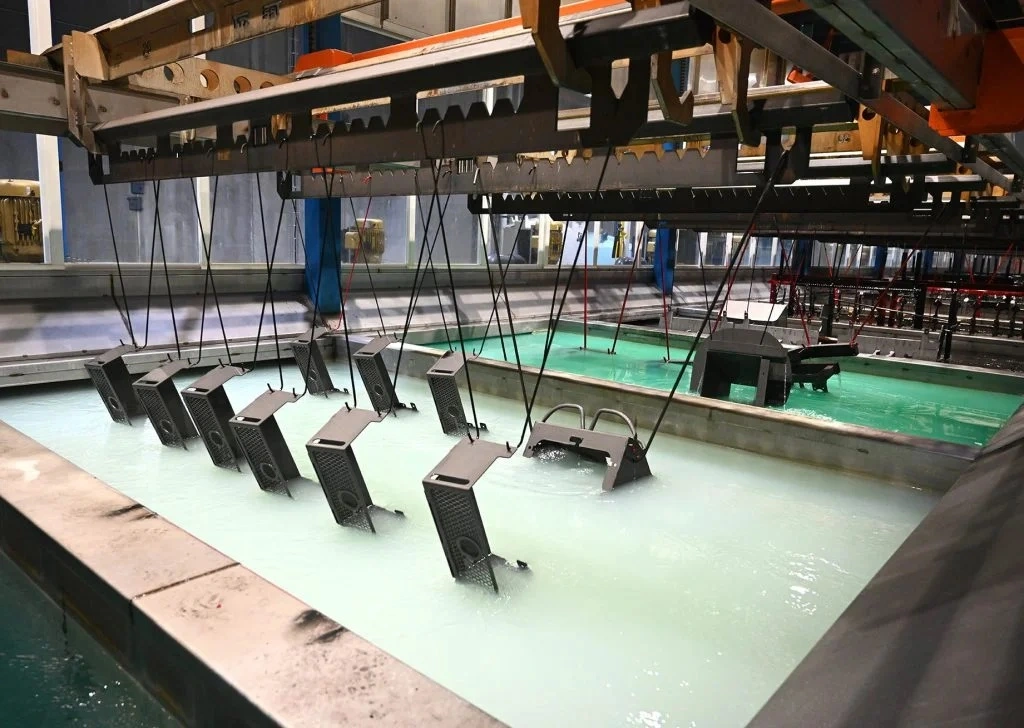
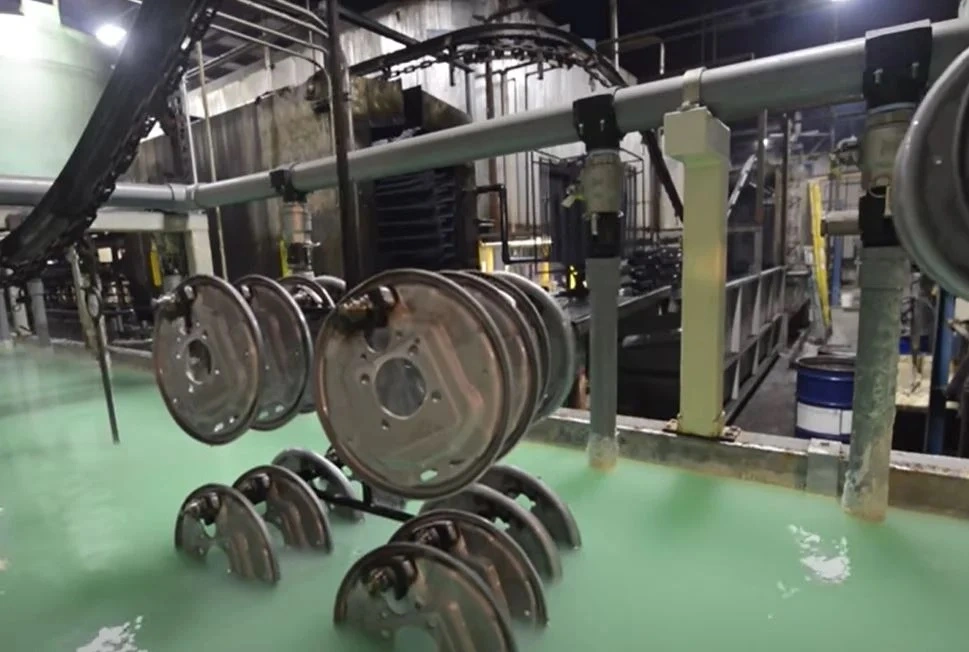

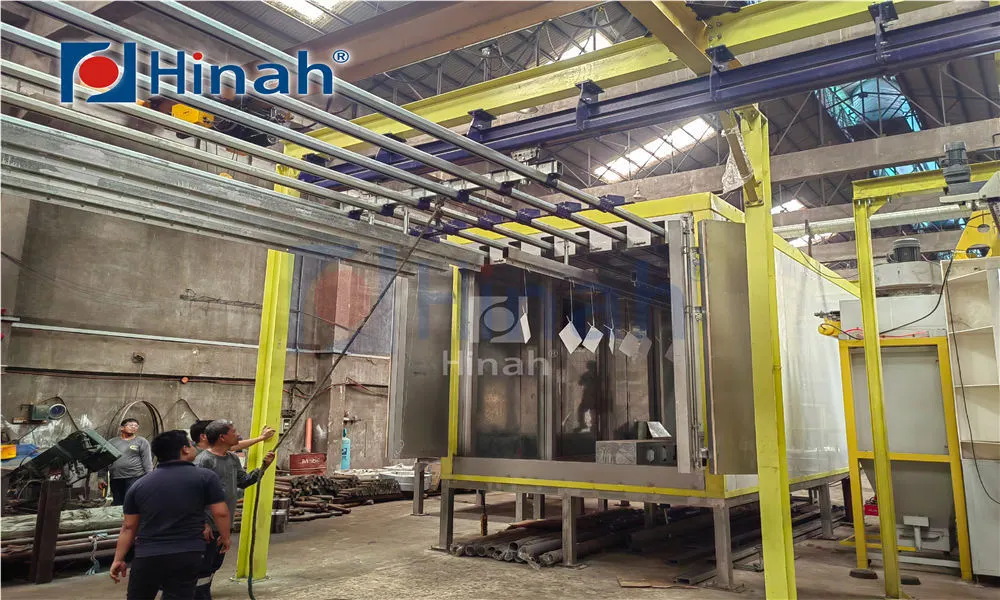
The performance of a powder coating line rarely depends on the spray guns alone. What really decides coating consistency, throughput, and reject rate is how parts travel between stages. That is exactly the job of Paint line conveyor systems.
A conveyor that runs at an unstable speed, loses ground contact, or drops hangers at the wrong angle will create defects no gun setting can fix. Choosing the right conveyor architecture early saves years of rework.
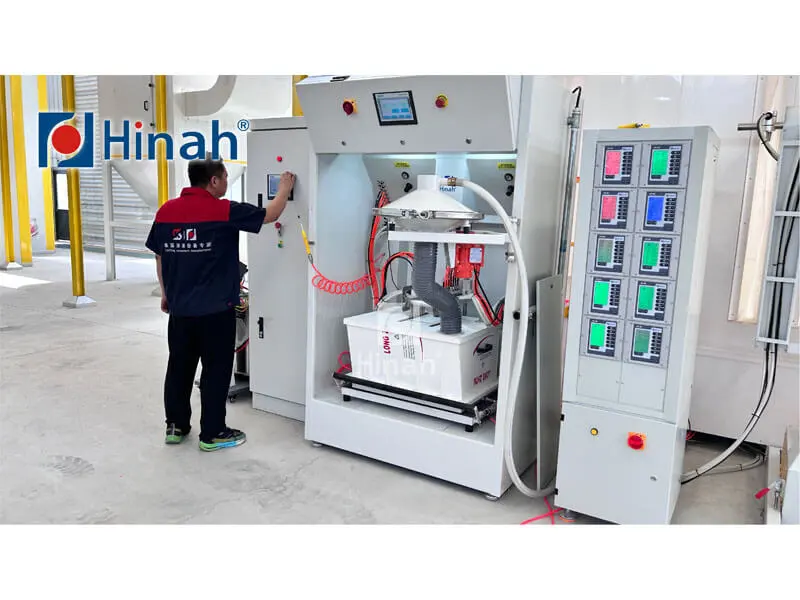
They are the mechanical transport network that moves parts through pretreatment, dry-off, powder booths, and curing ovens in a fixed sequence. Speed, pitch, and part orientation are all controlled by the conveyor, not by the operator.
Their main duties are straightforward:
Hold each part at the correct angle inside the spray booth
Maintain constant line speed for even film build
Carry a reliable electrical ground to the part
Survive oven temperatures without lubrication breakdown
Match takt time to the plant's required output
When any one of these duties fails, the visible result is orange peel, thin corners, backside misses, or inconsistent gloss.
Film thickness is a function of dwell time in the booth. If line speed drifts by even a few percent, the coating thickness drifts with it. Variable-frequency drives with closed-loop feedback keep that number steady.
Powder particles need a path to earth. Hanger hooks coated with cured paint act as insulators and cut transfer efficiency. A conveyor design that allows easy hook cleaning, or that uses a separate grounding shoe, keeps transfer efficiency high.
Flat panels and box sections need rotation to reach recessed areas. Conveyors that allow programmable rotation at the booth entrance reduce manual touch-up and cut powder consumption.
Continuous loop with a single drive
Lowest capital cost for simple parts
Best for high-volume, low-variety production
Difficult to buffer or stop individual carriers
Two tracks: a power chain and a free carrier line
Carriers can accumulate, stop, and switch lines
Supports multiple booth passes and cooling zones
Higher cost, higher flexibility
Used for heavy or awkward parts that cannot hang
Often paired with a separate overhead line
Require careful masking of the belt surface
Chain runs inside a sealed track
Less contamination from powder and dust
Good fit for cleanroom-level finishing
Before selecting a supplier, collect these numbers for every candidate design:
Line speed range – expressed in meters or feet per minute
Maximum load per carrier – including hanger and fixture weight
Carrier pitch – spacing between hanging points
Oven dwell time – derived from speed and oven length
Minimum curve radius – affects plant floor layout
Number of drives – more drives mean better tension control
Ground resistance – target a low, stable value at the part
Temperature rating – chain lubricant must survive cure oven heat
These figures should be confirmed in writing, not just on a general arrangement drawing.
Choose a monorail when your product mix is stable and you run one shift at a steady rate. It is simple, affordable, and easy to maintain.
Choose power and free when you need buffers between stages, when parts require two passes through a booth, or when you plan to add a second color line later. The extra cost is usually recovered through higher uptime and lower manual handling.
A third option is a hybrid layout, where a monorail feeds a power and free section at the booth. Several finishing plants use this to keep oven loading simple while gaining flexibility at the spray stage.
The conveyor does not operate in isolation. It passes through chemical pretreatment tunnels, dry-off ovens, and cure ovens, each with its own temperature and humidity profile.
Points to check during integration:
Chain lubrication must not drip into pretreatment tanks
Carriers must not carry chemical drag-out into the dry-off zone
Oven entry and exit openings must match carrier dimensions
Thermal expansion of the track must be allowed for
Emergency stops must be coordinated across all stages
Misalignment here causes jams, which cause unplanned downtime and partial cures.
Conveyors are the one asset that stops the entire line when they fail. A planned maintenance routine is not optional.
Inspect chain tension weekly
Clean hanger hooks on a fixed cycle to protect grounding
Check drive motors and reducers for vibration
Replace worn trolley wheels before they score the track
Keep a spare carrier set and drive motor in stock
Plants that track conveyor-related downtime separately usually find it is the single largest cause of lost production hours.
Capital cost depends on track length, number of drives, carrier count, and control level. A simple monorail loop may cost a fraction of a fully automated power and free system.
However, the cheaper option can be more expensive over ten years if it limits your product range or forces manual rework. Evaluate total cost of ownership instead of purchase price alone.
Energy use of drives and lubrication systems
Spare parts availability and lead time
Labor required for hook cleaning and touch-up
Scrap rate from grounding loss
Changeover time between product families
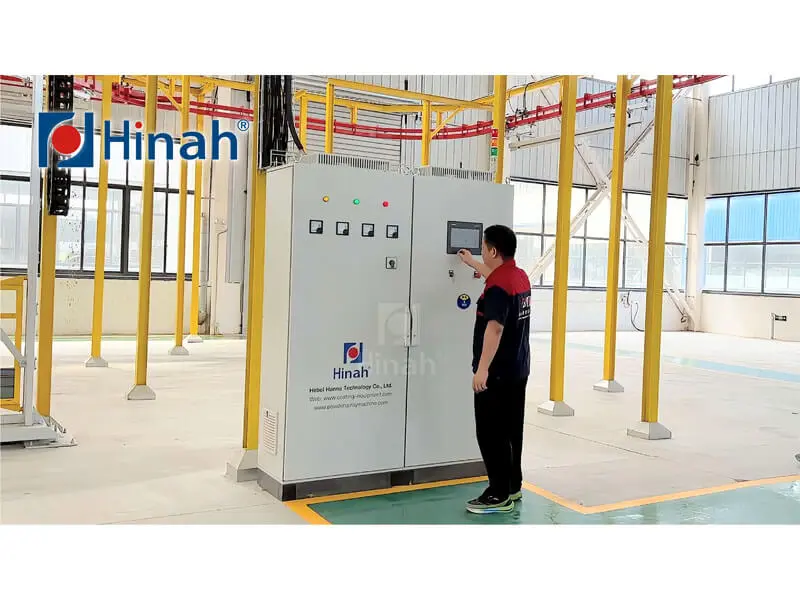
HANNA designs conveyor layouts around the part, not around a catalog. The engineering team starts with hanger geometry, oven dwell time, and required output, then selects the track type that meets those numbers with the least complexity.
For plants running mixed production, HANNA often recommends power and free sections at the booth while keeping a simpler monorail through the ovens. This balances flexibility with maintenance cost.
Every project includes grounding verification, speed calibration, and operator training before handover. That step alone prevents many of the coating defects that get blamed on powder or guns.
A1: There is no single number. Speed is set by the dwell time your powder and oven require. Most lines run between 1.5 and 6 meters per minute, but heavy parts or thick films need slower speeds. Always calculate from film build and cure schedule first.
A2: It depends on powder volume, but most plants clean hooks every one to three production days. If you see a rise in backside misses or thinner films, grounding is likely the cause. Clean hooks and recheck transfer efficiency.
A3: Yes, if the conveyor has spare capacity and the drives can handle the extra load. Power and free systems make this easier because carriers can be routed to different booths. A monorail may need a new drive and additional track.
A4: Usually uneven loading, worn trolley wheels, or a change in line speed. Swing reduces coating uniformity on flat surfaces. Check carrier balance and track wear before adjusting gun settings.
A5: Measure resistance between the part and earth with the line running. If readings rise over time, hooks or grounding shoes are contaminated. This is one of the most common hidden causes of poor powder adhesion.
A6: For cleanroom finishing or plants with high cosmetic standards, yes. The sealed track keeps powder dust out of the chain and reduces lubrication-related defects. For general industrial parts, a standard track is often sufficient.
A7: At minimum, keep trolley wheels, chain links, a drive motor, and one full carrier assembly. These are the parts that stop the line when they fail, and lead times can stretch to weeks for custom components.
The conveyor is the backbone of any powder coating operation. It sets the rhythm for pretreatment, spraying, and curing, and it quietly decides whether your finish passes inspection.
Match the conveyor type to your product mix, verify grounding and speed control, and plan maintenance before the line starts running. Those three steps protect both your finish quality and your uptime.