Finishing shops that move from manual spraying to a fully integrated system usually see three changes at once: steadier film thickness, lower powder waste, and a production rate that no longer depends on operator stamina.
This article explains what an automated powder coating line actually includes, where the real costs sit, and how to avoid the design mistakes that show up months after commissioning.
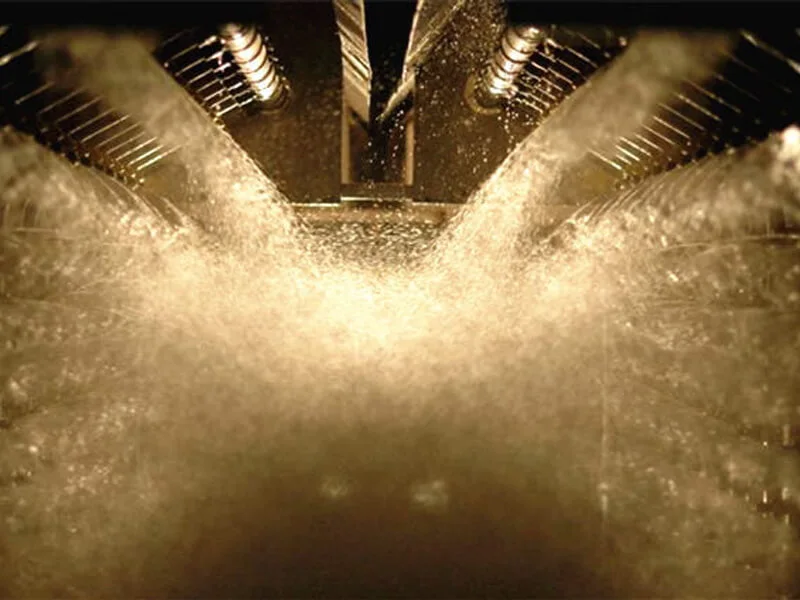
Automation in powder coating is not a single machine. It is a linked process chain where parts move through pretreatment, drying, coating, curing, and cooling with minimal manual handling.
The level of automation can range from a conveyor that simply carries parts between manual booths to a fully closed system with robotic reciprocators, recipe-driven gun control, and automated powder recovery.
Conveyor and hanger system – overhead or floor-mounted, often chain-driven with variable frequency control.
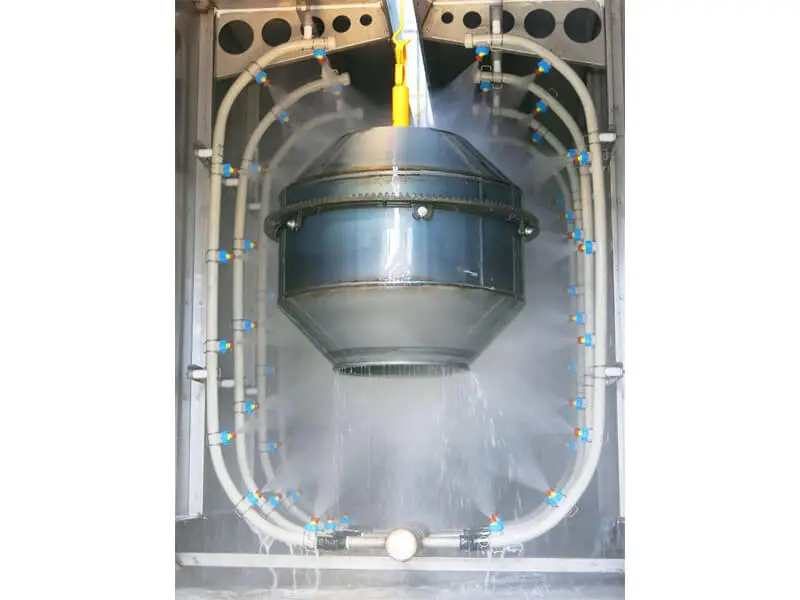
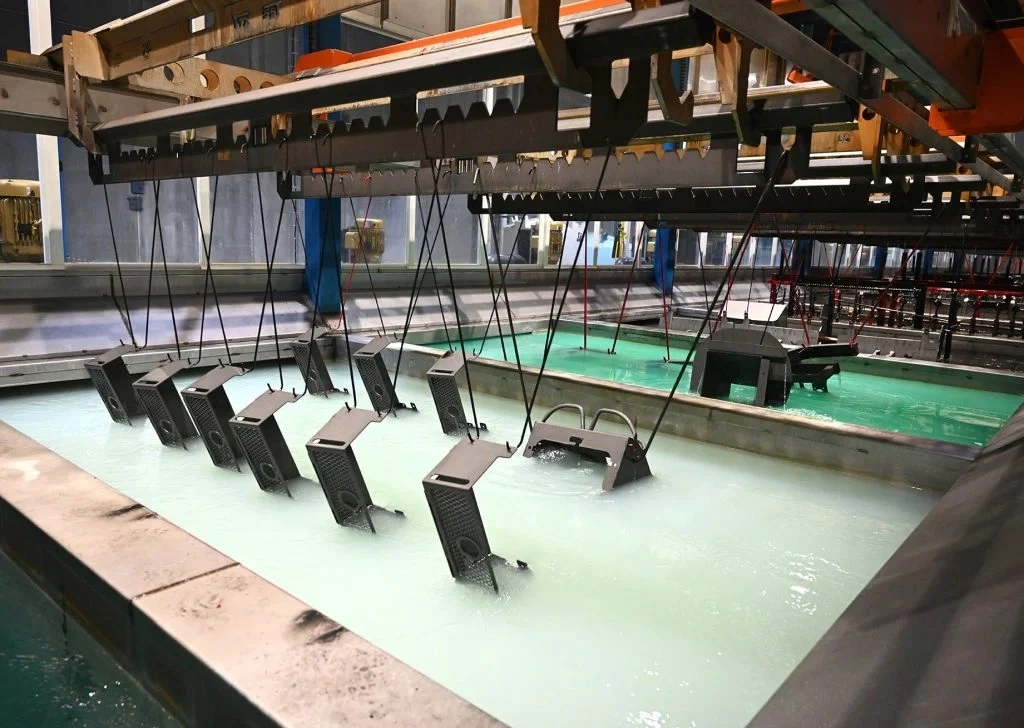
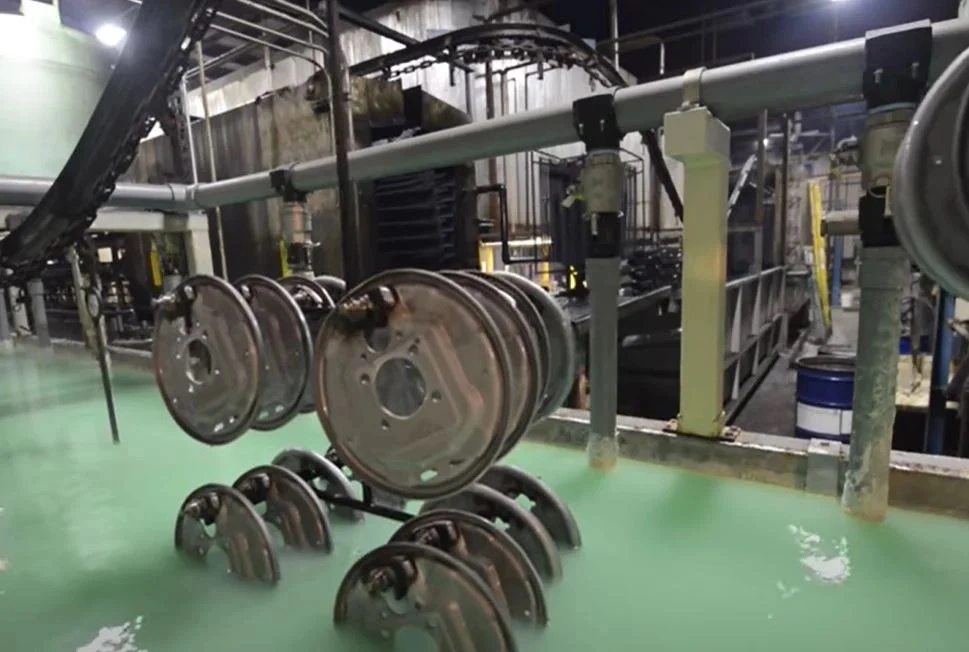
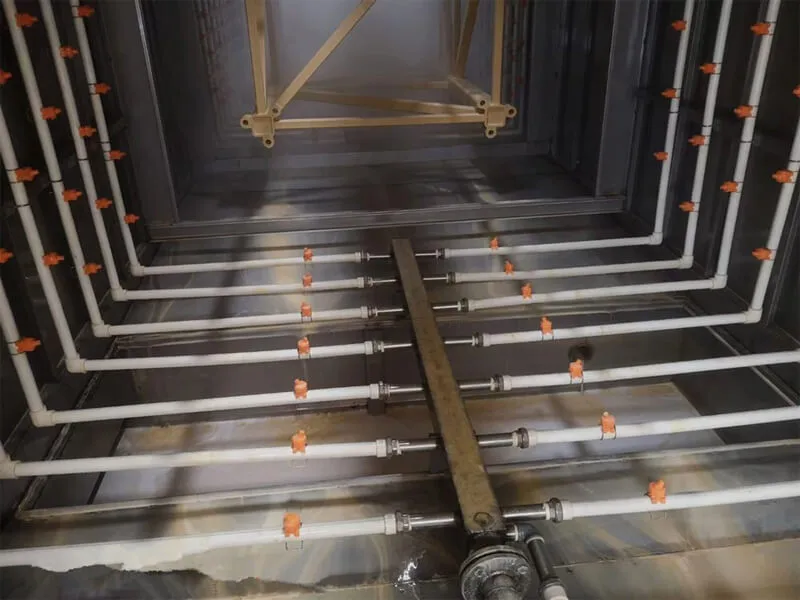
Pretreatment stages – spray or dip, usually 5 to 9 stages including degreasing, rinse, conversion coating, and passivation.
Dry-off oven – removes residual moisture before coating to prevent pinholes and adhesion failures.
Powder booths – manual, automatic reciprocator, or robot-equipped, with cartridge or cyclone recovery.
Powder feed and recovery system – hoppers, pumps, sieves, and reclaim blending.
Curing oven – typically a convection oven holding 180–200 °C for 10–20 minutes at part temperature.
Cooling tunnel and unloading station – stabilizes the film before packing.
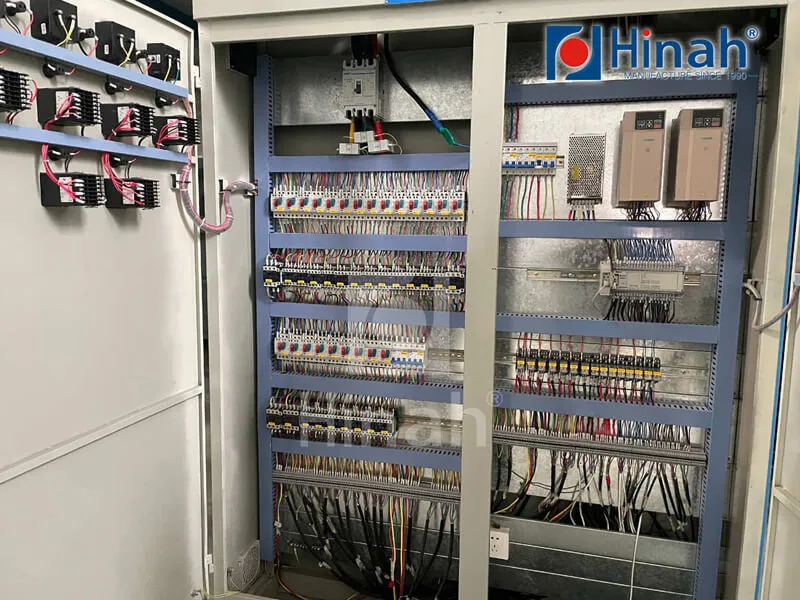
Control system – PLC with recipe management, alarms, and line-speed synchronization.
The business case is usually built on throughput and consistency rather than labor savings alone.
Stable film thickness – reciprocators and fixed gun distance reduce variation between parts and between shifts.
Higher transfer efficiency – recovered overspray is reclaimed and blended back, often pushing utilization above 95%.
Predictable cycle times – line speed defines output, so quoting and scheduling become easier.
Lower rework rate – fewer runs, sags, and bare edges than manual spraying.
Better working conditions – operators stay outside the booth envelope instead of standing in the powder cloud.
For high-volume aluminum profiles, steel furniture, or appliance housings, the payback period on a well-sized line frequently lands between 18 and 36 months.
Parts are hung with consistent spacing and orientation. Poor hanger design is one of the most common causes of shadowing and uneven coverage later in the process.
Cleaning quality determines adhesion more than any coating parameter. Chemistry concentration, temperature, and stage timing must all be monitored and logged.
Parts must be fully dry. Trapped moisture inside seams or welded joints will outgas during curing and cause craters.
Automatic guns mounted on reciprocators apply the powder. Voltage, current, powder flow rate, and gun-to-part distance are set per recipe.
The oven brings the substrate, not the air, to the required temperature. Cure schedules should be validated with a data logger on the actual part.
Film thickness, gloss, adhesion, and impact resistance are checked on a sampling basis before packing.
Most performance problems in a new finishing system trace back to specification choices made before the purchase order was signed.
Define the required parts per hour and the hanger density needed to reach it. A line that is too slow limits growth; one that is too fast wastes energy and powder.
Cartridge recovery – simpler, good for single-color long runs.
Cyclone with post-filter – better for frequent color changes and higher reclaim rates.
Fast color change booths – worth the investment if you change colors more than twice per shift.
Oven length is set by line speed multiplied by cure time. Insulation quality, burner type, and heat recovery all affect operating cost more than purchase price.
Leave room for an extra pretreatment stage, a second booth, or a longer cooling zone. Retrofitting into a crowded footprint is expensive.
Budgets vary widely, but the main cost blocks are consistent across projects.
Conveyor length and hanger count
Number of pretreatment stages and tank material
Booth quantity, gun count, and reciprocator configuration
Oven dimensions, insulation specification, and heating method
Control system complexity and recipe software
Installation, ducting, civil work, and commissioning
Operating cost is dominated by energy for the ovens, powder consumption, and maintenance labor. A slightly higher capital spend on insulation and recovery equipment often lowers the five-year cost considerably.
Supplier selection should weigh engineering support as heavily as price. Ask for reference installations running comparable parts at comparable line speeds.
Check whether the supplier handles pretreatment chemistry, oven balancing, and operator training as part of the scope. Gaps between vendors are where commissioning delays appear.
Established integrators such as HANNA typically provide layout drawings, utility schedules, and on-site commissioning support, which reduces the coordination burden on the buyer.
Confirm utility capacities — compressed air quality, power, gas, and water — before equipment arrives.
Verify floor flatness and load ratings along the conveyor route.
Run empty conveyor trials before introducing parts.
Validate oven temperature profiles with a six-point data logger.
Train operators on recipe changes, not just start-up and shutdown.
Document baseline settings for each product family.
Allow two to four weeks of production ramp-up before expecting full design output. Early output targets should be conservative.
A well-maintained line runs for years with predictable upkeep. Neglected lines fail at the worst possible moment.
Clean booth walls and recovery filters on a fixed schedule.
Inspect conveyor chain lubrication and hanger condition weekly.
Calibrate powder feed pumps and check for surging.
Replace oven thermocouples and verify controller accuracy quarterly.
Test pretreatment chemistry daily and adjust dosing accordingly.
Keep a spare parts list for high-wear items such as venturi tubes and seals.
Several avoidable errors appear repeatedly across new installations.
Undersizing the dry-off oven, leading to water carry-over.
Ignoring part grounding — poor earth connection causes low transfer efficiency.
Specifying too few guns for the required line speed.
Underestimating color-change downtime.
Skipping operator training on the control system.
Each of these issues is inexpensive to solve at the design stage and costly to correct after installation.
Automation pays off when volumes are steady and part families are repeatable. Job shops with highly varied, low-volume work may be better served by a semi-automatic booth with manual touch-up.
For manufacturers running consistent batches, an automated powder coating line delivers the repeatability that manual operations struggle to match.
If your scrap rate is rising, your powder consumption per square meter keeps climbing, or your throughput is capped by staffing, it is worth reviewing your process against an automated alternative.
Requesting a layout study and a throughput calculation from an experienced integrator such as HANNA is a low-risk first step toward a realistic decision.
A1: Cost depends on conveyor length, pretreatment stages, booth count, gun quantity, and oven size. Small semi-automatic systems start in the low six figures, while full-scale lines with multi-stage pretreatment and robotic application cost substantially more. Always request a detailed scope breakdown rather than a single lump-sum figure.
A2: A typical mid-size system takes eight to sixteen weeks from delivery to full production, including civil work, mechanical assembly, utility hookup, and commissioning. Custom layouts with multiple booths or extended ovens can take longer.
A3: Yes, within limits. Reciprocator stroke, gun positioning, and conveyor speed can be stored as recipes and recalled for each product family. Color changes require a fast-change booth or a dedicated booth if the change frequency is high.
A4: A well-designed booth with cyclone recovery and proper reclaim blending commonly achieves 95% or higher utilization. Poor grounding, incorrect gun distance, and unbalanced airflow will reduce this significantly.
A5: Daily cleaning of booths, weekly conveyor inspection, monthly gun and pump checks, and quarterly calibration of ovens and controllers cover most needs. A preventive maintenance schedule with logged tasks keeps unplanned downtime low.
A6: Usually not in full form. Low-volume, high-mix shops often do better with a manual or semi-automatic booth. Automation becomes cost-effective when batch sizes and repeat orders are predictable.
A7: Gather your part drawings, maximum part dimensions, required output per hour, target film thickness, color change frequency, and available floor space. This information lets a supplier produce a realistic layout and quotation on the first pass.
Buying an automated powder coating line is a long-term capital decision, not a quick equipment purchase. The difference between a line that runs smoothly for a decade and one that fights you daily usually comes down to specification accuracy and commissioning discipline.
Define your throughput targets clearly, plan space for growth, and work with a supplier that provides engineering depth alongside hardware. Doing so turns a coating system into a reliable production asset.
For layout planning and equipment options, the engineering team at HANNA can review your part mix and recommend a configuration that fits your volume and building constraints.