
In the domain of advanced thermal processing, the gap between semiconductor wafer baking stations and industrial drying equipment has historically been vast—one defined by sub-degree precision, the other by acceptable tolerances. For operations involving high-value intermediates such as active pharmaceutical ingredients (APIs), specialty chemicals, or precision food ingredients, this tolerance gap translates directly to yield loss, rework, and compromised product characteristics. The modern industrial tray dryer must therefore abandon legacy design paradigms and adopt the thermal uniformity, cleanability, and data integrity standards long established in semiconductor fabrication. Nasan has executed this convergence, delivering batch drying platforms that satisfy the most rigorous process capability requirements across pharmaceutical, nutraceutical, and advanced material sectors.
Conventional drying cabinets suffer from inherent design flaws: turbulent airflow patterns, single-zone temperature control, and uninsulated chambers that create thermal gradients exceeding ±5°C. For a tray dryer to achieve process capability (Cpk) above 1.33, three subsystems must be engineered with semiconductor-grade discipline: air distribution geometry, multi-zone thermal regulation, and real-time moisture analytics.
Drawing directly from horizontal laminar flow furnaces used in wafer processing, modern industrial tray dryers utilize computational fluid dynamics (CFD)-optimized plenum chambers. Nasan’s designs incorporate adjustable perforated diffusers and high-efficiency backward-curved impellers that maintain air velocity uniformity within ±2% across all tray positions. This eliminates channeling—a phenomenon where air preferentially flows through low-resistance paths, leaving peripheral trays under-dried. The result is batch-to-batch moisture content variability reduced to less than 1.5% relative standard deviation (RSD), a metric previously unattainable in batch drying.
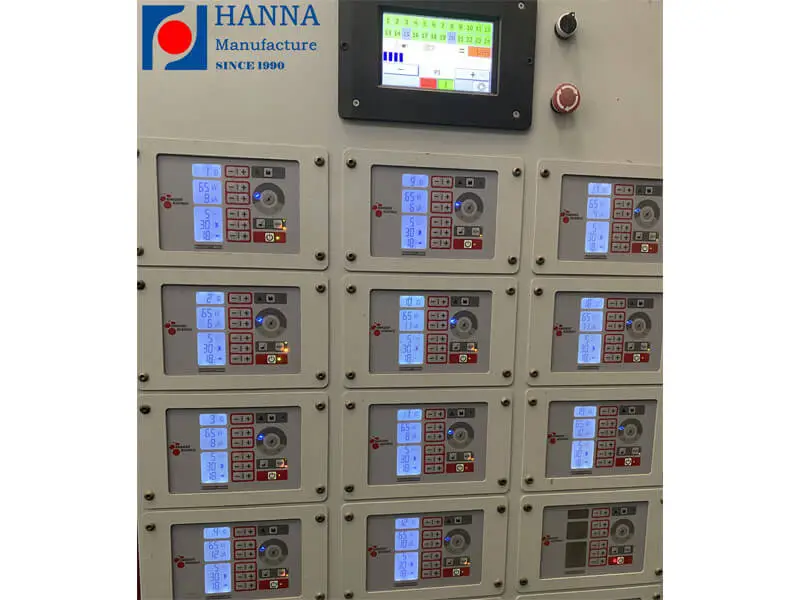
A precision tray dryer must operate with zone-to-zone temperature deviations below ±0.8°C. Nasan achieves this through independent PID controllers for each horizontal zone, coupled with Class A platinum resistance thermometers (PRTs) positioned according to ISO 21807 mapping protocols. The control system integrates solid-state relays (SSRs) that modulate heating elements with 0.1-second resolution, preventing thermal overshoot that degrades heat-sensitive materials. This level of precision is non-negotiable when drying products like probiotic cultures, where temperatures exceeding 45°C can reduce colony-forming units by orders of magnitude.
Industrial batch drying serves sectors where product integrity, documentation, and repeatability are paramount. The following applications demand a semiconductor-grade tray dryer:
Pharmaceutical intermediates & APIs: Drying of crystalline powders, granulates, and filter cakes requires precise control to avoid polymorphic transitions or degradation. Uniform thermal exposure ensures that residual solvent levels meet ICH Q3C guidelines without extended processing times.
Nutraceutical & herbal extracts: High-value botanical concentrates (e.g., curcumin, ginseng) are prone to thermal degradation and oxidation. Low-temperature drying cycles (30–50°C) with inert gas purging preserve bioactive potency while achieving moisture targets below 5%.
Specialty chemicals & advanced materials: Catalyst precursors, battery materials (LFP, NMC), and rare-earth compounds demand contamination-free drying with documented thermal history. Sanitary tray dryers with 316L stainless steel interiors prevent cross-contamination between batches—critical for semiconductor-grade chemical suppliers.
Process engineers across pharmaceutical and chemical manufacturing consistently report five critical failures with legacy drying equipment. Each deficiency stems from the absence of semiconductor-grade engineering principles in the tray dryer design.
Thermal non-uniformity: Traditional units exhibit temperature variations of 5–8°C across the chamber, leading to over-dried material at the air inlet and under-dried product at the exhaust. This forces operators to extend drying cycles by 20–30%, increasing energy consumption and reducing throughput.
Inadequate cleanability: Riveted seams, crevices, and inaccessible corners create harborage points for residues, making cross-contamination between campaigns virtually unavoidable. Validation swab tests frequently fail, requiring extended cleaning validation protocols.
Limited data integrity: Without continuous monitoring and electronic batch records, manufacturers struggle to comply with 21 CFR Part 11 or GAMP 5 requirements. Paper-based logs are insufficient for regulatory audits, leading to warning letters and production holds.
Energy inefficiency: Single-wall construction and lack of heat recovery result in thermal losses exceeding 40%, directly inflating operational budgets and carbon footprints.
Scale-up challenges: Laboratory tray dryers rarely correlate with production-scale units due to inconsistent airflow patterns, forcing lengthy and costly process development cycles.
Nasan addresses these deficiencies by applying manufacturing protocols borrowed from wafer fabs: statistical process control (SPC), fully welded sanitary construction, and validated thermal mapping. Every industrial tray dryer in the Nasan portfolio features:
Modular tray carts with RFID traceability: Each cart is equipped with passive RFID tags that link drying parameters to specific batch lots, enabling full genealogical traceability—a prerequisite for pharmaceutical serialization requirements.
High-efficiency cross-flow heat exchangers: Recovering 65% of exhaust enthalpy, these systems reduce specific energy consumption (SEC) to below 1.1 kWh per kilogram of water removed, representing a 35% improvement over conventional units.
Sanitary 316L stainless steel interiors: Fully radiused corners, electropolished finishes (Ra < 0.5 µm), and sloped floors eliminate residue accumulation, reducing cleaning validation cycles from hours to minutes.
IoT-enabled control architecture: Remote monitoring via OPC-UA, batch report generation in PDF/CSV, and predictive maintenance alerts align with Industry 4.0 frameworks. The system records all critical process parameters (CPPs) at 1-second intervals, ensuring complete data integrity.
Validation data from Nasan installations demonstrates a process capability index (Cpk) exceeding 1.33 for residual moisture content across 50+ consecutive batches, meaning less than 0.01% of batches fall outside specification limits. For pharmaceutical and specialty chemical manufacturers, this reliability directly translates to supply chain security and regulatory confidence.
Capital allocation for industrial drying equipment requires rigorous financial modeling. A lifecycle analysis comparing Nasan’s precision tray dryer against conventional batch ovens reveals compelling economic drivers:
Energy cost reduction: 32–38% lower utility consumption due to inverter-driven fans, multi-stage heat recovery, and advanced insulation (triple-wall construction with mineral wool).
Yield improvement: Elimination of over-drying and thermal degradation preserves 4–7% of product weight annually. For a facility producing $20 million worth of dried APIs, this equates to $800,000–$1.4 million in recovered value.
Labor efficiency: Automated recipe management, remote alarm notifications, and self-diagnostic functions reduce operator intervention by 12–15 hours per week, enabling redeployment to higher-value activities.
Regulatory risk reduction: Full data logging and audit trail functionality reduce non-conformance costs associated with FDA 483 observations or warning letters—typically ranging from $250,000 to $2 million per event.
These advantages typically yield a payback period of 12–18 months, making the upgrade to a precision batch drying platform a fiscally defensible investment for regulated industries.
The next generation of industrial tray dryer technology will leverage machine learning algorithms to predict optimal drying trajectories based on real-time feedstock variability. Nasan’s current R&D initiatives include adaptive drying models that self-optimize using historical batch data—a direct parallel to run-to-run control systems in semiconductor etch and deposition tools. Early pilot data indicates that such AI models can reduce drying cycle times by an additional 15% while improving moisture uniformity by 18% compared to static recipe control. For B2B buyers, this represents an opportunity to future-proof their thermal processing lines against rising energy costs and tightening regulatory landscapes.
A1: Industrial-scale tray dryer systems are engineered for continuous 24/7 operation with validated thermal uniformity across large chamber volumes (typically 50–500 trays). They incorporate sanitary construction, automated loading systems, and full data integrity suites (21 CFR Part 11 compliance). Laboratory units lack the throughput capacity, cleanability, and documentation features required for commercial production or regulated environments.
A2: Nasan performs thermal mapping per ISO 21807:2019 standards using a minimum of 24 calibrated thermocouples distributed across all tray positions. Mapping is conducted under loaded conditions to account for product thermal mass. The acceptance criterion is ±1.0°C deviation from setpoint across the entire usable volume—a specification derived from semiconductor diffusion furnace qualification protocols. Validation documentation is provided with every system.
A3: Yes, modern industrial tray dryers are designed for multiproduct flexibility. Nasan’s systems feature recipe management that stores up to 500 drying profiles with independent parameters for temperature ramp rates, humidity setpoints, and drying duration. Between campaigns, a validated cleaning procedure (manual or CIP) is executed; the sanitary design (no crevices, electropolished surfaces) ensures rapid residue removal. Changeover validation typically requires three successful swab tests per ISO 14698 standards.
A4: Based on data from pharmaceutical and specialty chemical installations, the average ROI is realized within 14 to 20 months. Key drivers include energy savings (30–35%), yield improvement (4–7% reduction in out-of-spec material), and decreased labor costs (automated operation). For facilities processing high-value products (>$500 per kg), payback often occurs at the lower end of this range. Nasan provides site-specific ROI modeling to support capital approval processes.
A5: Every tray dryer from Nasan is designed with regulatory requirements integrated at the hardware and software levels. Key features include: electronic batch records with audit trails (compliant with 21 CFR Part 11), real-time monitoring of critical process parameters, automated alarm logging, and secure user access controls. The systems are supplied with installation qualification (IQ) and operational qualification (OQ) protocols, and Nasan’s quality management system is ISO 9001:2015 certified. Full validation support (PQ) is available upon request.
For organizations operating in pharmaceutical, nutraceutical, or advanced material sectors, the choice of thermal processing equipment directly impacts regulatory compliance, operational efficiency, and product quality. Nasan continues to lead the convergence of semiconductor-grade precision and industrial batch drying, delivering tray dryer solutions that meet the most exacting requirements of validated manufacturing environments.