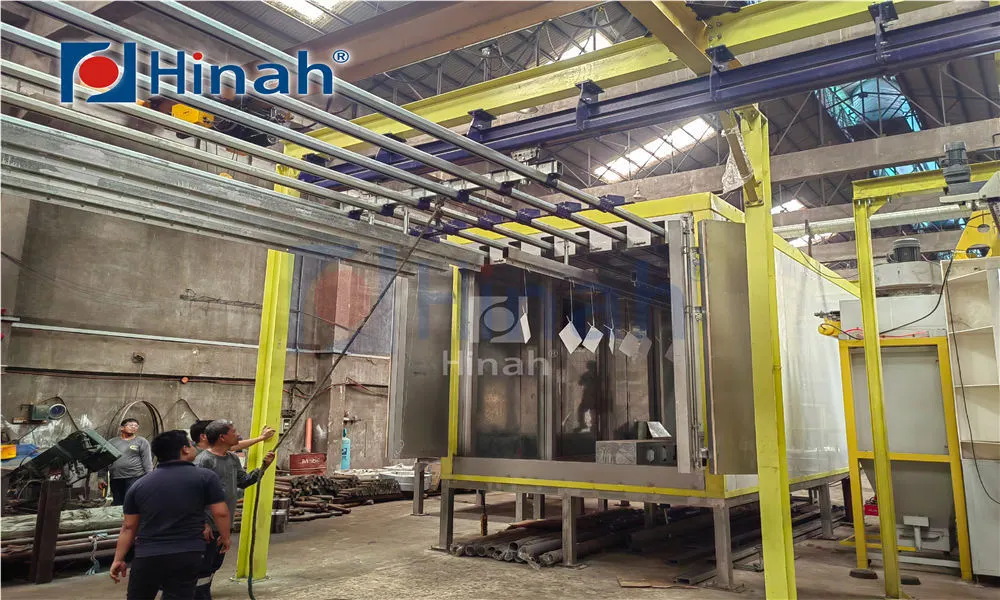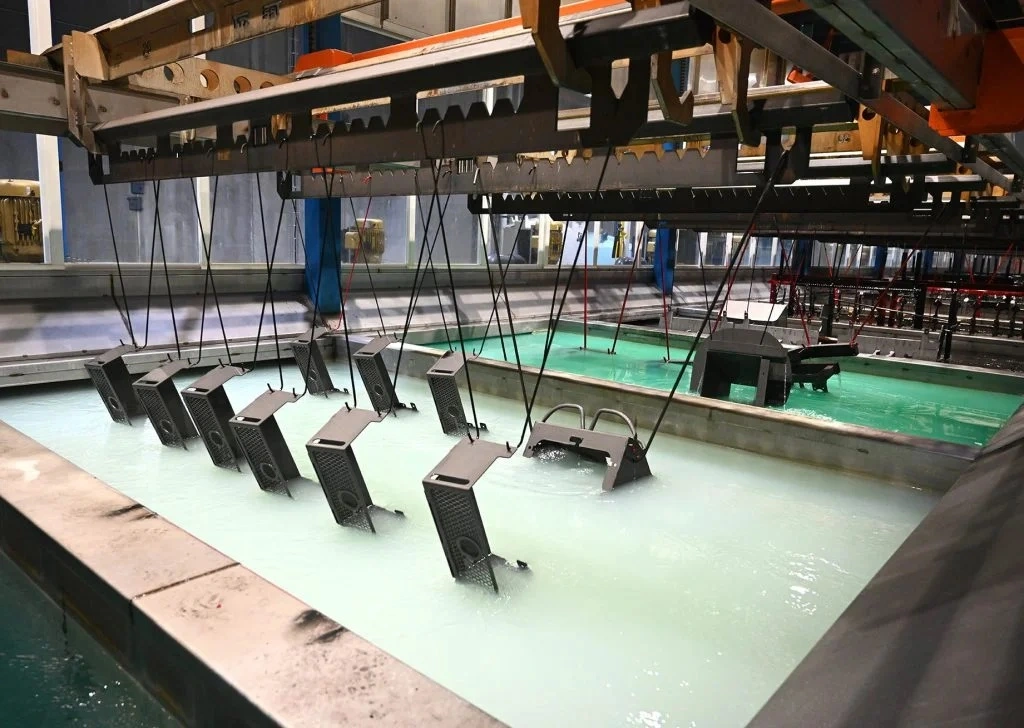
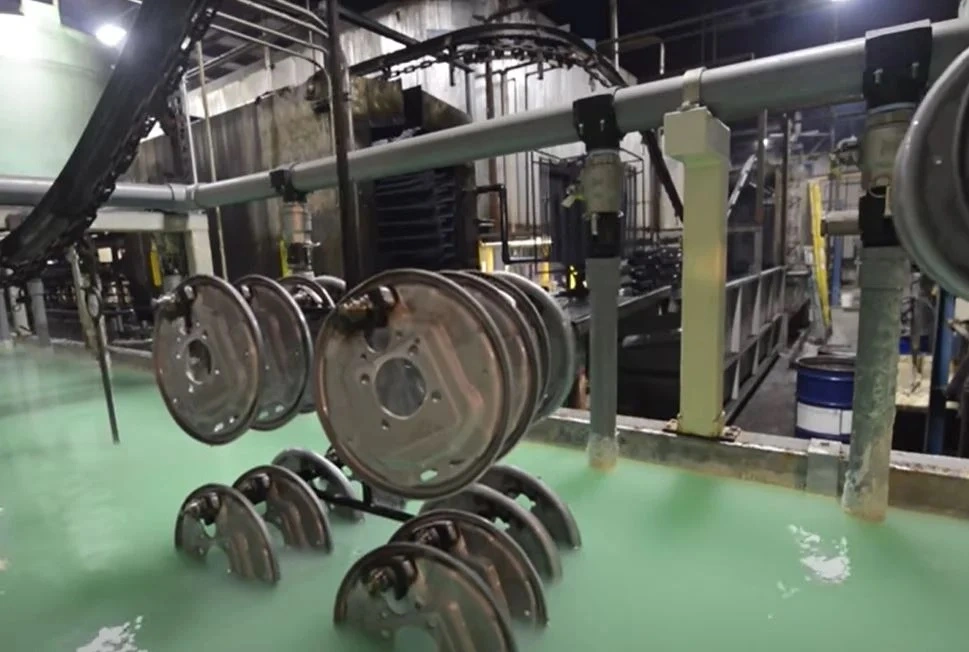

The Conveyor paint line is the backbone of any industrial coating operation. It dictates production rhythm, part spacing, oven residence time, and overall line efficiency. A poorly designed conveyor results in bottlenecks, uneven coating thickness, and excessive energy consumption. This article provides a component-level analysis of Conveyor paint line systems, covering mechanical configurations, speed regulation, load capacity, and integration with pretreatment washers, spray booths, and curing ovens. Drawing on data from HANNA's 240+ installations, we will examine how to select the right conveyor type for your part mix and production volume.
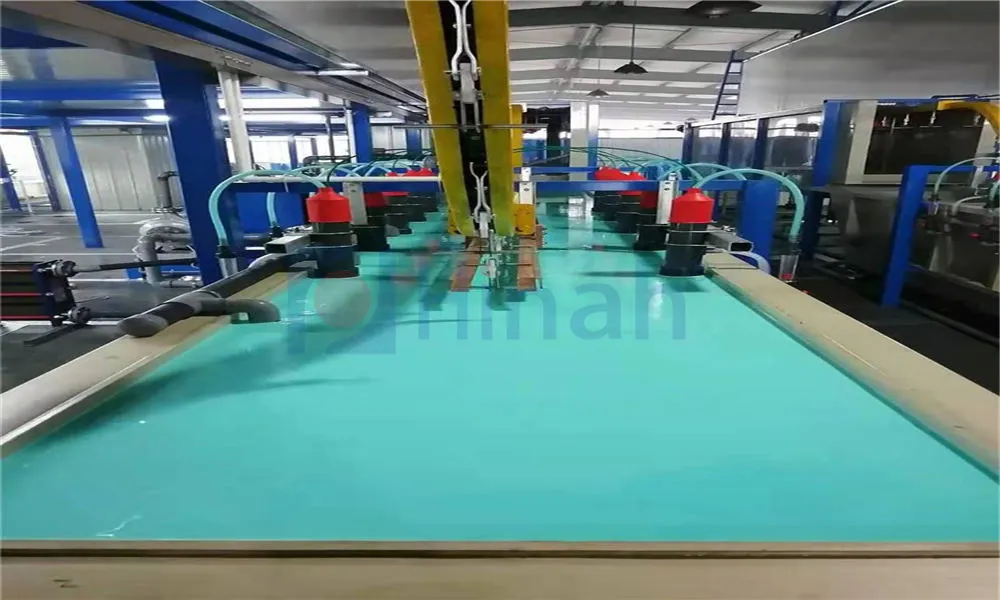
The conveyor paint line does more than move parts from A to B. It directly impacts:
Cycle time: Chain speed and part spacing determine how many pieces per hour can be processed.
Coating uniformity: Consistent speed through spray booths ensures even film build.
Cure quality: Accurate dwell time inside the oven at specified temperature is impossible without reliable conveyor motion.
Downtime frequency: Conveyor chain wear, bearing failures, and drive motor issues are leading causes of unplanned stops.
According to industry benchmarks, a well-engineered automated conveyor system can achieve 95–98% uptime, while a poorly maintained or underspecified line often runs below 80% availability. For a two-shift operation, the difference represents 500–600 lost production hours per year.
Choosing the correct conveyor topology is the first major decision. Each type has distinct advantages and limitations.
Operation: A single continuous chain running inside an I-beam or enclosed track. Parts hang from trolleys attached to the chain.
Best for: High-volume, single-color lines where all parts follow the same path and speed. Typical applications: automotive wheels, appliance panels, fencing.
Advantages: Lowest initial cost per meter ($150–$300/m), simple maintenance, long chain life (10–15 years with proper lubrication).
Limitations: Cannot accumulate parts (if one section stops, the whole line stops). Color changes or batch processing require stopping the line.
Operation: Two tracks: one powered chain (drive) and one free track with accumulating trolleys. Trolleys can be disengaged from the power chain using pusher dogs and stops.
Best for: Multi-color job shops, lines requiring buffer zones, or processes with different dwell times (e.g., extended curing for certain parts).
Advantages: Allows accumulation, offline spurs for touch-up, independent speed zones, and automatic sortation. Reduces downtime because a downstream stop does not halt upstream pretreatment.
Disadvantages: Higher cost ($400–$800/m), more complex controls, requires precise timing of dog engagement.
Operation: Chain runs in a floor trench or on the surface; parts are mounted on carts or fixtures that ride on the chain.
Best for: Heavy parts (over 250 kg), unstable loads that cannot be hung, or applications requiring floor-level access for manual spraying.
Advantages: Low center of gravity, easy load/unload with forklifts, no overhead structure required.
Disadvantages: Chain exposed to dirt and overspray, more difficult to clean, trench requires floor modification.
HANNA offers all three configurations, with engineers helping customers select based on part weight, production mix, and available building height. For most general manufacturing, an overhead monorail is the starting point, while power-and-free becomes cost-effective when color changes exceed three per shift.
Once the conveyor type is chosen, these six parameters must be calculated to ensure the conveyor paint line meets production targets.
Chain speed (m/min): Determined by the slowest process station (pretreatment dip time, oven cure time). Formula: Speed = (Part length + spacing) / (required process time). For a 2 m part with 0.5 m spacing requiring 10 min in oven, speed = 2.5 m / 10 min = 0.25 m/min. However, this is too slow for practical operation; consider multiple parts in parallel or longer oven.
Part spacing (center-to-center): Minimum 1.5× part width to allow gun access and air circulation. For complex shapes, spacing may need to be 2–3× width to avoid Faraday cage effects.
Maximum load per hanger: Structural limit of trolley wheels and chain pins. Standard monorail: 50–150 kg per hanger at 150–300 mm pitch. Heavy-duty: up to 500 kg.
Vertical curves: Minimum radius for overhead chain is typically 1.5 m for horizontal turns and 3 m for vertical inclines. Sharper curves cause chain binding and increased wear.
Drive motor power (kW): Calculated from total chain pull (sum of friction, incline, and live load). Friction coefficient for lubricated steel chain on I-beam: 0.05–0.10. Incline adds 9.8 N per kg per meter rise. Safety factor of 1.5–2.0.
Thermal expansion gaps: For ovens operating at 200°C, conveyor rail can expand 2–3 mm per meter. Expansion joints must be placed every 20–30 m to prevent buckling.
Using these parameters, HANNA’s engineering team creates a conveyor layout drawing that includes all elevation changes, inspection access points, and lubrication stations. The lead time for a custom conveyor paint line typically ranges from 8 to 16 weeks.
The Conveyor paint line must synchronize with three major process zones.
Parts enter a multistage washer (zinc phosphate, iron phosphate, or zirconium). The conveyor must maintain consistent submersion times (typically 30–90 seconds per stage). For dip washers, the conveyor includes a vertical drop section that lowers parts into the tank. Chain lubrication must be food-grade or high-temperature grease to avoid contamination of the wash chemistry.
As parts pass through the powder coating booth, the conveyor speed must be synchronized with reciprocator stroke rates. Automatic guns trigger on part presence using photoelectric sensors. Inconsistent speed causes leading-edge overload or trailing-edge light coating. A closed-loop encoder on the conveyor drive provides feedback to the gun controller.
The conveyor carries parts through the oven for a specified dwell time (10–30 minutes typical). Oven length = conveyor speed × dwell time. For a speed of 1.5 m/min and 15 minutes dwell, oven length = 22.5 m. Oven entry and exit vestibules reduce heat loss. The conveyor chain inside the oven must be rated for continuous 200–250°C operation, using high-temperature lubricants (e.g., graphite-based) that do not smoke or drip onto parts.
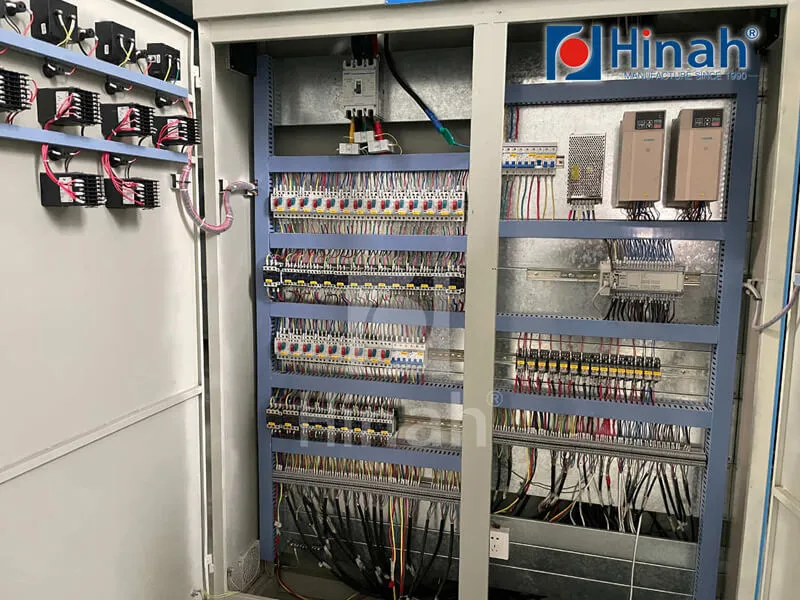
HANNA provides turnkey integration drawings that specify all interface dimensions, sensor locations, and control interlocks. A single PLC manages conveyor speed, oven temperature setpoints, and booth gun firing, ensuring coordinated operation.
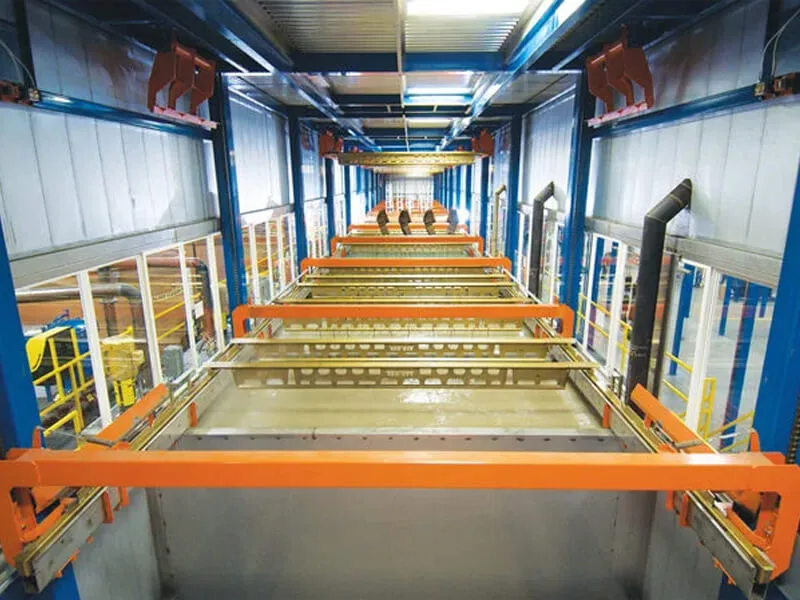
Even a robust conveyor paint line requires disciplined maintenance. Below is a schedule based on HANNA’s field service records.
Daily: Listen for unusual noises (squeaking indicates dry chain); check oil levels in drive gearbox; inspect for loose hangers.
Weekly: Apply automatic chain lubricator (if equipped) or manual spray lubrication. Measure chain elongation: if pitch has increased by 3% over original, plan for chain replacement.
Monthly: Inspect all trolley wheels for flat spots or bearing play; tighten drive motor mounting bolts; clean photoeyes.
Quarterly: Check chain wear on turns – replace worn horizontal curves. Test emergency stops and accumulation zone sensors.
Annually: Full chain tension measurement; replace worn sprockets; perform thermal imaging of drive motor and gearbox.
Common failures and solutions:
Chain over-elongation: Caused by high loads or insufficient lubrication. Solution: Install automatic lubricator with frequency adjusted to chain speed (e.g., 1 pulse per 1000 chain feet).
Hanger swing: Parts oscillate in oven, causing contact with walls. Add steady rails or anti-sway guides in the oven section.
Jamming at transfers (power-and-free): Dog misalignment or worn pusher dogs. Adjust timing cams or replace dogs every 2 years.
Chain galling in oven: High temperature causes expansion and binding. Use Inconel or stainless steel chain links with oversized clearances.
Many conveyor paint line operators run the line faster than necessary, causing higher energy consumption in ovens and washers. By analyzing the bottleneck station (usually the oven), you can reduce speed to the minimum required for cure, saving gas and electricity. A case study: a Midwest automotive supplier reduced conveyor speed from 2.2 m/min to 1.6 m/min after optimizing oven airflow, resulting in 18% lower natural gas consumption ($27,000/year) with no loss in output because they increased part density on hangers.
Variable frequency drives (VFDs) on conveyor motors allow speed adjustment for different product families. A VFD also provides soft start, reducing chain shock loads. HANNA integrates VFDs with line PLCs, storing speed recipes for each product SKU.
Conveyor systems present pinch points, falling object hazards, and entanglement risks. Required safety features include:
Emergency pull cords or stop buttons every 15–20 meters along the line.
Runway guards at floor level to prevent contact with moving chain (required by OSHA 1910.212).
Overload protection: Torque limiter or current sensing on drive motor to prevent chain breakage.
Fire detection in oven conveyor tunnel – thermal sensors trigger CO2 or water mist suppression.
Load limit signs posted at loading zones.
For powder coating lines, the conveyor chain must be grounded to prevent static discharge that could ignite dust. HANNA's powder coating plant designs include grounding brushes contacting each trolley as it passes through the booth.
Q1: What is the typical lifespan of a conveyor paint line
chain?
A1: With proper lubrication (automatic
oiler) and moderate loads, a steel chain lasts 10–15 years. In high-temperature
ovens (200°C+), chain life reduces to 5–8 years. Elongation monitoring is the
best indicator – replace when pitch increases by 3%.
Q2: Can I convert an existing monorail conveyor to
power-and-free?
A2: Partial conversion is possible
but costly (often 70–80% of a new system). You would need to replace the track,
trolleys, and add accumulation controls. For most facilities, selling the old
line and purchasing a new power-and-free system is more economical.
Q3: How do I calculate the required drive motor horsepower for my
conveyor paint line?
A3: Total chain pull (kg) =
(Live load weight + chain weight) × friction coefficient + (vertical rise × live
load weight / 100). Then Power (kW) = (Chain pull × speed in m/s) / (0.8
efficiency). Add 25% safety margin. HANNA provides free calculations with your
line layout.
Q4: What is the maximum part weight for an overhead monorail
conveyor?
A4: Standard trolleys handle 50–150 kg
per hanger at 150–300 mm pitch. For parts up to 500 kg, use heavy-duty chain
(X-458 or 678 series) with 200 mm pitch and reinforced trolleys. Above 500 kg,
consider an inverted floor conveyor.
Q5: How often should conveyor chain be lubricated in a powder coating
environment?
A5: Automatic lubrication systems
apply oil every 1–2 hours of operation. Manual lubrication should be performed
every 40 operating hours. Use high-temperature oil (flash point >240°C) to
avoid smoking in the oven. Over-lubrication causes dripping onto parts;
under-lubrication accelerates wear.
Q6: Can a single conveyor paint line handle parts of very different
sizes (e.g., 0.5 m and 3 m lengths)?
A6: Yes, but
you must set part spacing based on the largest part. For mixed loading, use an
automated spacing system (photoelectric sensors that adjust hanger gaps) or run
batches of similar sizes. Power-and-free conveyors allow offline spurs for
oversized parts.
Selecting the correct Conveyor paint line requires detailed analysis of your part geometry, weight, production volume, and color change frequency. Generic conveyor kits often fail to account for oven thermal expansion, vertical curve radii, or accumulation requirements.
HANNA offers a complimentary engineering consultation including:
Conveyor type selection matrix based on your part mix and shift targets.
Chain pull and motor power calculation.
Layout drawing with all elevation changes, lubrication points, and safety stops.
Integration plan for pretreatment, booth, and oven – including control interlocks.
Start your inquiry now – provide your part drawings, desired output (parts/hour), and any existing equipment specifications. Our team will respond within 3 business days with a preliminary design and budget range. Click here to contact HANNA’s conveyor specialists or call+86 186 3393 1770 for immediate assistance.