
In industrial finishing, operational waste is often silent. According to data from the Powder Coating Institute (PCI), up to 30% of standard B2B coating operations suffer from poor first-pass transfer efficiency, translating to thousands of dollars in wasted powder annually.
When searching for powder coating equipment for sale, buyers frequently prioritize initial capital expenditure (CAPEX) over long-term operational expenditure (OPEX). This guide examines the strategic variables of sourcing industrial finishing systems to ensure sustained profitability.
Selecting the right machinery is not merely about finding a vendor. It requires a comprehensive understanding of automation, energy footprints, and material recovery. Let us explore how modern engineering addresses these operational challenges.
Most buyers assume that selecting a lower-priced curing oven reduces initial startup risks. However, low-CAPEX ovens frequently exhibit poor thermal insulation, resulting in high energy dissipation. In industrial applications, a thermal loss of just 5% can increase annual gas or electricity consumption by up to 25%.
This "Energy-Transfer Paradox" indicates that the lowest-priced powder coating equipment for sale can become the most expensive asset within 18 months of continuous operation. High-quality systems counter this by utilizing high-density rock wool insulation and integrated heat exchangers.
To assist B2B procurement teams, we utilize the C.A.R.E. Framework (Cure, Application, Recovery, Ergonomics) to evaluate system integrity before purchase:
Cure Uniformity: Consistent temperature distribution across the entire workspace.
Application Efficiency: Maximizing the first-pass transfer efficiency of electrostatic guns.
Recovery Rate: Minimizing powder waste through advanced multi-cyclone or cartridge filtration.
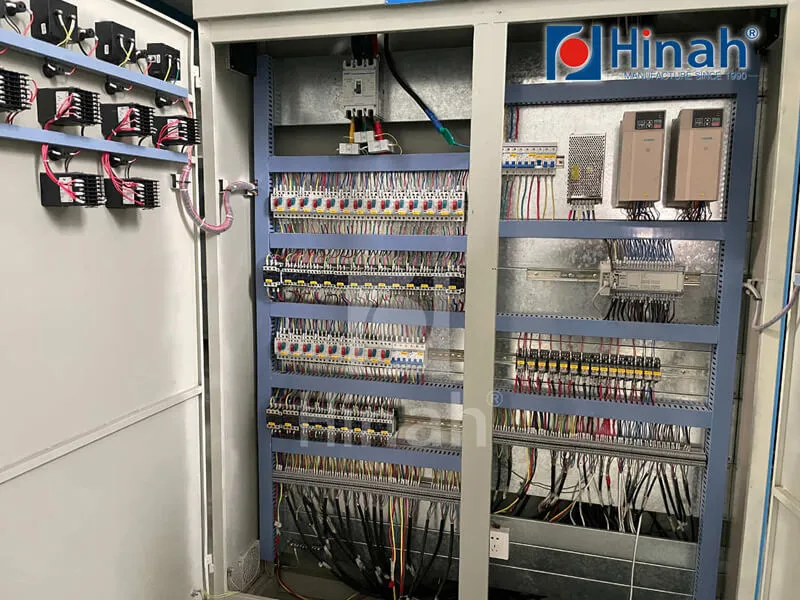
Ergonomics & Automation: Reducing manual labor bottlenecks and integrating with PLC controls.
By applying this framework, decision-makers can look past initial price tags and evaluate equipment based on its total cost of ownership (TCO) and daily yield capacity.
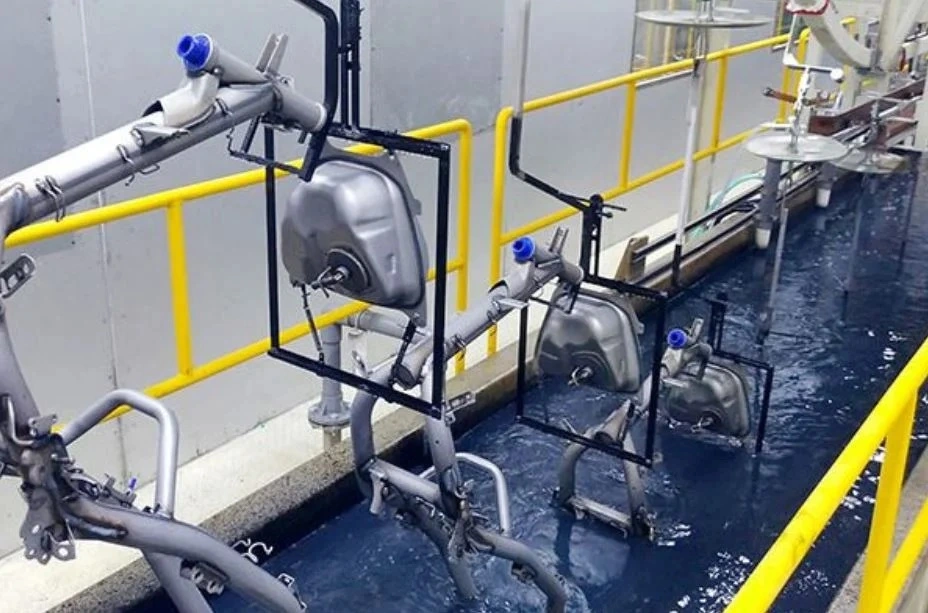
No powder coating system can compensate for poor surface preparation. Up to 90% of coating failures, such as blistering or premature corrosion, originate in the pre-treatment phase. For industrial-scale operations, manual solvent wiping is rarely sufficient or consistent.
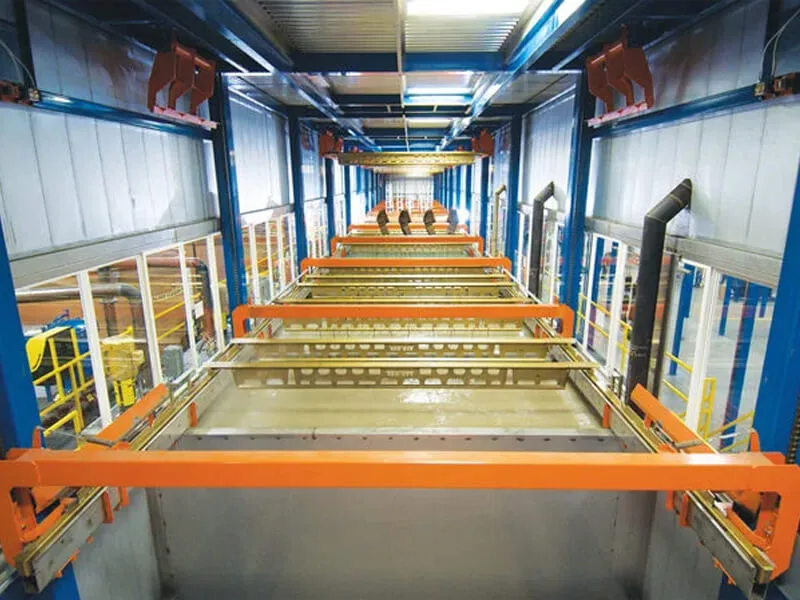
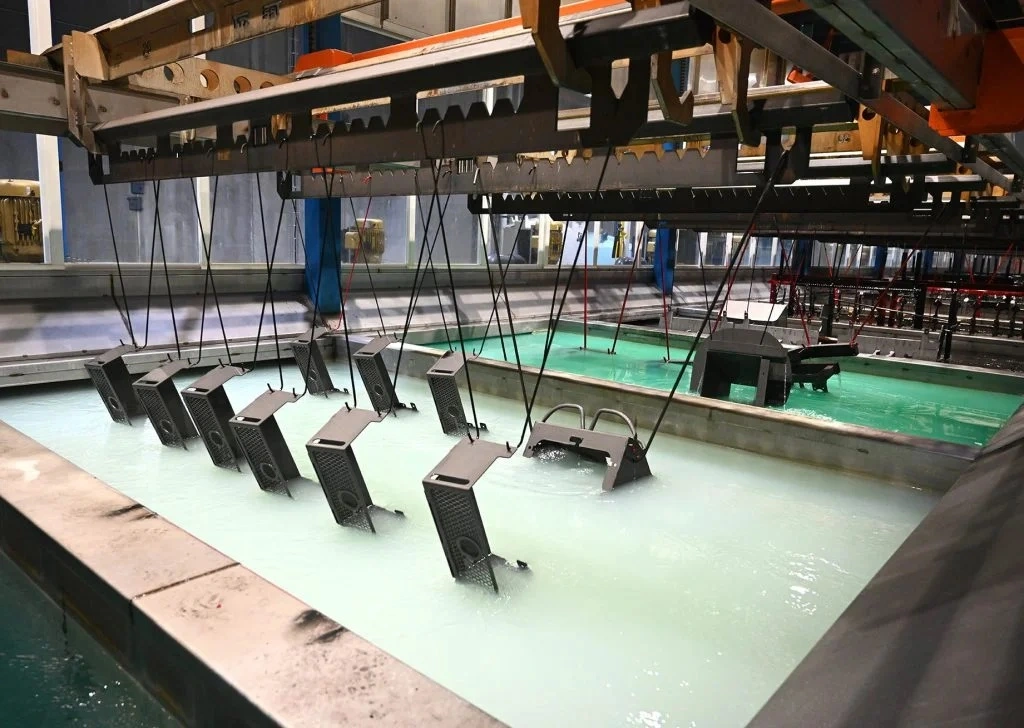
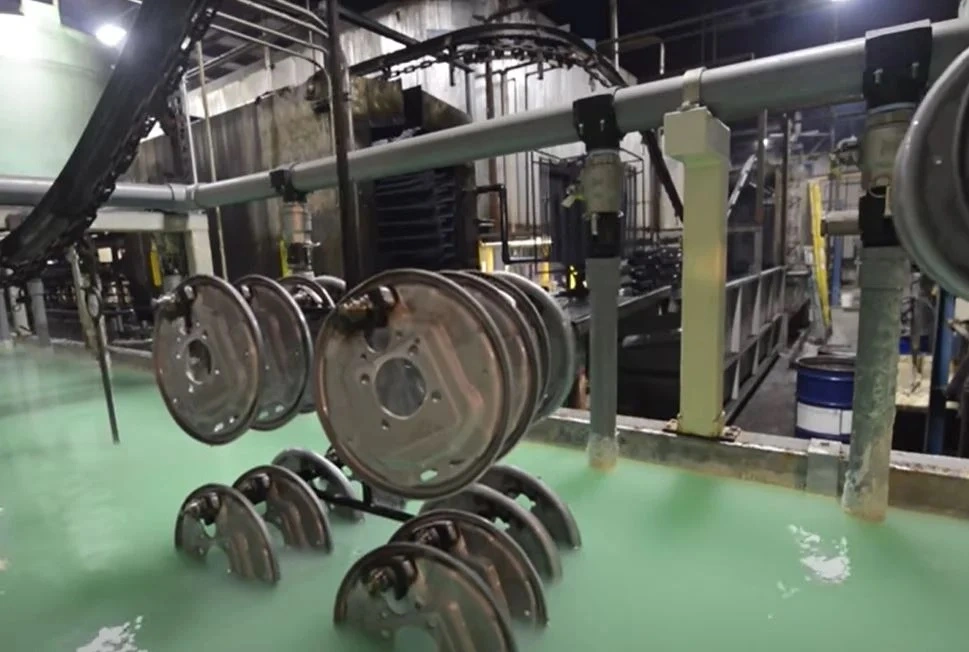
Automated pre-treatment lines generally employ either multi-stage spray systems or immersion dip tanks. Spray pre-treatment is highly effective for high-volume, continuous conveyorized production. These systems utilize chemical agents to remove surface contaminants and apply conversion coatings, such as zinc phosphate or zirconium, to enhance adhesion.
When evaluating powder coating equipment for sale, ensure the pre-treatment stage matches your substrate materials. For instance, aluminum requires different chemical profiling compared to cold-rolled steel. Modern systems integrated by HANNA feature automated chemical dosing to maintain precise pH and concentration levels.
Furthermore, water quality plays a decisive role. Incorporating a Reverse Osmosis (RO) water rinse stage prevents mineral deposition on the metal surface, which otherwise compromises the salt-spray resistance of the finished product.
The electrostatic spray booth is where transfer efficiency is determined. Traditional manual booths often lead to uneven film thickness and excessive overspray. In contrast, automated booths utilize reciprocating gun movers (reciprocators) to deliver a consistent coating layer across complex geometries.
First-pass transfer efficiency (FPTE) measures the percentage of sprayed powder that actually adheres to the workpiece. Standard systems achieve 50% to 60% FPTE, whereas advanced electrostatic systems can reach up to 85%. This difference directly impacts raw material consumption and operational throughput.
When looking at powder coating equipment for sale, pay close attention to booth construction materials. Non-conductive plastic or sandwich-wall structures prevent powder from adhering to the booth walls, facilitating faster color changes and higher powder recovery rates.
Airflow management inside the booth is equally critical. Engineered ventilation must maintain a steady downward or cross-draft airflow of approximately 0.4 to 0.5 m/s. This velocity is sufficient to contain overspray without disrupting the electrostatic cloud path between the gun and the part.
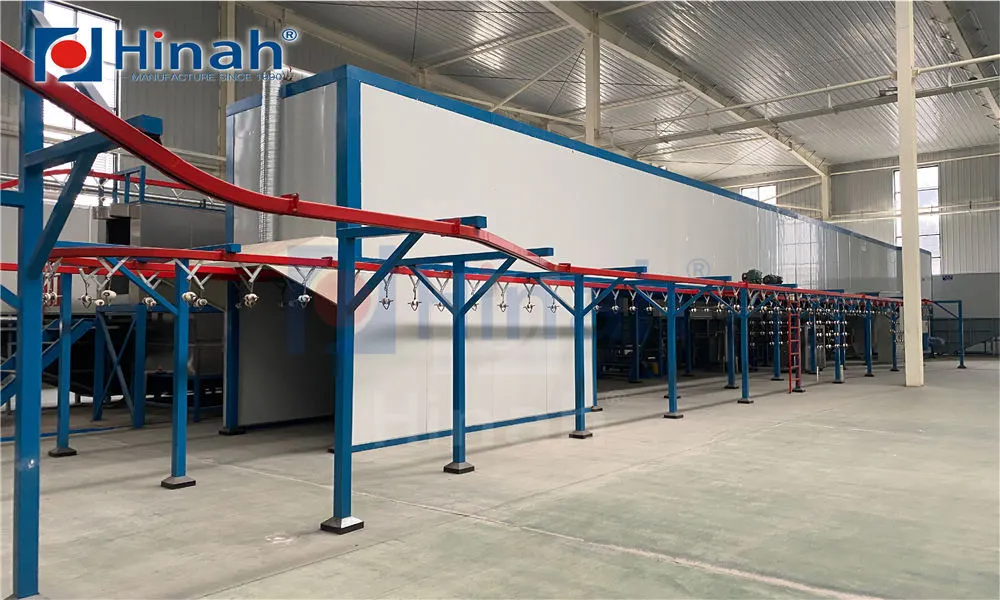
Curing is a chemical process where the powder cross-links to form a durable protective barrier. If the curing oven fails to maintain uniform temperature distribution, the coating may under-cure (leading to brittle finishes) or over-cure (causing discoloration and loss of adhesion).
Industrial curing ovens utilize either convection heating, infrared (IR) heating, or a hybrid combination. Convection ovens are highly versatile and suitable for parts with complex geometries. IR ovens offer rapid heat-up times and are highly efficient for flat panels or uniform geometries.
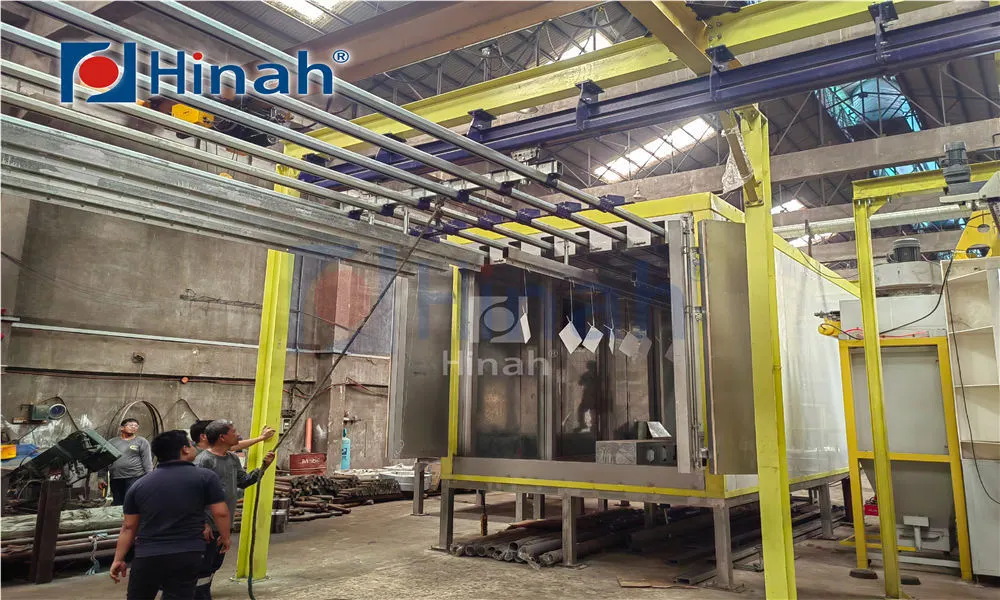
To prevent heat loss at exit and entry ports, advanced curing systems utilize air curtains or bridge-type configurations. These designs trap the heated air inside the upper chamber, significantly reducing energy consumption. High-quality systems designed by HANNA are built with 150mm to 200mm high-density rock wool panels to minimize thermal bridges.
When assessing powder coating equipment for sale, verify that the heating unit is equipped with modulating burners. These burners adjust gas flow dynamically based on the actual heat load, rather than cycling simply on and off, saving up to 15% on fuel costs.
The choice between cartridge filtration and multi-cyclone recovery systems is dictated by your production mix and color-change frequency. Operating a single-color line has vastly different equipment requirements than operating a line with multiple color changes per shift.
Cartridge recovery systems pass the oversprayed air directly through pleated filters. They offer high filtration efficiency (up to 99.9%) and are highly economical for long production runs of a single color. However, cleaning cartridges for color changes is labor-intensive and carries a risk of cross-contamination.
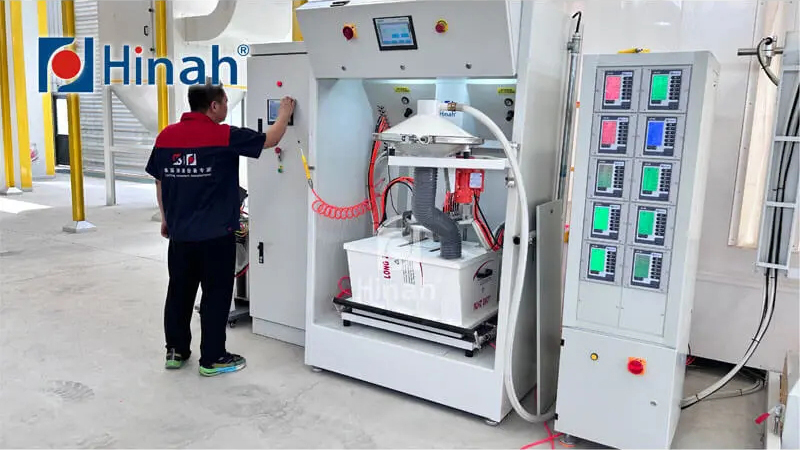
Multi-cyclone recovery systems utilize centrifugal force to separate powder particles from the air stream. The recovered powder is collected at the bottom of the cyclone and returned to the feed hopper, while ultra-fine particles are captured by a secondary after-filter. This design allows for rapid color changes with minimal downtime.
When reviewing powder coating equipment for sale, buyers should compare the recovery efficiency of both options. While a multi-cyclone system has a higher initial cost, the reduction in color-change time from hours to minutes can pay back the investment within months for high-mix manufacturers.
To help guide your procurement process, use the checklist below to compare different powder coating equipment for sale options:
| System Component | Key Technical Metric | Standard Requirement | High-Efficiency Requirement |
|---|---|---|---|
| Pre-treatment | Stage Count & pH Control | 3-Stage Manual / Semi-Auto | 5 to 7-Stage Auto with RO Rinse |
| Spray Booth | First-Pass Transfer (FPTE) | 50% - 60% | 75% - 85% with Auto-Reciprocator |
| Recovery Unit | Color Change Time | 1 - 2 Hours (Cartridge) | 15 Minutes (Multi-Cyclone) |
| Curing Oven | Temperature Uniformity | ± 5°C | ± 2.5°C with Modulating Burner |
| Conveyor System | Line Speed Control | Fixed Speed | VFD Variable Speed with PLC Integration |
By standardizing these metrics during your evaluation, you can make an objective, data-driven purchasing decision that aligns with your facility's long-term production requirements.
Many plant managers purchase industrial finishing systems based on current production volumes without accounting for future growth. A line designed with zero room for expansion will require costly modifications or complete replacement once demand increases by 20% to 30%.
Another frequent oversight is neglecting floor space constraints and conveyor routing. Standard overhead conveyor paths must be designed with proper radius turns and incline angles to prevent parts from swaying or contacting booth walls during operation.
Lastly, ensure that the selected vendor provides robust aftermarket support. High-quality systems manufactured by brands like HANNA include comprehensive training, wear-parts inventory, and remote diagnostic capabilities to minimize unplanned downtime.
Q1: What is the average lifespan of industrial powder coating equipment?
A1: With standard maintenance, high-quality industrial powder coating lines can operate reliably for 15 to 20 years. Key components like conveyor chains and oven burners require regular servicing, while spray booth filters must be replaced according to production hours.
Q2: How do I calculate the ROI of an automated powder coating line vs. manual application?
A2: ROI calculations should incorporate labor cost reductions, powder savings from higher transfer efficiency, and increased daily throughput. Automated lines often reduce labor requirements by 50% while improving powder utilization, typically yielding payback within 12 to 24 months depending on production volume.
Q3: What is the difference between cartridge recovery and cyclone recovery systems?
A3: Cartridge recovery systems are highly efficient (up to 99.9%) and ideal for single-color operations. Cyclone recovery systems use centrifugal forces to separate powder from the air, making them far better suited for multi-color lines because they can be cleaned and prepared for color changes in a fraction of the time.
Q4: Why is curing oven temperature uniformity critical for B2B production?
A4: Temperature uniformity ensures that every part of the workpiece receives the same thermal energy. Non-uniform curing leads to weak adhesion, variations in gloss levels, and compromised physical resistance, which can result in high rejection rates from quality control.
Q5: How does pre-treatment impact salt spray test performance?
A5: Pre-treatment creates a clean surface and a micro-crystalline conversion layer that acts as an anchor for the powder. Without proper pre-treatment (such as multi-stage washing and phosphating), humidity and corrosive elements can easily penetrate the coating, causing rapid sub-film corrosion during salt spray testing.
Investing in powder coating equipment for sale is a significant commitment. Prioritizing only the initial cost often leads to high maintenance and operational expenses. A balanced approach focuses on energy efficiency, reliable material recovery, and robust mechanical construction.
For operations aiming to modernize their finishing lines, partnering with an experienced manufacturer is key. HANNA designs and manufactures tailored powder coating lines that meet strict international standards, helping B2B clients optimize production yields and lower utility costs. Contact our engineering team today to discuss your project requirements.