
In the industrial finishing sector, thermal processing often accounts for up to 60% of total plant energy consumption. Many B2B buyers face a recurring challenge: despite investing in high-end powder chemistry, their finished products suffer from adhesion failures or uneven gloss levels. The root cause rarely lies in the powder itself, but rather in the thermal performance of the curing system.
Selecting an industrial curing system requires looking beyond basic dimensions and price tags. A misconfigured thermal chamber can lead to rising operational costs and high reject rates. This guide offers an objective analysis to help B2B buyers evaluate a powder coating oven for sale, ensuring long-term efficiency and process repeatability.
A common misconception in the finishing industry is that purchasing the largest available curing chamber provides maximum operational flexibility. While a larger chamber allows for occasionally curing oversized parts, it often introduces significant inefficiency for daily operations. Heating excess air volume requires substantial energy, leading to high utility bills when running partial loads.
An oversized chamber also complicates the maintenance of a uniform temperature profile. Large, underutilized spaces often develop cold spots, which can lead to under-cured sections on complex workpieces. Instead of choosing excessive physical space, operators can improve throughput by optimizing hanger configurations, refining conveyor paths, and utilizing zoned heating systems.
When evaluating a powder coating oven for sale, matching the internal dimensions to your daily production volume is critical. High-efficiency systems designed by established manufacturers like HANNA prioritize localized thermal efficiency over raw volume. This approach ensures that energy consumption remains directly aligned with actual production output.
To consistently achieve high-quality finishes, curing systems must balance three interconnected variables. We define this relationship as the Thermal Equilibrium Triad (TET). This framework consists of Substrate Mass, Airflow Velocity, and Heat Transfer Efficiency. Adjusting any single element directly affects the other two.
Substrate mass determines the energy required to bring a part to its target curing temperature. A heavy steel casting requires significantly more thermal energy than a thin aluminum extrusion. Airflow velocity ensures this heat is distributed evenly across all surfaces, preventing boundary layer air from insulating the workpiece and delaying the curing process.
Heat transfer efficiency measures how effectively the system converts fuel or electricity into usable thermal energy within the chamber. When searching for a powder coating oven for sale, look for systems that allow precise control over air circulation patterns. Proper circulation helps balance the Thermal Equilibrium Triad, preventing both under-curing and thermal degradation.
Selecting the right energy source is a key decision when investing in a curing system. The primary options—direct gas-fired, electric convection, and infrared (IR)—each offer distinct advantages depending on local utility rates, production volume, and the physical characteristics of the substrates being processed.
Gas-fired convection systems remain the standard for high-volume B2B operations due to their lower operational costs in regions with affordable natural gas or LPG. Electric ovens offer highly clean curing environments and precise temperature control, making them suitable for cleanroom environments or facilities without gas infrastructure. However, they can incur higher operating costs in areas with high electricity rates.
| Oven Type | Energy Efficiency | Temperature Control Precision | Best Suited For |
|---|---|---|---|
| Gas Convection | High (Low utility cost) | Moderate (±5°C) | High-volume, heavy mass parts |
| Electric Convection | Moderate (High utility cost) | High (±2°C) | Precision components, cleanrooms |
| Infrared (IR) / Hybrid | Very High (Localized) | Excellent (Zoned) | Flat profiles, rapid color changes |
Infrared systems excel at rapidly heating the part surface, making them suitable for flat panels or simple geometries. However, they operate on line-of-sight heating, which can lead to uneven curing on complex, three-dimensional parts. Hybrid systems, which combine infrared pre-heating with gas convection curing, help maximize throughput for high-capacity lines.
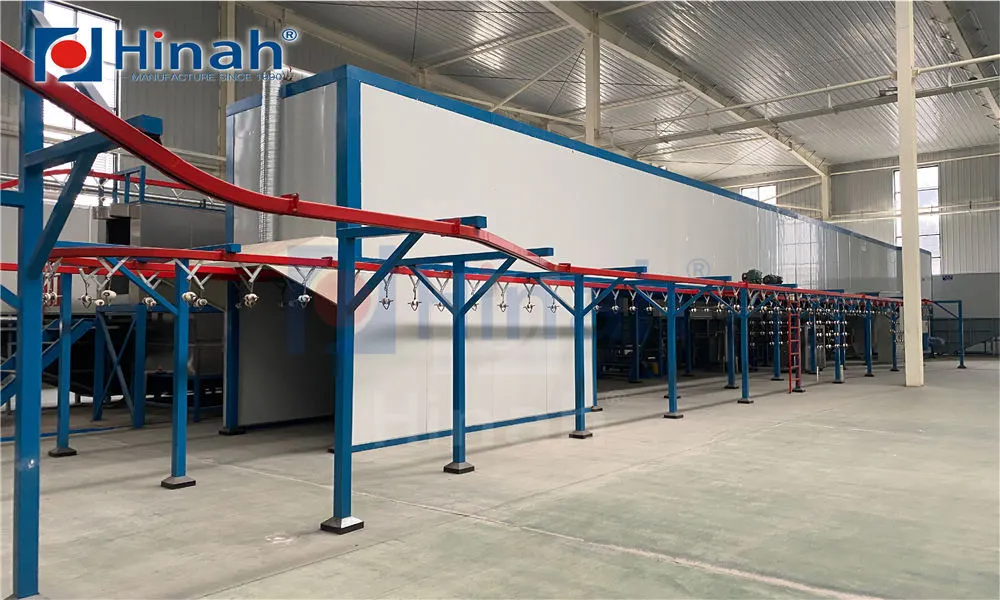
When reviewing a powder coating oven for sale, the technical specifications list provides essential insights into long-term reliability. Pay close attention to wall panel insulation thickness and material density. Standard systems typically use 100mm to 150mm of rockwool insulation; high-temperature applications benefit from denser insulation to minimize heat loss through the oven shell.
Air circulation configuration is another critical technical detail. Bottom-up airflow designs are highly effective for curing complex shapes because they naturally distribute heat as warm air rises. Additionally, the construction of the burner chamber and heat exchanger should utilize high-grade stainless steel to prevent oxidation and thermal fatigue over years of continuous operation.
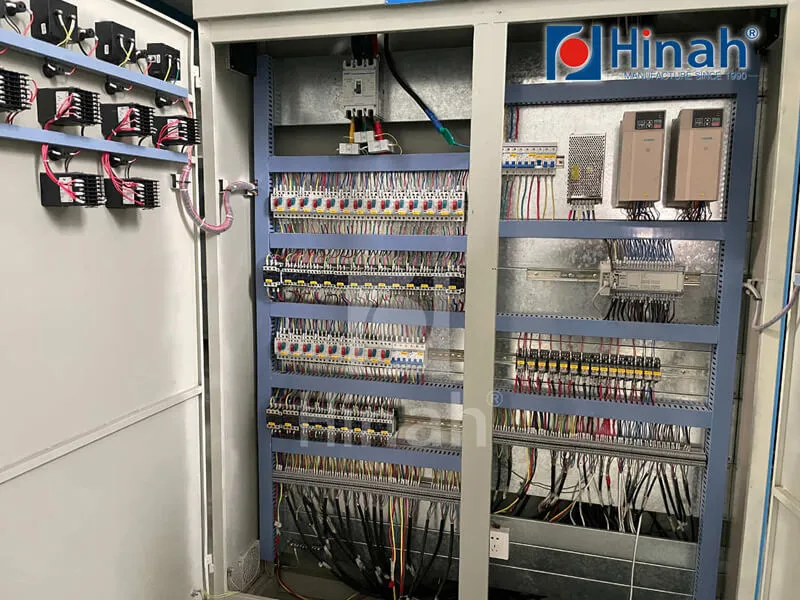
Control systems are also evolving beyond basic analog thermostats. Modern industrial systems utilize PLC-based controllers with multi-zone temperature tracking. For operations looking to integrate their finishing systems, manufacturers like HANNA provide control interfaces that monitor energy consumption in real-time, helping operators optimize bake cycles for different batch profiles.
Before finalizing a purchase, project managers can use this practical template to evaluate whether a specific powder coating oven for sale aligns with their operational targets and financial goals.
Dimensional Verification: Measure your largest anticipated workpiece and add at least 300mm of clearance on all sides to ensure proper airflow and prevent contact with the oven walls.
Thermal Ramp-Up Rate: Verify that the system can reach curing temperatures (typically 180°C to 200°C) within 20 to 30 minutes from a cold start to minimize idle time.
Exhaust Rate Calculations: Ensure the exhaust fan capacity meets safety regulations (such as NFPA 86 or EN 1539) for venting volatile organic compounds or moisture during the initial bake phase.
Operational Footprint: Verify that the floor space accommodates not only the oven itself but also the clearance required for doors, burner boxes, and loading carts.
Energy Consumption Estimate: Calculate the hourly operating cost based on local gas or electricity tariffs to determine the payback period of high-efficiency models.
Q1: What is the average lifespan of an industrial powder coating
oven?
A1: With regular maintenance, high-quality
industrial curing systems can operate reliably for 15 to 20 years. Key
components such as circulation fans, burners, and control relays may require
replacement or servicing every 5 to 7 years to maintain peak efficiency.
Q2: Can I use a gas convection oven to cure liquid coatings as well
as powder?
A2: Yes, many convection systems can
process both liquid and powder coatings. However, liquid coatings release higher
concentrations of flammable solvents, requiring increased exhaust ventilation
rates to comply with safety standards and prevent solvent wash issues.
Q3: How often should I perform a temperature profile test inside the
oven?
A3: For standard B2B production, we recommend
performing temperature profiling using a multi-channel data logger at least once
a month. For high-precision industries like aerospace or automotive, profiling
is typically conducted weekly or after any major nozzle adjustments.
Q4: Why does my powder finish have a textured or orange peel
appearance?
A4: An orange peel finish often results
from an incorrect thermal ramp-up rate. If the oven heats the substrate too
slowly, the powder particles do not flow out completely before cross-linking
begins. Conversely, excessive heat can cause the powder to gel prematurely.
Q5: What are the primary safety features to look for in a powder
coating oven for sale?
A5: Essential safety
features include explosion relief panels, purge timers to clear residual gas
before ignition, airflow safety switches that shut down burners if the fan
fails, and independent over-temperature limit controllers.
Acquiring a new curing system represents a long-term operational commitment. Prioritizing low initial purchase prices over thermal efficiency often leads to higher utility bills and inconsistent product quality. By analyzing key performance indicators such as heat distribution, insulation density, and energy consumption, B2B buyers can secure equipment that supports reliable production.
When reviewing options for a powder coating oven for sale, partnering with experienced manufacturers who offer custom engineering services is highly beneficial. Companies like HANNA provide tailored thermal designs and technical support, helping finishing shops optimize their curing processes, reduce scrap rates, and maintain consistent quality.