
In industrial surface finishing, the application of thermosetting powder coatings requires precise thermal treatment to achieve intended mechanical and chemical properties. This process relies on a molecular cross-linking reaction where polymer resins and curing agents chemically bond under sustained heat. Transforming dry, electrostatic powder into a continuous, durable protective layer requires a highly stable thermal environment. To establish this controlled environment, the integration of a professionally engineered curing oven is necessary to ensure consistent product quality, optimal adhesion, and reliable finish durability.
Understanding the thermodynamics of polymer cross-linking, the physics of heat transfer, and the engineering variables of oven design is fundamental for plant managers and process engineers. This analysis examines the mechanics of heat transfer, key process control parameters, system design considerations, and operational strategies to maximize efficiency and prevent finish defects in high-volume production lines.
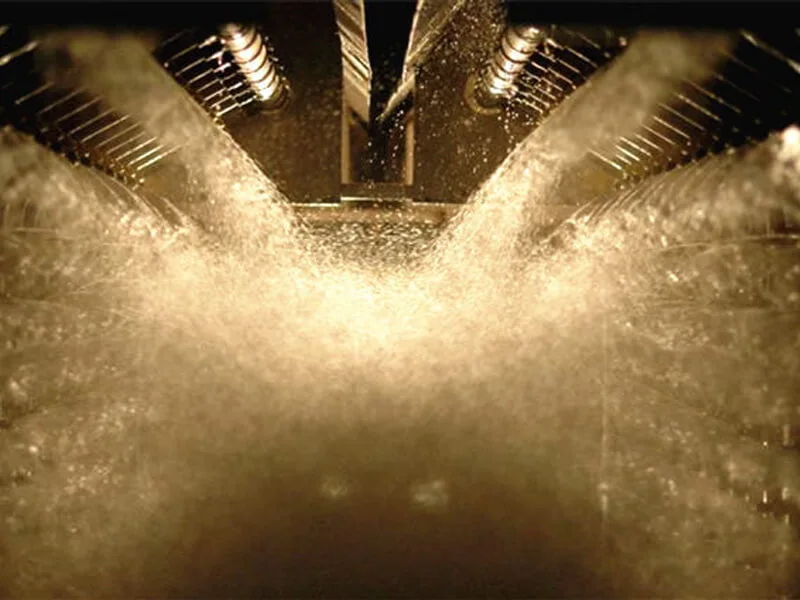
Thermosetting powder coatings consist of solid resin particles, curing agents, pigments, and additives. When exposed to heat within a controlled thermal chamber, these materials undergo a multi-phase physical and chemical transformation:
Melting and Flow Phase: As the surface temperature of the substrate rises past the glass transition temperature (Tg) of the resin, the solid powder particles melt, coalesce, and flow to form a continuous wet film.
Outgassing Phase: During the melting phase, any entrapped air, moisture, or volatile components must escape from the film before the cross-linking reaction progresses too far, preventing surface voids.
Gelation and Cross-Linking: Once the material reaches its activation temperature, the functional groups of the resin react chemically with the cross-linking agent. This exothermic chemical reaction increases the molecular weight of the polymer, forming a three-dimensional network.
Final Cure: The polymer network reaches its maximum cross-linking density, establishing the physical properties of the coating, such as impact resistance, flexibility, hardness, and chemical resistance.
If the heat input is insufficient, the chemical reaction remains incomplete, leading to poor adhesion and premature coating failure. Conversely, excessive heat exposure can degrade the polymer backbone, causing color shifts and brittleness. Consequently, maintaining precise control over the thermal profile within the heating chamber is a decisive requirement for any industrial coating line.
Industrial heating chambers utilize different methods to transfer thermal energy to the coated parts. The choice of heat transfer mechanism directly affects processing speed, temperature uniformity, and energy consumption.
Convection systems are the most common solution in high-volume industrial finishing. These systems utilize a burner box and a recirculating fan to heat the air, which is then distributed throughout the chamber via adjustable ductwork. The heated air transfers its energy to the substrate through convective heat transfer.
The design of a convection curing oven relies heavily on controlled air velocity and distribution. Airflow patterns must be designed to maximize heat transfer to the parts without generating excessive air velocities that could dislodge uncured powder from the substrate. Balanced supply and return duct systems are required to maintain a uniform temperature zone throughout the entire chamber volume, regardless of part geometry.
Infrared systems use electromagnetic radiation to transfer thermal energy directly to the coating and substrate, bypassing the intermediate air medium. This radiation is classified by wavelength into short-wave, medium-wave, and long-wave infrared energy.
IR systems offer rapid heat transfer rates, reducing the time required to bring the substrate to the reaction temperature. This rapid heating is advantageous for parts with high thermal mass or simple geometries. However, IR curing requires a direct line of sight between the emitter and the coated surface. Complex three-dimensional parts with recessed areas or shadowed zones cannot be cured uniformly using IR radiation alone, as shadowed regions will remain under-cured.
To balance the advantages of both methodologies, many modern production lines integrate hybrid systems. In a hybrid configuration, an initial infrared zone quickly melts and gels the powder, preventing powder blow-off and accelerating the heating cycle. This is followed by a convection zone that provides uniform thermal distribution to cure complex geometries, recessed areas, and inner cavities where direct line-of-sight radiation cannot reach.
Achieving a reliable cure requires careful calibration of several physical and operational parameters. Process engineers must monitor and control these variables to prevent production bottlenecks and quality defects.
A common operational oversight is relying solely on air temperature readouts from the oven controller. The cross-linking reaction is governed by the actual temperature of the metal substrate, not the surrounding air. Thick-walled steel castings possess high thermal mass and require significantly more time to reach the reaction temperature than thin-walled sheet metal components. Consequently, process parameters must be calculated based on substrate temperature profiles rather than ambient chamber air temperatures.
Dwell time refers to the duration for which the substrate is maintained at the specific curing temperature recommended by the powder manufacturer (for example, 10 minutes at 180°C). This dwell time does not include the ramp-up time required for the metal to reach that target temperature.
To establish accurate process windows, regular profiling of the curing oven is necessary to monitor thermal performance. This is achieved using a multi-channel data logger equipped with contact thermocouples attached directly to various points on a test part. This profiling system travels through the oven, recording the temperature-over-time curve of the substrate. This data allows operators to determine the exact time-temperature relationship and ensure that all areas of the part—regardless of metal thickness—receive the thermal energy required for complete polymerization.
The table below outlines typical thermal profiling parameters based on substrate thickness for a standard polyester powder formulation:
| Substrate Thickness | Estimated Ramp-Up Time | Required Dwell Time | Target Substrate Temperature |
|---|---|---|---|
| 1.5 mm Sheet Metal | 4 - 6 Minutes | 10 Minutes | 180°C (356°F) |
| 6.0 mm Structural Steel | 12 - 15 Minutes | 10 Minutes | 180°C (356°F) |
| 25.0 mm Cast Iron Block | 25 - 35 Minutes | 10 Minutes | 180°C (356°F) |
The structural design of an industrial heating system directly influences its thermal efficiency, temperature stability, and structural longevity. Several mechanical features must be incorporated into high-performance systems.
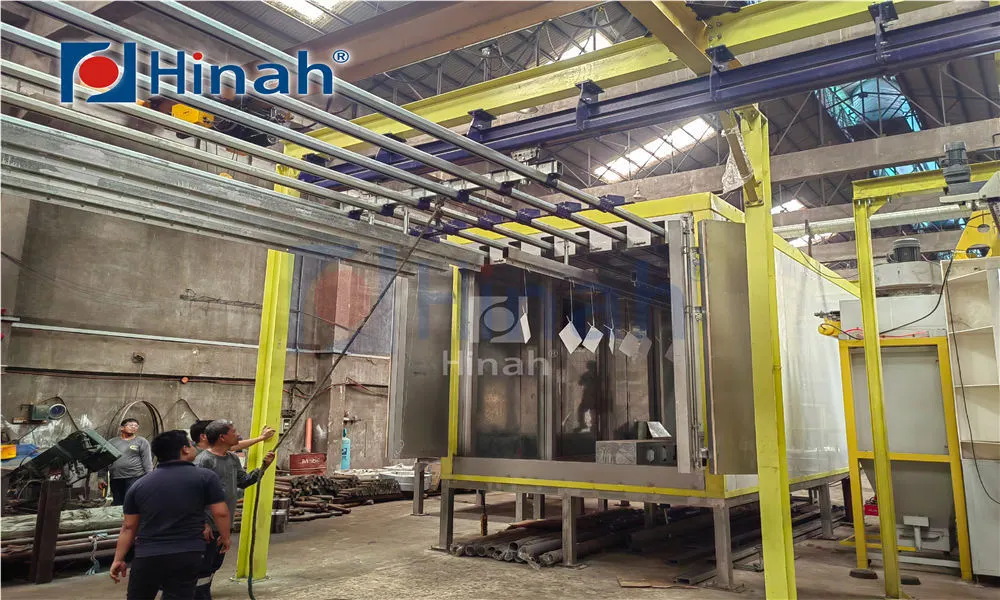
The outer enclosure of the chamber must minimize thermal radiation to the surrounding plant floor. Standard industrial designs utilize double-wall panel construction. High-density rock wool or mineral fiber insulation, typically between 100mm and 150mm in thickness, is packed between the inner and outer sheet steel skins. To prevent heat transfer via direct conduction, structural steel supports must incorporate thermal breaks. Industrial manufacturers, such as HANNA, design these thermal systems with heavy-duty rock wool insulation and structural frame thermal breaks to minimize heat dissipation.
In gas-fired convection systems, the combustion chamber must be designed to ensure complete fuel combustion while isolating the open flame from the recirculating air stream if indirect heating is required. Direct-fired burners are highly efficient but introduce combustion byproducts directly into the curing environment, which may affect certain sensitive colors. Indirect-fired systems utilize a high-temperature heat exchanger to isolate combustion products, ensuring clean air within the curing space.
The distribution of heated air from the combustion chamber to the working zone is controlled by supply ductwork equipped with adjustable dampers. These dampers allow engineers to fine-tune the airflow direction and volume, establishing a balanced temperature profile across the entire height and width of the conveyor path.
Continuous conveyorized coating lines require open entry and exit vestibules for parts to pass through without interruption. These openings represent a major source of heat loss. To mitigate this, air curtains or air seals are positioned at each opening. High-velocity blowers direct a thin sheet of air across the opening, creating a pressure barrier that keeps the hot process air inside the chamber while preventing cooler ambient air from entering. Integrating a modern curing oven into an automated line requires precise synchronization between conveyor speed and thermal profile.
Improper thermal processing leads to a range of physical and cosmetic defects. Understanding the root causes of these issues allows production teams to implement targeted corrective actions.
Under-curing occurs when the substrate does not reach the required temperature, or if the dwell time at that temperature is insufficient. This results in an incomplete polymer network, which manifests as poor adhesion, low impact resistance, and susceptibility to chemical solvent attack. Under-cured finishes are prone to chipping and delamination during subsequent assembly or field service.
Over-curing occurs when the coating is subjected to excessive temperatures or prolonged exposure to high heat. This causes thermal degradation of the polymer molecules, leading to color shifts (typically yellowing of light shades), loss of gloss, and increased brittleness, which reduces the impact strength of the finish.
The heating rate during the initial melting phase is key to preventing surface defects:
Orange Peel: If the temperature rises too slowly, the powder may not flow completely before cross-linking begins, resulting in a textured surface texture known as orange peel. Engineering customized heating zones, a specialty of HANNA, allows operators to regulate the temperature ramp rate, allowing the powder to flow smoothly before the cross-linking reaction commences.
Pinholes and Cratering: If the ramp-up rate is too rapid, the surface layer may cross-link before volatiles from the substrate or formulation have fully outgassed. This traps gas bubbles that eventually pop, leaving pinholes or craters in the cured finish.
Particulate Contamination: High-velocity airflow inside the chamber can carry airborne dust, fibers, or soot from direct-fired burners, which can settle on the molten powder and become permanently embedded in the cured surface. Maintaining high-efficiency filtration in the air recirculation loop is necessary to prevent this issue.
Maximizing the efficiency of thermal processing equipment requires systematic maintenance and careful energy management. Because heating processes are energy-intensive, small deviations in system performance can lead to significant increases in fuel or electricity consumption.
A structured preventive maintenance program should focus on several primary areas:
Burner Calibration: Annual calibration of gas burners ensures clean combustion and optimal fuel efficiency, reducing the formation of carbon soot and ensuring stable temperature control.
Gasket and Seal Inspection: Access door gaskets and high-temperature seals must be inspected regularly. Worn gaskets allow hot air to escape, causing increased energy consumption and unstable internal thermal profiles.
Fan and Motor Lubrication: Recirculating blowers operate continuously at elevated temperatures. Bearing lubrication and drive belt tension must be maintained according to manufacturer specifications to prevent mechanical failures.
Ductwork Cleaning: Over time, fine powder residues can bypass filtration systems and accumulate inside air distribution ducts. Regular cleaning of plenums and ductwork is required to maintain balanced airflow and prevent particulate contamination from settling on parts.
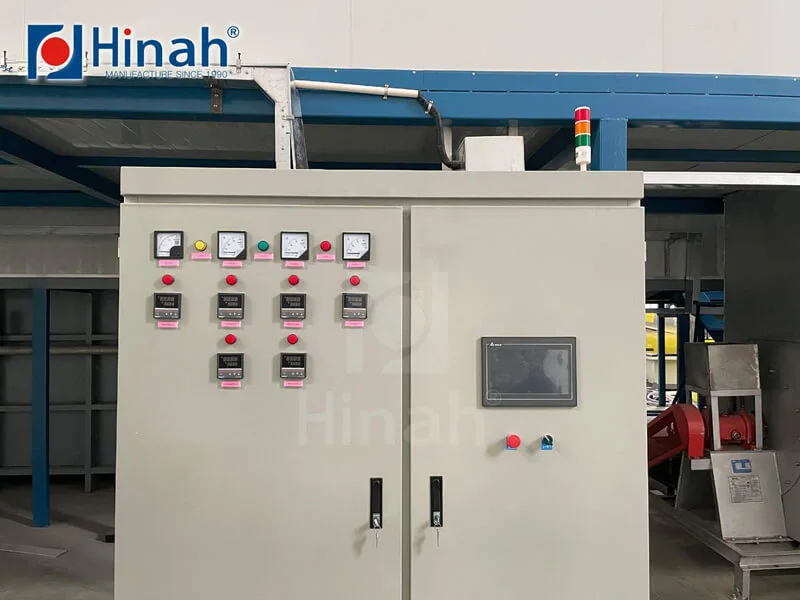
Achieving a reliable, high-quality powder coating finish is directly dependent on the performance and design of the industrial curing system. By maintaining precise control over substrate temperatures, optimizing heat transfer methods, and utilizing robust mechanical designs, manufacturers can achieve consistent product finishes and reliable throughput. Selecting and maintaining the appropriate curing oven ensures consistent quality and long-term reliability.
For specialized advice on configuring these systems to fit your production space, reaching out to the engineers at HANNA can provide valuable operational insights. We invite you to contact our team today to submit a detailed inquiry regarding your industrial coating requirements, equipment specifications, or process optimization goals.
Q1: What is the difference between air temperature and part temperature during curing?
A1: Air temperature refers to the thermal state of the recirculating air within the heating chamber, which is measured by system controllers. Part temperature, or substrate temperature, refers to the actual temperature of the metal substrate itself. Because metal parts require time to absorb heat, the part temperature lags behind the air temperature. Complete polymerization is only achieved when the metal substrate itself reaches and maintains the target temperature for the full duration specified by the powder manufacturer.
Q2: How often should an industrial curing system undergo thermal profiling?
A2: It is recommended to perform thermal profiling at least once a month under standard operating conditions. Additionally, profiling should be conducted whenever there is a change in the substrate geometry, metal thickness, powder coating formulation, or after any major maintenance on the burners or air distribution fans. This regular monitoring ensures that the system continues to operate within the correct process window.
Q3: What causes yellowing or color shifts in cured powder coatings?
A3: Yellowing or color shifts are typically caused by over-curing, where the coating is exposed to excessive temperatures or prolonged dwell times inside the heating chamber. It can also occur in direct-fired gas systems where combustion byproducts, such as nitrogen oxides (NOx), react with the curing agents in the powder, particularly in white or light-colored formulations. Switching to indirect heating or adjusting the burner calibration can help mitigate this issue.
Q4: How do air curtains at the oven entrance improve process efficiency?
A4: Air curtains create a high-velocity barrier of air across the open entry and exit vestibules of continuous conveyorized systems. This barrier prevents hot process air from escaping into the facility and limits cold ambient air from entering the heating chamber. By minimizing convective heat loss, air curtains stabilize internal temperatures and reduce the fuel or energy required to maintain the process temperature.
Q5: Can different metal thicknesses be cured simultaneously in the same batch process?
A5: Yes, but this requires adjusting the process parameters to accommodate the thickest substrate in the batch. The dwell time must be extended to ensure that the heaviest component reaches the target temperature and completes its cure cycle. Care must be taken to ensure that the thinner parts, which will reach the cure temperature much faster, are not subjected to over-curing or thermal degradation during the extended cycle.