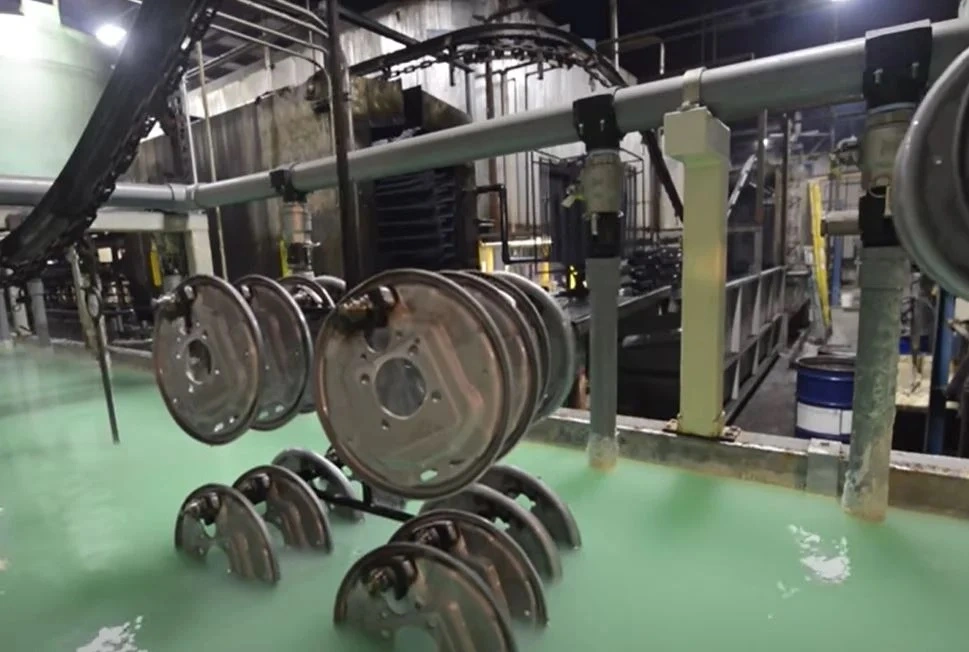

Industrial powder coating systems depend on the precise interplay between the spray booth environment and the curing oven thermal profile. For finishing engineers and production managers, the powder coating oven and spray booth represent a unified thermal-fluid system where particle transport, electrostatic deposition, and polymer cross-linking must be synchronised within tight tolerances. This article examines the engineering principles governing each subsystem and their collective influence on first-pass yield, film thickness uniformity, and surface defect density.
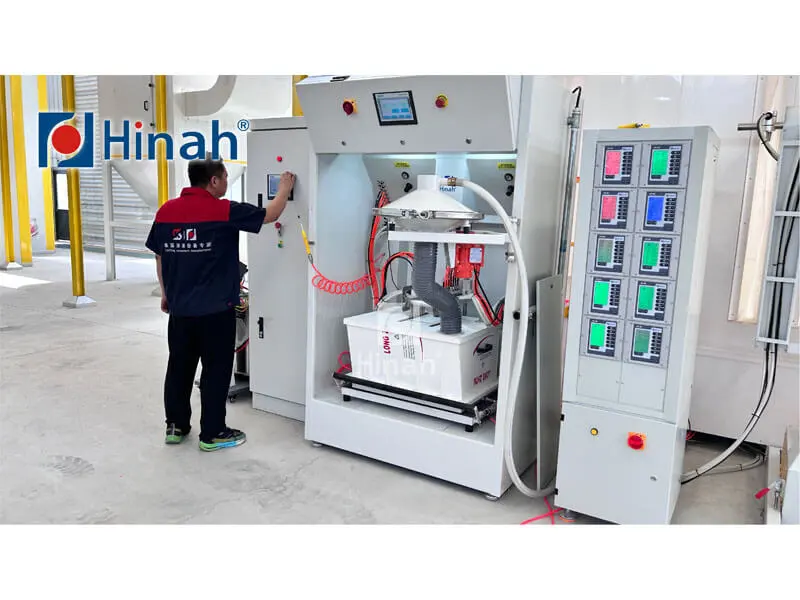
Every high-performance powder line operates within a defined envelope of air velocity, temperature gradient, and residence time. The spray booth section manages particle entrainment and overspray capture, while the oven section provides the thermal energy required for melting, flowing, and curing the powder film. Isolating these functions mechanically is straightforward, but optimising their interaction requires a systems-level view of pressure differentials, air balance, and thermal inertia.
Key performance indicators for the integrated system include:
Transfer efficiency (percentage of sprayed powder adhering to the substrate)
Cure index (degree of cross-linking measured via gel time or differential scanning calorimetry)
Film thickness range (typically 60–120 µm for architectural or automotive specifications)
Surface roughness (Ra values post-cure, influenced by powder flow and levelling behaviour)
These parameters are not independent. Modifications to booth airflow affect the powder cloud density, which in turn changes the deposited film mass per pass. That deposited mass then dictates the thermal demand in the oven, particularly the ramp rate needed to reach the glass transition temperature (Tg) of the resin system without causing outgassing or orange-peel defects.
Modern spray booths for powder applications operate with a controlled downdraft or cross-draft configuration. The face velocity typically ranges from 0.3 to 0.6 m/s for manual booths and 0.4 to 0.8 m/s for automatic systems. This range balances powder containment with operator comfort and minimises the re-entrainment of settled powder. Below 0.3 m/s, turbulent eddies near the workpiece cause uneven deposition; above 0.8 m/s, the electrostatic field is disrupted, and fine powder particles (<10 µm) are preferentially exhausted.
Pressure differentials between the booth interior and the surrounding plant environment must be maintained at 50–100 Pa negative to prevent powder leakage into the production area. This is achieved through a variable-frequency-drive (VFD) controlled exhaust fan, which adjusts speed based on filter loading. A pressure transmitter placed near the operator access point provides feedback to the VFD, ensuring consistent containment even as cartridge filters become progressively loaded with recovered powder.
Powder recovery efficiency directly affects material utilisation and operational cost. Two primary architectures dominate the industrial landscape:
Cyclone + secondary filter: The cyclone removes coarse particles (above 20 µm) with 90–95% efficiency, while the secondary cartridge or bag filter captures fines. This arrangement permits color changes with manageable purge times, provided the cyclone geometry matches the powder's Stokes number.
Cartridge-only (high-efficiency) system: Multiple cartridge filters in parallel achieve 99.8% capture for particles down to 0.5 µm. Pulse-jet cleaning with dry compressed air maintains the pressure drop below 1500 Pa. These systems are preferred for single-color, high-volume operations where downtime for filter change is minimised.
Recycled powder—a blend of virgin and recovered material—must be sieved (typically through 120–200 mesh) to remove agglomerates and contaminants before re-feeding to the spray guns. The ratio of recovered-to-virgin powder affects fluidisation characteristics and triboelectric charging behaviour; most manufacturers recommend a maximum 30% recycled content for consistent film quality.
The spray gun's corona or tribo charging mechanism interacts with booth airflow in ways that are often underestimated. High humidity (>60% RH) reduces charge transfer efficiency, leading to lower transfer efficiency and increased overspray. Dehumidification of the booth supply air is therefore not merely a comfort measure but a process-critical control point. Similarly, fluidising air volume (typically 2–4 m³/h per kg of powder) must be calibrated for each powder formulation; excessive fluidisation creates dusting, while insufficient flow leads to surging and erratic powder output.
Industrial curing ovens for powder coatings fall into three categories, each with distinct thermal characteristics:
Convection ovens: Heated air recirculated through gas-fired or electric duct heaters. Temperature uniformity within ±3 °C is achievable with proper baffle design. These ovens are the most common for general metal finishing due to their predictable heat-up rates and suitability for complex geometries.
Infrared (IR) ovens: Medium-wave or short-wave IR emitters provide rapid surface heating, reducing the time to reach the powder's melt-flow temperature. IR is particularly effective for thin-gauge parts with high surface-to-mass ratios, but it requires careful zoning to avoid shadowing effects.
Combination ovens: IR boosters followed by convection hold zones. The IR section quickly melts the powder, while the convection section maintains the substrate temperature for the required dwell time to complete cross-linking. This hybrid approach offers the best cycle time for mixed-product lines.
The temperature-time profile must match the powder manufacturer's cure schedule, typically specified as a metal temperature (not air temperature) for a given dwell time. For example, a standard TGIC-polyester system might require 10 minutes at 200 °C metal temperature. Thermocouple-equipped test coupons attached to the conveyor provide real-time feedback for oven control systems.
Multi-zone ovens enable independent control of heat input along the conveyor path. A typical configuration includes:
Entry zone: Rapid heat-up (20–30 °C/min) to initiate melting and flow
Mid zone: Soak at the target cure temperature (±2 °C)
Exit zone: Gradual cooling or controlled dwell to prevent thermal shock before handling
Air recirculation rates in convection ovens are set to achieve 10–20 air changes per minute. Higher recirculation improves temperature uniformity but increases the risk of powder contamination from airborne particles. Filters (MERV 13 or higher) on the recirculation path are mandatory for automotive or appliance-grade finishes.
The conveyor speed and part spacing determine the effective oven residence time and the thermal load on the system. As part density increases, the oven's heat exchanger must compensate to maintain the setpoint. This is where proportional-integral-derivative (PID) control with feed-forward from conveyor speed becomes essential. Without feed-forward, temperature droop occurs during high-load periods, resulting in under-cured areas on the leading edges of parts.
Load density also influences the airflow pattern within the oven. Dense loads can create "shadow" zones where recirculated air is blocked from reaching the part surfaces. Deflector plates and adjustable air nozzles help mitigate this, but the design must be validated using computational fluid dynamics (CFD) modelling during the engineering phase.
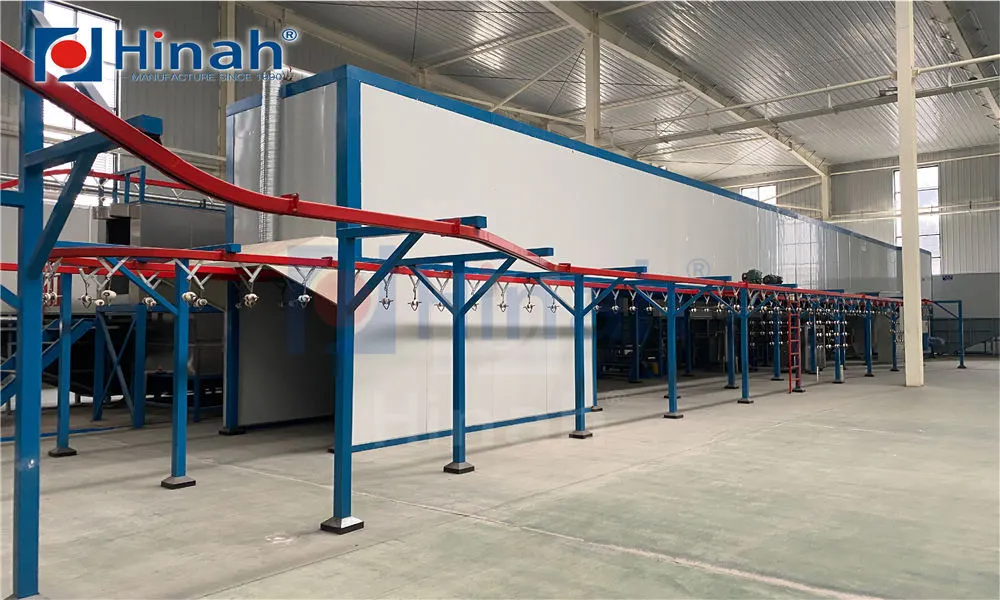
The interface between the powder coating oven and spray booth is not merely a conveyor pass-through; it is a critical junction where thermal and pneumatic conditions must be matched. The booth exhaust air—often laden with fine powder particles—should not be drawn into the oven intake. Physical separation of at least 2 metres, combined with directional air curtains, prevents cross-contamination. Additionally, the oven's cooling zone exhaust should be routed away from the booth inlet to avoid introducing heated, moisture-laden air that can affect powder fluidisation.
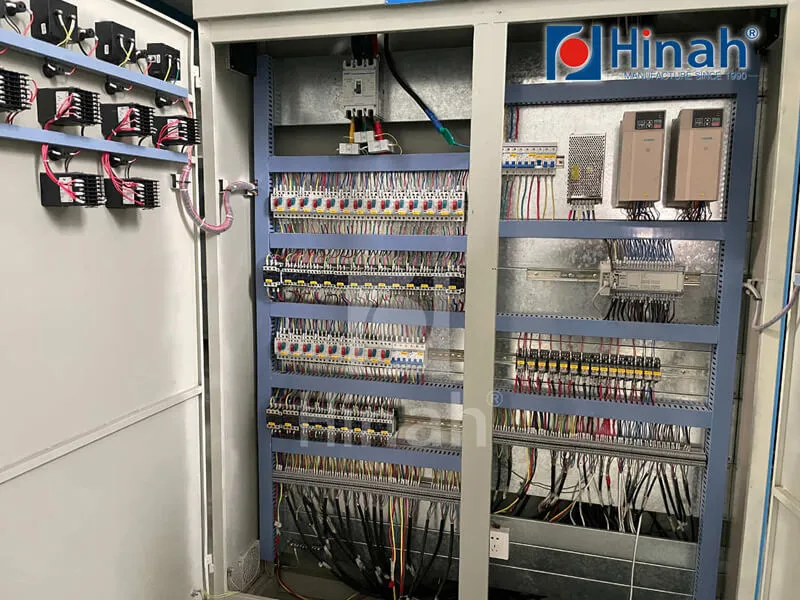
Control system integration is equally important. Modern programmable logic controllers (PLCs) link the booth's powder feed rate, the oven's temperature setpoints, and the conveyor drive speed. A central human-machine interface (HMI) allows operators to select product recipes that automatically adjust all parameters—gun voltage, powder flow, air velocity, and oven temperature—for each part type. This recipe-driven approach reduces setup errors and enhances repeatability across shifts.
Data logging of key process variables (oven zone temperatures, booth pressure, relative humidity, powder feed rate) provides traceability for quality audits. When film thickness deviations are detected, the logged data helps isolate whether the root cause lies in the booth (changing spray pattern), the oven (temperature drift), or the powder batch itself.
For finishing lines requiring frequent color changes, the system design must accommodate purge cycles. A typical color-change sequence involves stopping powder feed, purging the guns and hoses with air, and running the booth at increased exhaust flow for 5–10 minutes to clear residual powder. The oven, however, continues running to maintain thermal stability. This decoupling of booth and oven operations is a key consideration in line layout and conveyor routing.
Facilities with diverse product portfolios often opt for modular designs where the booth and oven can be reconfigured for different part sizes without extensive mechanical modifications. Telescoping booth walls, adjustable oven baffles, and quick-change filter cartridges support this flexibility. HANNA offers such modular systems with pre-engineered interfaces, reducing engineering time for custom line configurations. The integration of vision-based part recognition with recipe selection further automates changeovers, allowing the same HANNA system to handle both small brackets and large structural beams with minimal manual intervention.
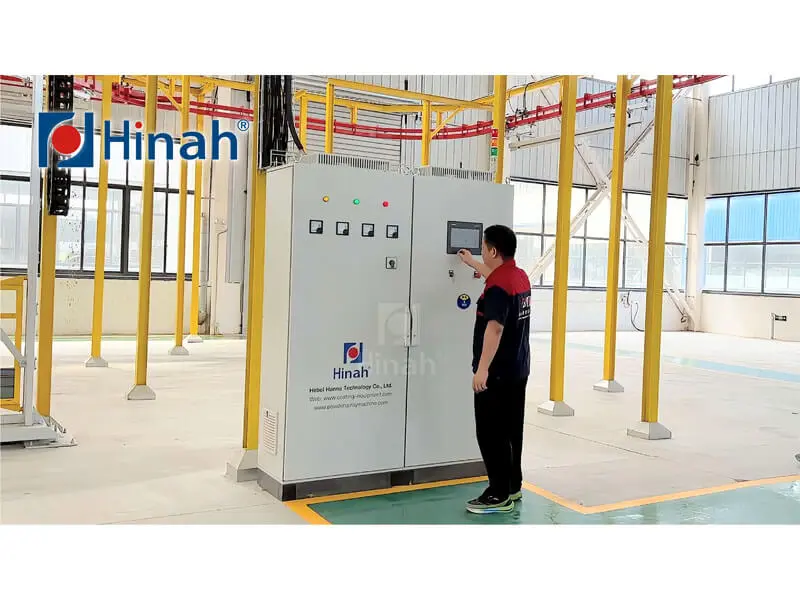
Scheduled maintenance activities for the combined system should be divided into daily, weekly, and quarterly intervals. Daily checks include inspecting the booth's powder feed hoses for wear, cleaning the spray gun electrodes, and verifying oven door seals for leaks. Weekly maintenance involves changing the booth's pre-filters and checking the oven's burner or heating element operation. Quarterly, the cartridge filters in the recovery system should be replaced or deep-cleaned, and the oven's temperature sensors should be calibrated against a NIST-traceable reference.
Performance verification tests are essential to demonstrate that the system remains within specification. A standard qualification protocol includes:
Booth airflow velocity mapping (9-point grid measurement at the part plane)
Oven temperature uniformity survey (12-point thermocouple array over the usable cross-section)
Transfer efficiency measurement (gravimetric method using coated and uncoated coupons)
Powder recovery efficiency (ratio of mass collected in hopper to total powder sprayed)
These tests should be repeated after any major maintenance event, such as fan replacement, filter media change, or control system upgrade. The data collected over time can be used to establish baseline performance bands, enabling predictive maintenance alerts when parameters drift beyond acceptable limits.
Q1: What is the ideal air velocity inside a powder coating spray
booth?
A1: The recommended air velocity ranges from 0.3 to 0.8 m/s,
depending on the booth type and part geometry. Manual booths typically operate
at 0.3–0.5 m/s to balance powder containment and operator comfort, while
automatic booths with higher production rates use 0.5–0.8 m/s to maintain a
consistent powder cloud and minimise overspray. Velocities below 0.3 m/s risk
powder settling on booth walls, while above 0.8 m/s may disrupt electrostatic
attraction and increase fine-particle exhaustion.
Q2: How do I determine the correct cure schedule for a powder coating
system?
A2: Cure schedules are specified by the powder manufacturer
based on the resin chemistry. The schedule always references the metal
temperature, not the oven air temperature. For example, a common schedule is 200
°C for 10 minutes at metal temperature. To validate this, attach thermocouples
to representative parts and run them through the oven at production conveyor
speed. The recorded time-temperature curve must meet or exceed the
manufacturer's minimum cure conditions throughout the entire part surface,
including thick sections and shadow areas.
Q3: Can recovered powder be reused directly in the spray
booth?
A3: Yes, but with important caveats. Recovered powder should
be sieved (120–200 mesh) to remove agglomerates and contaminants. Most systems
can incorporate up to 30% recycled powder mixed with virgin material without
significantly affecting fluidisation or transfer efficiency. Higher recycle
ratios may alter the powder's particle size distribution, leading to orange-peel
or reduced gloss. Regular testing of the mixed powder's flowability and
chargeability is recommended to maintain consistent film quality.
Q4: What causes orange-peel defects in powder-coated surfaces, and
how can they be prevented?
A4: Orange-peel is primarily caused by
incomplete flow or levelling of the powder film before gelation. Contributing
factors include: (1) the oven ramp rate is too slow, allowing the powder to gel
before fully melting; (2) the powder particle size distribution is too fine or
too coarse; (3) the substrate temperature is below the recommended minimum for
the resin system. Prevention involves verifying the oven temperature profile
with thermocouple runs, maintaining powder particle size within the
manufacturer's specification (typically D50 of 30–40 µm), and ensuring the
substrate is preheated to at least 10 °C above the ambient dew point to avoid
moisture-induced defects.
Q5: How often should the cartridge filters in a powder recovery
system be replaced?
A5: Replacement intervals depend on the system's
duty cycle and the powder type. Typically, cartridge filters last between 500
and 2,000 operating hours. Indicators that replacement is due include: (1)
differential pressure across the filters exceeds 1500 Pa despite pulse-jet
cleaning; (2) visible powder breakthrough on the clean-air side; (3) reduced
powder recovery efficiency, noted by increased overspray accumulation in the
booth. Regular monitoring of the pressure drop trend allows for predictive
replacement, avoiding unplanned downtime.
Q6: Is it possible to run both convection and IR heating in the same
curing oven?
A6: Yes, combination ovens that integrate infrared
emitters followed by a convection hold zone are widely used. The IR section
rapidly melts the powder, promoting flow and levelling, while the convection
section maintains the required dwell time for complete cross-linking. This
configuration reduces overall cycle time and is particularly beneficial for
parts with varying thermal masses. The IR zones must be individually
controllable to avoid overheating thin sections or under-heating thick sections,
which is achieved through zone-specific power control and part-temperature
feedback.
Q7: What is the effect of humidity on powder coating transfer
efficiency?
A7: Relative humidity directly affects the triboelectric
or corona charging of powder particles. At humidity levels above 60%, moisture
adsorbed on the powder surface reduces the charge-to-mass ratio, lowering the
electrostatic attraction to the substrate. This results in increased overspray
and reduced first-pass transfer efficiency. Dehumidifying the booth supply air
to maintain 40–55% RH is a standard practice for consistent deposition,
especially in tropical or seasonal climates. Continuous monitoring of booth
humidity with a calibrated sensor is recommended for quality-controlled
lines.
For detailed system specifications, layout assistance, or performance simulation of your powder coating line, please direct your inquiry to the engineering team at HANNA. Our specialists provide application-specific calculations, including airflow modelling, thermal load analysis, and recovery system sizing, to match your production requirements. Submit your project parameters here for a comprehensive system proposal.