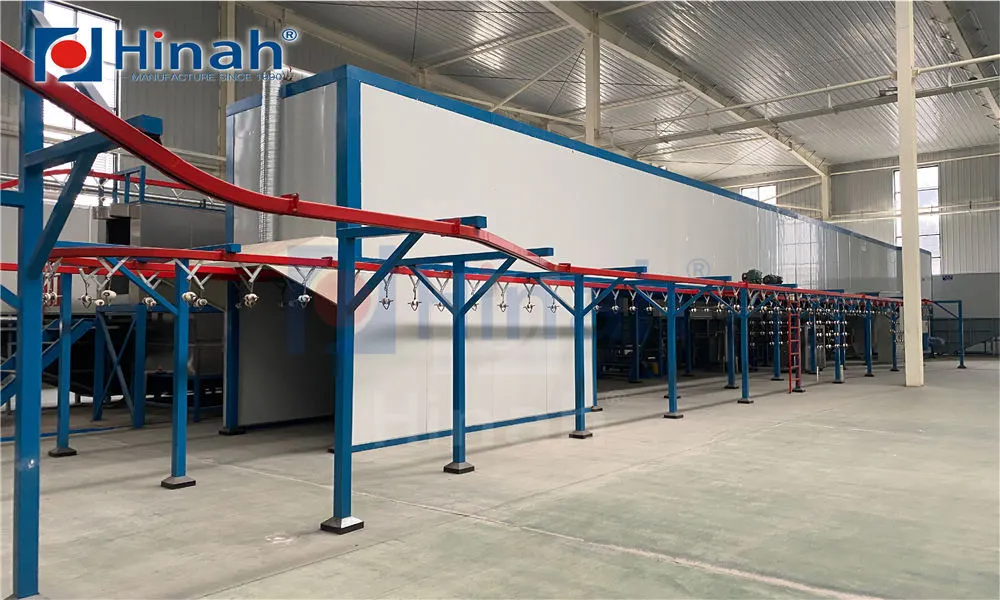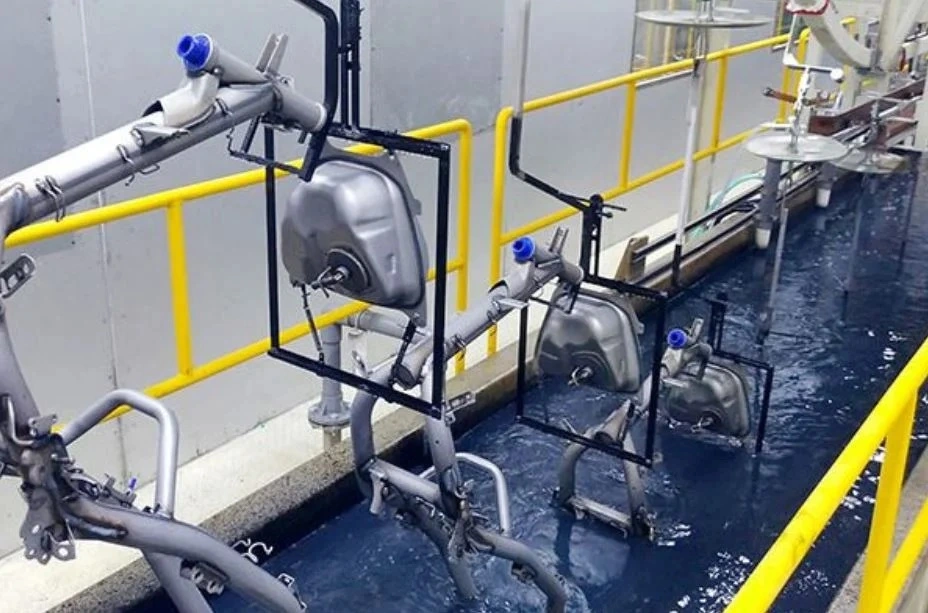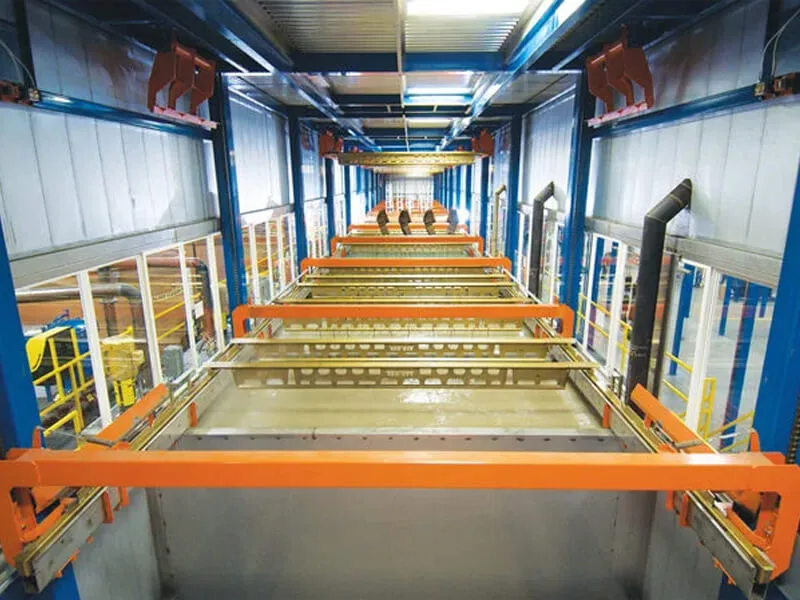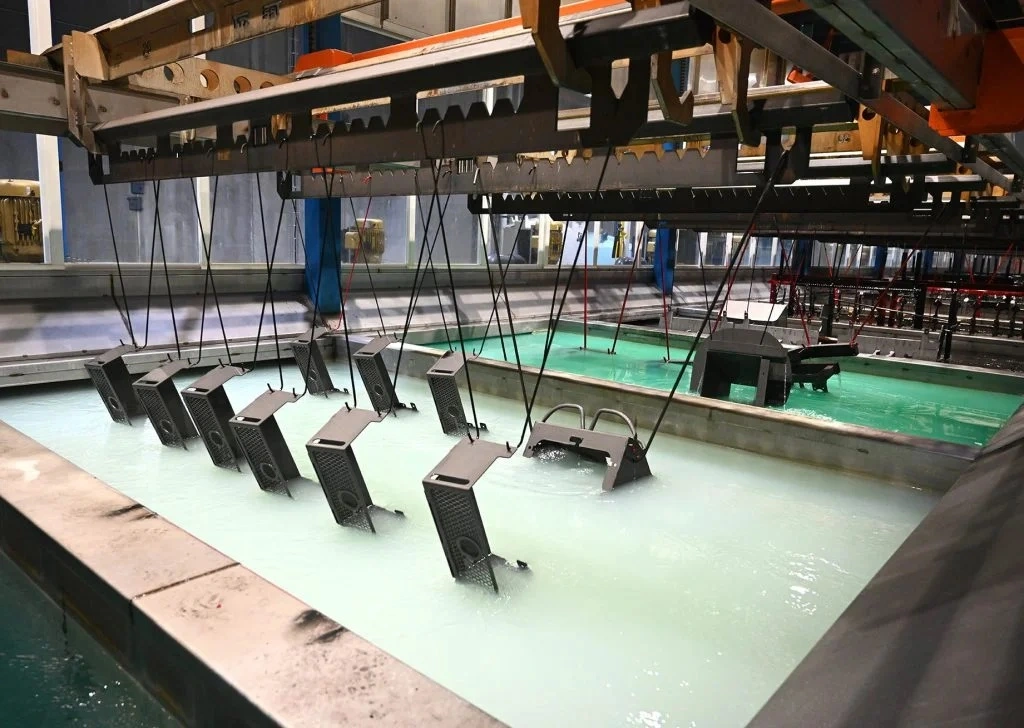

In modern industrial finishing, the efficiency of a coating line is largely determined by the design and operational discipline of Powder coating rooms. These controlled environments are not merely booths; they are integrated systems that manage overspray, regulate airflow, ensure operator safety, and directly affect first-pass transfer efficiency. Many finishing lines operate with hidden losses—excessive powder consumption, frequent color change downtime, or inconsistent film builds—all of which trace back to suboptimal room configuration. This article provides a component-level analysis of Powder coating rooms, addressing engineering pain points with measurable solutions, and referencing proven modular architectures from HANNA.
A well-engineered powder coating room contains overspray, recovers reusable powder, and maintains a clean substrate environment. Without proper containment, up to 40% of sprayed powder can be lost to floor sweepings or exhausted filters, directly increasing material costs. Moreover, cross-contamination between different powder chemistries (epoxy, polyester, hybrid) leads to rework and rejects. The primary functions include:
Overspray capture – using induced airflow to draw particles toward filtration units.
Airborne dust control – maintaining respirable dust levels below OSHA permissible limits.
Temperature/humidity stability – preventing moisture absorption in hygroscopic powders.
Explosion risk mitigation – integrating relief panels and spark detection per NFPA 33.
Leading integrators such as HANNA have developed modular spray booth designs that allow manufacturers to scale recovery systems based on production volumes, reducing total cost of ownership by 22–28% compared to field-built alternatives.
The most critical parameter in any powder coating room is the controlled airflow velocity across the operator opening. Standard face velocities range from 0.3 to 0.6 m/s (60–120 fpm). Below this range, powder drifts out of the enclosure; above it, turbulence pulls heavy particles into exhaust ducts prematurely. Computational fluid dynamics (CFD) simulations are now used to design laminar flow patterns that prevent dead zones near corners. For manual booths, a cross-draft design is common, while automatic lines with reciprocators prefer a semi-downdraft arrangement for uniform powder cloud extraction.
Most high-efficiency Powder coating rooms use either cartridge collectors or cyclones followed by secondary filters. Cartridge filter technology dominates fast-color-change applications because it offers pulse-jet cleaning and compact footprint. Cellulose/polyester blend cartridges with nanofiber coatings achieve 99.9% efficiency on particles >0.5 µm. Conversely, cyclones excel in high-throughput, single-color lines where reclaim quality is less sensitive; they remove larger particles first, reducing load on after-filters. A well-designed system returns 85–95% of overspray powder to the feed hopper, directly lowering virgin powder purchases.
For job shops running 5–15 color changes per shift, powder coating rooms must incorporate quick-release wall panels, smooth interior surfaces (stainless steel or static-dissipative polypropylene), and integrated blow-off lances. These features reduce cleaning time from 40 minutes to under 8 minutes. The use of cascading airflow zones further isolates different powder types. HANNA's modular rooms include floor-level sweep ducts that remove settled powder without manual scraping, a feature that has cut color change labor by 60% in field studies.
Despite standardized designs, plant managers face recurring issues. Below are three common failure modes and their engineering remedies:
Faraday cage under-coverage: Occurs on recessed areas or sharp internal corners. Solution – use multi-stage voltage profiling (40–70 kV) combined with tribo-charging guns that reduce back-ionization. Modify booth airflow to avoid vortex shedding around parts.
Filter blinding from fine powder: High humidity causes powder to agglomerate on cartridge surfaces. Solution – install dew point-controlled compressed air for pulse cleaning and maintain room temperature >18°C with RH below 55%.
Explosion hazards from dust accumulation: Many powder rooms exceed the 1/8-inch layer limit of combustible dust. Automated sweep-down nozzles on a timer prevent buildup. Pressure relief vents must have a calculated area of at least 0.1 m² per 10 m³ of enclosure volume.
A closed-loop recovery system within Powder coating rooms can reduce powder consumption by 30–50% compared to once-through exhaust. Two primary architectures exist:
Single-stage recovery: Cyclone + secondary cartridge; overspray powder is collected in a drum and sieved before reintroduction. Best for single-color, high-volume lines.
Two-stage with automatic sieving: Integrated vibratory sieve and fresh powder hopper. Allows direct blend of reclaim powder at 15–25% ratio without affecting appearance or cure.
Advanced powder management controllers monitor differential pressure across filters and trigger pulse cleaning only when needed, reducing compressed air use by 35%. HANNA's IntelliFlow system, available on request, adds real-time reclaim ratio tracking, reporting material savings directly to the ERP system. For lines processing over 500 kg of powder weekly, investing in a double-cyclone arrangement pays back within 10 months.
The interface between powder coating rooms and downstream curing ovens is often underestimated. Inconsistent transfer can lead to uncured powder falling off hooks or contamination of oven air. Critical integration points include:
Conveyor pass-through openings: Adjustable baffles that minimize air leakage between booth and oven. Recommended opening gap ≤ 50 mm around the chain and hangers.
Flash-off zone: A 2–3 meter unheated tunnel before the oven allows excess air from the spray booth to separate, preventing powder blow-off due to high oven airflow.
Cooling tunnels after cure: Avoids backflow of hot air into the powder room which could cause premature gelation of overspray powder.
When Powder coating rooms are poorly aligned with oven entry, part rejects increase due to “powder sag” or incomplete flow. Using synchronized variable frequency drives for both booth exhaust and oven air make-up maintains pressure balance within ±5 Pa. HANNA provides turnkey integration drawings that specify all interface dimensions, ensuring no field modifications are needed during installation.
Any enclosure where combustible powder is suspended in air must comply with NFPA 33 Standard for Spray Application Using Flammable Materials. Key requirements for powder coating rooms include:
Construction of non-combustible material (minimum 1.6 mm steel or equivalent).
Explosion venting – total area calculated as 1 ft² per 15 ft³ of volume (0.093 m² per 4.25 m³). Vents must discharge to a safe outdoor location.
Grounding continuity – all conductive components (booth walls, reclaim hoppers, gun barrels) bonded to a true earth ground with resistance < 1 ohm.
Automatic shut-off of powder feed and ventilation interlock when fire suppression activates.
For ATEX-certified environments (Zone 21 or 22), additional requirements mandate dust-ignition-proof electrical components and temperature monitoring of bearings in rotary valves. HANNA's Ex-proof powder rooms are fully certified for gas groups IIB and IIC, with stainless steel construction and passive spark detection.
Industry 4.0 transforms traditional booths into intelligent finishing cells. Modern Powder coating rooms integrate sensors that monitor:
Filter differential pressure – predicting cartridge change intervals.
Powder hopper level – triggering automatic refill from silos.
Air velocity at face opening – adjusting fan speed to maintain setpoint even when conveyor load changes.
Color change verification – using optical reflectance sensors to confirm no residual powder remains.
Cloud-based dashboards allow remote troubleshooting; a Midwest automotive supplier reduced unscheduled downtime by 62% after retrofitting smart monitoring systems to their three existing powder rooms. Predictive algorithms also notify operators when cleaning cycles require adjustment based on production volume trends.
A contract coater in Ohio faced 35-minute average color change times and 18% powder waste. HANNA designed a 12’ x 10’ powder coating room with quick-release floor grates, central vacuum recovery, and an auto-purge gun manifold. After installation, color change dropped to 9 minutes, and reclaim efficiency rose to 88%. The room's variable-speed fan reduced electricity consumption by 41% compared to the previous fixed-speed exhaust. This installation demonstrates that even compact Powder coating rooms can achieve metrics previously reserved for high-volume lines, provided the design incorporates modular reclaim and rapid-access filters.
Q1: How often should cartridge filters in a powder coating room be
replaced?
A1: Typical replacement interval is
800–1200 operating hours, but real-time differential pressure monitoring offers
a better indicator. When pressure drop exceeds 1.2 kPa (4.8 inH₂O) after pulse
cleaning, cartridge efficiency declines. In high-load applications (e.g., heavy
textured powders), change every 600 hours; for smooth, fine powders, up to 1500
hours is achievable.
Q2: Can powder coating rooms be used for both manual and automatic
spraying interchangeably?
A2: Yes, hybrid designs
incorporate operator access doors and robotic mounting rails. The critical
factor is airflow balance: manual spraying typically requires lower face
velocity (0.3 m/s) to reduce operator fatigue, while automatic lines with
reciprocators can tolerate 0.5–0.6 m/s. Adjustable inverter-driven fans allow
switching between modes.
Q3: What are the maximum temperature limits inside a powder coating
room?
A3: Most powder rooms operate at ambient
(15–30°C). Some powders (especially TGIC-free polyester) require room
temperatures below 28°C to prevent caking. For hot zones near curing ovens,
install insulated walls or an air curtain. Continuous exposure above 40°C
degrades filter media and promotes powder clumping in the reclaim hopper.
Q4: Is it necessary to have explosion venting if the powder room is
located outdoors?
A4: Yes, NFPA 33 does not exempt
outdoor enclosures. Even outside, a deflagration can cause structural damage and
project fragments. Outdoor powder coating rooms require vents directed away from
walkways and equipment. Hinged explosion panels are preferred over rupture
membranes for outdoor use due to weather resistance.
Q5: How can I calculate the required air volume for a new powder
coating room?
A5: Use the formula: Q (m³/h) =
face velocity (m/s) × opening area (m²) × 3600. For a 2.5 m wide by 2 m
high opening, with target velocity 0.4 m/s: Q = 0.4 × 5 × 3600 = 7200 m³/h. Add
15% for leakage around conveyor openings. Then select a fan capable of that flow
at 800–1200 Pa static pressure (depending on filter load).
Designing, retrofitting, or upgrading Powder coating rooms requires precise engineering to match your production mix, floor space, and powder types. Whether you need a compact manual booth or a fully automated multi-color system with integrated reclaim, HANNA provides site-specific CFD analysis, explosion safety calculations, and turnkey installation. Reduce your powder consumption, cut color change downtime, and achieve consistent finish quality.
Request a consultation or a free energy savings estimate today. Our engineering team will review your line layout, powder usage data, and safety requirements to deliver a customized solution.
Send your inquiry to HANNA’s industrial finishing division – click here to contact our specialists or call+86 186 3393 1770. For immediate technical datasheets, visit our resource center.