
Industrial surface finishing requires meticulous thermal processing to achieve the desired physical and chemical properties of thermosetting coatings. The cross-linking of polymer resins relies on a precise thermal cycle where temperature and dwell time must be controlled within tight parameters. Within this context, the selection of an industrial Electric powder coating oven dictates the final adhesion properties, impact resistance, and aesthetic quality of the finished parts. Unlike fossil-fuel-based heating systems, electrical heating offers unique advantages in terms of atmospheric purity, temperature control precision, and ease of maintenance, making it a preferred choice for high-specification industrial applications.
The powder curing process is not merely a drying phase but a complex chemical reaction. When thermosetting powder is applied to a substrate, it must undergo three distinct phases during the heating cycle: melt, gelation, and cross-linking. As the temperature rises, the solid powder particles melt and coalesce into a continuous liquid film. Further heating triggers the cross-linking reaction between the resin and the curing agent, raising the molecular weight and turning the liquid film into a tough, durable thermoset polymer.
This process requires a stable heat transfer mechanism. Convection heating is the primary method employed, using forced hot air to transfer thermal energy to the metal substrate. The rate of heat transfer is governed by the convective heat transfer coefficient, which is directly influenced by air velocity and temperature uniformity within the chamber. If the substrate does not reach its target temperature (often between 180°C and 200°C) and maintain it for the required dwell time, the coating will suffer from incomplete polymerization, leading to premature mechanical failure.
Operating a high-efficiency Electric powder coating oven relies on the precise balance of resistive heating and forced air recirculation. Electrical resistance elements, typically constructed from high-grade alloys such as nickel-chromium (NiCr), are housed within a dedicated heater cabin. When energized, these elements generate thermal energy, which is subsequently transferred to the circulating air stream.
A high-volume centrifugal fan pulls return air from the curing chamber, directs it through the heater cabin where it absorbs heat from the elements, and then forces the heated air back into the chamber via structured distribution ducts. The ductwork is engineered with adjustable registers or louvers that allow operators to balance the air distribution. This ensures that the hot air is distributed evenly across all zones of the oven, minimizing temperature gradients.
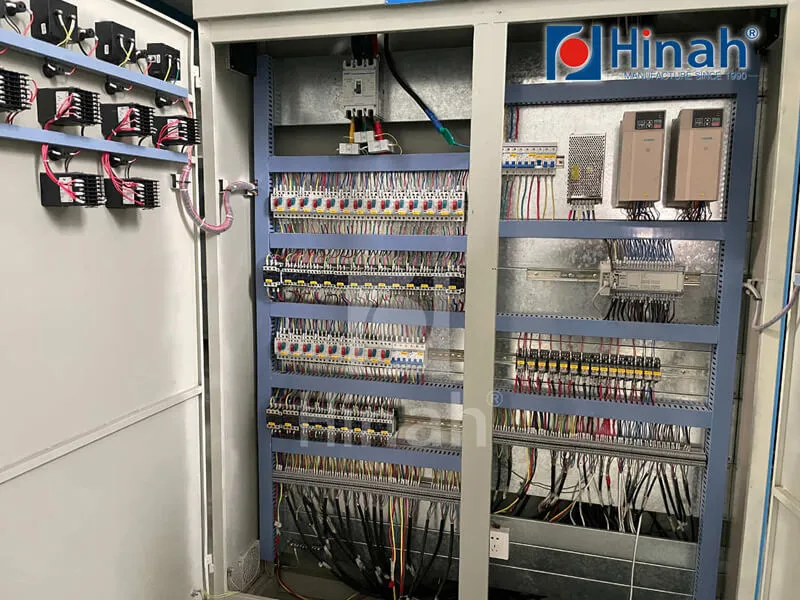
The integration of silicon-controlled rectifiers (SCR) or thyristor power controllers allows for infinitely variable control of the power output to the heating elements. Instead of simple on/off contactor control, which causes cyclic temperature fluctuations, SCR controllers modulate the electrical current based on continuous feedback from PID (Proportional-Integral-Derivative) controllers. This advanced regulation maintains the temperature within +/- 1 degree Celsius of the target setpoint, ensuring high curing consistency.
Minimizing heat loss is a key design parameter for any industrial thermal processing system. The structural envelope of the curing chamber must resist thermal expansion stresses while preventing heat transfer to the surrounding plant environment. To achieve this, manufacturers like HANNA utilize multi-layer high-density mineral wool insulation with thicknesses ranging from 150 mm to 200 mm, sandwiched between an inner lining of aluminized steel and an outer shell of cold-rolled structural steel.
Aluminized steel is selected for the interior due to its superior corrosion resistance and high heat reflectivity, which aids in maintaining thermal efficiency. The structural design must carefully address the phenomenon of thermal bridging—where metal-to-metal contact between the inner and outer skins creates a direct path for heat to escape. By utilizing specialized non-conductive joint designs and insulated structural breaks, thermal bridging is effectively mitigated. This design choice maintains the exterior panel temperature close to ambient, enhancing operator safety and reducing the thermal load on the factory's air conditioning systems.
The pattern of airflow inside the chamber determines the heating rate of the metal parts. There are several primary airflow configurations used in industrial ovens:
Horizontal Airflow: Recommended for flat panels or parts suspended in high-density configurations. The air moves across the chamber horizontally, ensuring even exposure for all parts.
Combination Airflow: Air is introduced from the bottom sidewalls and rises upward to be collected at the ceiling. This is highly effective for mixed-load configurations with varying part sizes.
Vertical Downward Airflow: Air is supplied from the ceiling and returned through ducts near the floor, suitable for large, heavy components that require rapid heat transfer.
Controlling air velocity is crucial. While high air velocity increases the heat transfer rate, excessive velocity can displace uncured powder from the parts, contaminating the oven and ruining the finish. Therefore, air distribution plenums must be designed to achieve high volume and low velocity, ensuring gentle yet thorough air circulation.
Industrial curing systems are configured based on production volume, part dimensions, and material handling methods. The two primary categories are batch systems and conveyorized continuous systems.
Batch systems are suitable for low-to-medium production runs, heavy or complex workpieces, and operations with variable curing cycles. These systems typically utilize heavy-duty swing doors or vertical lift doors equipped with high-temperature silicone gaskets to ensure a positive hermetic seal. Material handling is accomplished via manual carts, roll-in racks, or overhead monorails.
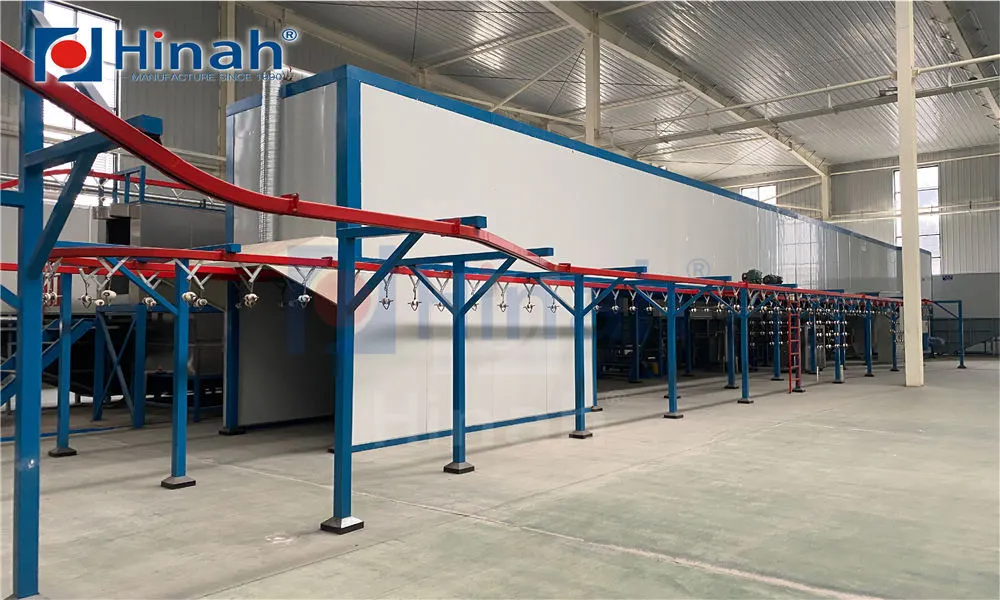
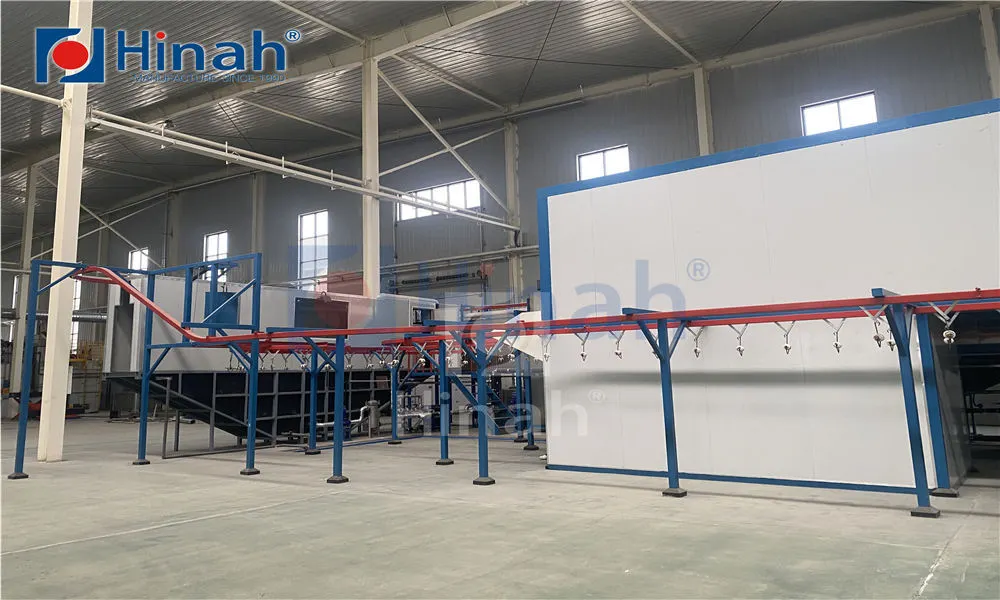
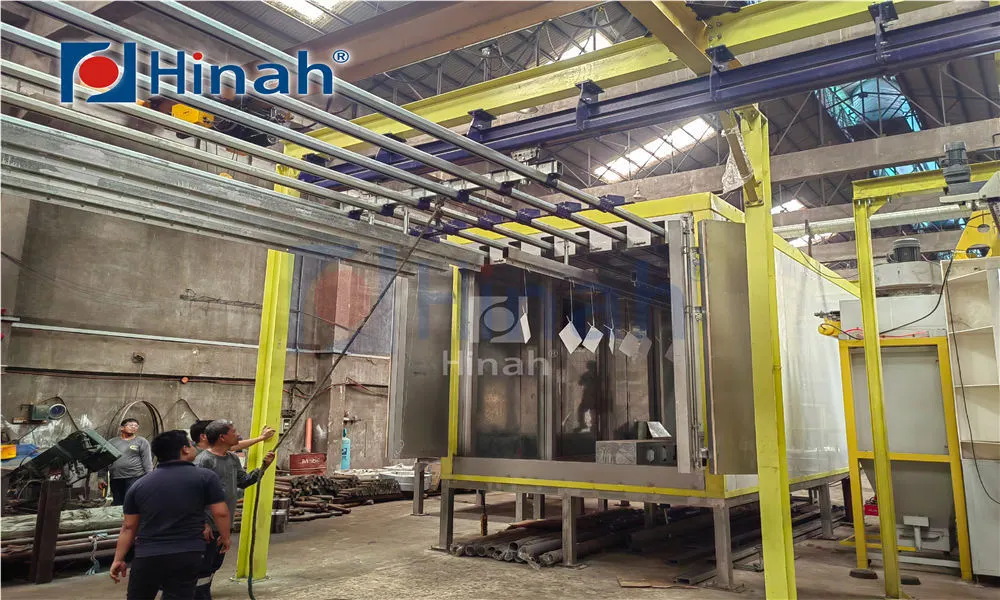
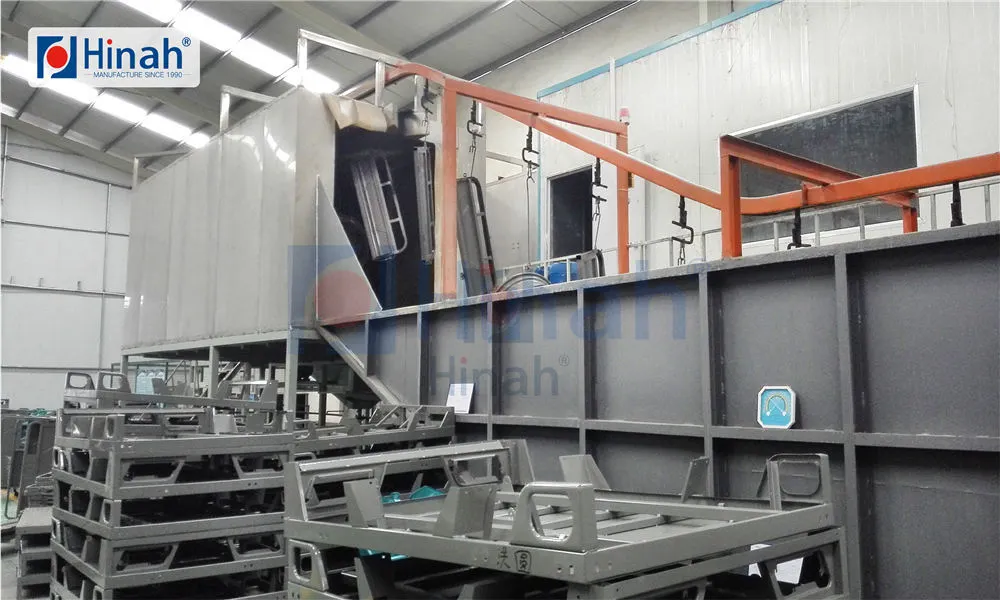
Conversely, when integrating an Electric powder coating oven into a continuous conveyor line, the oven is configured as a tunnel. Continuous tunnel systems are designed for high-volume, automated production where parts travel continuously through the heating zone. To prevent heat loss through the open entry and exit vestibules, these ovens are equipped with high-velocity air curtains. These air curtains project a laminar sheet of air across the openings, effectively containing the heated air within the chamber while allowing unrestricted passage of the suspended parts. The length of the tunnel is calculated based on the conveyor line speed and the required dwell time of the powder coating material to ensure a complete cure cycle.
Industrial operators often encounter operational difficulties that compromise the quality of the finished coating. Understanding these challenges allows for the implementation of robust engineering solutions.
Because hot air naturally rises, ovens can experience higher temperatures at the ceiling than at the floor. This stratification results in under-cured parts at the bottom of a rack and over-cured parts at the top. To solve this, advanced engineering designs, such as those implemented by HANNA, utilize proprietary structural breaks, floor-level return air ducts, and high-volume recirculation fans. This configuration pulls the cooler air from the bottom of the chamber and forces the heated air through adjustable overhead and lateral ducts, ensuring uniform temperature distribution throughout the entire working envelope.
Uncured powder applied via electrostatic spray is held on the metal substrate by weak electrostatic forces. If the velocity of the air entering the curing chamber is too high, it can displace the loose powder before it has melted and gelled, resulting in thin spots, rough finishes, and contamination of the oven interior. This challenge is addressed by designing low-velocity, high-volume air distribution systems. By widening the discharge ducts and using slotted plenums, the air velocity is kept below the threshold that causes powder displacement, while still delivering the thermal energy required for curing.
Although powder coatings contain minimal solvents, the curing process releases small amounts of volatile organic compounds (VOCs), water vapor, and low-molecular-weight polymers. If these substances are allowed to accumulate inside the chamber, they can condense on the ceiling or walls and drip back onto the curing parts, causing surface defects. Incorporating a continuous, low-volume exhaust system is necessary to vent these volatiles. This exhaust air is replaced by fresh filtered makeup air, maintaining positive pressure and preventing the ingress of external plant dust that could contaminate the finishes.
Specifying the correct equipment requires a detailed analysis of operational parameters. The thermal capacity of the heating elements must be sized not only to maintain the operating temperature but also to bring the incoming cold metal substrates up to the curing temperature within a specified heat-up rate. If the heat-up rate is too slow, the powder may not flow out properly, leading to an "orange peel" texture.
When designing a system, the total power rating of the Electric powder coating oven must match the peak throughput requirements. The calculation must account for the mass flow rate of the parts, the conveyor hooks, the structural racks, and the air turnover rate. Furthermore, the electrical control panel should feature advanced diagnostics, phase loss protection, and high-temperature limit controllers to prevent thermal runaway in the event of a primary thermocouple failure.
Operating high-temperature industrial equipment demands adherence to rigorous safety codes. In many jurisdictions, compliance with standards such as NFPA 86 (Standard for Ovens and Furnaces) is mandatory. Key safety features include:
Pre-Purge Cycle: Before the heating elements can be energized, the exhaust fan must run for a predetermined duration to ensure that any accumulated combustible vapors are fully purged from the oven volume.
Airflow Interlocks: Pressure switches must monitor the operation of the recirculation and exhaust fans. If any fan fails, the control system must immediately de-energize the heating elements to prevent localized overheating and potential fire hazards.
Explosion Relief Panels: Industrial ovens must incorporate lightweight explosion relief panels, typically located on the roof, designed to release pressure harmlessly upward in the event of an overpressure occurrence.
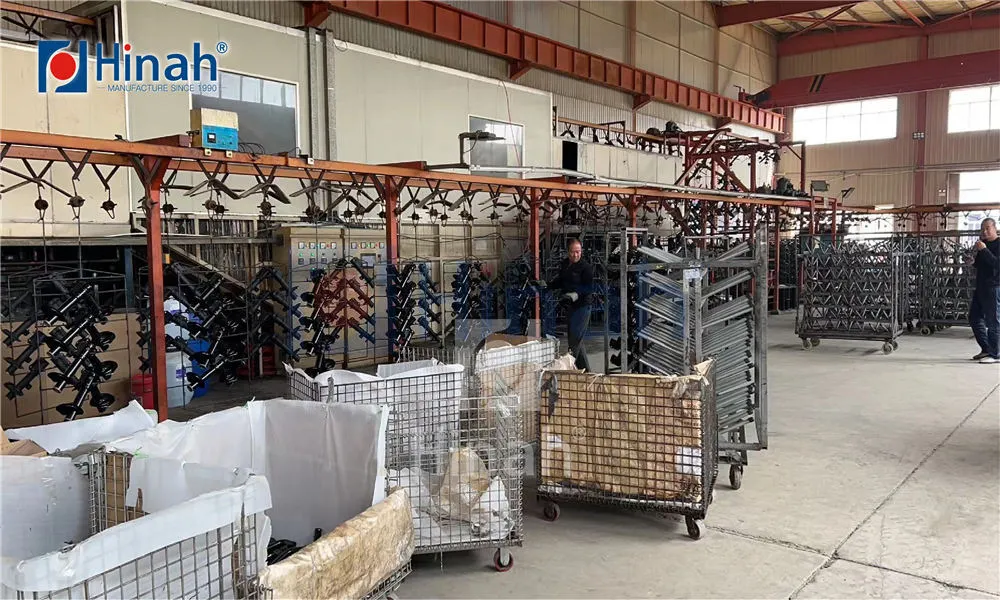
Achieving a high-quality surface finish requires a balanced integration of heating efficiency, airflow design, and precise temperature regulation. Choosing a high-performance Electric powder coating oven is a long-term investment that directly impacts production efficiency and product quality. By utilizing advanced PID control, robust thermal insulation, and balanced airflow distribution, manufacturers can ensure repeatable curing cycles that meet stringent industrial standards.
The engineering team at HANNA provides customized thermal designs tailored to your specific production demands, part geometries, and spatial constraints. For detailed technical evaluations, system specifications, or to discuss your upcoming finishing project, we invite you to contact our application engineers. Submit an inquiry today to receive a comprehensive engineering proposal tailored to your industrial requirements.
Q1: What is the optimal temperature uniformity required for standard powder curing?
A1: For standard industrial powder coating applications, a temperature uniformity of +/- 5 degrees Celsius (+/- 9 degrees Fahrenheit) throughout the working zone is typically sufficient to ensure consistent cross-linking. For high-specification sectors such as automotive or aerospace components, a tighter tolerance of +/- 3 degrees Celsius (+/- 5 degrees Fahrenheit) may be specified. This uniformity is verified through regular Temperature Uniformity Surveys (TUS) using multi-channel data loggers.
Q2: How does electric convection heating compare to infrared (IR) heating in powder curing?
A2: Electric convection heating utilizes forced hot air to heat the substrate and cure the powder. This method is highly effective for complex, three-dimensional parts with recessed areas, as the air wraps around the entire geometry. Infrared (IR) heating relies on electromagnetic waves to transfer heat directly to the surface. While IR systems offer fast heat-up times and are excellent for flat or simple geometries, they operate on line-of-sight and can struggle to cure shadowed or complex areas uniformly.
Q3: What safety features are mandatory for an electric industrial oven?
A3: Standard safety regulations, such as NFPA 86, require several integrated safety components. These include a pre-purge timer to exhaust potential vapors before heating, airflow safety switches that shut off the heating elements if the ventilation fans stop, an independent high-limit controller to prevent thermal runaway, and explosion relief panels to safely vent pressure in the event of an internal ignition.
Q4: How does a PID controller with SCR power modulation improve the curing process?
A4: A PID controller continuously calculates the difference between the desired temperature and the actual temperature, adjusting the output of the Silicon Controlled Rectifier (SCR) accordingly. Unlike traditional on/off contactor controls that cause temperature swings as the heaters cycle fully on and off, the SCR power controller modulates the electric current continuously. This results in highly stable temperatures, often within +/- 1 degree Celsius of the setpoint, preventing under-curing or over-curing of the powder coating.
Q5: What maintenance steps are necessary to prevent powder contamination in the oven?
A5: To prevent contamination, operators should perform regular maintenance including: routine vacuuming of the oven floor and recirculation ductwork to remove loose powder; checking and replacing exhaust and intake filters; inspecting door seals to prevent thermal leakage; and periodically wiping down internal walls to remove condensed volatiles that could drip onto curing workpieces.