
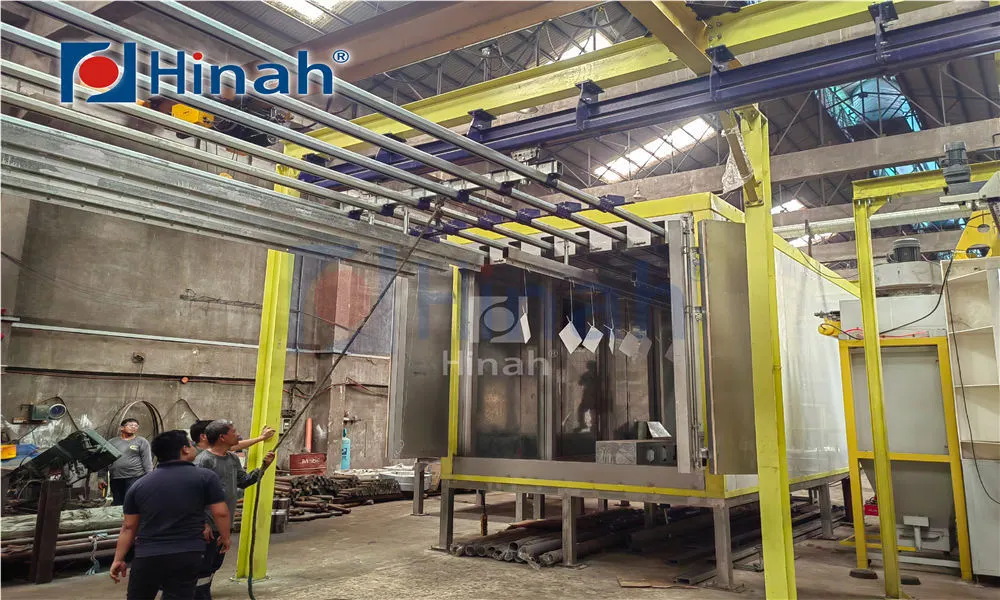
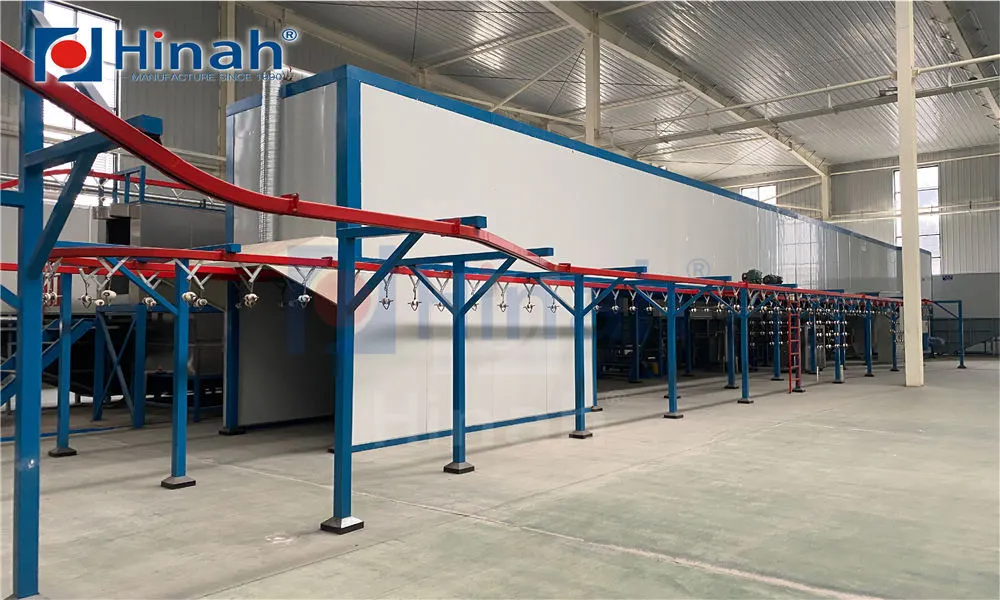
Industrial surface finishing demands precise control over environmental variables, powder recovery rates, and airborne containment. In high-volume production lines, the design of the application enclosure directly influences transfer efficiency, coating uniformity, and overall operational throughput. When plant managers and system engineers evaluate powder coating booth manufacturers, they must look beyond simple sheet-metal enclosures. The selection process requires a comprehensive assessment of fluid dynamics, material science, filtration engineering, and automation compatibility.
A properly engineered booth system acts as the foundation of the entire electrostatic application process. By maintaining balanced airflow and optimizing powder containment, these systems prevent cross-contamination, protect operators from overspray inhalation, and minimize powder waste. This analysis explores the core engineering principles, system configurations, and material choices that define industry-grade finishing equipment.
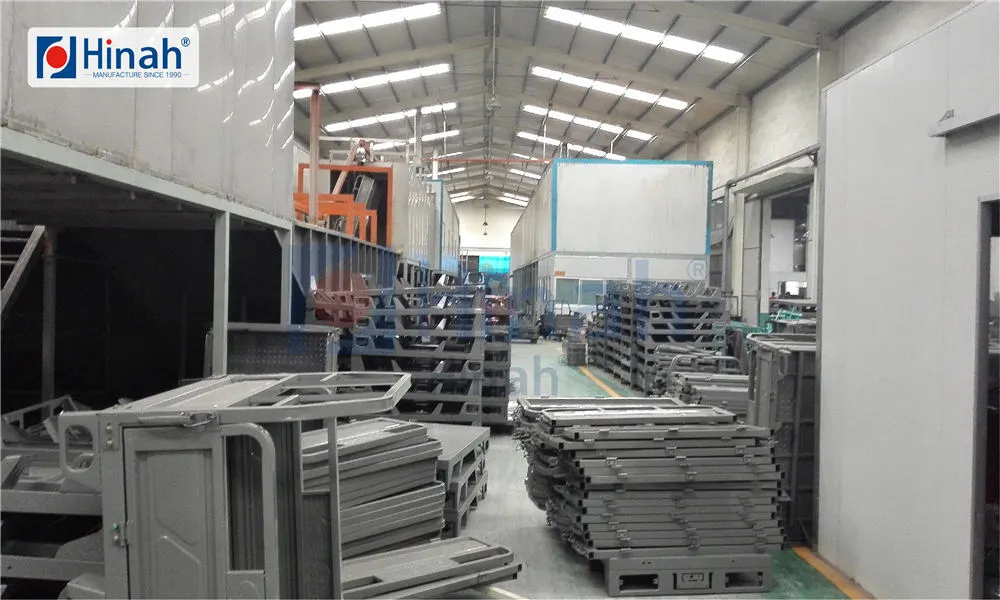
The primary function of any powder enclosure is containment. Air must be drawn into the booth at a velocity high enough to prevent powder particles from escaping into the plant floor, yet controlled enough not to disrupt the electrostatic powder path between the spray gun nozzle and the grounded workpiece.
Experienced powder coating booth manufacturers design air management systems based on face velocity standards. Face velocity is the speed of air moving through the booth openings, such as conveyor slots and manual operator stations. Industry standards generally dictate a minimum face velocity of 100 to 120 linear feet per minute (0.5 to 0.6 meters per second). Maintaining this threshold ensures that overspray is pulled directly into the extraction ductwork rather than drifting outward into the surrounding plant environment.
The distribution of this airflow is equally important. Linear airflow designs prevent turbulence around the spray zone. If air moves too rapidly or erratically near the electrostatic guns, it deflects the fluidized powder cloud away from the target parts, reducing first-pass transfer efficiency. Modern engineering utilizes computational fluid dynamics (CFD) to model air currents within the booth canopy, ensuring that low-pressure zones do not form where fine powder particles could accumulate and settle.
The material used to construct the booth canopy dictates both its powder-attracting properties and the ease of color changes. Traditionally, powder booths were constructed from stainless steel or galvanized steel sheet metal. While highly durable, metal surfaces are conductive and grounded, which naturally attracts electrostatically charged powder particles. This results in heavy powder buildup on the walls, requiring manual scraping and blowing down during color changes.
To address this operational challenge, leading engineering firms like HANNA utilize non-conductive, low-mass plastics for canopy construction. Materials such as polypropylene, polyvinyl chloride (PVC), or composite sandwich structures offer distinct advantages:
Using these materials allows manufacturers to create a self-cleaning floor system. Mechanical scrapers or rotating air knives continuously move fallen powder toward the extraction intake, maintaining a clean booth floor throughout the production cycle.
For operations using multiple colors or high-volume single colors, the choice of recovery system determines the material efficiency of the line. Industrial powder coating booth manufacturers offer two primary recovery configurations: cartridge filter systems and cyclone separators.
Cartridge systems utilize a bank of polyester or paper filters positioned directly behind the spray chamber or in an integrated collector module. The exhaust fan pulls air through these cartridges, trapping the oversprayed powder on the outer surface of the filter media. Periodically, a reverse-pulse jet of compressed air cleans the cartridges, knocking the powder down into a collection hopper.
While cartridge collectors achieve high filtration efficiency (often exceeding 99.9% for particles down to 0.5 microns), they are generally limited to single-color operations where the collected powder can be continuously recycled back to the feed hopper. If a color change is required, the entire set of cartridges must be replaced and the collector cabinet thoroughly cleaned to prevent color cross-contamination, which introduces significant downtime.
For operations requiring frequent color changes with reclaim capabilities, multi-cyclone or high-efficiency single cyclone systems are the industry standard. Overspray-laden air enters the cyclone inlet tangentially at high velocity. The centrifugal force flings the heavier powder particles outward against the cyclone wall, where they spiral downward into a collection cone and are pumped back to the fluidizing hopper via a sieve system.
The clean air, along with ultra-fine powder particles (typically under 5 microns), rises through the center vortex tube and passes to a secondary after-filter module containing final HEPA filters. Cyclone systems achieve recovery efficiencies of 95% to 98%. Because the cyclone has no internal parts or filters to trap powder, cleaning the polished stainless-steel interior involves a rapid air-purge process, allowing color changes to occur quickly and reliably.
To maximize throughput, industrial powder application relies heavily on automated gun movement. Modern booths designed by HANNA are engineered to accommodate multi-axis reciprocators, robotic arms, and automatic optical sensing barriers.
As parts approach the booth entry, light curtains or laser scanners detect the height, width, and profile of the incoming workpiece. This dimensional data is transmitted to the PLC, which adjusts the stroke length, speed, and positioning of the automatic spray guns in real-time. This level of synchronization ensures uniform film thickness across complex geometries while minimizing overspray outside the boundaries of the part.
The mechanical interface between the reciprocator and the booth wall must be sealed to prevent powder leakage. Specialty slot seals, constructed from flexible polyurethane strips or pressurized air barriers, allow the gun bars to move vertically or horizontally without allowing powder particles to escape into the ambient plant environment.
The application of organic powder coatings involves electrostatic charges, compressed air, and combustible organic dust. Therefore, safety compliance is a major consideration when evaluating powder coating booth manufacturers.
Enclosures must comply with international standards such as NFPA 33 (National Fire Protection Association) in North America, or ATEX directives in Europe. These safety codes dictate several design parameters:
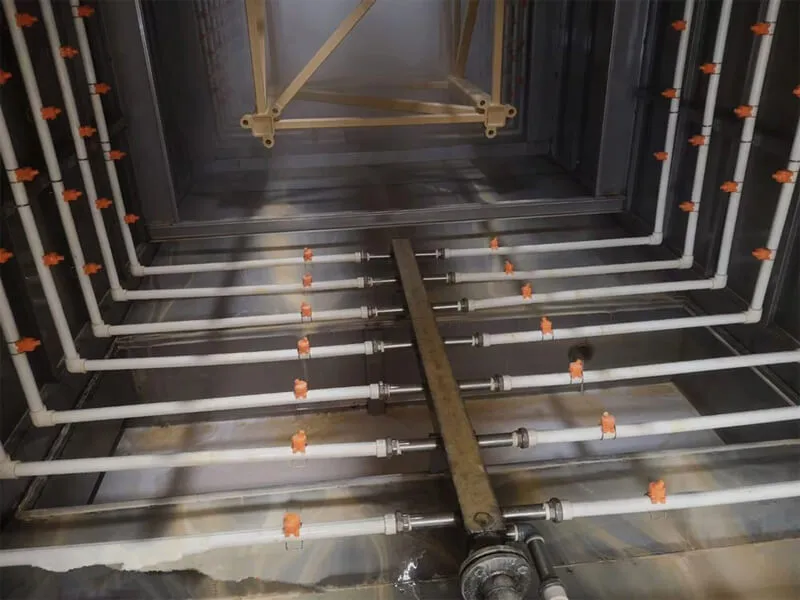
When selecting a manufacturer, procurement teams must evaluate the vendor's engineering capability to customize systems for specific line layouts. Overhead monorail conveyors, power-and-free conveyor loops, and floor-mounted track systems all require specialized booth entry and exit profiles to minimize air leakage while allowing smooth part travel.
Additionally, the integration of high-pressure fluidizing feed centers, ultrasonic sieves, and powder management centers should be considered. A well-designed powder management center automatically transfers virgin powder from bulk boxes to the spray hopper, mixes it with reclaimed powder from the cyclone, and monitors powder level sensors to maintain a consistent feed density to the spray guns.
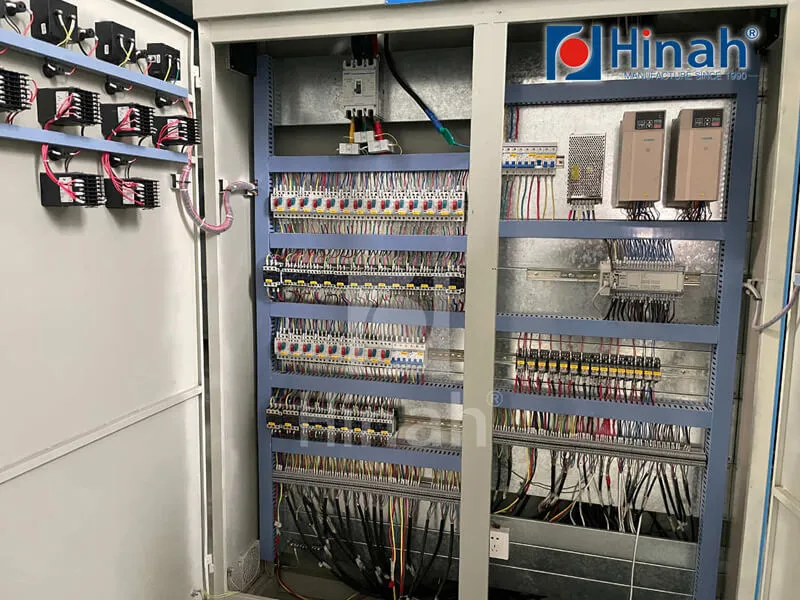
Working with an established partner like HANNA ensures that the physical booth, air handling unit, recovery system, and control PLC operate as a unified system, minimizing commissioning delays and guaranteeing that emissions comply with local environmental regulations.
Q1: What is the optimal face velocity for an industrial powder coating booth?
A1: The industry standard face velocity is between 100 and 120 linear feet per minute (0.5 to 0.6 m/s). This velocity provides sufficient suction to contain overspray within the booth enclosure while preventing air turbulence from disrupting the electrostatic deposition of powder onto the workpiece.
Q2: Why are polypropylene booths preferred over stainless steel booths for multi-color lines?
A2: Polypropylene is non-conductive and holds a low static charge. Unlike grounded stainless steel, which attracts charged powder particles, polypropylene repels them. This reduces powder accumulation on the walls, making it easier to clean and significantly reducing the time needed to change colors.
Q3: How does a cyclone separator achieve powder recovery without filters?
A3: A cyclone separator uses centrifugal force to separate powder from the air stream. The exhaust air enters the cyclone tangentially, creating a rapid vortex. The heavy powder particles are thrown against the outer wall and fall down to the collection cone for reuse, while light particles and clean air exit through the top exhaust path.
Q4: What safety standards must a powder coating booth comply with?
A4: Depending on the region, booths must comply with NFPA 33 (for fire protection in spray application processes) or ATEX directives (for explosive atmospheres). These standards require interlocks between ventilation and electrostatic systems, grounding verification, and explosion venting for collectors.
Q5: Can automatic and manual spray stations be combined in a single booth?
A5: Yes. Many high-volume lines feature an automatic booth chamber equipped with reciprocators, followed immediately by manual touch-up stations on the entry or exit side of the booth. These touch-up stations allow operators to apply powder to recessed areas or complex weldments that automatic guns cannot reach.
Designing an efficient, safe, and high-performance powder finishing line requires custom engineering tailored to your part dimensions, production volume, and color change requirements. Contact our engineering team today to receive a detailed system proposal, layout design, and equipment specification sheet for your upcoming coating line upgrade.