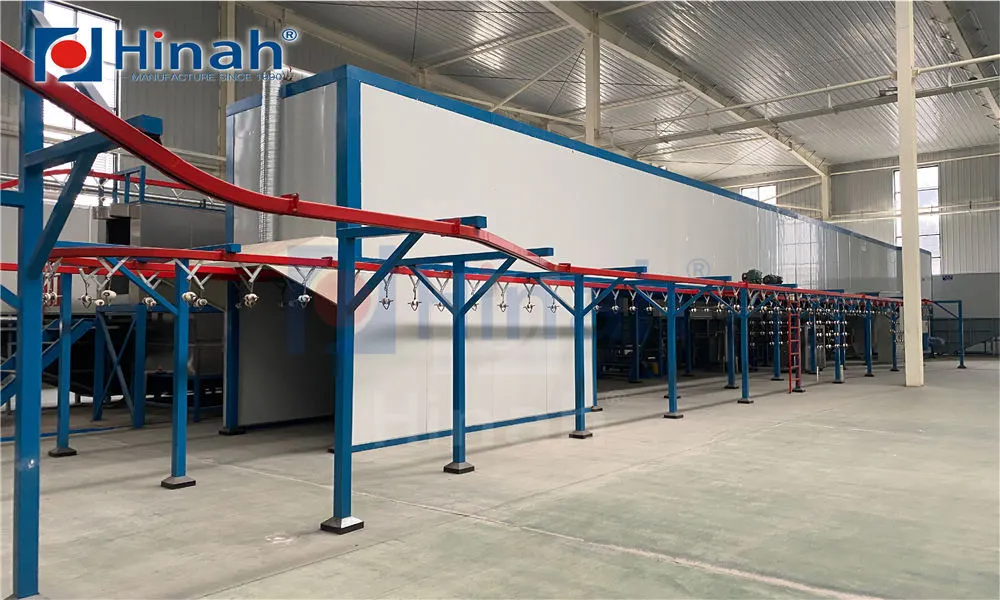

Industrial surface finishing requires a systematic approach to surface preparation, application, and curing. To achieve durable finishes on metal components, manufacturers utilize integrated industrial finishing setups. A modern industrial paint line system acts as a unified production line designed to apply protective and decorative coatings systematically. From heavy machinery and automotive assemblies to agricultural equipment and household appliances, these systems must handle specific production volumes, part geometries, and material specifications. Choosing the right design configurations is a primary factor in minimizing downtime and securing consistent coat thickness. Equipment manufacturers such as HANNA design these systems to balance material distribution, heat transfer, and conveyor speeds, ensuring each stage operates in synchronization with the next.
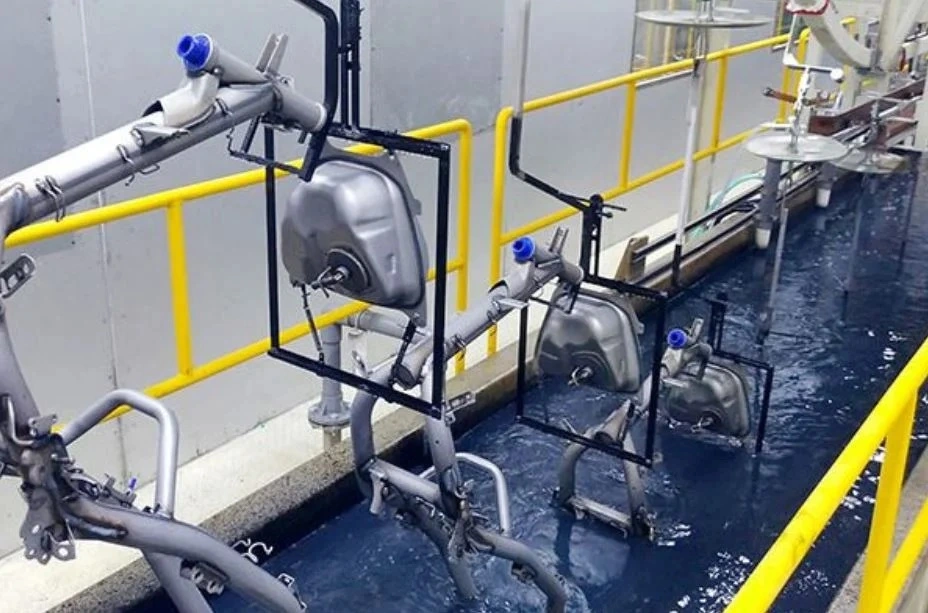
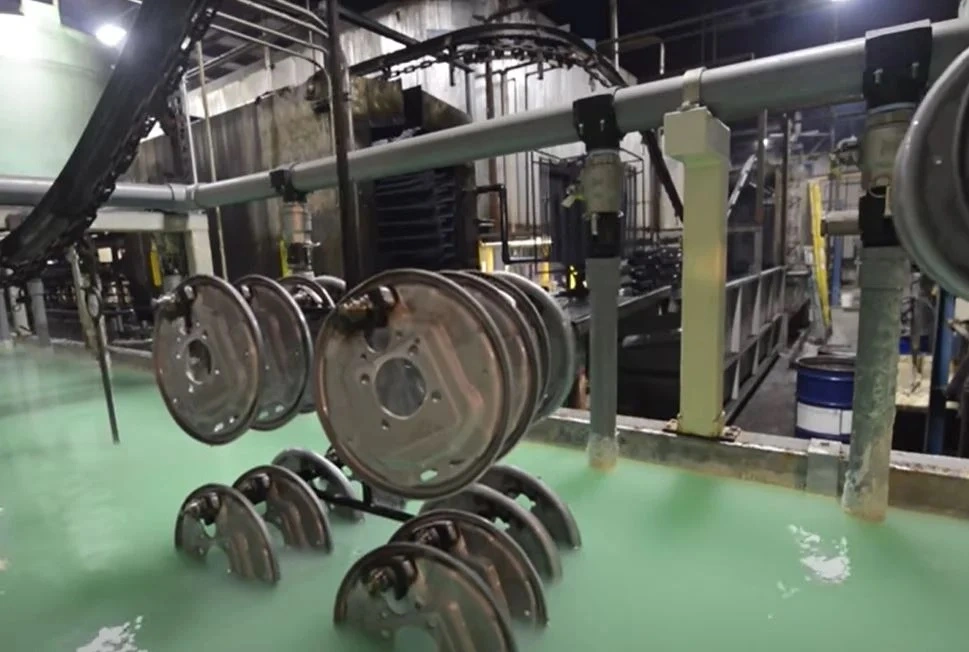
Surface preparation is the foundation of high-quality coating. Without proper cleaning and profiling, coatings fail to adhere, leading to peeling, corrosion, and finish defects. Pretreatment systems typically consist of either chemical spray washers or dip tanks, depending on part sizes and production volume requirements.
For steel parts, a multi-stage chemical washer is configured to perform degreasing, rinsing, surface activation, phosphating, and final sealing. An iron phosphate or zinc phosphate treatment creates a microscopic conversion layer that prevents oxidation and improves paint adhesion. Zinc phosphating provides a more robust crystalline layer, making it suitable for parts exposed to harsh outdoor environments. Zirconium-based pretreatments have also gained traction due to their ability to operate at ambient temperatures and their compatibility with multiple metal substrates, including steel, aluminum, and galvanized surfaces.
The physical cleaning stage often begins with a heated alkaline degreaser to remove manufacturing oils, rust preventatives, and drawing compounds. This is followed by multiple water rinses, using reverse osmosis (RO) or deionized (DI) water in the final rinse stage to prevent water spot contamination. Residual minerals from tap water can leave conductive salts on the metal surface, which can cause blister defects under the cured paint film. A properly engineered spray washer controls nozzle pressure, angle, and flow rates to ensure complete chemical coverage on complex part configurations.
Typical stages in a high-capacity chemical pretreatment process include:
Once the parts exit the wet pretreatment stage, they must be completely dried before coating application. The dry-off oven utilizes high-velocity air circulation to remove moisture from complex geometries, crevice areas, and blind holes. Moisture left on the surface can cause flash rusting or lead to application defects such as pinholes and bubbling when the coating is applied.
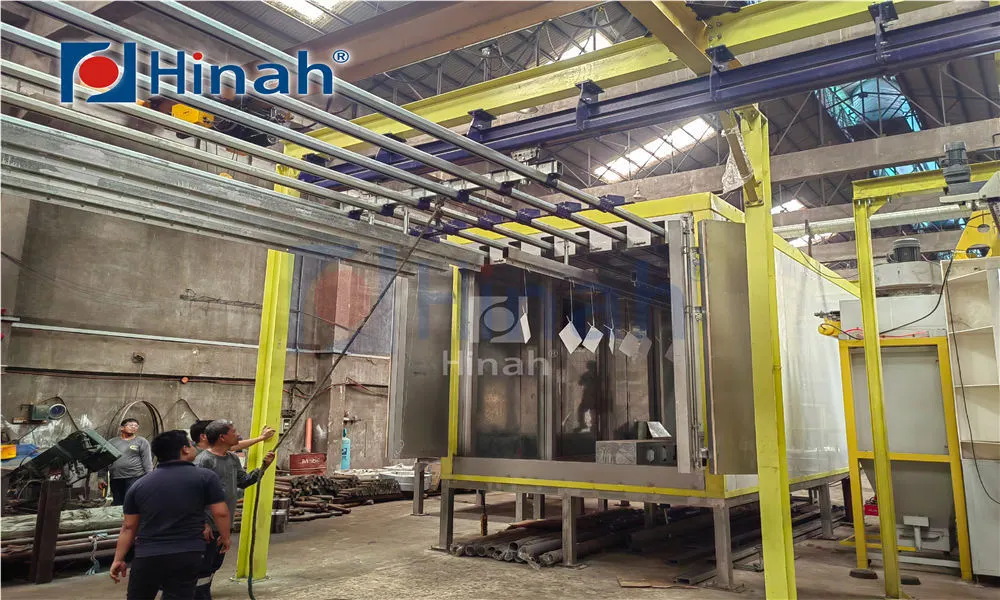
Following the application process, the curing oven raises the temperature of the substrate to melt, flow, and cross-link the powder coating. These ovens can use convection heating, infrared (IR) emitters, or a combination of both. Convection ovens distribute heated air evenly throughout the chamber, making them suitable for parts with varying metal thicknesses. The design must ensure that the air velocity is balanced; high air velocity can blow uncured powder off the parts, leading to thin areas and contamination of the oven walls.
Infrared ovens provide rapid heat transfer, which is ideal for flat surfaces or line configurations requiring shorter cycle times. IR energy directly heats the coating and the outer surface of the metal without needing to heat the entire mass of the part first. Combining infrared preheating with a convection curing zone represents a highly effective hybrid approach, allowing the powder to gel quickly under the IR heaters to prevent wind-blow issues before entering the high-velocity convection zone.
The application zone is where the actual coating occurs. In powder coating lines, electrostatic spray guns charge the powder particles, which are then attracted to the grounded workpiece. The design of the paint line system booth must manage airflow to contain overspray while preventing turbulence that could disrupt the powder cloud.
To achieve uniform coverage on parts with complex geometries, automated electrostatic guns are mounted on reciprocators that move vertically or horizontally. These movements are synchronized with the conveyor speed to ensure an even distribution of powder across the entire height of the part hang. The voltage and current settings on the electrostatic controllers must be adjustable. High voltage (often between 60 kV and 100 kV) is used to establish a strong electrostatic field for flat surfaces, while lower voltage with higher current is selected to penetrate recessed areas and combat Faraday cage effects.
The charging method also plays an important role in application performance:
Oversprayed powder that does not adhere to the parts is drawn toward the collection filters by the booth exhaust fan. Modern booths utilize either cyclone recovery systems or cartridge filter systems. Cyclone separators use centrifugal force to separate powder particles from the air stream. The heavy powder particles fall to the bottom of the cyclone, where they are sieved and pumped back into the fluidizing hopper for reuse. Finer particles that cannot be reused are carried to the secondary cartridge collector. Cartridge-style booths pull the air directly through cartridge filters, which requires dedicated filter modules for color changes to prevent cross-contamination.
Moving parts through the pretreatment, application, and curing zones requires a dependable conveyor system. The choice of conveyor influences the overall layout, cycle times, and operational footprint of the facility.
Overhead monorail conveyors are common for continuous, high-speed lines where parts follow a fixed path. These systems use a continuous chain running inside a track, with hanger attachments spaced at regular intervals. They are reliable and relatively simple to maintain, making them suitable for high-volume, uniform production.
For more complex manufacturing operations, power-and-free conveyors allow individual carriers to stop, switch tracks, or accumulate in specific areas without stopping the entire line. This flexibility is beneficial when parts require different dwell times in the curing oven or when manual inspection or loading stations are integrated into the line.
Floor conveyors, including chain-on-edge and spindle conveyors, are preferred for parts that require rotation during the spray application or cannot be hung from above, such as heavy automotive castings or small cylindrical components. The conveyor path must be designed with expansion joints and tension take-up units to accommodate the thermal expansion that occurs inside the high-temperature curing ovens. Automated chain lubrication systems are required to apply high-temperature synthetic lubricants that do not drip onto the parts, preventing surface contamination.
Achieving consistent paint film thickness across complex three-dimensional structures requires careful calculation of mechanical and physical parameters. Line speed, hanger design, and gun positioning must be coordinated to ensure uniform coverage.
Temperature uniformity inside the curing oven is a major determinant of final finish quality. If the oven has cold spots, the powder coating will not fully cure, resulting in poor adhesion and brittle finishes. Conversely, overheating can cause color shifting or thermal degradation. Engineering a thermal profile involves mapping the oven using data loggers attached to test parts to measure the actual temperature of the metal at various heights. To address these thermal challenges, automated systems designed by HANNA utilize modulated burners and adjustable air distribution ducts to maintain temperature variance within a narrow range throughout the entire curing chamber.
The spatial arrangement of parts on the conveyor, known as the part density or pitch, also plays a major role in efficiency. Hanging parts too close together can cause shielding, where one part blocks the spray path of the gun from reaching an adjacent part. Hanging them too far apart leads to wasted oven space and low material transfer efficiency. Computer-aided design (CAD) software is often utilized to model the part hanging configurations and spray gun paths before physical production begins.
Finishing operations often encounter issues that disrupt continuous production. Identifying these bottlenecks and integrating targeted mechanical solutions ensures steady output.
Parts with deep recesses, sharp interior corners, or welded ribs present a physical challenge known as the Faraday cage effect. The electrostatic field lines concentrate on the outer edges of these recesses, repelling the charged powder from penetrating the inner corners. To resolve this issue, operators adjust the electrostatic parameters, such as lowering the voltage while increasing the current, or utilizing specialized powder guns with field-modifying nozzles. Properly positioning automatic guns and utilizing manual touch-up stations within the overall paint line system layout ensures that recessed areas receive adequate coverage without over-applying powder to the outer edges.
Vibration or sway of parts on the conveyor line can cause uneven coating thickness, part-to-part contact, or even collisions with booth walls. This issue is often caused by incorrect hanger design, excessive line speed, or poor conveyor maintenance. Utilizing rigid, custom-designed hangers with stable hook attachment points reduces movement. Additionally, incorporating stabilizer guides or tracking systems inside the spray booth keeps parts aligned with the automatic spray guns, ensuring a consistent distance between the nozzle and the substrate.
Switching colors frequently can lead to contamination if the booth is not thoroughly cleaned between batches. A single particle of a different color can ruin an entire batch of cured parts. Modern booths are constructed from non-conductive materials like polypropylene or sandwich-structured plastics, which do not attract powder particles. This allows for rapid cleaning using air squeegees and automated booth cleaning cycles. Quick-change powder centers also feed powder directly from the original manufacturer's box, simplifying clean-up and color change times down to under fifteen minutes.
Modern industrial finishing is shifting away from manual operations toward automated, data-driven systems. Implementing smart controls allows for precise tracking of part geometries and dynamic adjustment of system parameters in real-time.
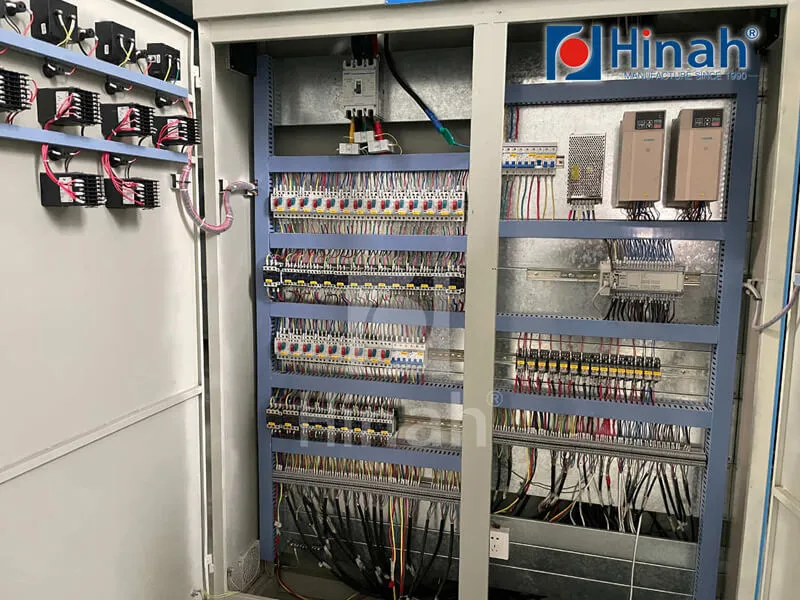
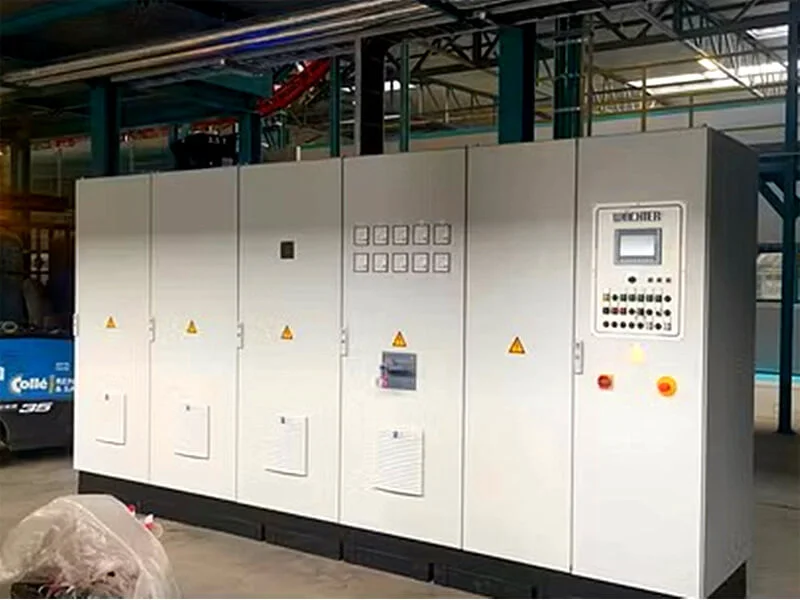
Centralized programmable logic controllers (PLCs) monitor every aspect of the finishing process, from chemical concentration in the pretreatment washer to conveyor speed and oven temperature. Through human-machine interfaces (HMIs), operators can select pre-programmed recipes tailored to specific parts, ensuring that the spray guns, air flows, and heat profiles adjust automatically. This automation reduces human error and maintains consistent finishing quality across different shifts.
Sensors installed at the entrance of the spray booth identify the shape, height, and width of incoming parts. This data is transmitted to the PLC, which controls the movement of the reciprocators and triggers individual spray guns only when a part is in front of them. This precise targeting minimizes powder waste in the gaps between parts. For high-volume production, integrating these robotic arm systems into a paint line system ensures that complex geometries are coated with repeatable accuracy. When specifying such lines, engineering expertise from HANNA provides customized PLC integration to coordinate these complex component movements.
Q1: What are the main differences between liquid paint lines and powder coating lines?
A1: Liquid paint lines utilize solvent or water-based wet coatings, requiring flash-off zones to allow solvents to evaporate before curing, alongside air filtration systems to manage volatile organic compounds (VOCs). Powder coating lines apply dry electrostatic powder, which is melted and cured in an oven. Powder coating lines do not require flash-off zones, produce virtually zero VOCs, and allow for oversprayed powder to be reclaimed and reused, whereas liquid overspray is typically discarded.
Q2: How does proper pretreatment affect the longevity of the finished coating?
A2: Pretreatment removes grease, mill scale, rust, and oils from the metal substrate while depositing a conversion layer (such as phosphate or zirconium). This layer acts as an anchor for the powder or liquid coating, significantly enhancing adhesion. Without proper pretreatment, humidity and oxygen can easily penetrate the coating, leading to sub-film corrosion, bubbling, and premature coating failure.
Q3: What is the purpose of a dry-off oven in a modern high-capacity paint line system configuration?
A3: The dry-off oven is positioned immediately after the chemical pretreatment washer. Its purpose is to evaporate any residual moisture from the surface of the parts before they enter the application booth. If moisture remains on the parts during powder application, it can cause defects such as pinholes, poor adhesion, and steam-induced bubbling during the final curing process.
Q4: How can Faraday cage issues be mitigated when coating complex geometries?
A4: Mitigating the Faraday cage effect involves adjusting the electrostatic parameters of the spray equipment. Lowering the voltage (kV) and increasing the current (microamps) helps the powder penetrate deep corners by reducing the electrostatic repulsion at the outer edges. Additionally, adjusting the nozzle type, utilizing manual touch-up stations, or using automated gun movement programs designed to target recesses from specific angles can ensure uniform coverage in hard-to-reach areas.
Q5: What are the advantages of using a power-and-free conveyor over a standard monorail conveyor?
A5: A standard monorail conveyor moves all parts at a fixed speed along a single continuous path. A power-and-free conveyor system features two tracks, allowing individual carriers to be disengaged from the drive chain. This enables carriers to stop, accumulate, bypass certain stages (such as skipping a spray booth for parts that do not require coating), or enter buffer zones for inspection or loading, providing much higher flexibility in complex production environments.
Industrial finishing lines require precise coordination of chemical, mechanical, and thermal systems to achieve reliable high-throughput results. If you are planning to install a new finishing line or upgrade your existing coating operations, our engineering team is here to support you. Please submit an inquiry with your part dimensions, production volumes, and coating requirements, and we will collaborate with you to design a reliable and productive solution.