
The selection of a powder coating oven directly determines cure quality, production throughput, and operational stability in industrial finishing lines. For coating applicators and manufacturing engineers, the relationship with powder coating oven suppliers extends beyond a simple equipment purchase—it involves a partnership that shapes the thermal processing core of the entire coating system.
Industrial powder curing demands precise temperature management, uniform heat distribution, and reliable control over the entire cure schedule. A mismatch between oven design and production requirements leads to under-cured films, orange peel defects, reduced impact resistance, and line stoppages. This examination focuses on the engineering parameters that define oven performance, the operational trade-offs inherent in different oven configurations, and the evaluation criteria that separate competent powder coating oven suppliers from those offering generic solutions.
Powder curing ovens serve a singular purpose: to raise the substrate temperature to the specified cure point and maintain it for the required duration, ensuring complete cross-linking of the polymer matrix. Achieving this objective requires coordinated performance across several subsystems.
Gas-fired burners remain the dominant heat source for high-volume continuous ovens, offering rapid heat-up and lower operational costs in regions with affordable natural gas. Direct-fired systems introduce combustion products into the oven atmosphere, necessitating careful management of air changes to prevent contamination of the powder film. Indirect-fired heat exchangers separate the combustion stream from the oven air, preserving coating purity at the expense of slightly lower thermal efficiency.
Electric heating elements, including both resistance and infrared types, provide cleaner heat and more precise zone control. Infrared ovens deliver high-intensity radiant energy that accelerates cure for flat parts or complex geometries with varying mass distribution. For hybrid systems, convection supplemented with infrared boosters addresses the thermal demands of thick-walled components that absorb heat slowly.
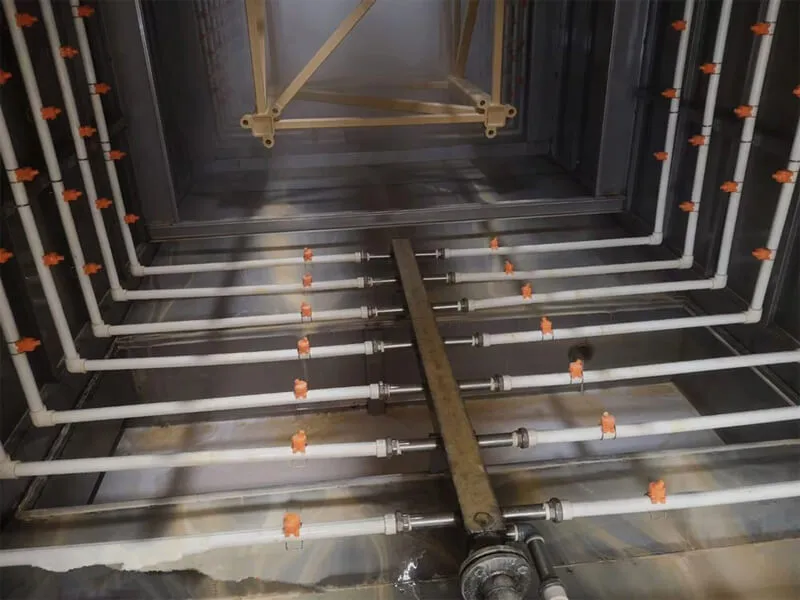
Convection ovens rely on high-velocity air circulation to transfer heat from the source to the part surface. Recirculating fans drive heated air through ductwork and plenums, discharging through nozzles or perforated plates directed at the workpiece. The air distribution pattern determines temperature uniformity across the oven chamber—a critical parameter for consistent film properties.
Temperature gradients exceeding ±5°C across the curing zone produce localized variations in cross-link density. Areas receiving lower heat flux remain under-cured, while zones exposed to higher temperatures risk discoloration or loss of gloss. Powder coating oven suppliers address uniformity challenges through computational fluid dynamics modeling during the design phase, optimizing duct geometry, fan placement, and airflow velocity to achieve a balanced thermal field.
Panel construction and insulation thickness directly affect heat loss to the surrounding environment. Mineral wool and ceramic fiber blankets, installed in layered configurations, minimize thermal bridging through structural supports. Higher-density insulation reduces surface temperatures on the oven exterior, improving workplace safety and lowering the building cooling load.
Door seals and access hatches represent vulnerable points for heat escape. Positive-pressure designs and high-temperature gaskets maintain the integrity of the thermal envelope, preventing cold air infiltration that disrupts temperature stability during automated part transfer.
The relationship between oven dimensions and line speed determines maximum production capacity. Correct sizing requires analysis of part geometry, conveyor configuration, and target cure cycle.
Batch ovens accommodate irregular production schedules and large, non-uniform parts that cannot traverse a continuous line. Walk-in designs with roll-up doors allow forklift loading of fixtures carrying multiple components. The heating cycle includes ramp-up, soak, and cool-down phases, with total cycle time influenced by the thermal mass of the parts and the oven's recovery capability after each door opening.
Batch processing introduces variability related to load density and positioning. Dense loads restrict airflow, creating shadow zones where parts receive less convective heat. Manufacturers overcome this limitation through adjustable baffles and variable-speed fans that adapt to different load configurations.
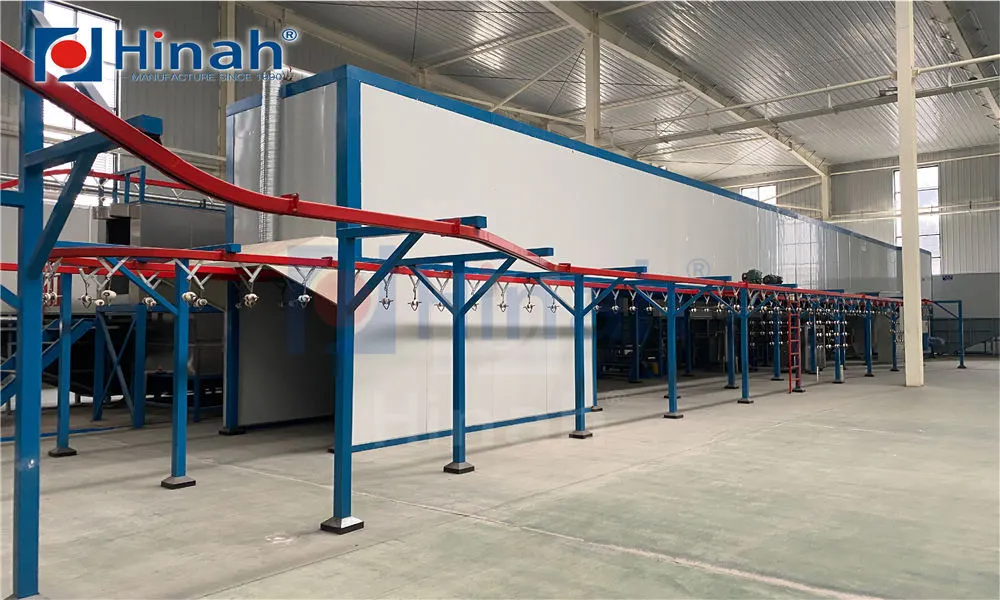
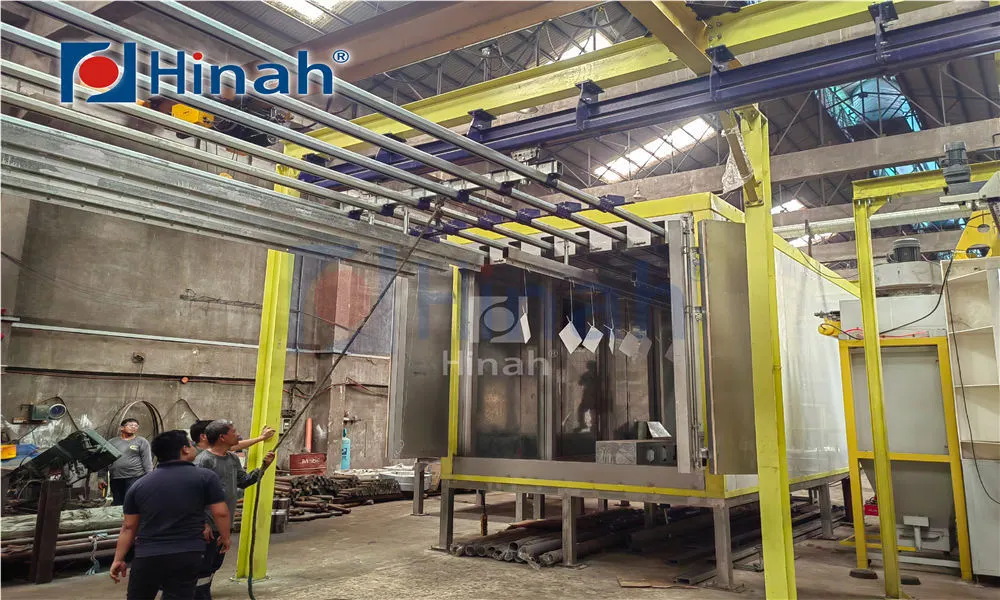
Conveyorized ovens integrate with automated powder coating systems, processing parts at steady speeds through a heated tunnel. Monorail conveyors suspend parts from overhead trolleys, while belt or chain-on-edge conveyors support smaller components. The oven length and conveyor speed are calculated from the cure schedule: for a 20-minute cure at 190°C and a line speed of 3 meters per minute, the oven requires 60 meters of heated zone.
Multi-zone continuous ovens provide independent temperature control along the conveyor path. A preheat zone raises part temperature gradually, reducing thermal shock to heat-sensitive substrates. The main cure zone maintains the target temperature, followed by a hold zone that ensures complete cross-linking. Powder coating oven suppliers offer modular zone configurations that allow facility operators to tune the thermal profile to specific powder formulations.
Powder manufacturers specify cure schedules based on the resin system's chemical kinetics. The metal temperature, not the oven air temperature, dictates the actual cure progression. Part thickness, material composition, and fixture mass all influence the time required for the part to reach the set point.
Thermal profilers equipped with multiple thermocouples traverse the oven alongside production parts, recording the temperature evolution at different positions. This data confirms that all surfaces achieve the required metal temperature within the specified window. Profiling also identifies cold spots, air leaks, or conveyor speed variations that compromise cure uniformity.
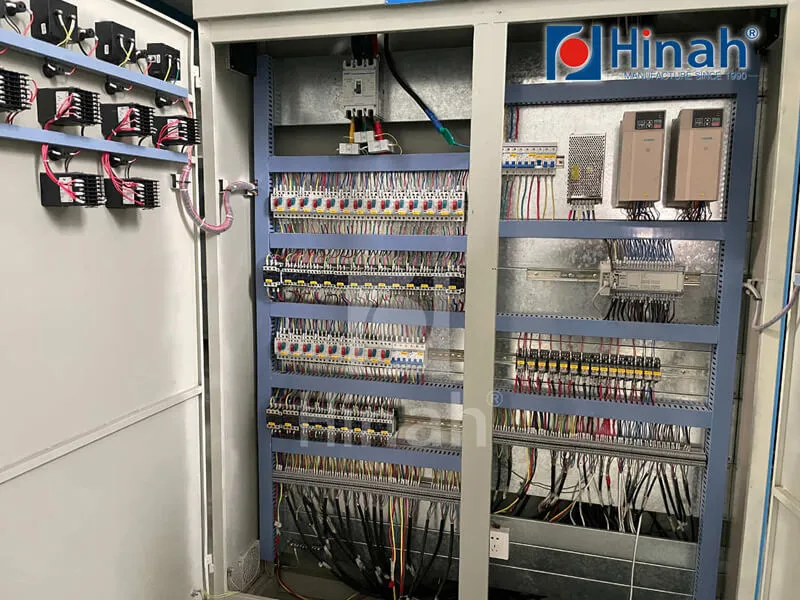
Modern control systems incorporate PID algorithms that adjust burner firing or heater output based on real-time feedback from thermocouples strategically placed within the oven chamber. Data logging capabilities track each batch's thermal history, supporting quality documentation for industries with stringent certification requirements.
Complex parts with thick cross-sections or large surface-to-mass ratios present distinct thermal challenges. The mass of the part acts as a heat sink, drawing energy from the surrounding air and slowing the temperature rise. Thin-walled sections reach cure temperature faster, potentially over-curing if the oven is set to accommodate the thicker portions.
Engineers compensate for this disparity through fixture design, using heat-absorbing blocks or supplemental infrared lamps directed at heavy sections. Some powder coating oven suppliers offer adaptive control systems that modulate heat output based on the thermal signature of each part, using pyrometers or thermographic sensors to adjust zone temperatures dynamically.
Energy represents a substantial portion of the operating cost for powder coating lines. Heat losses through exhaust stacks, conveyor openings, and oven walls accumulate over thousands of operating hours, directly impacting the bottom line.
Recuperative heat recovery systems capture waste heat from exhaust gases and preheat incoming fresh air. This approach reduces the burner load by 15 to 30 percent, depending on the temperature differential and system design. Variable-frequency drives on circulation fans match airflow to the actual heat demand, avoiding the inefficiency of constant-speed operation during low-load periods.
Oven zoning also contributes to efficiency. By maintaining different temperature levels along the conveyor path, the system avoids overheating the entire oven volume to satisfy the requirements of a single zone. Zoning reduces energy waste and improves the consistency of the thermal profile across the cure cycle.
The operating environment inside a powder curing oven places severe demands on materials and components. Continuous exposure to elevated temperatures accelerates wear on bearings, seals, and electrical connections. Preventive maintenance programs that include regular inspection of fan motors, belt tension, burner nozzles, and thermocouple calibration reduce unplanned downtime.
Recirculating air carries fine powder particles that escape the spray booth and settle on oven surfaces. Over time, this residue accumulates and can combust if ignition sources are present. Regular cleaning schedules and the use of non-stick coatings on interior surfaces minimize deposit buildup.
Accessibility of critical components influences maintenance efficiency. Oven designs with removable panels, hinged access doors, and clear labeling of service points allow maintenance crews to perform inspections and repairs without extended line shutdowns. Powder coating oven suppliers that incorporate serviceability into their engineering reduce the total ownership burden for end users.
The evaluation of powder coating oven suppliers requires a systematic review of engineering capability, manufacturing quality, and post-installation support. Suppliers that maintain in-house fabrication capabilities, rather than subcontracting critical components, offer greater control over quality and delivery timelines.
Engineering expertise manifests in the supplier's ability to perform thermal modeling, airflow simulation, and structural analysis for each project. Custom designs derived from a modular platform combine the benefits of proven components with tailored configurations. The supplier's test facility and demonstration equipment allow clients to validate cure performance with their own powder materials and part samples before committing to production equipment.
Installation and commissioning services, including operator training and process documentation, determine how quickly the oven integrates into the existing line. Suppliers who assign dedicated project managers and field service engineers ensure smooth transitions from fabrication to production operation.
For coating operations requiring high uptime and consistent quality, partnerships with established powder coating oven suppliers provide access to continuous improvement resources, spare parts availability, and technical support. HANNA maintains an engineering team focused on thermal process optimization, offering clients a comprehensive approach to oven integration. HANNA provides both standard and custom oven systems that incorporate the latest advancements in airflow management, insulation, and control technology.
Q1: What factors determine the optimal oven type for a powder coating
line?
A1: The decision between batch and continuous ovens depends on
production volume, part size variation, and changeover frequency. High-volume,
low-mix operations benefit from continuous conveyorized designs that maintain
steady-state thermal conditions. Low-volume, high-mix production lines require
batch ovens with adjustable settings to accommodate diverse part geometries and
cure schedules.
Q2: How does oven airflow design affect powder coating
quality?
A2: Airflow distribution determines temperature uniformity
across the oven chamber. Uneven airflow creates hot and cold zones, resulting in
inconsistent cure levels. Parts in cold zones remain under-cured with reduced
mechanical properties, while parts in hot zones experience over-curing that
causes discoloration, loss of flexibility, and diminished impact resistance.
Q3: What is the recommended approach for verifying oven temperature
uniformity?
A3: Temperature uniformity verification involves running
a thermal profiler with multiple thermocouples through the oven under normal
production conditions. The profiler records temperature data from different
positions, confirming that all measured locations achieve the target cure
temperature within the specified tolerance. This testing should be performed
during initial commissioning and repeated periodically to detect drift.
Q4: How do part fixturing and conveyor design interact with oven
performance?
A4: Fixtures and conveyor carriers affect heat transfer
by absorbing thermal energy and disrupting airflow patterns. Heavier fixtures
require longer heat-up times, potentially extending the cure cycle. Open-frame
designs allow air circulation around the part, improving heat transfer
efficiency. Conveyor speed and spacing between parts influence the residence
time in the heated zone, directly impacting cure completion.
Q5: What maintenance practices extend the service life of a powder
curing oven?
A5: Key maintenance activities include cleaning
recirculating fan blades and duct surfaces to remove accumulated powder residue,
inspecting and replacing worn door seals to prevent heat loss, calibrating
thermocouples and controllers for accurate temperature control, checking burner
combustion efficiency and nozzle condition, and verifying fan motor amperage and
vibration levels to detect early signs of mechanical issues.
Q6: Can a single powder coating oven handle multiple powder
chemistries?
A6: Single ovens accommodate various powder
formulations provided the oven can achieve the highest required cure temperature
among the powder types used. Switching between chemistries requires adjusting
the set point and possibly the conveyor speed to match the cure schedule of each
material. Ovens with programmable controllers store multiple temperature
profiles, simplifying the transition between different powders.
For detailed engineering consultation and system proposals, HANNA offers application-specific support for powder curing oven projects. Reach out to the technical sales team to discuss production requirements, facility constraints, and performance expectations for your next coating line integration.