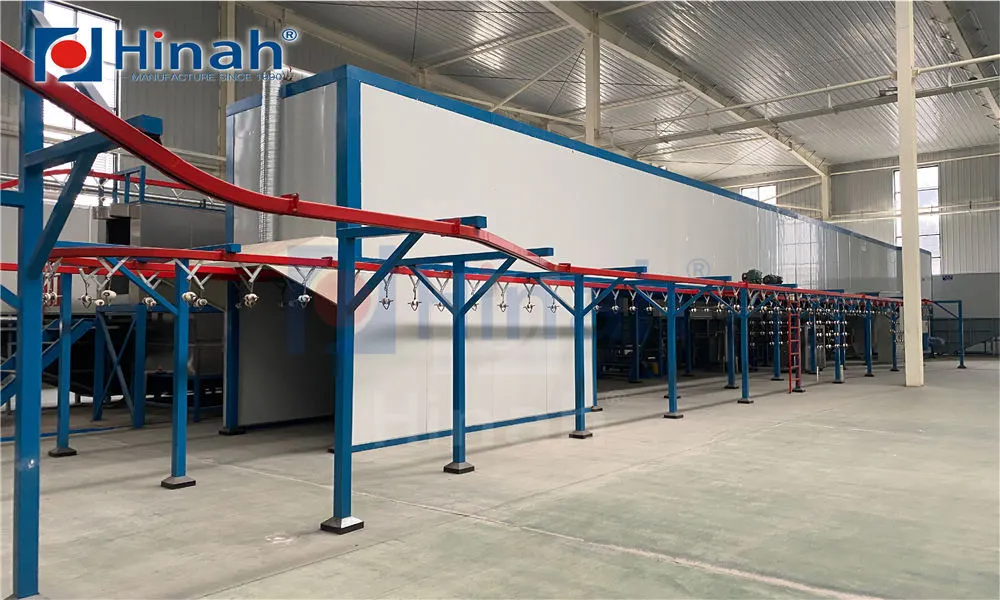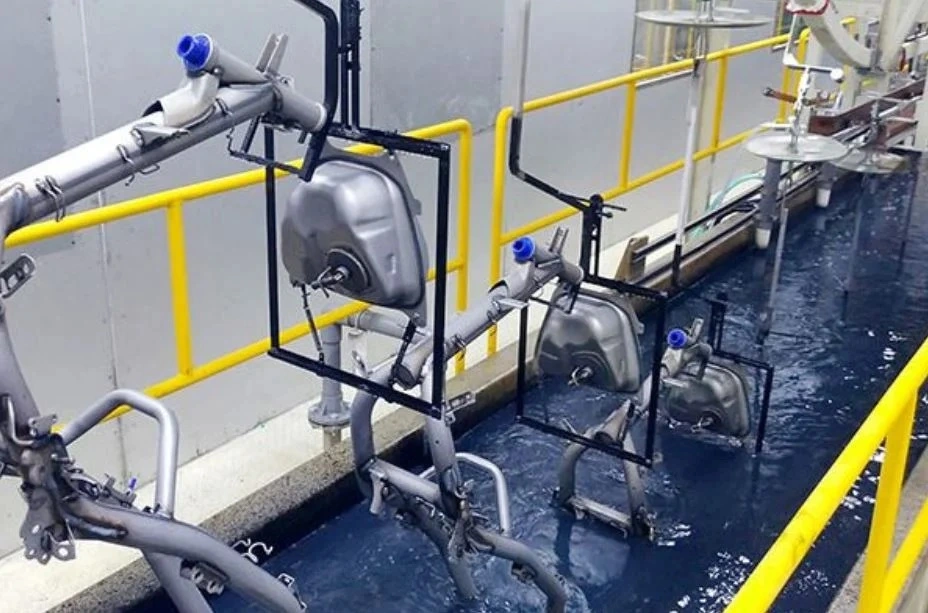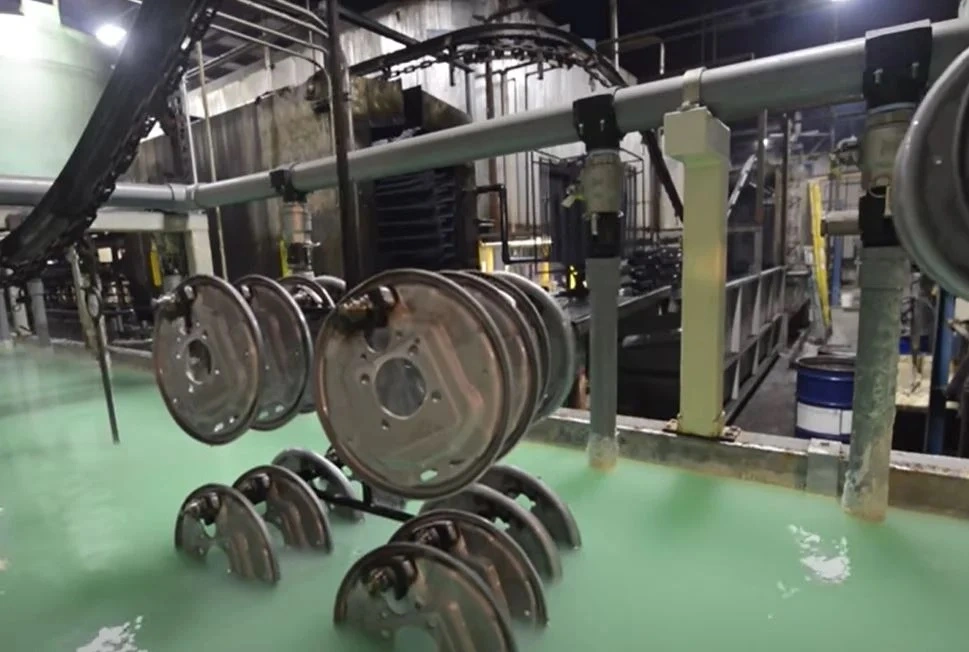

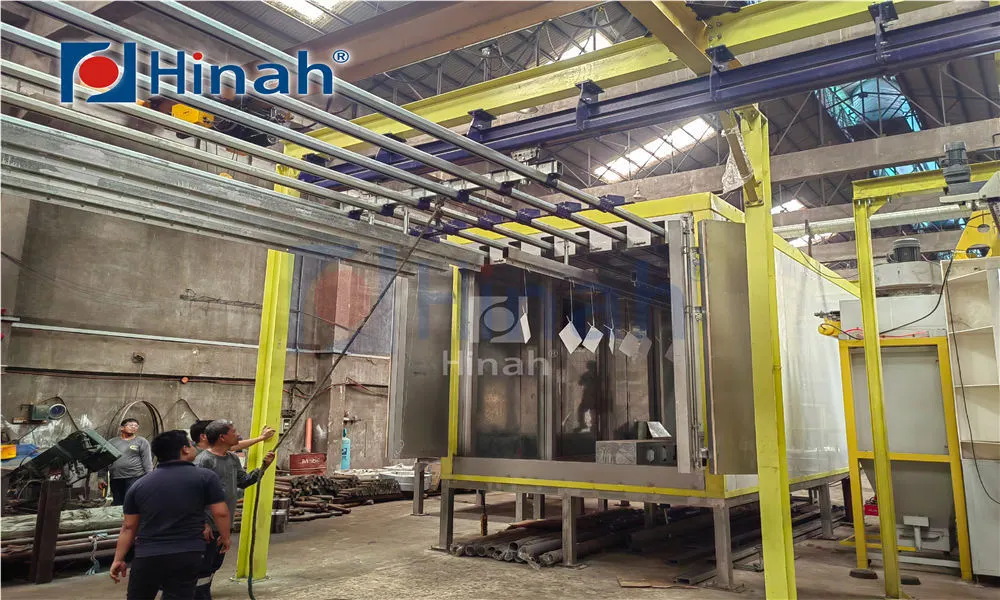
Industrial powder coating lines require continuous, uniform heat distribution to achieve cross-linking of polymer resins. In high-volume production lines, a conveyor curing oven represents the primary thermal processing zone. HANNA designs custom finishing systems configured to handle complex geometries, heavy payloads, and demanding production schedules. Understanding the physical principles behind continuous thermal curing helps plants achieve consistent coating quality, avoid adhesion failures, and maintain steady output rates.
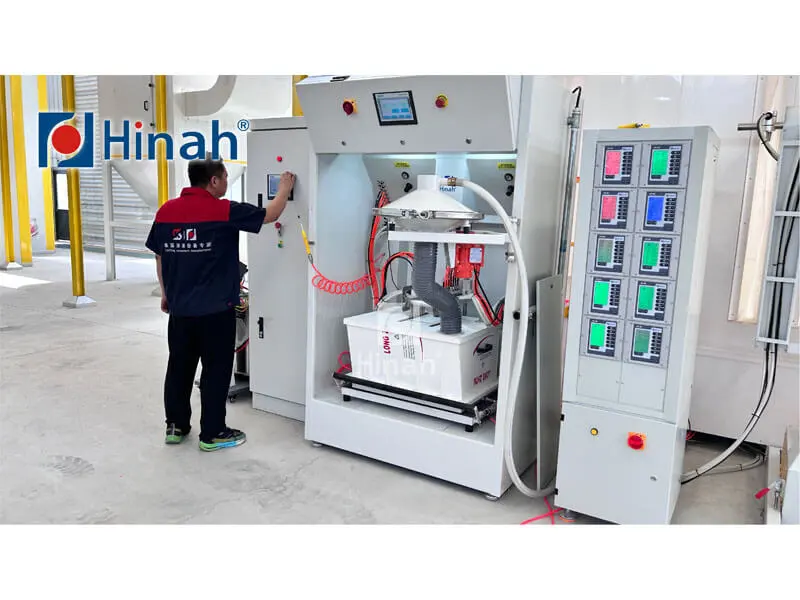
The transition of powder coating from a dry powder to a fully cured, durable protective layer involves distinct thermal phases. These phases include powder melting, flowing, wetting, and chemical cross-linking. Thermosetting powders, such as polyester TGIC, epoxies, and hybrids, require a specific thermal profile to initiate polymerization. This process is highly dependent on achieving the correct Peak Metal Temperature (PMT) of the substrate.
Unlike batch systems, continuous curing lines rely on steady conveyor movement through differentiated heat zones. The thermal energy must penetrate the metal substrate completely. If the substrate does not reach the specified PMT for the required dwell time, the coating will suffer from under-curing, leading to brittle finishes, poor impact resistance, and reduced chemical resistance. Conversely, over-curing caused by slow conveyor speeds or excessively high temperatures can lead to discoloration, loss of gloss, and thermal degradation of the polymer matrix.
Convection heating remains the standard method in continuous curing systems. High-velocity heated air is circulated around the parts, transferring thermal energy via convection. To accelerate the initial melting phase and prevent powder blow-off, some advanced layouts integrate infrared (IR) pre-heating zones before the convection chamber. Infrared energy transfers heat rapidly to the powder layer and the immediate outer surface of the substrate, gelling the powder before it enters the high-velocity air streams of the main convection zone.
A reliable continuous thermal curing system is constructed from several integrated components, each designed to withstand thermal expansion and maintain steady-state heat profiles.
The structural shell typically consists of double-wall tongue-and-groove panels. These panels are filled with high-density rock wool insulation, usually ranging from 150mm to 200mm in thickness, to prevent heat transfer to the surrounding plant floor. The inner skin of the panel is often made of aluminized steel to resist corrosion and reflect heat, while the outer skin is fabricated from galvanized or painted structural steel. To minimize thermal bridging, high-temperature gaskets seal the joints between panels, and structural supports are designed with minimal metal-to-metal contact between the inner and outer skins.
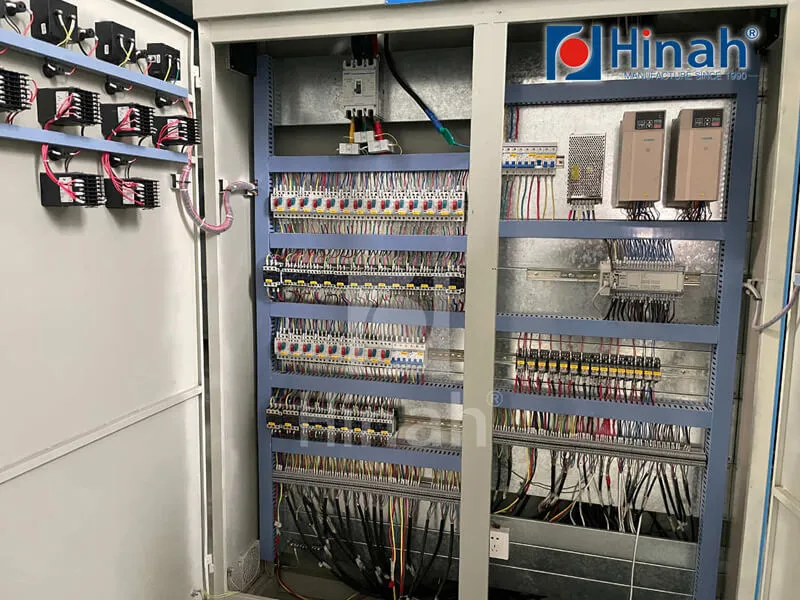
The heat utility chamber houses the burner, the combustion sleeve, and the primary circulation fan. Direct gas-fired burners, utilizing natural gas or liquefied petroleum gas (LPG), are highly common due to their responsive temperature control and clean combustion. The Burner Management System regulates the fuel-to-air ratio using modulating control valves linked to PID controllers. This setup ensures that the burner adjusts dynamically to changes in load, such as when a dense batch of heavy-gauge steel parts enters the heating zone.
Uniform temperature distribution requires precise control over airflow directions and velocities. Adjustable supply ducts, positioned along the bottom or side walls of the oven, deliver heated air into the curing chamber. Return air ducts, typically located in the upper portion of the ceiling, pull cooled air back into the burner chamber for reheating. Nozzles along the supply ducts must be adjusted to ensure that high-velocity air does not dislodge uncured powder from the parts during the initial entry stage, while still maintaining sufficient volume to heat heavy metal profiles uniformly.
Maintaining a balanced thermal environment in a continuous conveyor curing oven presents several operational challenges, particularly when handling mixed production runs with varying metal thicknesses.
Thermal Stratification: Hot air naturally rises, creating a temperature differential between the top and bottom of the oven chamber. If left unmanaged, parts hung at the top of a rack may over-cure while parts at the bottom remain under-cured. Balanced air distribution and high-volume recirculation fans help mitigate this effect.
Contamination and Particulate Defects: High-velocity recirculating air can pick up loose powder particles, dust, and combustion byproducts, depositing them onto the wet, molten coating surface. This leads to surface defects such as pinholes, craters, and rough finishes. Regular maintenance of filtration systems and duct cleaning is necessary to prevent contamination.
Thermal Loss at Openings: Continuous systems require openings at the entrance and exit for parts to pass through on the conveyor. Without proper air containment, substantial heat escapes into the factory, resulting in high energy use and unstable temperatures near the oven entry and exit vestibules.
Conveyor Vibration and Sway: Mechanical vibrations from the conveyor chain can transfer to the hanging parts, causing them to swing or collide inside the tunnel. This can lead to uncured powder rubbing off onto adjacent parts or oven walls, creating surface damage and accumulation of cured powder debris on the oven floor.
To address thermal loss and maximize space utilization, industrial system designers configure ovens in several ways. HANNA develops custom configurations that align with specific plant floor footprints and cycle requirements. The physical layout of the oven tunnel plays a key role in thermal containment.
A straight-through design is suitable for high-speed linear lines, but it requires highly effective air curtains or air seals at both ends. These air curtains use high-velocity fans to blow a continuous sheet of air across the openings, creating a pressure barrier that seals the hot air inside. Alternatively, multi-pass layouts, such as U-turn or S-turn configurations, locate the entrance and exit openings on the same side or utilize internal loops. This path design naturally traps heat within the elevated upper sections of the oven chamber, reducing thermal loss through the entry and exit portals.
To verify that a conveyor curing oven is operating according to specification, thermal profiling is performed regularly. This process involves sending a temperature data logger equipped with thermocouples through the oven along with the production parts. The thermocouples are attached directly to different sections of a test part (representing thin, medium, and thick metal zones) to record the temperature throughout the entire curing cycle. This profile provides the data needed to adjust burner settings, conveyor speeds, and damper positions to match the powder manufacturer's specifications.
The conveyor system must be synchronized with the thermal capacity of the curing chamber to ensure complete cross-linking. The selection of the conveyor type depends on the weight, shape, and volume of the parts being coated.
Overhead monorail conveyors are widely used for continuous powder coating lines. These systems feature a continuous chain running through an enclosed track or an I-beam structure, with hangers spaced at regular intervals. For heavier parts, power-and-free conveyor systems offer greater flexibility, allowing parts to be stopped, accumulated, or diverted to different curing zones without stopping the entire production line. This is beneficial when curing parts with significantly different metal thicknesses that require different dwell times.
Calculating the correct length of the oven requires a precise understanding of the line speed and the necessary cure time. For example, if a powder formulation requires 15 minutes of cure time at a target PMT, and the conveyor line speed is set to 2 meters per minute, the heated zone of the oven must be at least 30 meters long, excluding the entry and exit vestibules. If space constraints prevent such a long tunnel, the temperature profile or the burner configuration must be adjusted to reach the PMT faster, or a multi-pass layout must be utilized to fold the travel path within a shorter footprint.
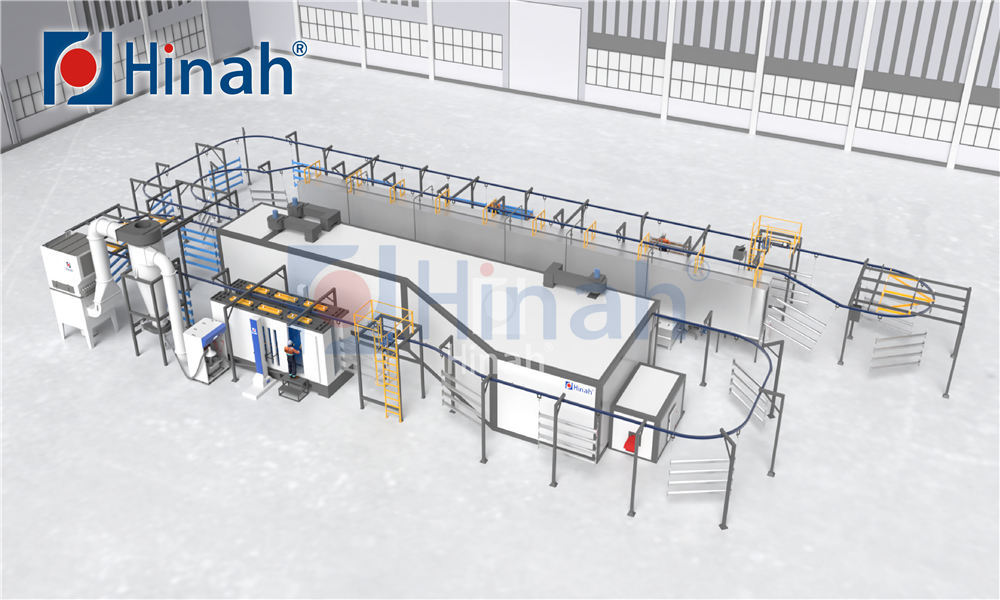
Proper management of a continuous thermal curing line involves routine calibration of temperature sensors, regular checking of burner combustion parameters, and verification of conveyor chain tension. Keeping the internal surfaces clean and free of powder accumulation prevents dust contamination defects on finished products. By maintaining a stable thermal environment, industrial coaters can ensure consistent adhesion, color uniformity, and mechanical durability across all processed parts.
For operations looking to design, build, or upgrade a finishing line, selecting the correct thermal equipment is key to achieving consistent quality. HANNA designs complete, automated powder coating lines, including customized thermal systems designed for precise temperature control. If you require a high-efficiency conveyor curing oven configured to your specific production throughput, layout limits, and substrate profiles, please submit your detailed inquiry to our engineering team for a professional consultation and system design proposal.
Q1: What is the difference between air temperature and peak metal temperature (PMT) in a curing oven?
A1: Air temperature refers to the temperature of the heated air circulating within the oven chamber, as measured by the oven's control thermocouples. Peak Metal Temperature (PMT) is the actual temperature reached by the metal substrate of the part itself. Because metal takes time to absorb heat, the air temperature must typically be higher than the target PMT, or the part must remain in the oven long enough for the metal temperature to rise and match the required cure profile.
Q2: How do air curtains prevent heat loss at the entry and exit vestibules?
A2: Air curtains utilize high-velocity blowers mounted at the top or sides of the oven openings to direct a controlled stream of air across the opening. This stream creates a pressure barrier that keeps the hot air inside the oven chamber and prevents cold factory air from entering. This containment maintains temperature stability near the ends of the oven and reduces energy waste.
Q3: Can different metal thicknesses be cured simultaneously in a continuous conveyor oven?
A3: Yes, but this requires careful configuration of the oven's temperature profile and conveyor speed. The conveyor speed must be slow enough, or the oven zone long eno