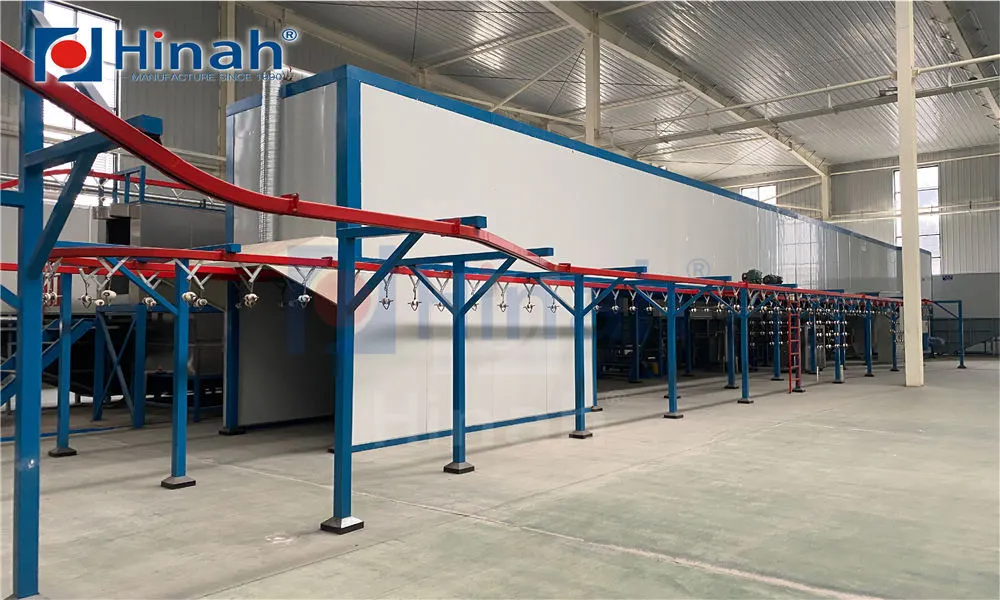

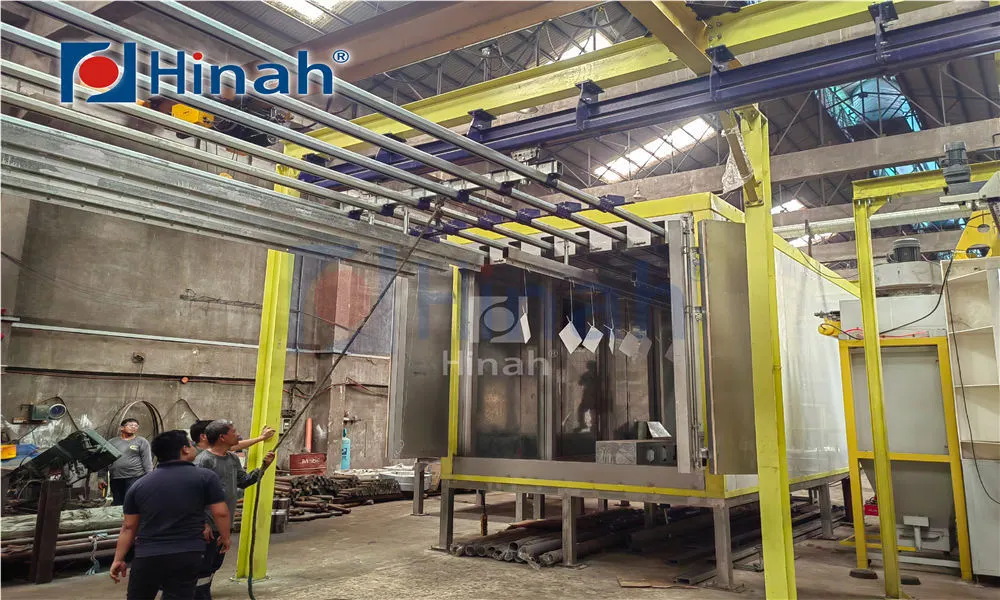
Industrial surface finishing operations rely heavily on robust exhaust and filtration engineering to maintain worker safety and comply with strict emission regulations. In automated powder application facilities, managing airborne particulates is a continuous engineering focus. When dry powder is sprayed electrostatically onto metal workpieces, a percentage of the material does not adhere to the surface. This overspray must be contained and collected immediately. Integrating advanced Environmental protection equipment into the production flow is the standard approach to preventing workspace contamination and atmospheric pollution. Through systematic design, modern coating plants achieve high recovery rates while discharging clean, filtered air back into the facility or the external environment.
When planning these complex systems, engineering groups like HANNA provide the structured design framework necessary to handle high-volume coating operations. By tailoring the airflow dynamics to the specific booth geometry, such systems prevent fine particulates from escaping into the wider factory floor. This structural containment forms the first line of defense in modern clean-air manufacturing initiatives.
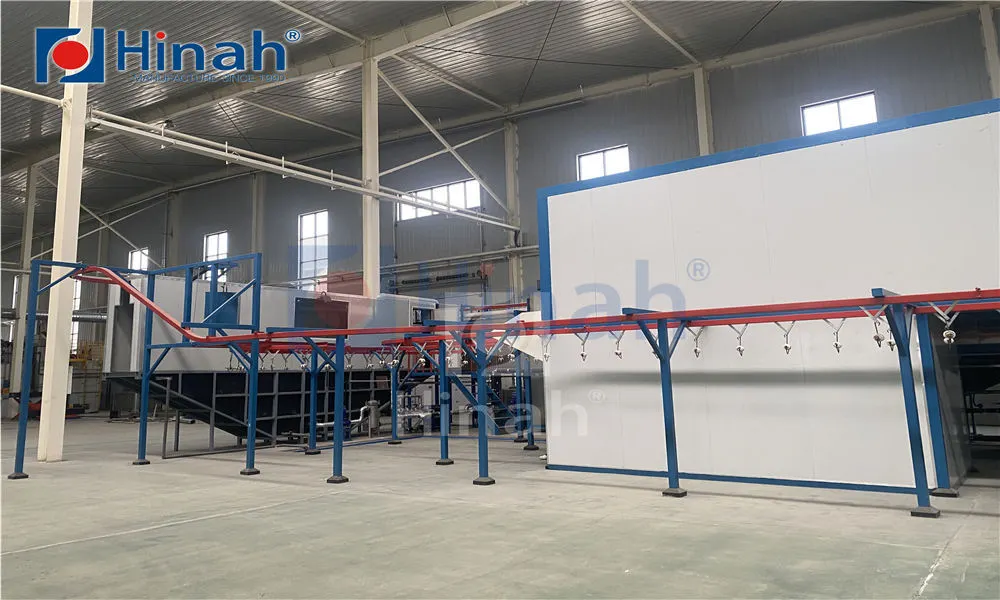
The primary defense against powder escape is the containment booth itself. A well-designed booth maintains a continuous negative pressure relative to the surrounding plant floor. This pressure differential ensures that air flows inward through all product openings and manual spray stations, preventing powder migration. The engineering behind this process requires precise velocity calculations to balance safety with application efficiency.
The inward velocity must be carefully managed. If the face velocity is too low, powder escapes. If it is too high, it disrupts the electrostatic powder path, leading to uneven coating thickness. A velocity of 0.4 to 0.5 meters per second is typically specified for automated stations. This velocity keeps the overspray moving toward the recovery intake without stripping powder from the grounded metal parts.
Depending on the workpiece geometry, crossdraft or downdraft airflow configurations are utilized to guide overspray directly toward the recovery intake plenums. In downdraft systems, air enters through the ceiling and is pulled downward through the floor grid, which is highly effective for large, complex structures. Crossdraft systems draw air horizontally across the booth, which works well for flat panels and high-speed conveyor lines.
The recovery of oversprayed powder serves a dual purpose: material conservation and environmental filtration. High-capacity operations utilize a multi-cyclone separator connected in series with a secondary cartridge collector. This configuration acts as a reliable dual-stage Environmental protection equipment system that separates reusable powder from ultra-fine waste dust.
The ductwork connecting the spray booth to the cyclone recovery system must maintain a minimum transport velocity, typically around 15 to 20 meters per second. This prevents powder from settling inside the horizontal runs of the ducting, which would pose a fire hazard and lead to pressure imbalances. Sharp elbows and sudden expansions are avoided in the layout; instead, gradual sweeps and clean-out ports are engineered into the air transport paths.
Cyclones use centrifugal forces to separate powder particles from the air stream. The air-powder mixture enters the cylindrical body tangentially at high velocity. The heavy particles are flung to the outer walls and descend into the collection cone, where they can be sieved and fed back into the application hopper. This mechanism is highly effective for particles larger than 5 to 10 microns, recovering up to 98% of the reusable coating material.
Fine particulates that escape the cyclone enter the secondary collector. Here, pulse-jet cartridge filters capture the remaining sub-micron particles. By utilizing premium spunbond polyester media, these filters ensure that exhaust air meets stringent clean air criteria. The collected fine dust, which is too small for high-quality spraying, is deposited into a waste container for safe disposal.
The continuous operation of secondary filtration depends on the performance of the filter media and the efficiency of the cleaning cycles. Standard paper filters often suffer from deep particle loading, which increases airflow resistance over time and degrades extraction performance.
Modern systems utilize spunbond polyester cartridges, often treated with a surface membrane like PTFE (polytetrafluoroethylene). This design promotes surface-loading rather than depth-loading. Particulates accumulate on the outer layer of the filter, making them easier to dislodge during cleaning cycles and extending the functional life of the cartridge.
To maintain constant airflow, the system uses a sequential reverse pulse-jet cleaning program. Compressed air is directed down the center of each filter cartridge in rapid pulses. This sudden reverse flow expands the filter media slightly, fracturing the dust cake and causing it to fall into the waste collection hopper. This process occurs online without interrupting the exhaust fan operation.
Digital pressure sensors monitor the resistance across the filter bank. When the pressure drop reaches a pre-set threshold, the system automatically triggers or accelerates the cleaning pulses. This feedback loop ensures stable static pressure within the booth, protecting both the application process and the surrounding workplace environment.
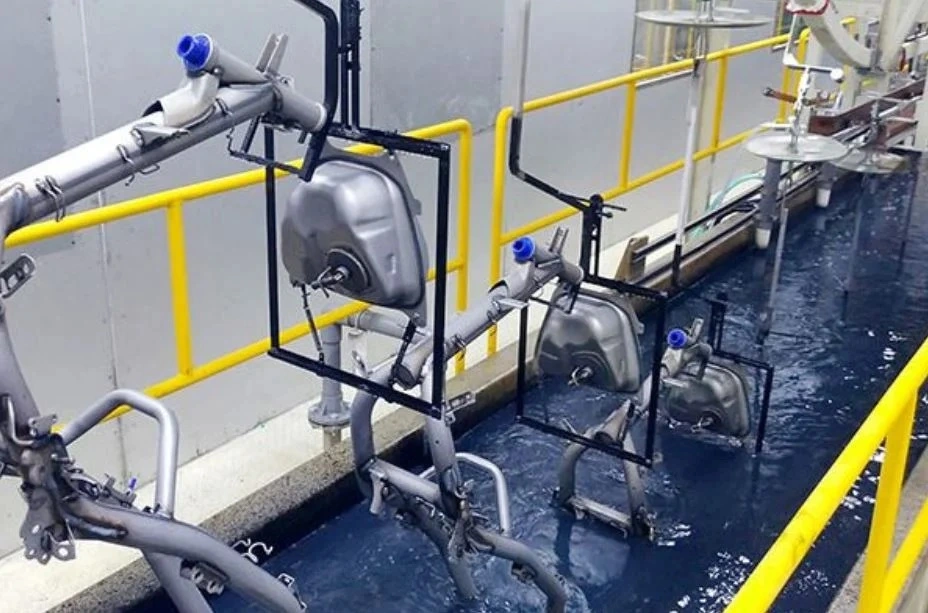
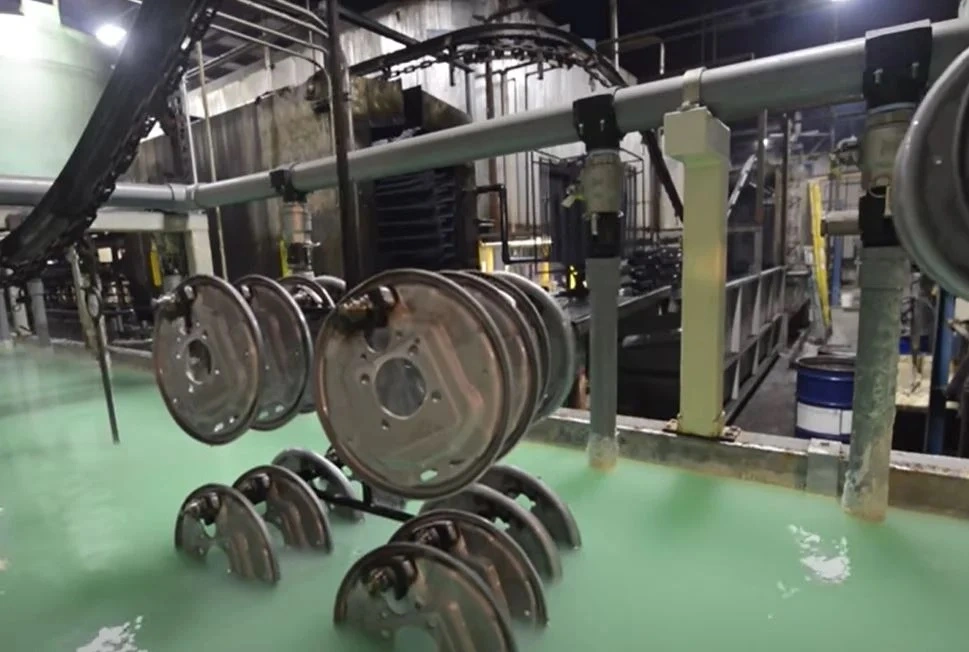
While powder coating is a low-solvent, environmentally friendly alternative to liquid painting, the complete finishing line still includes stages that require air and water purification. Metal pre-treatment involves multi-stage chemical baths to clean, de-grease, and condition the workpiece surface before powder application.
The chemical vapors generated during pre-treatment, along with any specialized liquid primers used on hybrid lines, must be mitigated. Thermal oxidizers are deployed as part of the overall Environmental protection equipment setup to break down these hydrocarbons into water vapor and carbon dioxide at temperatures exceeding 800 degrees Celsius, ensuring compliance with local air quality standards.
The heated chemicals used in spray pre-treatment stages generate mists that can corrode factory structures and impact air quality. Wet scrubbers, which pass the exhaust air through a counter-current liquid spray, neutralize these chemical vapors before the air is discharged. The scrubbing liquid is continuously monitored for pH levels and adjusted automatically.
Rinse water from pre-treatment stages cannot be discharged directly into municipal sewers without treatment. Neutralization systems adjust the pH of the wastewater, precipitate heavy metals, and filter out suspended solids. This clean effluent can then be safely discharged or recirculated back into the rinsing stages, reducing fresh water consumption.
High-capacity industrial fans required to draw air through cyclones and heavy-duty filter banks generate significant sound pressure levels. Designing an environmentally compliant system requires addressing acoustic pollution alongside chemical and particulate emissions to protect workforce health.
In integrating these safety and structural systems, the experience of a seasoned engineering manufacturer is highly beneficial. HANNA designs integrated recovery configurations that align with international safety codes while maintaining high mechanical reliability. This focus on structural safety prevents catastrophic failures and ensures long-term operational stability.
Different manufacturing sectors present distinct physical challenges that dictate the configuration of environmental filtration systems. A one-size-fits-all approach cannot address the specific particulate behaviors found in varying production environments.
These lines run continuously and handle heavy payloads. The associated Environmental protection equipment must feature continuous-duty powder recovery systems with automated sieving and powder transfer mechanisms to handle high volume without manual intervention. The integration of backup filter chambers allows for maintenance without stopping the main production line.
Multi-color change lines require recovery booths designed for rapid cleaning. Double-stage cyclone systems are used to separate and collect different colors efficiently, preventing cross-contamination in high-purity architectural applications. The booth walls are often constructed from non-conductive plastics to minimize powder attraction, facilitating faster color changes.
Large, complex welded structures require manual touch-up stations alongside automated reciprocators. The extraction volume must be carefully balanced across the long booth structure to ensure uniform air distribution. Multiple extraction points along the booth length prevent stagnant zones where powder could accumulate.
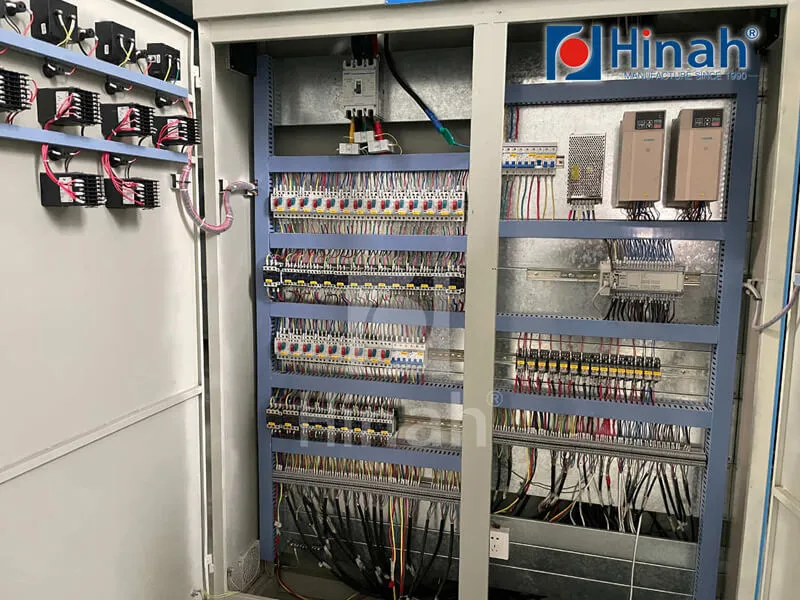
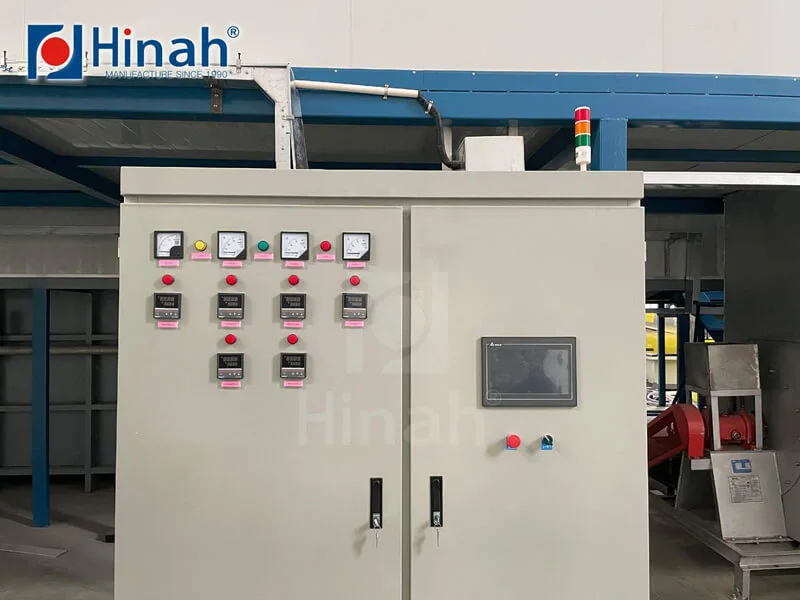
Achieving reliable performance from pollution control systems requires systematic integration with the entire conveyorized line. The control architecture should link the spray booth, the curing ovens, and the exhaust fans into a single automated control loop. If a fault is detected in the secondary filtration unit, the powder feed and conveyor systems should automatically halt to prevent uncontrolled emissions. Implementing this level of coordination requires high-grade control panels and precise instrumentation. Deploying professional-grade Environmental protection equipment ensures that compliance with local environmental departments is met consistently, protecting the manufacturer from unexpected operational stops.
For industrial coating plants seeking to align their operations with modern emission standards and maximize dry powder recovery, choosing the correct equipment configuration is a major engineering decision. Please submit your production requirements, including booth dimensions, daily powder consumption, and local emission limits, to the engineering team at HANNA. Our specialists are prepared to review your plant parameters and provide tailored engineering proposals.
Q1: What is the separation efficiency of a multi-cyclone recovery system?
A1: Multi-cyclone systems generally achieve a separation efficiency between 95% and 98% for powder particles larger than 10 microns. Particles smaller than this threshold are carried over to the secondary filter collector. The precise efficiency depends on the inlet velocity, the physical density of the powder, and the exact geometric design of the cyclone inlets.
Q2: How often should secondary cartridge filters be replaced in powder coating lines?
A2: Filter longevity is governed by the operating hours, the powder loading rate, and the efficiency of the reverse pulse-jet cleaning system. High-quality spunbond polyester cartridges with PTFE membranes typically last between 4,000 and 8,000 operating hours. Regular monitoring of the differential pressure gauge is the most reliable method to determine when the filters are reaching the end of their functional lifespan.
Q3: Can the clean air exhausted from a cartridge collector be returned directly to the factory floor?
A3: Yes, in many jurisdictions, recirculating the exhausted air is permitted if a tertiary HEPA filtration stage is installed downstream of the cartridge collector. This tertiary stage acts as a safety barrier in case of a primary filter rupture. Recirculating the air helps conserve indoor thermal energy, particularly in climate-controlled production facilities.
Q4: How do explosion venting panels protect the filtration system during a dust ignition event?
A4: If a combustible concentration of organic powder ignites inside the closed collector vessel, the pressure rises rapidly. Explosion venting panels are designed to rupture at a low, pre-determined pressure threshold, venting the expanding gases and flame front safely upward into a designated hazard zone. This prevents the physical destruction of the collector casing and protects personnel from structural fragmentation.
Q5: What are the main design criteria for wet scrubbers used in metal pre-treatment stages?
A5: Wet scrubbers must be designed with materials resistant to corrosive chemicals, such as heavy-duty polypropylene or high-grade stainless steel. The main criteria include the liquid-to-gas ratio, which determines the volume of scrubbing liquid needed per unit of exhaust air, and the packing material density, which maximizes the contact area between the vapor contaminants and the neutralizing solution.