
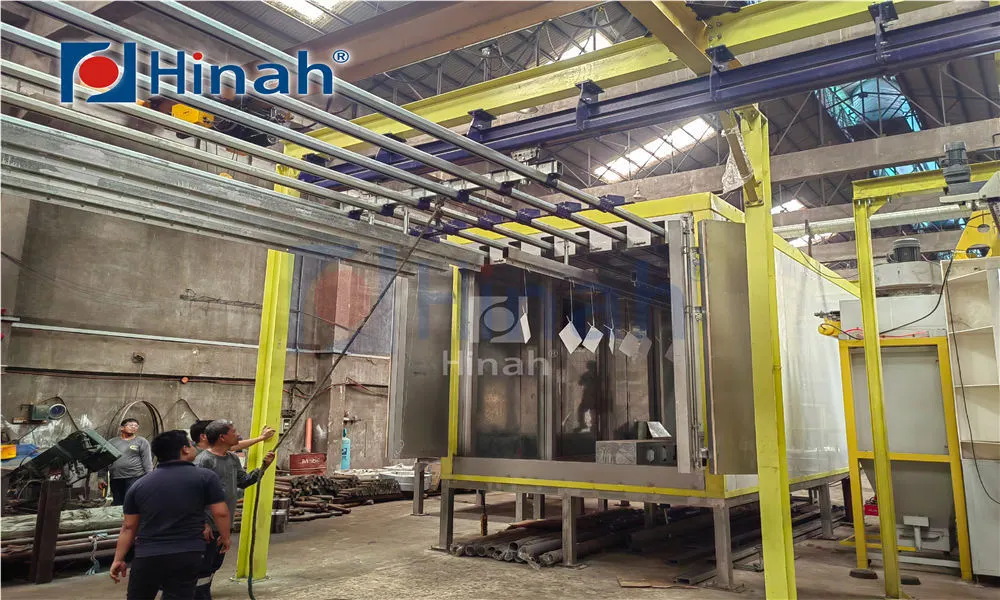
The selection of powder coating line manufacturers represents a decision that extends beyond equipment procurement. A powder coating line is an integrated sequence of process stations—pretreatment, drying, electrostatic application, curing, and material handling—each of which must operate within defined parameters to produce consistent film builds, adhesion, and corrosion resistance. The engineering choices made at the design stage determine not only the quality of the finished coating but also the line's ability to accommodate product mix changes, maintain uptime, and adapt to evolving regulatory standards.
The global powder coatings market was valued at USD 15.17 billion in 2024 and is projected to reach USD 20.87 billion by 2030, reflecting a compound annual growth rate of 5.46%. This growth is driven by the continuing shift from liquid coatings to powder systems, which emit negligible volatile organic compounds and achieve material utilization rates exceeding 95% when equipped with effective recovery systems. For manufacturing operations evaluating capital investments in finishing infrastructure, understanding the technical architecture of a powder coating line is the foundation for selecting powder coating line manufacturers capable of delivering systems that align with specific production requirements.
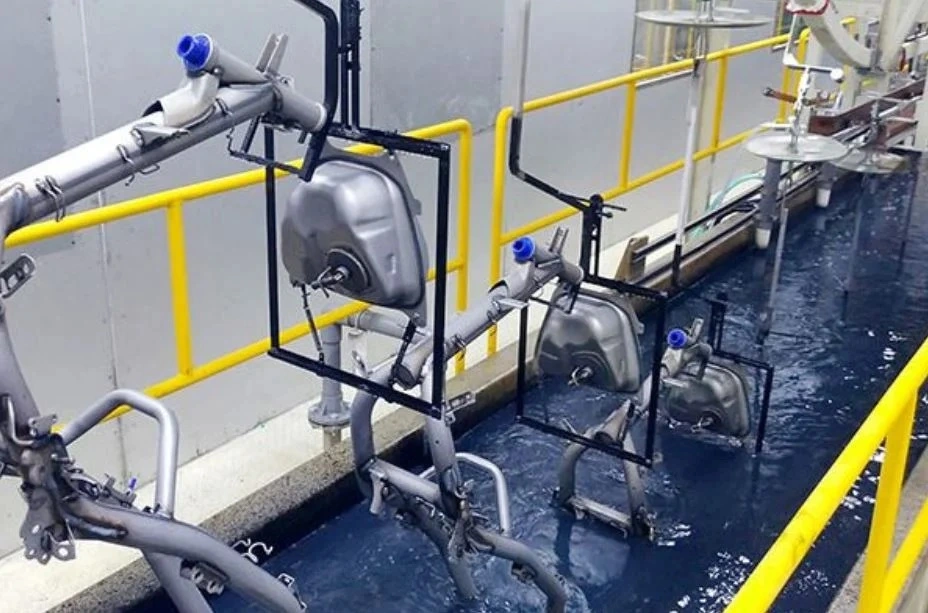
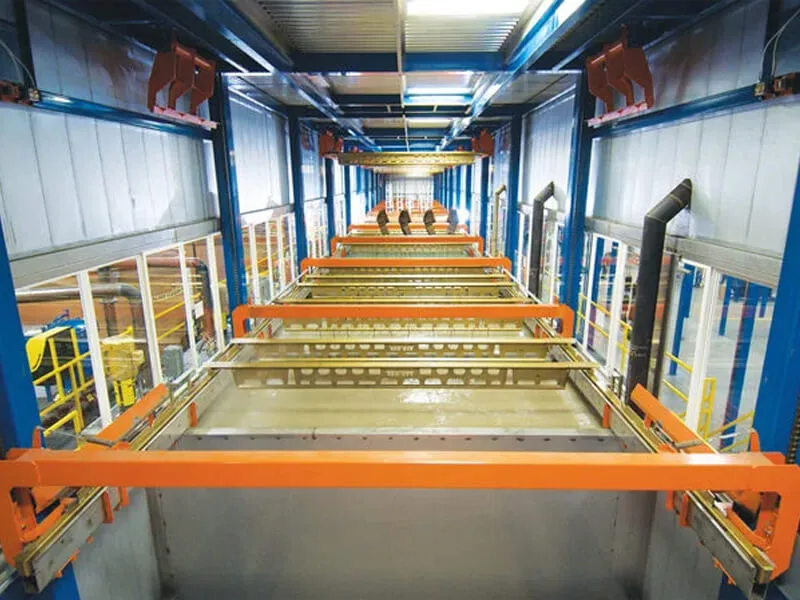
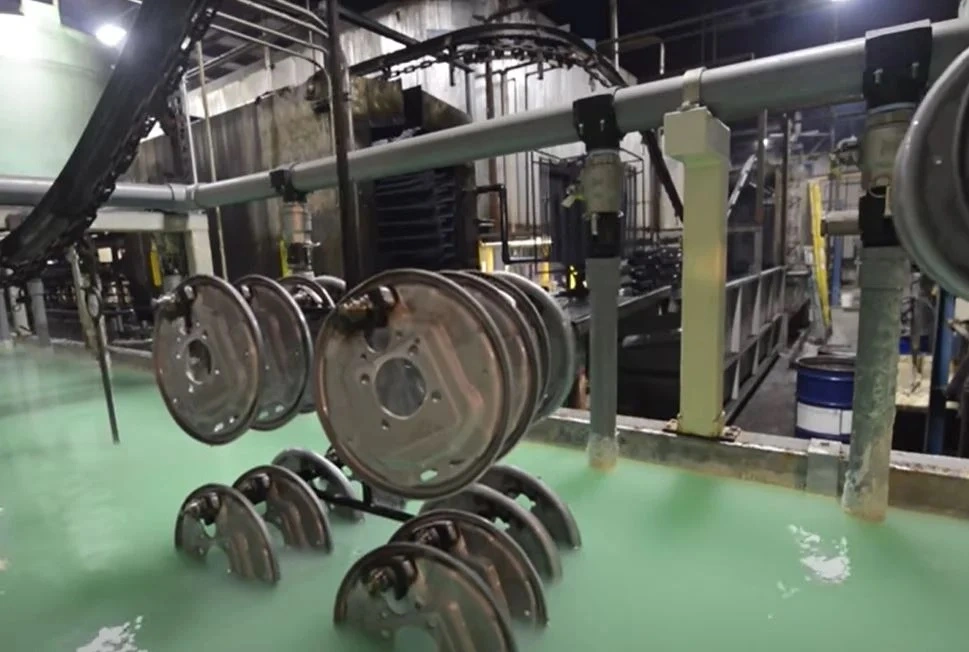
The pretreatment section of a powder coating line establishes the surface condition upon which all subsequent process steps depend. Incoming metal parts carry organic contaminants—drawing compounds, rust-preventive oils, and machining fluids—along with inorganic residues such as mill scale, laser oxide, and light rust. These contaminants must be removed before powder application; otherwise, adhesion failures, film defects, and reduced corrosion resistance will result regardless of the quality of the powder or the precision of the application equipment.
A typical pretreatment washer consists of three to nine stages, with five-stage systems being the most common configuration for general industrial applications. The sequence generally includes:
The chemistry of the conversion coating stage is selected based on the substrate material. For steel, zinc phosphate or iron phosphate systems are common; for aluminum, chromate-free treatments such as zirconium or titanium-based conversion coatings have gained widespread adoption. The effectiveness of the pretreatment process is validated through定期 testing of bath concentrations, rinse water quality, and coating weight measurements. HANNA integrates pretreatment systems into its line designs with attention to stage configuration, dwell time, and temperature control, recognizing that surface preparation accounts for a significant proportion of coating failures in production environments.
Following the washer, parts pass through a dry-off oven that removes residual moisture before powder application. This oven typically operates at 250–300 °F, with parts spending six to eight minutes in the heated zone. Inadequate drying leaves water on the part surface, which can cause popping or cratering in the cured film. The dry-off oven must be sized to match the line speed and the thermal mass of the parts being processed.
The powder application booth is where the coating material is deposited onto the grounded workpiece. Electrostatic spray guns charge powder particles as they exit the nozzle, creating an electrostatic field between the gun electrode and the part. The charged particles are attracted to the grounded substrate, resulting in transfer efficiencies that typically range from 60% to 80% for manual systems and can exceed 85% for automated configurations with optimized gun positioning.
Powder is delivered to the spray guns from a fluidized hopper, where compressed air suspends the powder particles in a fluid-like state. From the hopper, powder is conveyed through hoses to the guns, where it is atomized and electrostatically charged. The application booth encloses the spraying area and houses the recovery system, which captures overspray powder using negative pressure airflow and multi-stage filtration. Cyclone separators and cartridge filter modules are the two predominant recovery technologies; cyclone systems can achieve recovery rates of up to 95%, returning unused powder to the supply hopper for reuse.
Color change operations present a distinct engineering challenge. When switching from one powder color or chemistry to another, the application booth, recovery system, and powder supply lines must be thoroughly cleaned to prevent cross-contamination. Fast-color-change booths incorporate smooth interior surfaces, quick-release filter cartridges, and purge cycles that reduce changeover time to 10–15 minutes. The design of the booth and recovery system directly influences the line's flexibility for short-run production and multiple-color workflows.
Automated gun positioning systems—using fixed nozzles, reciprocators, or robotic arms—provide consistent spray patterns and reduce the variability introduced by manual operation. For complex geometries or parts with deep recesses, reciprocating guns can be programmed to follow part contours, ensuring that shadowed areas receive adequate coverage. The integration of gun triggering systems, which activate spraying only when a part is present in the booth, reduces powder consumption and minimizes buildup on fixture edges.
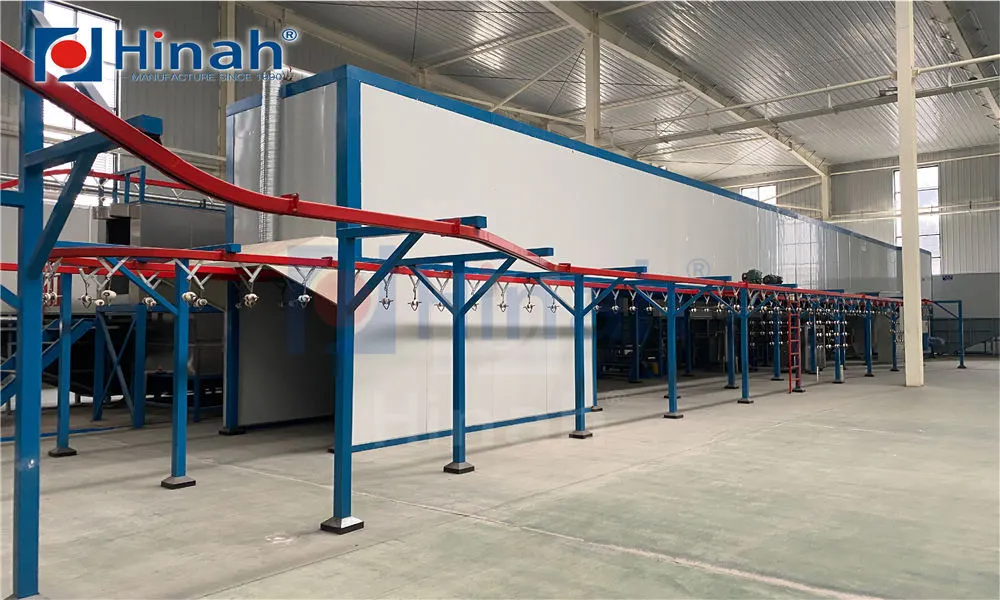
The curing oven completes the powder coating process by applying sufficient heat to melt, flow, and cross-link the powder film. The curing reaction is temperature- and time-dependent; the metal substrate must reach the specified cure temperature—typically 350–400 °F for conventional thermosetting powders—and maintain that temperature for the required dwell time, generally 20 to 25 minutes.
Convection ovens are the most prevalent curing technology in powder coating lines. Direct-fired gas convection ovens circulate heated air through the oven chamber, transferring heat to the part surface through forced air movement. Convection heating reaches all surfaces of the part, including internal cavities and recessed areas, making it suitable for complex geometries. Infrared ovens offer faster heat-up times by transferring radiant energy directly to the powder film, but they are line-of-sight processes and may not adequately cure shadowed areas. Many modern lines employ a combination approach: an infrared zone to rapidly fuse the powder, followed by a convection zone to complete the cross-linking reaction.
Oven balancing is a critical but often underappreciated aspect of curing system design. Temperature uniformity across the oven chamber must be validated under loaded conditions, as part density, fixturing, and conveyor speed all affect heat transfer. Metal temperature curves—measured by thermocouples attached to parts as they traverse the oven—provide the data needed to confirm that all parts reach the required cure schedule. Variations in oven temperature can result in under-cured films (poor mechanical properties) or over-cured films (loss of gloss and embrittlement).
The energy source for the curing oven—natural gas, propane, or electricity—influences both operating costs and the line's environmental footprint. Gas-fired ovens are common due to their lower energy costs and ability to achieve high temperatures efficiently. Electric ovens, while more expensive to operate, offer precise temperature control and are sometimes preferred for applications requiring tight thermal uniformity. HANNA provides curing oven solutions that incorporate insulation specifications, burner management systems, and airflow design to achieve the temperature profiles required for specific powder formulations and part geometries.
The conveyor system ties together the discrete process stations of a powder coating line, transporting parts through pretreatment, drying, application, and curing at a controlled speed. The selection of conveyor type—overhead monorail, power-and-free, or chain-on-edge—depends on part geometry, weight, and the required processing sequence.
Overhead monorail conveyors are the most common configuration, suspending parts from trolleys that travel along a fixed track. This design keeps the conveyor mechanism above the work zone, reducing contamination risk and allowing parts to rotate or oscillate for uniform coating coverage. Power-and-free conveyors add accumulation capability, enabling parts to be held in buffer zones between process stages—useful for lines that process multiple product families with different cure schedules or pretreatment requirements.
Chain-on-edge (COE) conveyors are employed for parts that require precise orientation or rotation during coating application. In a COE system, parts are mounted on spindles that rotate as they pass through the spray booth, ensuring that all surfaces are exposed to the electrostatic field. The rotational speed and conveyor speed must be synchronized to achieve uniform film build without excessive overspray.
Racking strategy—the method of fixturing parts on the conveyor—directly affects line efficiency and coating quality. Dense racking maximizes throughput but may create shadow areas where electrostatic attraction is reduced. The design of racks and hooks must account for drainage of pretreatment solutions, grounding integrity for electrostatic application, and clearance for spray guns and oven airflow. Many powder coating line manufacturers offer racking consultation as part of their system design services, recognizing that fixturing decisions influence both coating uniformity and line productivity.
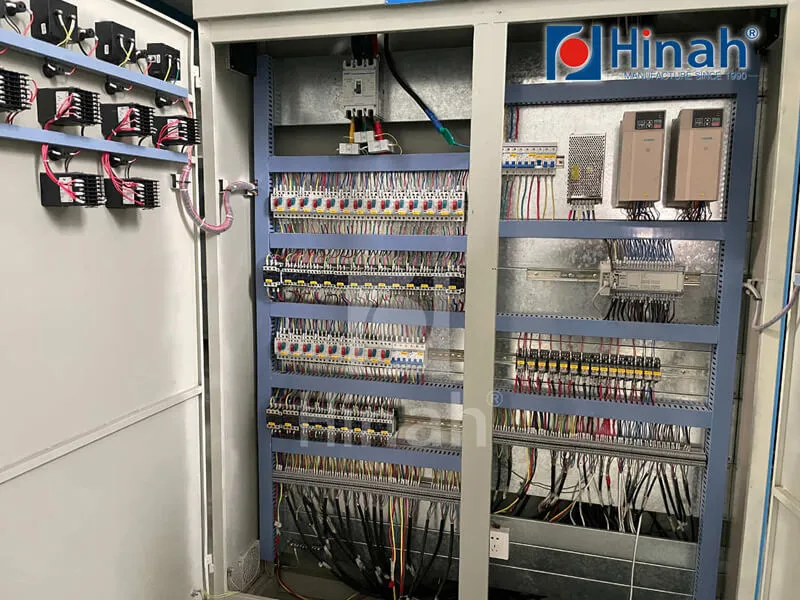
Modern powder coating lines are supervised by programmable logic controllers (PLCs) that coordinate conveyor speed, oven temperatures, spray gun parameters, and pretreatment chemistry dosing. PLC-based automation enables precise control over process variables, reducing the variability inherent in manual operation. Touchscreen interfaces provide operators with real-time visibility into line status, alarm conditions, and production metrics.
Line balancing—the synchronization of throughput across all process stations—is a primary objective of control system design. If the pretreatment washer processes parts faster than the curing oven can cure them, parts will accumulate in buffer zones or the conveyor will need to stop, reducing overall efficiency. Conversely, if the oven is oversized relative to the washer's capacity, energy is wasted and thermal degradation of the coating may occur. Control algorithms that adjust conveyor speed based on oven load and part density help maintain balanced flow, provided the line has been designed with sufficient flexibility in its drive systems.
Data acquisition from the control system supports process improvement initiatives. Variables such as oven zone temperatures, powder flow rates, and conveyor speed can be logged and analyzed to identify correlations with coating quality metrics. Statistical process control charts applied to these data help operators detect drift in equipment performance before product quality is affected. HANNA incorporates data logging and reporting capabilities into its control platforms, enabling manufacturers to maintain documented records of line performance for quality management systems.
Integration with plant-wide systems—such as MES (Manufacturing Execution Systems) or ERP (Enterprise Resource Planning) platforms—allows the powder coating line to receive production schedules and report completion status automatically. This integration reduces manual data entry and provides management with visibility into finishing operations as part of the overall production workflow.
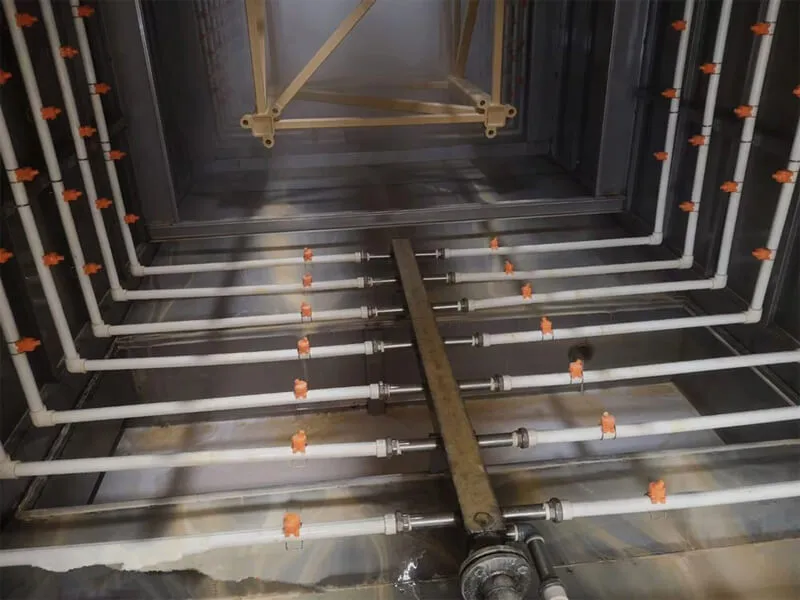
Commissioning a powder coating line involves verifying that each subsystem meets its design specifications. The validation process typically includes:
Once the line is in production, ongoing verification relies on a combination of in-process monitoring and periodic sampling. Conveyor speed, oven temperatures, and powder feed rates are monitored continuously; deviations from setpoints trigger alarms for operator intervention. Scheduled maintenance activities—such as cleaning of spray booth filters, replacement of pump diaphragms, and calibration of thermocouples—are tracked through the control system's maintenance module to ensure that all equipment remains within its specified operating range.
Regular recertification of the line—typically performed annually or after major modifications—includes re-testing of temperature uniformity, airflow patterns, and electrostatic performance. These recertification activities provide documented evidence that the line continues to meet the requirements of the coating specification and any applicable standards.
Q1: What is the typical transfer efficiency for an electrostatic powder coating system?
A1: Transfer efficiency in electrostatic powder coating generally ranges from 60% to 85%, depending on factors such as part geometry, grounding quality, gun positioning, and airflow in the booth. Manual systems often achieve 60–70%, while automated systems with fixed or reciprocating guns can reach 80–85% when optimized for specific part profiles. The remainder is captured by the recovery system and reused, so overall material utilization can approach 95% in well-designed lines.
Q2: How is color change time minimized in a powder coating line?
A2: Fast-color-change systems incorporate several design features: smooth interior booth surfaces that resist powder accumulation, quick-release cartridge filters that can be swapped without tools, and purge cycles that flush powder from hoses and supply lines. Many modern booths use a “cyclone + cartridge” hybrid recovery system that allows one color to be used while another is being set up, reducing downtime. With these features, color change times of 10–15 minutes are achievable.
Q3: What causes orange peel in powder coatings and how can it be prevented?
A3: Orange peel—a textured surface finish resembling the skin of an orange—arises from incomplete flow and leveling of the powder film during the curing process. Causes include insufficient oven temperature, inadequate dwell time, excessive powder film thickness, or the use of powders with high viscosity at melt temperatures. Prevention requires validating the cure schedule with metal temperature probes, maintaining uniform oven temperature, and controlling film build through consistent gun settings and conveyor speed.
Q4: Which conveyor type is best for a powder coating line handling large, heavy parts?
A4: Overhead monorail conveyors with heavy-duty trolleys are typically chosen for large or heavy parts, as they can support loads of several hundred pounds per carrier. Power-and-free conveyors offer the advantage of accumulation zones, allowing parts to be staged between process sections—beneficial when different part sizes require different cure times. Chain-on-edge conveyors are less suited to heavy parts because the spindle mounting system has lower load capacity.
Q5: How often should pretreatment bath solutions be tested and replenished?
A5: Pretreatment bath testing frequency depends on the production volume and bath size. For high-volume lines, daily testing of concentration, pH, and temperature is typical, with adjustments made as needed. Titration kits or automated dosing systems measure chemical activity; when levels fall below specification, concentrated chemistry is added. Full bath replacement is scheduled based on the buildup of contaminants and may occur monthly or quarterly, depending on the washer's design and the cleanliness of incoming parts.
Q6: What is the role of deionized water in the pretreatment process?
A6: Deionized (DI) water is used in the final rinse stages of the pretreatment washer to remove dissolved solids—such as calcium, magnesium, and chloride ions—that would otherwise remain on the part surface after drying. These dissolved solids can interfere with the conversion coating and reduce corrosion resistance. DI water is produced by passing tap water through cation and anion exchange resins, which replace mineral ions with hydrogen and hydroxide ions, resulting in purified water with conductivity below 10 µS/cm.
For detailed engineering consultation on powder coating line configuration, retrofit, or expansion, contact HANNA to discuss your specific production requirements and process objectives.