
The choice of a powder coating plant supplier directly shapes production throughput, first-pass yield, and the long-term consistency of finished parts. For operations running multiple shifts or handling complex geometries, the supplier's role extends far beyond delivering equipment. It encompasses process engineering, system integration, and responsive field support. This article examines seven decision points that separate a capable partner from one that merely supplies hardware.
Production managers and plant engineers frequently evaluate proposals based on line speed or oven dimensions. While those specifications matter, they do not capture the full picture. A robust powder coating installation must maintain stable powder delivery, uniform film thickness across varying part shapes, and efficient color-change protocols. These outcomes depend on how the powder coating plant supplier configures each subsystem and how well those subsystems interact under real-world shop-floor conditions.
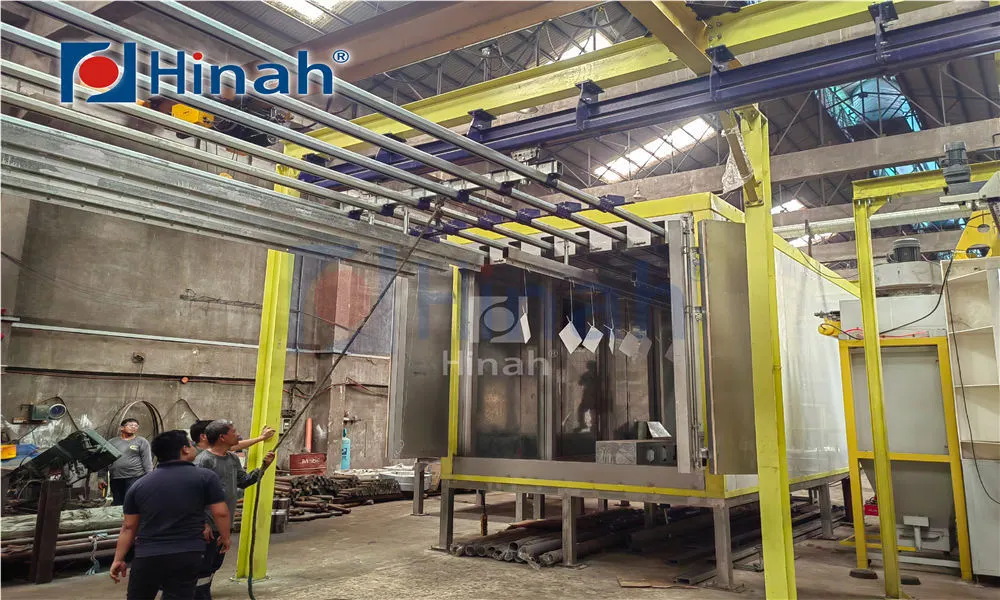
The application center—comprising spray booths, gun controllers, and powder feed assemblies—determines the baseline transfer efficiency. A well-engineered booth minimizes overspray while maintaining consistent cloud density. When assessing a powder coating plant supplier, examine the booth's airflow design, filter staging, and powder reclaim routing.
Downdraft booths generally offer superior powder containment compared to cross-draft designs, particularly for large or irregular parts. The air velocity across the booth opening should stay between 0.8 and 1.2 m/s to prevent powder escape while avoiding turbulence that disturbs the spray pattern. A supplier that provides adjustable airflow dampers and pressure monitoring gives production teams finer control over environmental conditions.
Electrostatic spray guns with programmable voltage and current settings enable operators to adapt to different powder formulations. For example, metallic powders require lower voltage to avoid charge buildup that causes uneven deposition. Likewise, the powder feed hopper and venturi pump must deliver a steady, pulse-free stream. Suppliers that integrate closed-loop feedback on powder flow—using mass-flow sensors or pressure transducers—help maintain coat weight within tight tolerances.
Booth material: Polypropylene or stainless-steel linings reduce powder adhesion and simplify cleaning between color runs.
Recovery efficiency: Cyclone-plus-cartridge systems typically reclaim 95–98% of overspray when properly balanced.
Gun positioning: Reciprocators or fixed arrays should offer stroke adjustment to match part height and contour.
The curing oven is often the largest single energy consumer in a powder coating line. Yet its performance is frequently judged solely by peak temperature rather than by thermal distribution. A competent powder coating plant supplier will present oven qualification data—temperature profiles taken at multiple points inside the oven chamber—to demonstrate uniformity.
Convection ovens remain the industry standard for mixed-product lines because they heat parts evenly regardless of surface color or mass. However, they require longer warm-up times and larger floor footprints. Infrared ovens accelerate curing for thin-gauge parts but can cause shadowing on complex assemblies. Hybrid designs that combine IR boost zones with convection main-heating sections offer a compromise for high-mix, low-volume scenarios.
Even with a properly sized burner, poor air distribution leads to under-cured areas near oven doors or on part hangers. Look for suppliers that use adjustable louver arrays and multiple return-air ducts. Data-logging thermocouples placed along the conveyor path provide evidence of stability. A supplier that offers oven mapping as part of the commissioning process demonstrates commitment to measurable quality.
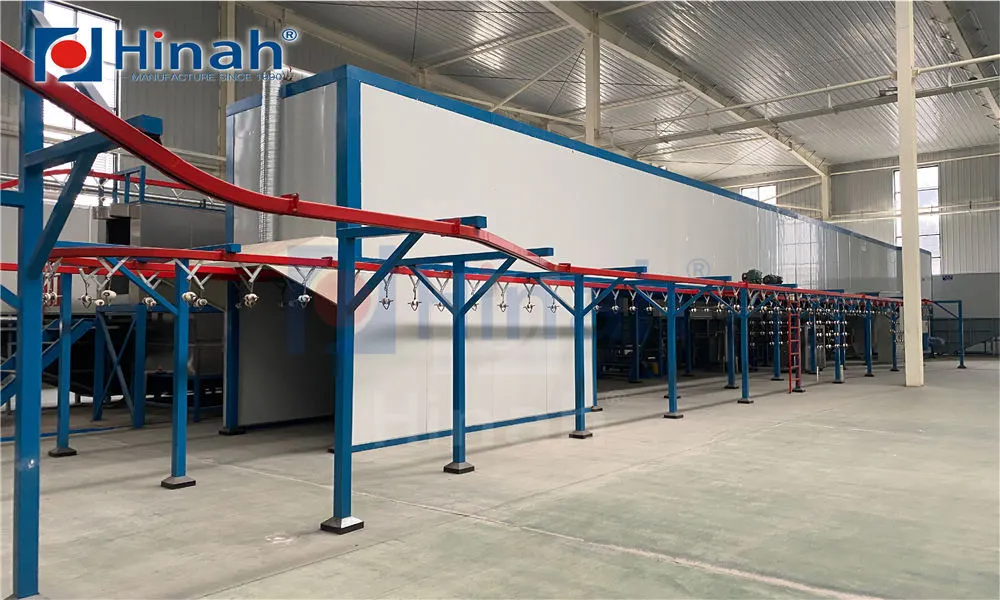
The conveyor system ties together pretreatment, drying, spraying, and curing. Its speed, indexing accuracy, and load capacity influence every downstream process. A powder coating plant supplier that only focuses on the coating equipment without addressing conveyor synchronization often leaves production gaps.
Chain type: Enclosed-track conveyors reduce contamination from lubricant drips and are easier to maintain in dusty environments.
Variable frequency drives (VFDs): Allow precise speed matching between conveyor movement and gun traversal, especially for parts with varying dwell-time requirements.
Workholder design: Grounding contacts and fixture configurations affect electrostatic transfer. Suppliers that provide fixture consultation help avoid poor grounding, which directly impacts film build.
A well-integrated conveyor also enables zone control—slowing parts in the spray booth while maintaining higher speeds in the oven zone. This flexibility reduces energy waste and improves throughput without requiring additional floor space.
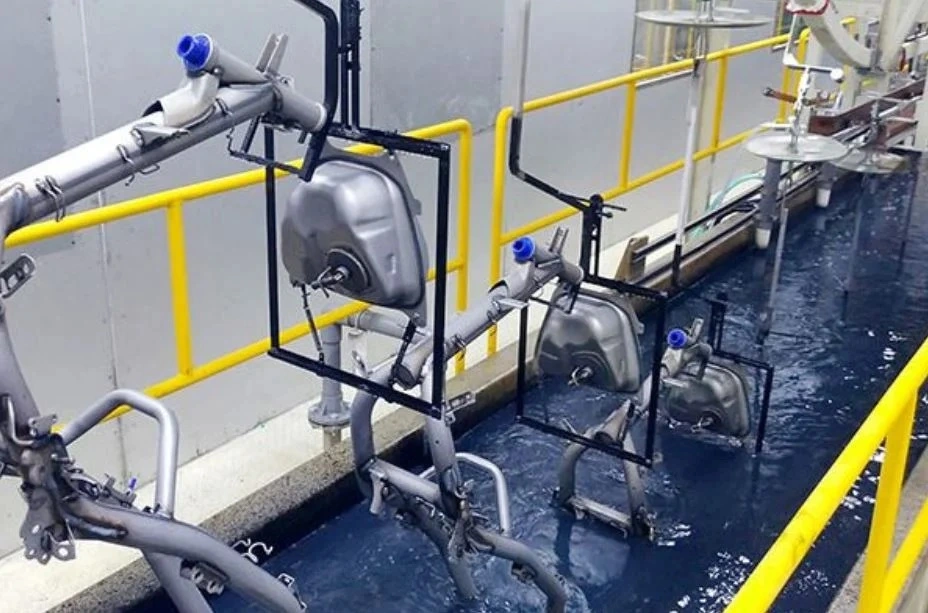
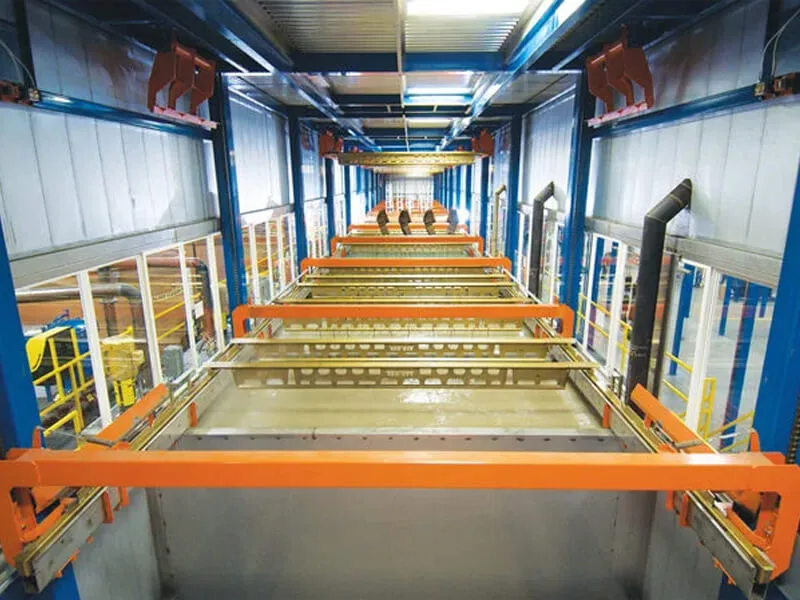
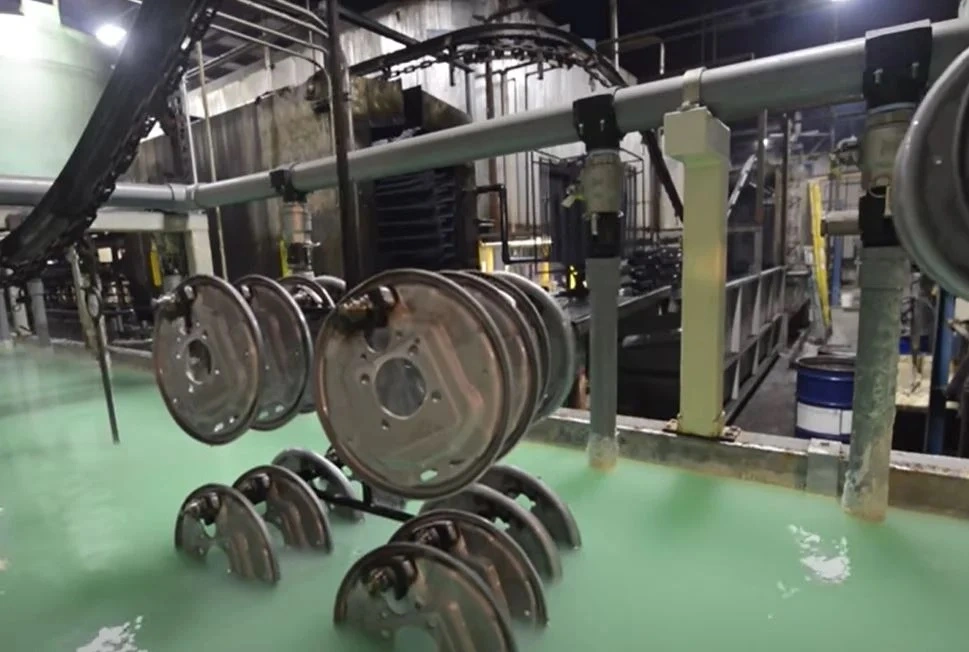
Powder adhesion and corrosion resistance depend heavily on the cleanliness and chemical conversion of the substrate. While pretreatment is often specified separately, the powder coating plant supplier must ensure that the spray and curing sections accommodate the pretreatment line's output. For instance, phosphating or silane-based treatments require specific drying temperatures and times before powder application.
A supplier that offers integrated controls—linking pretreatment parameters with spray booth settings—reduces the risk of surface contamination. Additionally, the conveyor entry and exit points should be designed to minimize dust ingress from pretreatment rinse stages.
For job-shop operations or OEMs with multiple color variants, color-change time is a major productivity lever. Quick-color-change booths incorporate removable powder feed hoppers, clean-in-place ducting, and rapid filter exchange systems. When evaluating a powder coating plant supplier, ask for documented color-change procedures and average time metrics.
Floor sweep systems that direct overspray to a central collection point.
Tool-less access panels for manual cleaning of gun tips and booth walls.
Powder feed lines with quick-disconnect fittings to reduce cross-contamination.
Some suppliers offer modular hopper carts that allow pre-loading of the next color while the current run is still active. This parallel preparation can cut downtime by 40–50% compared to traditional single-hopper setups.
Modern powder coating lines generate substantial data—oven temperatures, gun kV/μA readings, conveyor speed, powder usage, and reject rates. A supplier that provides a central PLC or SCADA interface enables operators to monitor these variables in real time. More importantly, historical data helps maintenance teams predict filter changes, nozzle wear, and burner drift before they cause out-of-spec parts.
Look for a powder coating plant supplier that offers open communication protocols (EtherNet/IP, Profinet, or Modbus TCP) rather than proprietary lock-in. This openness simplifies integration with existing MES or ERP systems. Remote diagnostic ports also allow the supplier's service engineers to analyze performance without dispatching a field technician for every issue.
Equipment reliability is only half the equation; the other half is how quickly the powder coating plant supplier responds when components fail. A supplier with a regional spare-parts warehouse and documented mean-time-to-repair (MTTR) data offers a tangible safety net. For high-volume lines, even a four-hour downtime can cost thousands of units of lost production.
HANNA, for instance, maintains a structured service program that includes preventive maintenance schedules, online troubleshooting guides, and expedited parts shipping for critical wear items such as electrode tips, powder hoses, and cartridge filters. This approach reduces unplanned stops and keeps production planners confident in their schedules.
Spare parts kits: Suppliers that offer pre-configured kits for common failure modes shorten repair times.
Training programs: Operator and maintenance training sessions should cover not only equipment operation but also fault diagnosis and calibration procedures.
Remote support: Secure VPN access to the control system allows the supplier to assist with software parameter adjustments without on-site visits.
Beyond equipment specifications, the powder coating plant supplier's engineering team should demonstrate familiarity with common finishing obstacles. Consider these scenarios:
Parts with deep cavities or inner corners often suffer from insufficient powder penetration due to electrostatic field distortion. A knowledgeable supplier will recommend gun angles, voltage modulation, or auxiliary electrostatic charging devices to improve coverage. Some suppliers also provide simulation tools that predict powder deposition patterns for new part designs.
Reclaimed powder differs in particle size distribution and chargeability from virgin material. Suppliers that integrate automatic blending systems—which proportionally mix reclaim with fresh powder—help maintain consistent fluidization and transfer efficiency. This feature reduces waste while preserving finish uniformity across long production runs.
Uneven film build often originates from inconsistent part grounding or gun-to-part distance fluctuations. Suppliers that provide grounded rack monitoring and distance sensors can alert operators when conditions drift. Some advanced systems automatically adjust gun output to compensate for part geometry changes.
A systematic assessment helps filter suppliers that merely meet paper specifications from those that deliver operational value. Consider these steps during the selection process:
Request a process flow diagram that includes all equipment interfaces, including pretreatment, drying, spraying, curing, and material handling.
Ask for commissioning protocols—the supplier should define acceptance criteria for film thickness, transfer efficiency, and oven temperature uniformity.
Review the supplier's field service coverage and average response times for emergency calls.
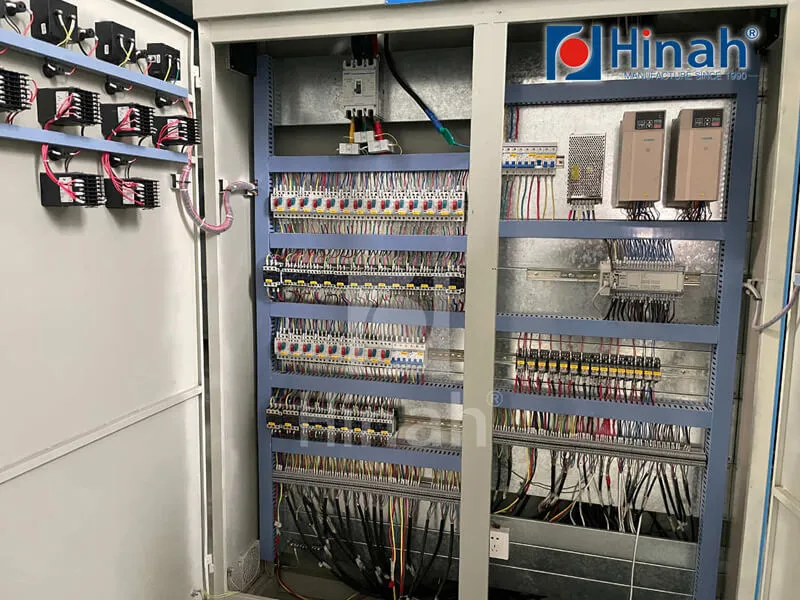
Inspect the proposed control panel layout for ease of use and accessibility of critical components like fuses, relays, and terminal blocks.
Clarify warranty terms on high-wear items such as powder pumps, gun electrodes, and oven burner nozzles.
HANNA provides transparent documentation on each of these points, allowing production teams to benchmark performance before committing to a line layout. This level of detail helps avoid surprises during installation and ramp-up phases.
The relationship with a powder coating plant supplier should extend beyond the warranty period. Regular audits—covering gun calibration, filter replacement intervals, and oven burner tuning—preserve the line's efficiency. A supplier that offers annual performance reviews and software updates helps production teams adapt to changing powder formulations or regulatory requirements.
Proactive maintenance planning, supported by the supplier's historical data on component wear, reduces the likelihood of catastrophic failures. Many suppliers now provide cloud-based dashboards that track equipment health indicators and suggest service actions. This predictive approach shifts maintenance from reactive to planned, improving overall equipment effectiveness (OEE).
Q1: What documentation should a powder coating plant supplier provide during the proposal stage?
A1: A comprehensive proposal should include a system layout drawing, electrical schematics, compressed air and power consumption estimates, commissioning checklists, and a spare parts recommendation list. Some suppliers also include a process FMEA (Failure Mode and Effects Analysis) specific to the proposed line configuration.
Q2: How does the powder coating plant supplier handle changes in powder formulations?
A2: Reputable suppliers maintain application labs where they test new powders with their equipment. They provide parameter adjustment guidelines—voltage, airflow, and oven temperature curves—to accommodate different chemistries, including low-cure, high-flow, or textured powders.
Q3: What is the typical lead time for a complete powder coating plant?
A3: Lead times vary based on system complexity and component availability. A standard line with a spray booth, oven, and conveyor often requires 12–20 weeks from order to shipment. Custom-engineered lines with specialized part handling may extend to 30 weeks. Suppliers should provide a detailed project timeline during the negotiation phase.
Q4: How does the supplier ensure the powder coating line meets environmental regulations?
A4: Compliance involves VOC (Volatile Organic Compound) emissions, powder dust concentration limits, and waste disposal procedures. A competent powder coating plant supplier incorporates cartridge filters or after-filters that meet local air-quality standards. They also provide guidance on safe powder storage and handling to meet fire safety codes.
Q5: What training does the supplier offer for operator and maintenance staff?
A5: Training typically covers safety protocols, daily start-up/shutdown procedures, gun cleaning, filter change-out, and fault-code interpretation. Some suppliers offer on-site training during installation, followed by remote refresher sessions. HANNA provides customized training modules that align with the specific production mix and shift schedule of each customer.
Q6: Can the supplier assist with line upgrades after installation?
A6: Yes, many suppliers offer retrofit solutions for booths, ovens, and control systems. Upgrading to higher-efficiency powder pumps or adding remote monitoring capabilities can extend the life of an existing line. A supplier with a modular design philosophy makes these upgrades more straightforward.
Q7: How does the supplier validate the line's performance before shipment?
A7: Most suppliers perform factory acceptance testing (FAT) using representative powder and test panels. The FAT includes measurements of transfer efficiency, film thickness uniformity, and oven temperature profiles. Customers are often invited to witness these tests to verify that the equipment meets the agreed specifications.For detailed project evaluations, equipment specifications, or to schedule a facility visit, please direct your inquiries to the engineering team at HANNA. Provide your part dimensions, production volume targets, and preferred powder types to receive a tailored system proposal.