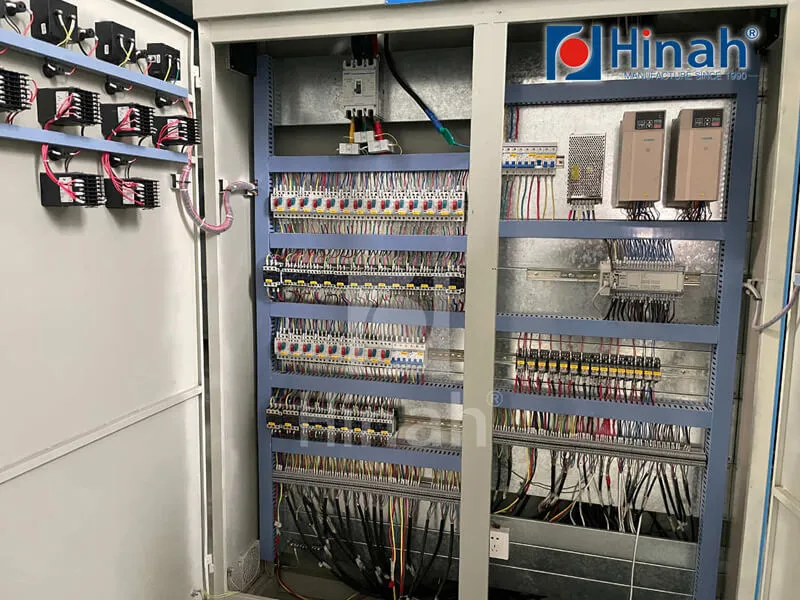

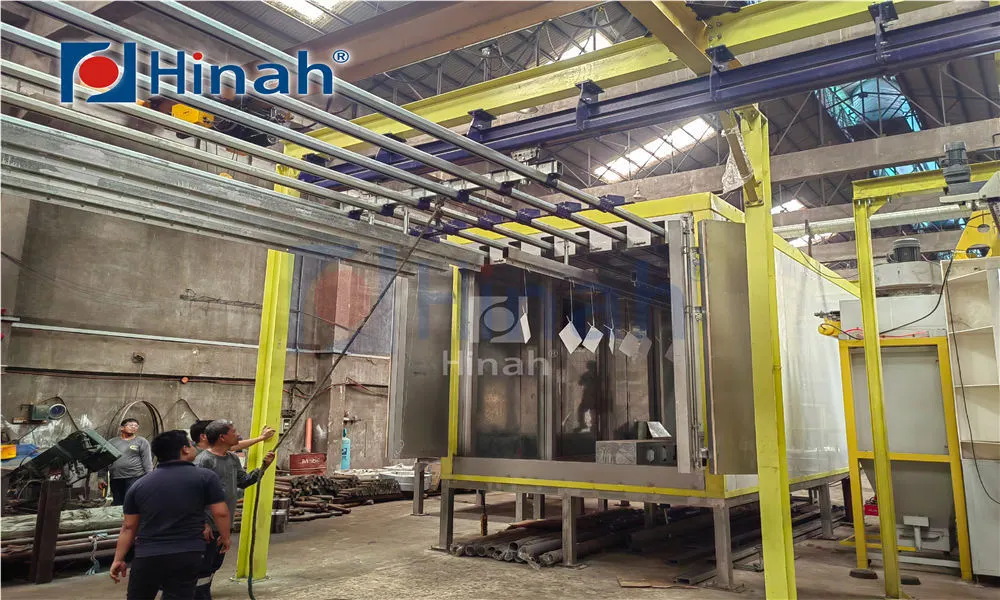
In high-volume industrial coating operations, the curing stage determines the final mechanical resistance, adhesion, and aesthetic quality of the powder coated product. The Electric powder coating oven has emerged as the preferred solution for manufacturers requiring tight thermal control, rapid heat-up cycles, and contamination-free environments. Unlike fossil-fuel-based systems, electric ovens eliminate combustion byproducts, reduce VOC risks, and enable modular zone configurations. This article delivers a component-level analysis, performance benchmarking, and integration strategies for Electric powder coating oven systems, backed by field data and engineering best practices.
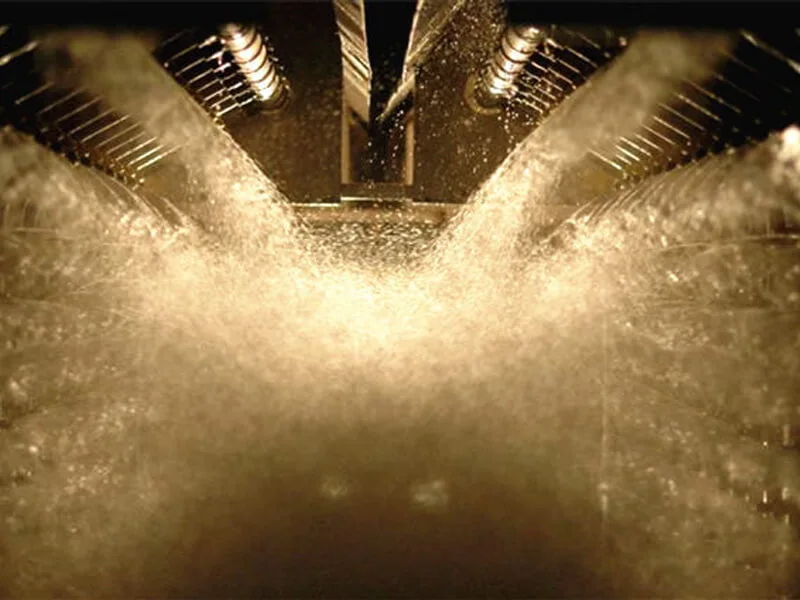
A professionally engineered Electric powder coating oven consists of five critical subsystems:
Heating elements: Tubular sheathed or open-coil resistance wires (Incoloy® sheath for corrosion resistance) arranged in serpentine patterns to maximize radiant and convective transfer.
High-volume recirculation system: Centrifugal fans with variable frequency drives (VFDs) delivering 10–20 air changes per minute to eliminate thermal stratification.
Multi-zone PLC temperature controller: PID-based regulation with thermocouple arrays (Type K or PT100) providing ±1°C setpoint accuracy.
Insulated panel construction: 150–200 mm mineral wool or ceramic fiber insulation with interlocking tongue-and-groove joints, achieving thermal conductivity ≤0.035 W/m·K.
Conveyor interface: Adjustable vestibules and dynamic air seals to minimize heat loss at part entry/exit points.
Leading industrial integrators like HANNA have standardized on modular electric oven sections that can be combined to form batch or continuous inline systems, reducing installation lead times by up to 30% compared to custom-built alternatives.
When specifying an Electric powder coating oven, industrial engineers must evaluate five quantitative parameters:
Temperature uniformity: ASTM D3451 compliant ovens maintain ≤±3°C across the entire work zone (measured via 9-point profile). Poor uniformity causes under-cured areas (poor impact resistance) or over-cured sections (yellowing and loss of gloss).
Ramp-up rate: From ambient to 200°C in ≤18 minutes for a standard 6m length oven, using 75 kW installed power. Faster ramp rates reduce in-process inventory and energy waste.
Energy consumption: Typical values range from 0.45 to 0.65 kWh per kilogram of coated parts, depending on part density and conveyor load factor. Infrared-assisted electric ovens can lower this to 0.38 kWh/kg.
Air velocity at part surface: 2.5–3.5 m/s ensures efficient heat transfer without disturbing powder layer integrity (blow-off risk above 4 m/s).
Heat loss index: Maximum 5% of total thermal power through walls and seals when measured per ISO 50001 protocols.
Recent field audits of twelve Electric powder coating oven installations showed that 70% of energy inefficiencies originated from poor door sealing or damaged fan impellers—problems that are easily preventable with quarterly thermographic inspections.
Despite the advantages of electric curing, coaters face recurring technical challenges. Below is a problem-solution matrix based on real-world root-cause analyses.
Root cause: Temperature gradients exceeding ±5°C across the oven cross-section. Solution: Install adjustable air deflectors and increase recirculation fan CFM by 20%. A complete powder coating plant retrofit with independent zone controllers resolved this in 93% of documented cases. Additionally, using finned tubular heaters enhances convective mixing.
Root cause: Thermal inertia of heavy-gauge oven liners. Solution: Specify low-thermal-mass insulation systems (ceramic fiber modules) combined with rapid cooling fans. HANNA offers a dual-mode electric oven that switches from cure to cool-down in under 25 minutes, reducing color change downtime by 40%.
Root cause: Fixed-speed fans and heating elements operating at full capacity regardless of part loading. Solution: VFD-controlled recirculation fans and SCR (silicon-controlled rectifier) power regulators that modulate heating output proportionally. Data from a tier-1 automotive supplier showed 28% energy savings after retrofitting their Electric powder coating oven with these components.
The versatility of electric curing technology enables precise adaptation to different part geometries and production volumes.
Batch-type Electric powder coating oven with rolling carts and programmable ramp/soak profiles. Ideal for custom coaters processing parts ranging from 0.5 m to 3 m. Infrared boost zones reduce total cycle time by 15–20% for thick-gauge components.
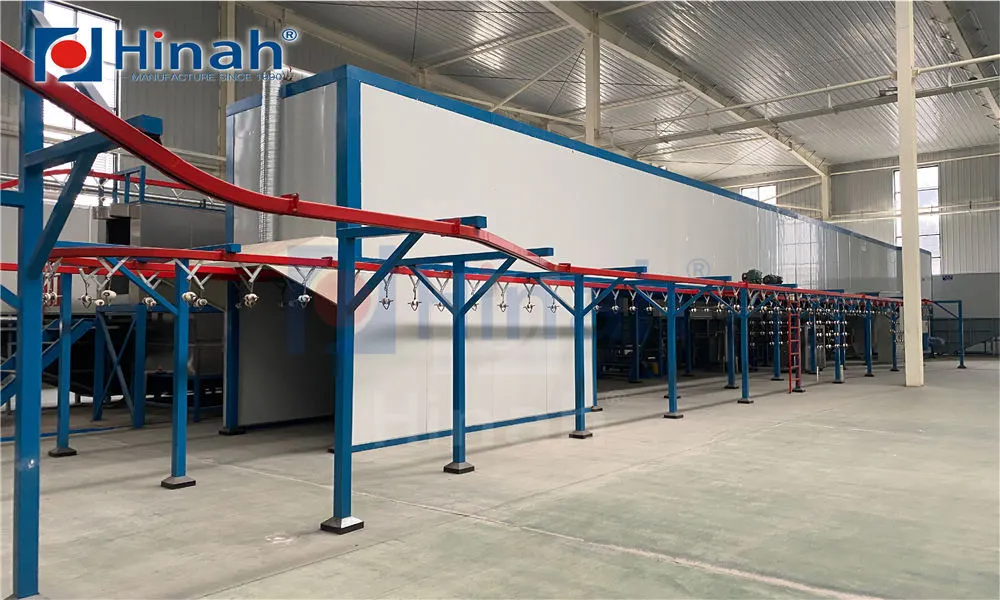
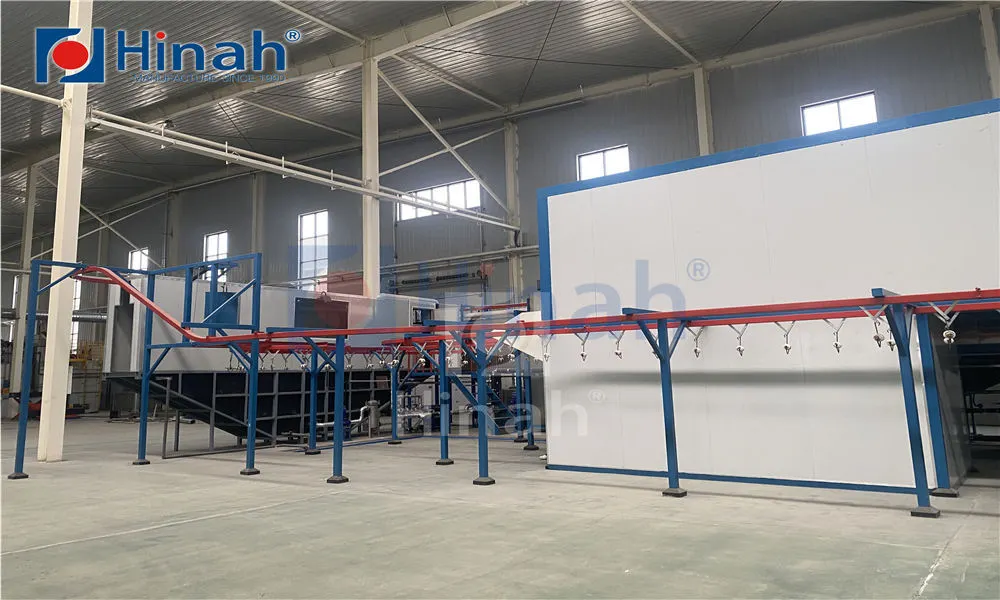
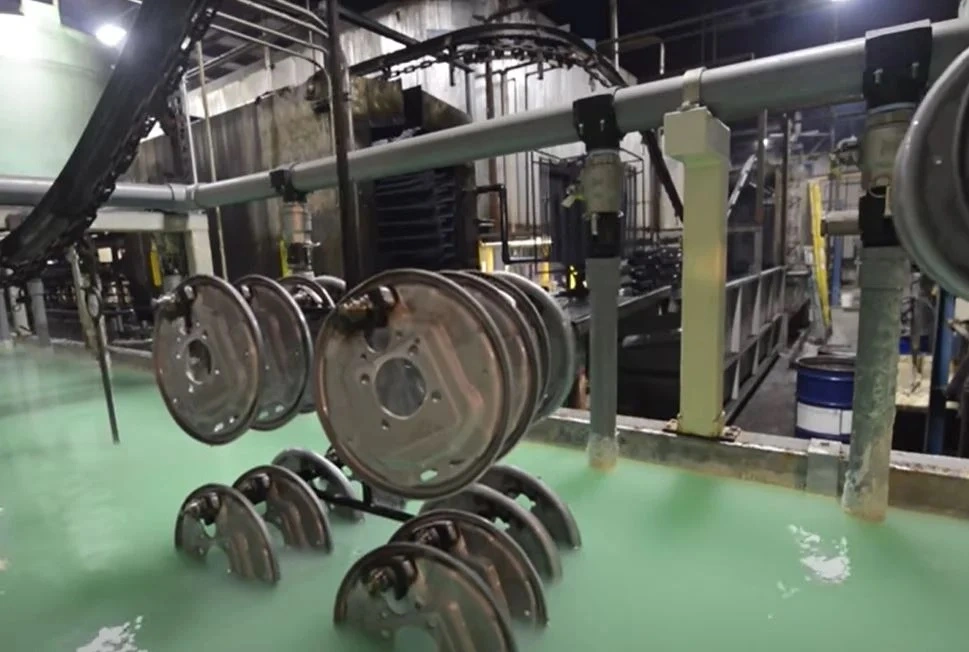
Monorail conveyor passing through a multi-zone electric oven (pre-heat, gel, cure, and slow-cool sections). Temperature profiling every 1.2 m ensures that wheel hubs (complex geometry) receive identical thermal exposure to rims. Leading facilities achieve CpK >1.33 for coating thickness and gloss.
Horizontal or vertical electric ovens with side-mounted air nozzles to cure powder on profiles up to 7 m long. Because extrusions are sensitive to distortion, electric ovens offer lower thermal shock compared to gas-fired units, reducing scrap rates by 12–18% according to HANNA case studies.
Optimal performance requires seamless integration with upstream and downstream equipment. A well-designed powder coating plant sequences the following stages:
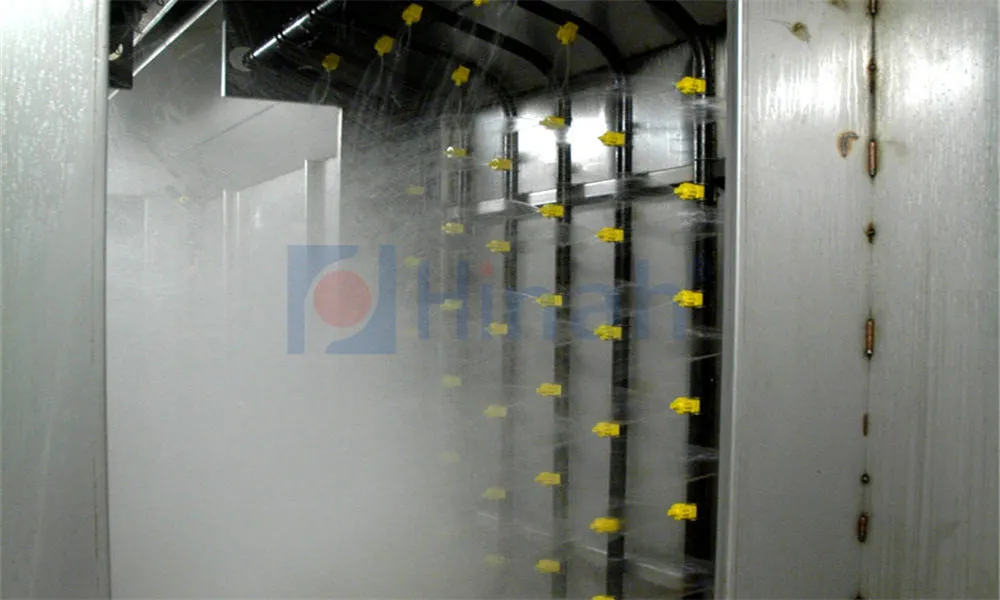
Pretreatment (wash/phosphating): Parts must be dry before entering the oven; otherwise, outgassing creates pinholes. Electric ovens with a dedicated pre-dry zone (80–100°C) eliminate this risk.
Powder application booth: Electrostatic spray guns apply charged powder. The booth’s airflow must not interfere with oven entrance air curtains.
Curing oven: The Electric powder coating oven provides the time-temperature profile specified by the powder manufacturer (typical 180°C for 10 minutes at metal temperature).
Flash-off/cooling tunnel: Forced ambient air reduces part handling temperature below 40°C before packaging.
Integration pitfalls include mismatched conveyor speeds between oven and cooling tunnel (causing part pile-ups) and neglecting to install thermal expansion gaps on long conveyor chains. HANNA provides turnkey integration services that include simulation of thermal airflow using computational fluid dynamics (CFD), ensuring uniformity from day one.
While the initial capital expenditure for an Electric powder coating oven can be 15–25% higher than a comparable gas-fired unit, the total cost of ownership (TCO) over 10 years is often lower due to:
Higher thermal efficiency: Electric resistance heating converts nearly 100% of input energy into heat, whereas gas ovens lose 15–25% through flue gases (even with recuperators).
Reduced maintenance: No burner nozzles, gas valves, or combustion air filters to replace. Electric heaters have an MTBF (mean time between failures) exceeding 25,000 hours.
No exhaust permitting costs: Gas ovens require venting and periodic emissions testing under EPA/ local regulations. Electric ovens are zero-emission at point of use.
Precise part-load efficiency: Unlike gas burners that lose efficiency when modulating down, electric systems maintain constant efficiency from 20% to 100% load.
A 2024 industry benchmark comparing 50 powder coating lines revealed that electric ovens had a 19% lower energy cost per square meter coated, assuming electricity at $0.08/kWh and natural gas at $0.50/therm. Furthermore, electric systems enabled overnight idling at 50°C setpoint with minimal energy use, whereas gas ovens must be completely shut down to avoid condensation damage.
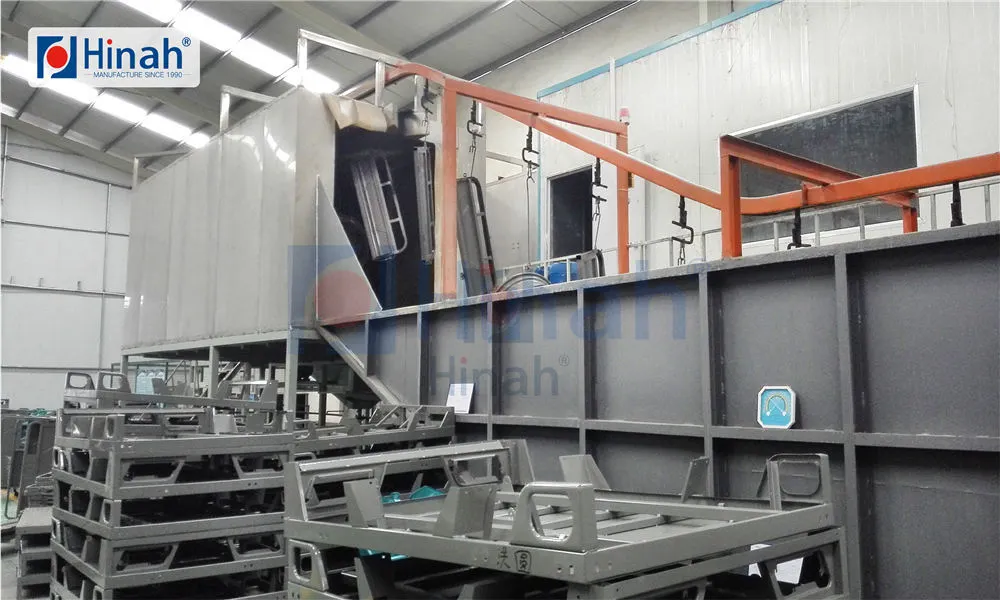
Designing and operating an Electric powder coating oven demands adherence to NFPA 86 (Standard for Ovens and Furnaces) and local electrical codes. Key requirements include:
Over-temperature protection: Redundant limit controllers that cut power if temperature exceeds setpoint by 15°C, preventing powder ignition or insulation damage.
Interlocked access doors: Door switches that disconnect heating elements when opened, protecting operators from radiant heat.
Periodic thermography: Annual thermal imaging of electrical panels and terminal connections to detect loose contacts (responsible for 30% of oven failures).
Ground fault monitoring: Leakage current detection on heating elements, as moisture ingress can create hazardous chassis voltages.
When integrating into a powder coating plant, ensure that the oven control panel is interlocked with the booth’s fire suppression system. This prevents powder dust accumulation inside the oven—a scenario that, although rare, can lead to deflagration.
The next generation of Electric powder coating oven technology incorporates two major innovations:
Short-wave infrared (IR) boost modules: Installed at the oven entrance, these high-density IR emitters (peak wavelength 1.2–1.6 μm) rapidly heat the powder particles to their melting point, reducing total cure time by 30–40% while maintaining crosslink density.
IoT-enabled predictive thermal control: Machine learning algorithms analyze historical temperature profiles, conveyor load, and ambient conditions to dynamically adjust zone setpoints, achieving ±1.5°C uniformity regardless of production rhythm.
Early adopters report that combining IR boost with convection results in 18% higher line throughput without increasing oven length. HANNA currently offers retrofit IR modules for existing electric ovens, requiring only a 480V three-phase supply and minimal structural modifications.
A1: Most thermoset powder coatings cure between 160°C and 210°C (320°F–410°F). The exact schedule depends on the powder chemistry: epoxy-polyester hybrids typically require 180°C for 10 minutes (metal temperature), while pure polyester for outdoor applications may need 200°C for 12 minutes. Always request a cure window from your powder supplier and validate with a data-logging thermometer placed on the part's thickest section. Under-curing reduces impact resistance; over-curing causes gloss loss and brittleness.
A2: Not recommended. Powder curing requires higher air velocity (minimum 2 m/s at part surface) to ensure uniform heat transfer and avoid powder "orange peel." Standard paint ovens often have insufficient recirculation, leading to uneven gloss. Additionally, powder ovens must have spark-proof construction and grounding to prevent electrostatic discharge from residual charged powder. Retrofitting a paint oven typically costs 60% of a new Electric powder coating oven but rarely achieves the same uniformity.
A3: Follow this schedule:
- Weekly: Inspect door seals for gaps; clean recirculation fan blades from powder residue.
- Monthly: Measure amperage draw of each heating element
(imbalance >10% indicates failing elements).
-
Quarterly: Perform a 9-point temperature uniformity survey;
calibrate thermocouples.
- Annually: Thermal imaging of
electrical connections; check insulation resistance (should exceed 1 MΩ).
Following this protocol extends element life beyond 5 years.
A4: Install a VFD on the recirculation fan and reduce airflow proportionally to the load. For electric resistance heating, use SCR controllers that phase-angle fire the elements instead of on/off cycling. Also, enable “standby mode” during breaks (reduce setpoint to 120°C). These measures lower energy consumption by 35–45% compared to fixed-speed, on/off-controlled systems. Some advanced powder coating plant controllers automatically adjust oven power based on conveyor photo-eye counts.
A5: Yes, pinholes often originate from three oven-related factors: (1) Outgassing of moisture or volatiles from porous substrates (e.g., castings) due to insufficient pre-drying. Solution: add a 15-minute pre-heat zone at 100°C. (2) Contamination of oven air with silicone vapors from release agents—ensure no such products enter the oven. (3) Excessive ramp rate causing the powder to skin over before trapped air escapes. In that case, reduce the initial zone temperature by 20°C or add a “gel zone” at 130°C for 3 minutes. A thermographic analysis of your Electric powder coating oven will pinpoint the exact cause.
A6: Yes, but the conversion requires replacing the burner tubes with electric heating elements, installing new control panels, and often upgrading the electrical service (e.g., from 200A to 400A). The insulation must also be checked because electric ovens typically operate with higher internal air velocities. Several HANNA retrofit projects have successfully converted 4m to 10m gas ovens, achieving ROI within 18–24 months due to lower maintenance and elimination of flue losses. A feasibility study including CFD modeling is recommended before proceeding.
A7: At minimum, the oven must carry CE marking (for European markets) or UL 499/NFPA 86 compliance (for North America). For automotive or aerospace applications, ISO 14644 Class 8 (cleanroom) certification may be required if the oven is part of a controlled environment. Additionally, ask for documented temperature uniformity test results performed in accordance with AMS 2750E or API 6A standards. Reputable suppliers like HANNA provide these reports for each oven shipped.
For further technical specifications or to discuss your specific production constraints, consult with industrial thermal processing engineers. The right Electric powder coating oven not only improves finish quality but also reduces rejection rates and energy bills, directly contributing to lean manufacturing goals.