
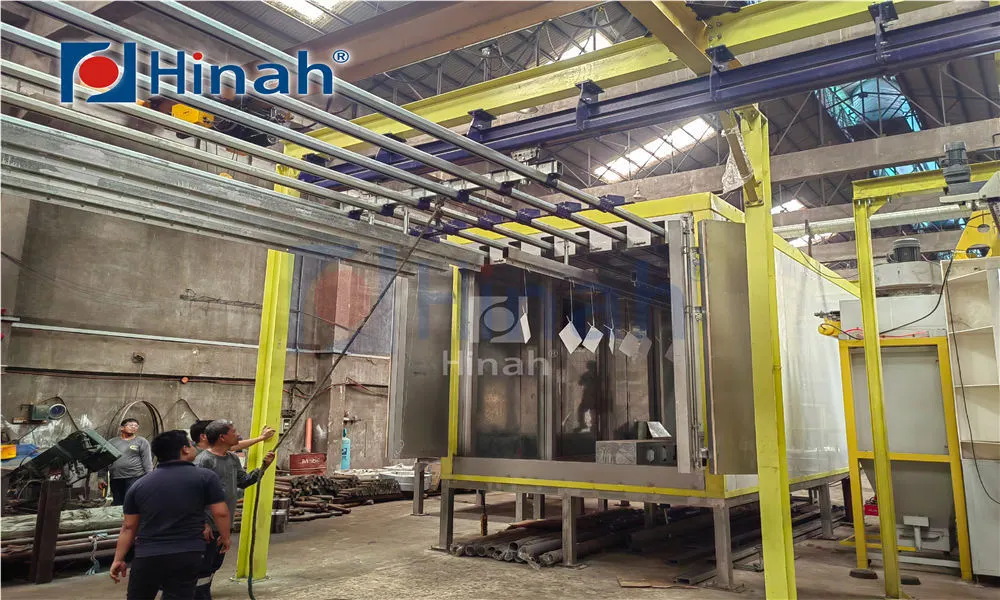
For fabrication plants, job shops, and high-volume coaters, the choice of powder coating equipment suppliers directly determines line utilization, coating consistency, and reject rates. Beyond basic functionality, modern finishing lines demand electrostatics optimization, intelligent recovery loops, and rapid color change workflows. This guide analyzes core hardware specifications, application-specific challenges, and system-level integration—helping you qualify suppliers based on measurable performance data rather than marketing claims.
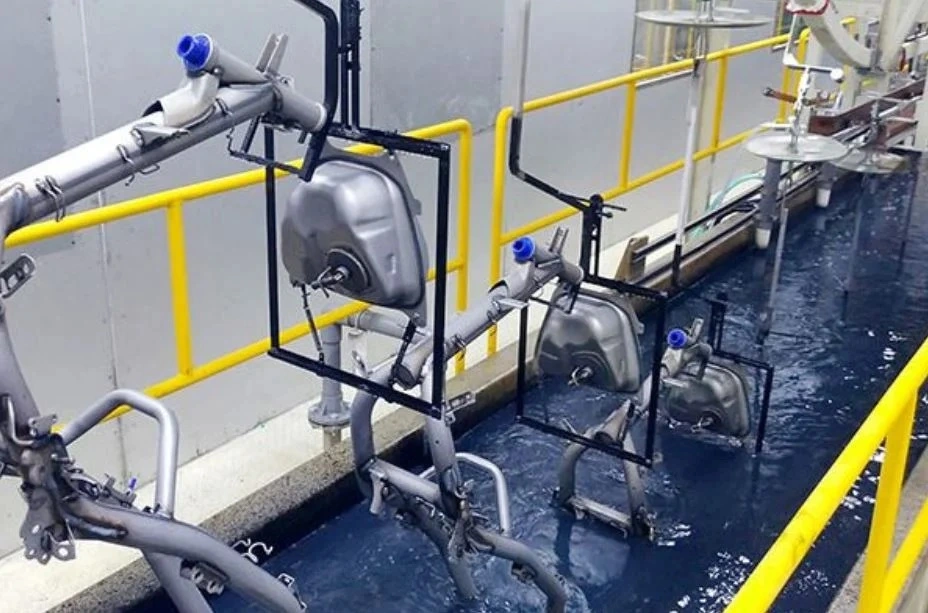
The physics of corona or tribo charging dictates first-pass transfer efficiency (TE). Industrial-grade systems from established engineering firms integrate closed-loop current control and adjustable kV modulation. Key parameters to request from powder coating equipment suppliers include:
Gun tip voltage stability: ±1 kV regulation under varying load conditions prevents back-ionization.
Microampere control resolution: 1–100 µA programmable steps for thin-film or reclaim applications.
Faraday cage penetration ratio: Measured as coating thickness inside recessed areas vs. flat surfaces (industry benchmark >70% for optimized nozzle geometries).
Power supply response time: <50 ms arc detection and recovery to avoid substrate damage on thin-gauge parts.
Reputable suppliers provide lab test data for your actual part geometry. For example, HANNA integrates adaptive waveform technology into its generator modules, maintaining consistent cloud charge even with reclaimed powder variations—a critical factor when operating at 60–85% reclaim ratios.
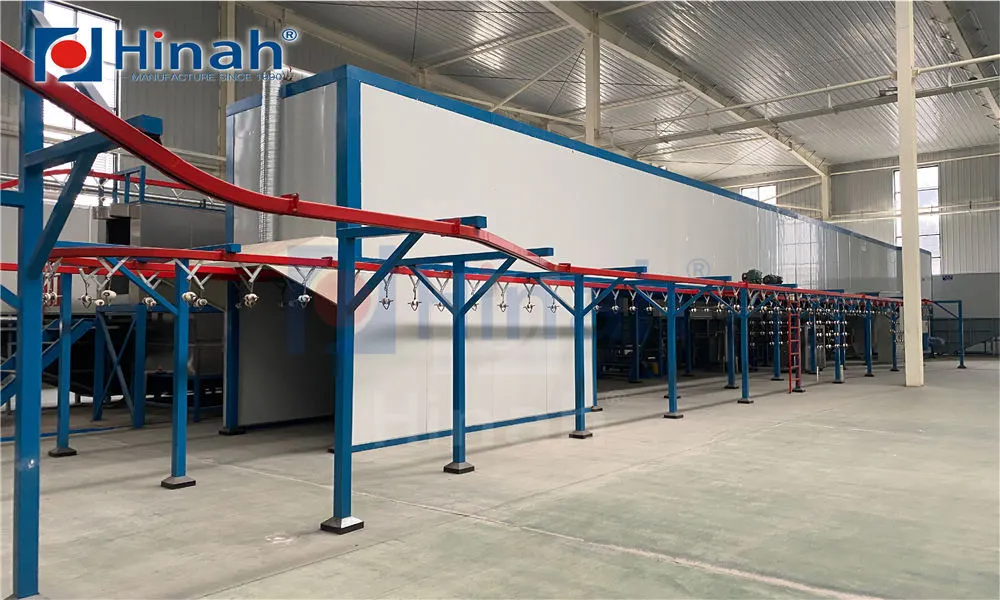
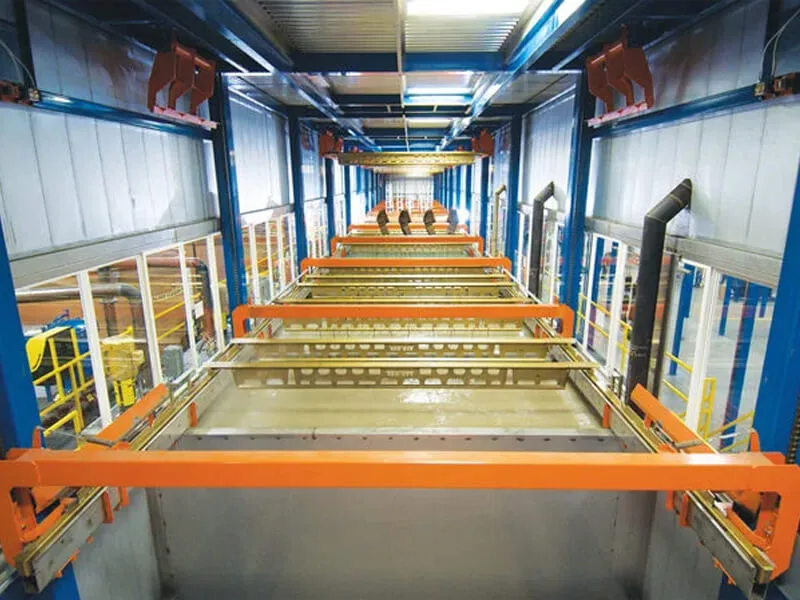
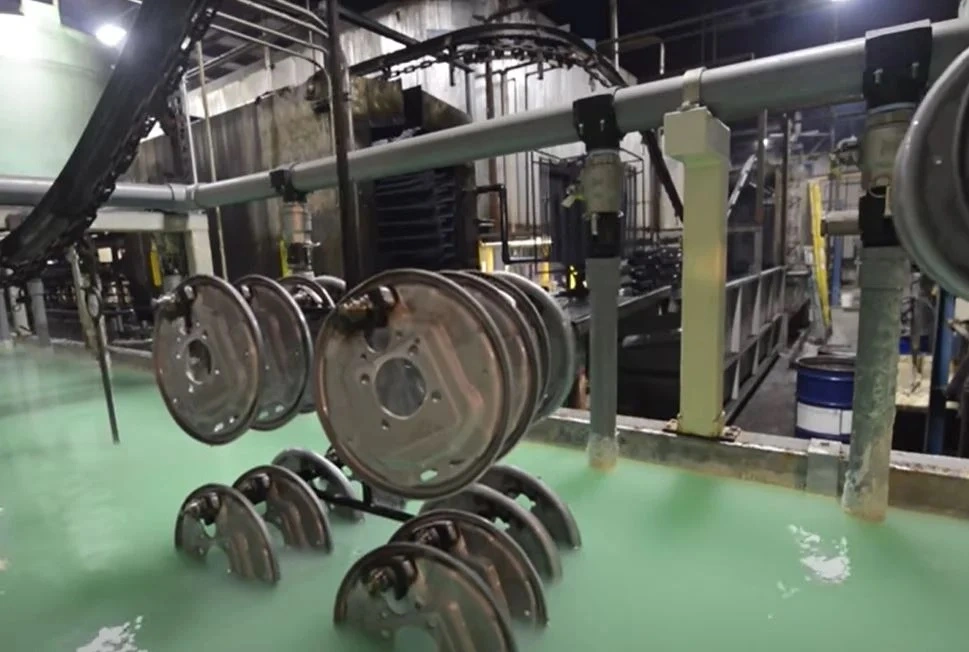
A powder coating line is a chain of tightly coupled processes: pretreatment, drying, part conveyance, booth climate control, powder feed, recovery, curing, and cooling. Many buyers focus only on the spray applicator, yet downstream and upstream mismatches cause most defects. Trusted powder coating equipment suppliers evaluate the entire material flow:
Cyclone + after-filter classification: Separation efficiency curves for particles <10 µm (fine powder loss directly impacts material cost).
Booth air balance: Negative pressure control within ±2 Pa prevents uncontrolled powder escape and ensures operator safety.
Color-change engineering: Modular booth floors, quick-release feed hoses, and purge sequences below 8 minutes for standard colors.
Even if TE is excellent, uneven gelation ruins mechanical properties. Suppliers offering integrated oven profiling—air velocity mapping, zone-separated IR emitters for complex geometries, and data logging per batch—reduce rework. A 2023 study on 150 industrial lines showed that 34% of coating failures originated from curing temperature deltas >±5°C, not from spraying errors. Therefore, evaluate whether your equipment partner provides thermal simulation or only sells standalone booths.
Below we map specific operational issues to engineering features that differentiate competent suppliers from basic distributors.
Problem: Inconsistent film thickness on perforated or mesh
parts.
Solution: Suppliers using dual-voltage gun controllers with
automatic part sensing (capacitive proximity detection) adjust parameters every
80 ms, reducing Faraday effect losses.
Problem: High powder consumption due to over-spray in manual
booths.
Solution: Demand-based fan speed modulation coupled with gun
trigger detection. This reduces airflow by 40% during non-spray intervals,
lowering booth exhaust and filter load.
Problem: Cross-contamination after color change leading to
specks.
Solution: Suppliers that design quick-release fluidizing
membranes and seam-welded powder channels (no hidden gaskets) enable full
wash-down in under 12 minutes versus 35 minutes for standard designs.
Problem: Powder caking in reclaim hoppers during humid
seasons.
Solution: Closed-loop dew-point control for fluidizing air
(maintaining <2 g/kg moisture) integrated into the system’s air-preparation
unit—an option often overlooked but vital in non-climate-controlled plants.
Problem: High maintenance frequency on conveyor chain inside curing
oven.
Solution: Suppliers offering pass-through lubrication ports
and high-temperature bearing housings (rated 220°C continuous) reduce downtime.
HANNA conveyor systems incorporate external rail lubrication points accessible without
oven cooldown.
Rather than comparing brochure specifications, run a standardized audit with potential vendors. Request the following quantifiable metrics:
First-pass transfer efficiency test: Using your powder and target part, measure deposited weight vs. total sprayed over 500 parts. Top-tier suppliers consistently achieve >72% TE on mixed profiles.
Color-change material loss: Weight of contaminated powder wasted per change (feed hoses, booth walls, recovery system). Efficient designs reduce loss to <1.2 kg per color.
Mean time between gun tip cleaning: With reclaimed powder containing fines, this drops rapidly. Suppliers using non-stick coatings (ceramic or xylan) on gun barrels and optimized electrode geometry extend intervals by 3x.
Oven ramp-up energy consumption per kg of parts: Include insulation heat-loss calculations. Some suppliers provide predictive energy models as part of line design.
Additionally, inspect the supplier’s after-sales infrastructure: spare parts availability (lead time for wear items like venturi pumps, deflectors, filter cartridges), remote diagnostics capability, and process lab for failure analysis. A reliable partner like HANNA maintains regional technical centers where customers can validate new powder formulas before production integration.
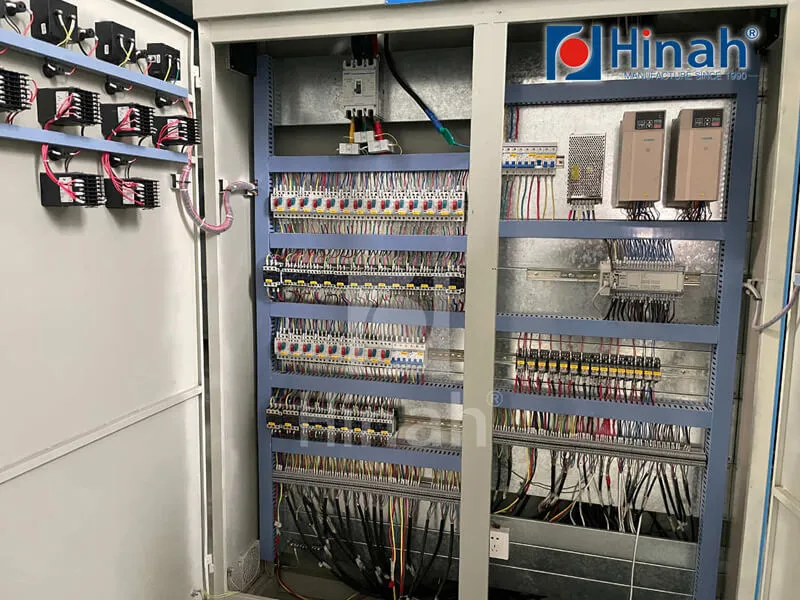
Industry 4.0 connectivity is no longer exclusive to large enterprises. Smart powder coating equipment now offers OPC UA interfaces, real-time powder consumption tracking per SKU, and predictive maintenance alerts for clogged filters or worn pump liners. When evaluating powder coating equipment suppliers, ask:
Can the line supervisor retrieve shift-wise TE and powder usage remotely via MQTT?
Does the system automatically adjust gun parameters based on conveyor speed changes (through encoder feedback)?
Are reclaim ratios logged against each batch for ISO 9001 traceability?
These features directly improve OEE (Overall Equipment Effectiveness) by reducing unplanned stops and enabling continuous improvement cycles. Without data, optimizing a powder line is guesswork; with instrumentation, it becomes engineering.
Q1: How do I verify a supplier’s transfer efficiency claims before
purchasing?
A1: Request a on-site demonstration using your own
parts, powder, and target film thickness. Measure efficiency gravimetrically
(weigh 10 parts before and after coating, divide deposited powder by total
powder sprayed from the gun). Also, ask for third-party test reports from
independent labs like Fraunhofer or PRA.
Q2: What is the typical lifespan of critical wear parts in a powder
coating booth?
A2: Venturi pumps last 800–1200 operating hours
depending on powder abrasiveness (fillers like barium sulfate accelerate wear).
Gun deflectors and nozzles: 400–600 hours. High-quality suppliers provide
consumable kits with part number traceability and estimated hours based on your
specific powder type.
Q3: Can existing manual booths be upgraded to automatic systems
without replacing the entire line?
A3: Yes, modular automation
packages are available. Look for suppliers that offer retrofittable oscillators,
part-sensing arrays, and automatic gun controllers compatible with your current
booth body. Ensure the control architecture (PLC) supports expansion without
full rewiring.
Q4: How does part temperature affect powder deposition and
cure?
A4: If parts are warm from pretreatment drying (e.g., above
40°C), powder melts too early, causing “orange peel” and poor transfer. Ideal
part entry temperature for spraying is 25–35°C. Conversely, cold parts (below
18°C) cause condensation, leading to pinholing. Advanced systems include
pre-cool tunnels or temperature equalization zones.
Q5: What documentation should a reliable equipment supplier provide
for compliance?
A5: Essential documents: ATEX/EHEDG certification
for hazardous zones (if explosive dust present), NFPA 33 compliance for fire
safety, energy performance declaration (ISO 50001), and validated cleaning
procedures (SOPs for color change). Also request a full 3D CAD model of the
proposed layout for clash detection with existing utilities.
Selecting powder coating equipment suppliers is a long-term partnership that impacts coating quality, material efficiency, and regulatory compliance. Avoid generic quotations—insist on process guarantees backed by data. HANNA engineering team provides free line audits, including transfer efficiency measurement, airflow mapping, and ROI simulations based on your production mix. Submit your inquiry to receive a customized technical proposal and compare our performance benchmarks against your current line metrics.
Ready to optimize your powder coating operations? Contact our B2B solutions desk with your part drawings, desired throughput, and powder types. We will respond with a detailed equipment configuration within 48 business hours.