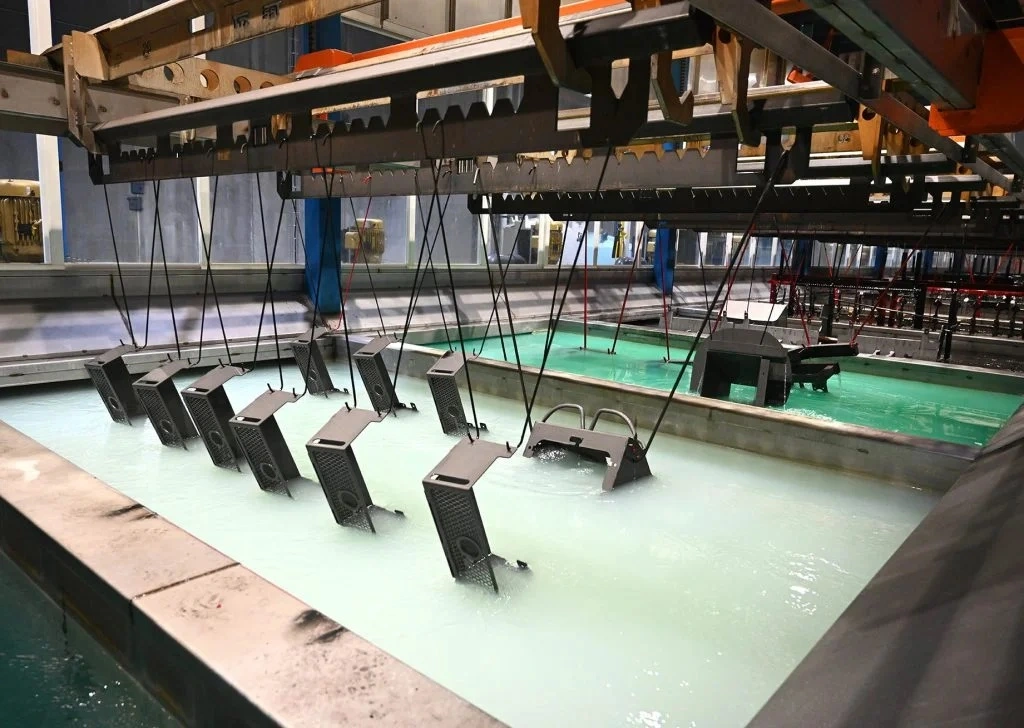
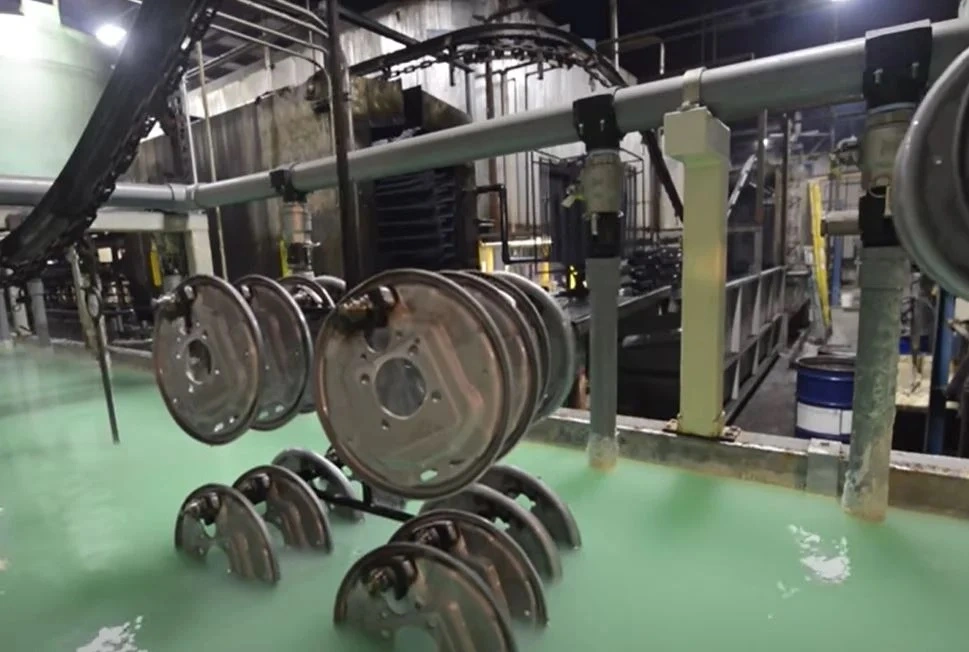
In industrial coating operations, the paint curing oven represents a decisive bottleneck for throughput, finish quality, and energy cost. Unlike simple drying chambers, a professional paint curing oven must deliver precise temperature ramping, uniform cross-sectional heat distribution, and controlled dwell times to achieve full cross-linking of polymer-based paints. This article examines thermo-fluid dynamics, heat source selection, and retrofit strategies — with real-world parameters from HANNA projects across automotive, heavy equipment, and industrial components sectors.
Every industrial coating formulation — whether epoxy, polyurethane, or polyester — specifies a curing window defined by substrate temperature and time. Deviations result in under-curing (poor adhesion, low chemical resistance) or over-curing (brittleness, discoloration). A professional paint curing oven must maintain:
Temperature uniformity ≤ ±5°C across the entire load zone (measured per ASTM D5423-23).
Ramp-up rate adjustable between 2–15°C/min to avoid solvent popping or substrate thermal shock.
Dwell time accuracy ±2% of set value, synchronous with conveyor speed.
Air change rate 8–12 volumes/hour to exhaust volatile organic compounds (VOCs) without heat loss.
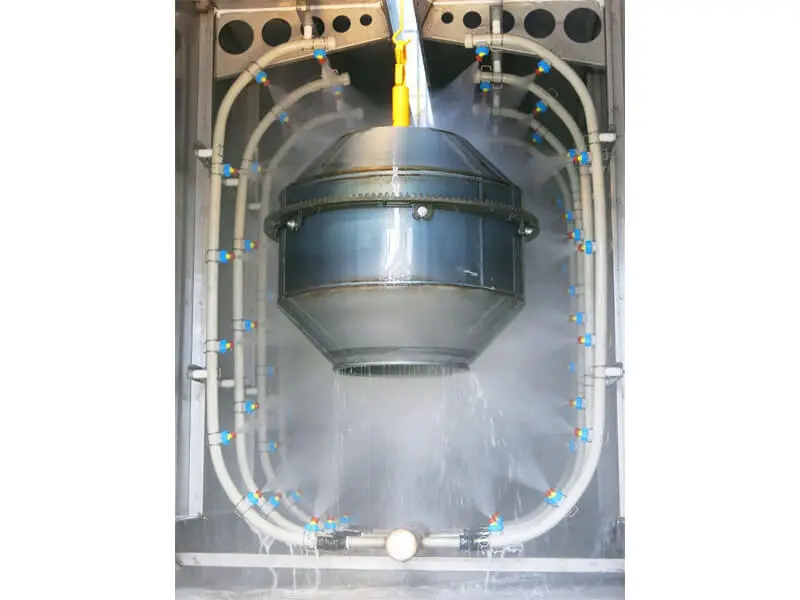
Many operators underestimate the impact of part geometry. For complex shapes with blind cavities, natural convection alone fails. Forced recirculation with adjustable nozzle arrays becomes necessary — exactly as implemented in HANNA direct-fired and indirect-fired ovens.
The choice between direct and indirect heating dramatically affects operational cost, atmosphere cleanliness, and maintenance intervals.
Combustion products (CO₂, H₂O vapor, trace nitrogen oxides) mix directly into the recirculating airstream. Advantages: thermal efficiency up to 92%, rapid response, lower capital cost. However, for high-gloss automotive clearcoats or moisture-sensitive two-component paints, the added humidity can cause micro-blistering. Use only when paint formulation tolerates up to 12% absolute humidity.
A heat exchanger separates combustion gases from process air. Zero contamination, ideal for medical devices, aerospace alloys, and powder coating reflow. Efficiency typically 78–84% but can reach 92% with condensing heat recovery. HANNA offers both tube-type and plate-type indirect exchangers with modular heat recovery modules that pre-heat fresh air using exhaust gases — reducing gas consumption by up to 27%.
For electric ovens (infrared or resistance heating), precise zone control is possible, but operating expenses are 3–4 times higher per kWh than gas. Recommended only for low-throughput, high-value parts or where gas lines are unavailable.
Poor airflow is the primary cause of reject rates in paint curing. Even a 10°C cold spot prevents complete curing, leading to corrosion start points. A properly engineered paint curing oven includes:
Plenum chambers with perforated baffles to equalize static pressure across the oven width.
Adjustable louvers directing air at 45° angles toward part recesses.
Reverse flow every 3–5 hours in batch ovens to break thermal stratification.
Computational fluid dynamics (CFD) validation before fabrication — a standard step in powder coating plant and wet paint lines from HANNA.
A practical case: A tractor manufacturer experienced 14% rework due to uncured paint on transmission housing internal ribs. After CFD analysis, HANNA installed six high-static-pressure plug fans with variable frequency drives (VFDs) and reoriented nozzles. The result: uniformity improved from ±18°C to ±3°C, and rework dropped below 2%.
Industrial paint curing ovens operate at 120–220°C (250–430°F) for most liquid paints, and up to 400°C for PTFE coatings. Without proper insulation and heat capture, energy loss becomes the largest operational expense.
Mineral wool panels (150–200 mm thickness, density 128 kg/m³) reduce skin temperature ≤ ambient +15°C.
Air-to-air heat exchangers recover 55–70% of exhaust heat to pre-heat incoming fresh air.
Turndown ratio of burners ≥25:1 for modulated firing to avoid cycling losses at partial load.
For integrators designing a complete line, combining a powder coating plant with a shared thermal oxidizer (for VOC destruction) can further cut natural gas consumption by 30%, because the oxidizer's waste heat preheats the curing oven — an option that HANNA engineers routinely model.
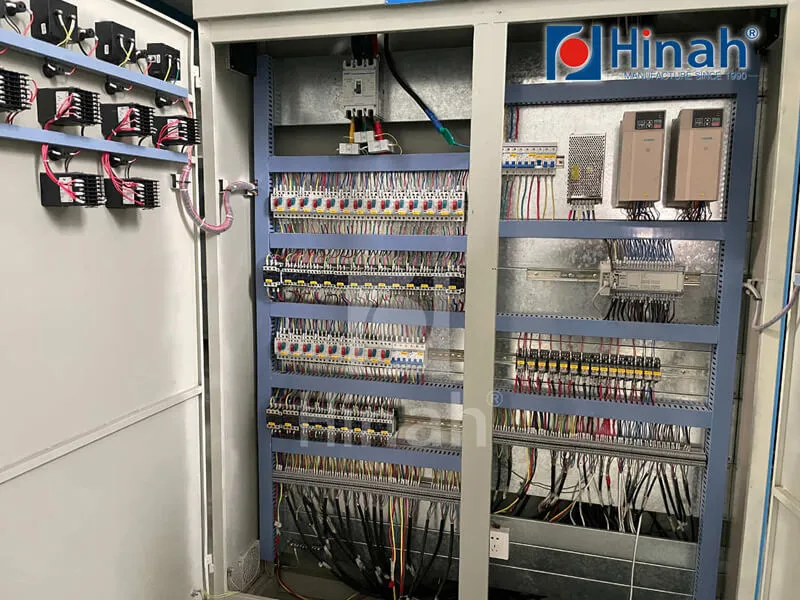
Modern paint curing ovens are not standalone; they must interface with upstream wash systems, paint booths, and downstream coolers. Key control features:
Multi-zone PID controllers with auto-tuning, communicating via Profinet or EtherNet/IP.
Real-time temperature mapping using 6–12 PT100 sensors, with data logging for batch traceability (ISO 9001:2022).
Predictive maintenance algorithms that detect fan bearing degradation or burner pressure drops.
Remote access dashboards for production managers to monitor cure curves from any device.
Nasan’s proprietary ThermaSmart™ controller, for example, learns the thermal inertia of each product SKU and automatically adjusts conveyor speed or zone heating to maintain the exact degree-minutes required, even during product changeovers.
Field audits across 47 facilities revealed these red flags that often go unnoticed until scrap rates rise:
Orange peel or solvent popping on horizontal surfaces → indicates excessive radiant heat or low air velocity.
Poor adhesion along part edges → edge cooling effect (high surface-to-mass ratio) combined with insufficient convective heat transfer.
Irregular gloss levels across a single batch → non-uniform airflow distribution.
Blue fuming from exhaust → incomplete combustion (check burner air-fuel ratio).
Condensation inside oven during warm-up → lack of minimum air change before production start.
Each symptom has a specific corrective action — from recalibrating damper positions to installing independent zone control. HANNA provides on-site thermal mapping services using 24-channel data loggers to diagnose these issues within one shift.
When existing equipment no longer meets quality or throughput demands, decision-makers face a classic trade-off. Below is a decision matrix based on oven age and condition:
Oven age < 5 years: Retrofit with VFD fans, high-efficiency burner, and insulation top-up. Payback period 12–18 months.
Oven age 5–10 years with structural integrity: Replace burner, add heat recovery, install new controls. Payback 24–30 months.
Oven age >10 years or rusted panels: New oven construction yields better long-term ROI due to modern aerodynamics and lower emissions compliance risk.
HANNA’s engineering team can execute a full modular replacement within 2–3 weeks of downtime, using pre-assembled wall sections and plug-and-play controllers — significantly faster than traditional field-built ovens.
Industrial paint curing ovens fall under multiple regulatory frameworks, including NFPA 86 (Ovens and Furnaces), OSHA 1910.107 (Spray finishing using flammable materials), and local air permits for VOC emissions. Critical safety features:
Purge timers (minimum 4 air changes before ignition).
Flame supervision with UV scanners or flame rods.
High-limit safety thermostats (manual reset, independent of process controller).
Explosion relief panels sized per NFPA 86 (1 sq ft per 15 cu ft of oven volume).
Automatic fresh air dampers that open on high-temperature excursion to cool oven rapidly.
Ignoring these not only risks catastrophic failure but also can void insurance coverage. Every paint curing oven supplied by HANNA is certified to CE, UL, and NFPA standards, with full documentation for local authorities.
Different industries impose unique demands:
Automotive wheels (aluminum alloy): Requires a 3-zone curing profile: ramp (30–80°C), hold (80–180°C), and cool-down (180–60°C) to avoid metallurgical changes. Oven length 24m for 600 wheels/hour.
Aerospace fasteners: Small parts with high density require infrared + convection hybrid oven to avoid overheating edges while core reaches cure temperature.
Agricultural machinery: Heavy steel fabrications need high air velocity (2.5 m/s) to penetrate joints and welds, preventing early rust.
Powder coating on MDF: Low-temperature cure (130°C max) with precise humidity control (<10g water/kg dry air) to prevent outgassing.
For each, the base powder coating plant or wet paint line design starts with a thermal simulation — and HANNA has executed over 200 such simulations globally in the last three years.
A1: For most solvent-borne and waterborne industrial paints (epoxy, polyurethane, acrylic), dwell time at metal temperature ranges 15 to 30 minutes, depending on part thickness and paint chemistry. Thick castings (30+ mm) may need 45–60 minutes. Always follow the paint manufacturer's technical data sheet (TDS), but also validate with a thermal couple attached to the heaviest part in the load.
A2: At minimum every 6 months for critical automotive or aerospace lines, or annually for general industrial use. Use a NIST-traceable reference sensor and perform a three-point calibration (low, setpoint, high). Also check that thermocouple wires have not drifted in resistance — replace any sensor that deviates more than ±2°C from reference.
A3: Not directly. Powder coating requires a much higher air volume (to suspend powder particles) and chemically clean atmosphere. However, you can design a powder coating plant with a separate curing oven that is also used for wet paint if you install post-filters to remove powder residues before switching to wet paint — but changeover cleaning takes 4–6 hours. Most production lines dedicate separate ovens.
A4: Standard industrial ovens with 150mm mineral wool insulation and stainless steel interior can operate continuously at 400°C (752°F). For PTFE coatings (cure at 380–400°C), you need special gaskets (silicone-free), high-temperature bearings, and a cooling section after the oven. HANNA builds custom PTFE ovens with ceramic fiber insulation rated to 650°C.
A5: Install a plate-type air-to-air heat exchanger on the exhaust stack, recovering waste heat to preheat fresh combustion air or oven makeup air. Typical gas savings: 20–35%. Payback period is 9–14 months for a 2-shift operation. The second-best upgrade is adding VFDs on recirculation fans — reduces electricity consumption by 40% during ramp-up and idle periods.
Selecting or retrofitting a paint curing oven is a high-stakes decision affecting finish quality, energy spend, and compliance. Whether you need a 30 ft batch oven for job-shop flexibility or a 200 ft continuous tunnel for automotive volumes, data-driven design eliminates guesswork. HANNA combines thermal simulation, modular fabrication, and global commissioning to deliver ovens that achieve ≤±3°C uniformity and ≥92% thermal efficiency.
For a detailed proposal including CFD temperature maps, energy consumption projections, and NFPA 86 compliance documentation, contact our engineering team with your part dimensions, coating type, and target throughput. We provide free initial thermal audits for facilities with existing curing problems.
Request your customized solution now → Send inquiry to HANNA specialists