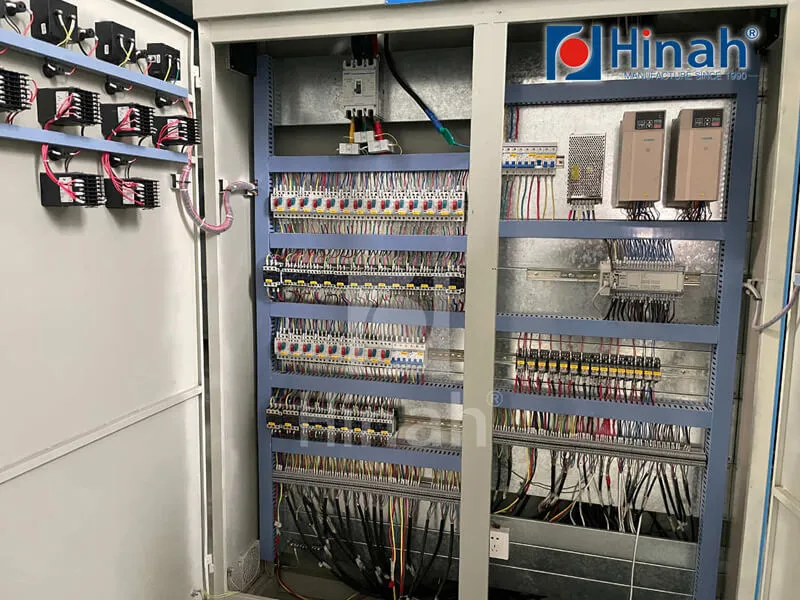

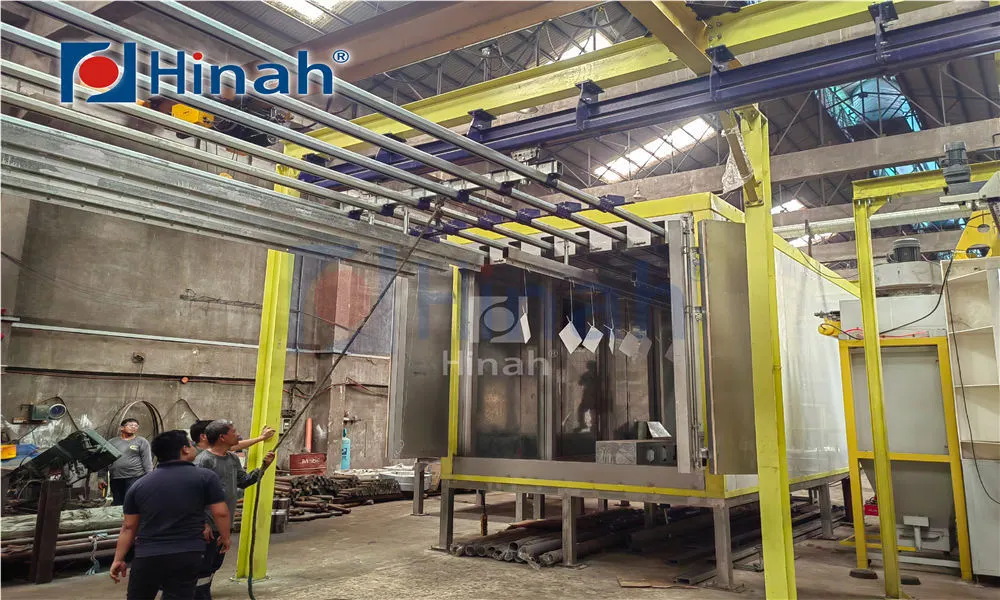
When evaluating a Powder coating system for sale, industrial buyers must look beyond price tags and examine thermal uniformity, conveyor dynamics, powder reclaim efficiency, and total cost of ownership (TCO). A mismatched system leads to rejects, high energy bills, and production bottlenecks. This technical reference provides component-level benchmarks, application-specific configurations, and quantitative ROI models to guide your capital equipment decision. Drawing from field data across 200+ installations, we analyze what separates a production-grade powder line from a basic setup.
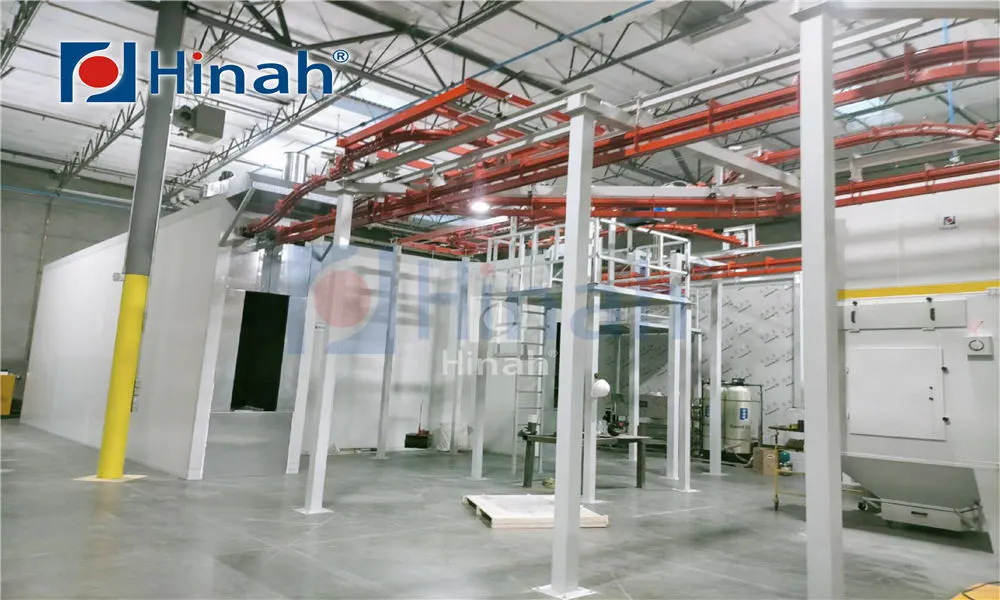
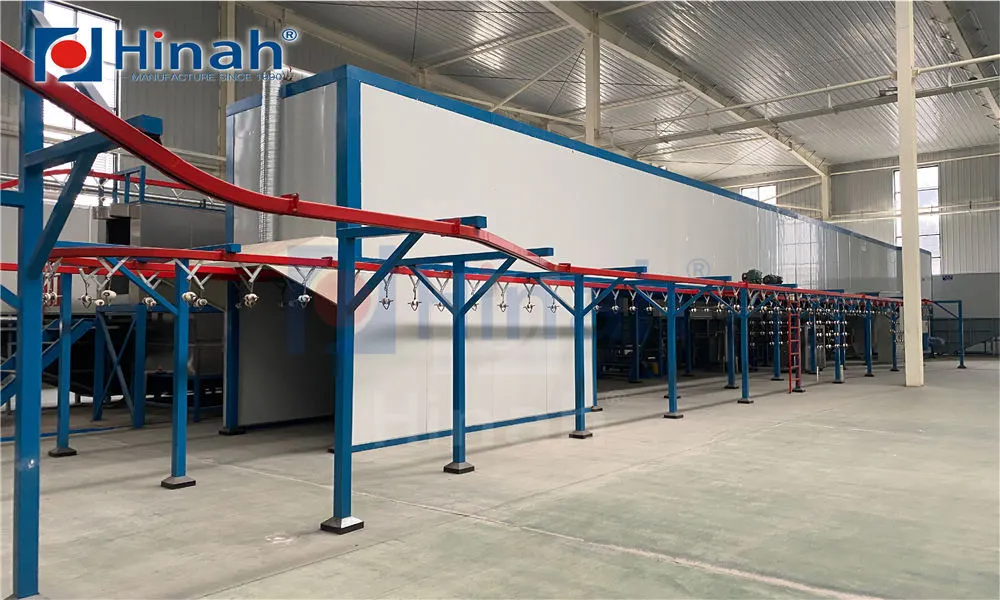
A complete Powder coating system for sale typically includes seven interdependent modules. Compromising on any single module reduces overall line efficiency.
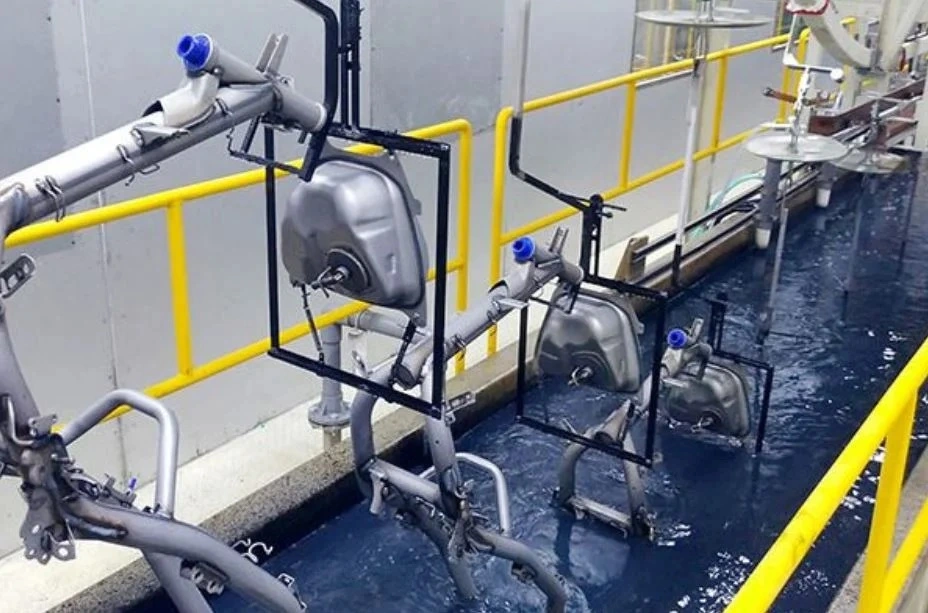
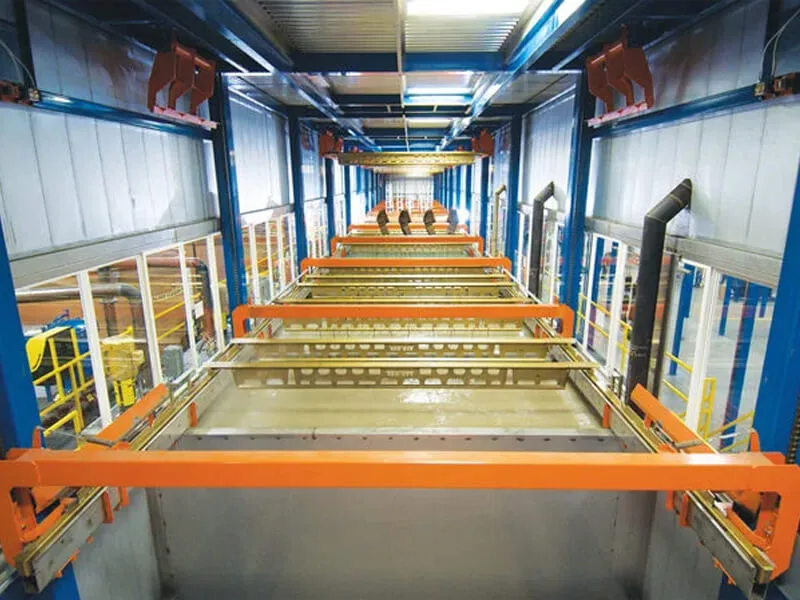
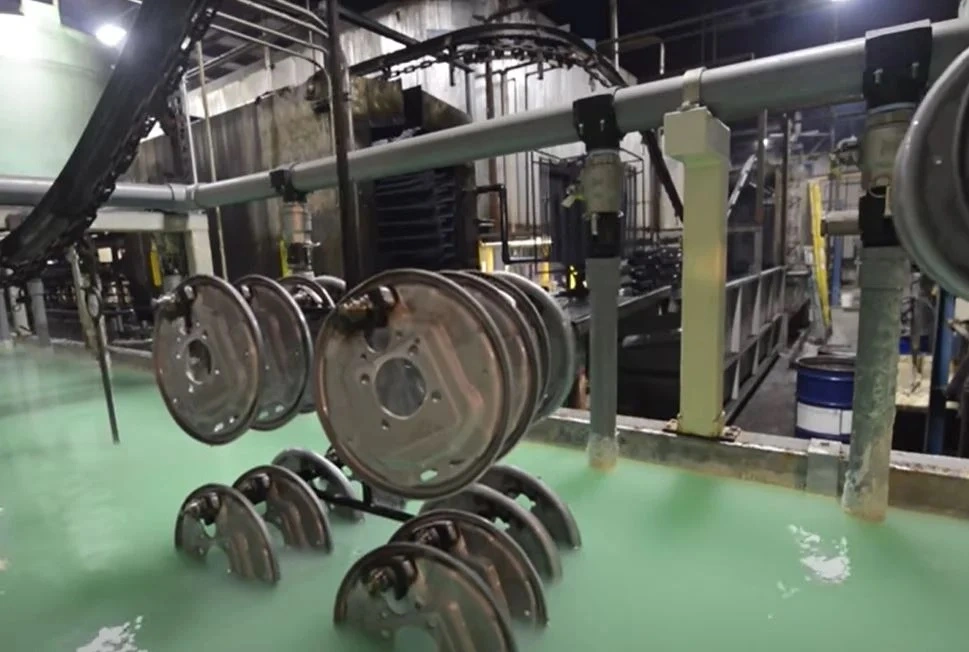
Pretreatment station: Spray or immersion washer with multi-stage chemical baths (alkaline clean, rinse, zinc phosphate, passivation). Throughput capacity: 1.5–6 m²/min depending on conveyor speed.
Dry-off oven: Gas or electric unit operating at 100–140°C to eliminate moisture before powder application. Inadequate drying causes outgassing pinholes.
Powder booth: Stainless steel construction with cartridge collectors (99.8% efficiency down to 0.5 μm) or cyclone + secondary filter. Booth airflow must maintain 0.3–0.5 m/s face velocity to contain overspray.
Electrostatic spray guns: Corona or tribo charging, with kV control (60–100 kV) and micro-processor controlled powder output (50–500 g/min per gun).
Powder recovery system: Sieving and blending unit that returns reclaim powder to the feed hopper at ratios up to 30% without compromising finish quality.
Curing oven: Powder coating system for sale listings often undervalue oven design – but temperature uniformity (±3°C) and ramp rate (ambient to 200°C in ≤20 min) directly determine coating crosslink density and gloss consistency.
Cooling tunnel: Ambient forced air or evaporative cooling to bring part temperature below 40°C before handling.
Leading integrators like HANNA provide modular lines where each component is sized to match a single conveyor speed, avoiding the “weakest link” effect common in assembled systems.
The choice between a batch and inline Powder coating system for sale depends on three variables: part size mix, daily throughput, and changeover frequency.
Best for: Job shops coating 10–500 parts/day, varying geometries up to 3m x 3m x 2m.
Typical footprint: 40–80 m² (including manual spray booth and batch oven).
Energy consumption: 0.9–1.2 kWh per kg of coated parts (higher due to heat losses during door openings).
Labor intensity: 2 operators per shift for loading/unloading and manual spraying.
Average ROI period: 14–20 months at 60% capacity utilization.
Best for: High-volume manufacturers (automotive wheels, architectural extrusions, appliance panels) with 2000+ parts/day and consistent profiles.
Footprint: 150–500 m², but parts per square meter ratio is 3–5x higher than batch.
Energy consumption: 0.45–0.65 kWh/kg – 30–40% lower than batch due to vestibule air seals and zone control.
Labor: 1 operator per shift plus automatic gun controllers; some systems run lights-out.
Average ROI: 12–18 months but requires higher initial capital (2–4x batch systems).
Hybrid solutions exist: a powder coating plant with a monorail conveyor that can bypass the automatic booth for manual touch-up offers flexibility. Field data from 2023 shows that 62% of buyers who initially chose batch later upgraded to inline within 3 years, incurring double installation costs.
Two subsystems most frequently under-engineered in a Powder coating system for sale are the curing oven and powder recovery unit. Here are industry-standard acceptance criteria.
Request a 9-point temperature uniformity test (ASTM D3451) before final acceptance. Acceptable tolerance: ±3°C for standard powders, ±1.5°C for thin-film architectural coatings (40–80 μm). Non-compliant ovens cause:
Under-cured zones: Poor impact resistance (less than 20 in-lb reverse impact) and failed solvent rub tests (MEK >100 double rubs).
Over-cured zones: Yellowness index (ΔE >1.5) and loss of gloss (>15% reduction from specification).
Electric ovens with dual-redundant thermocouples and SCR-controlled heating elements consistently outperform gas-fired units in uniformity. HANNA guarantees ±2°C uniformity on all inline systems for sale, validated by third-party thermal profiling.
For systems reclaiming overspray, the recovery efficiency directly impacts material cost (powder averages $4–$12/kg). A high-performance cyclone + cartridge filter combination recovers 97–99% of overspray. Critical metrics:
Reclaim ratio limit: Maximum 30% reclaim mixed with virgin powder to avoid orange peel or reduced flow. Beyond 30%, add a fresh powder feeder.
Sieving mesh: 140–200 μm (100–120 mesh) to remove agglomerates and debris. Automatic vibrating sieves with breakaway magnets capture ferrous contaminants.
Booth airflow balance: Negative pressure relative to the plant floor (0.05–0.1 inches water column) prevents powder escape. Manometers should be installed on each booth.
In a powder coating plant operating two shifts, 15% improvement in reclaim efficiency reduces annual powder spend by $18,000–$45,000 depending on throughput.
Requirements: High-gloss clear coats and base coats, curing at 180°C for 20 min (metal temperature). Pain point: Faraday cage areas inside wheel spokes cause uneven coating thickness. Solution: Specify a Powder coating system for sale with tribo guns (which charge powder by friction, not corona) plus reciprocating arms with four guns per side. Tribo systems reduce back-ionization and improve wrap-around. Data from a tier-1 supplier showed reject rates dropping from 8.2% to 2.1% after switching to tribo.
Requirements: AAMA 2604/2605 compliance – 200°C for 12 minutes, 80–120 μm film thickness, 60+ gloss retention after 1000h QUV. Pain point: Vertical ovens cause sagging on long profiles. Solution: Horizontal conveyor with dual-chain drive and part rotation in the oven. Also, IR pre-heat zone (short-wave emitters at 1.2 μm) gels the powder before convection, eliminating sag. Several powder coating plant integrators offer modular IR sections.
Requirements: High film build (120–200 μm) for corrosion
resistance, curing at 200°C. Pain point: Outgassing from cast
iron or welded seams. Solution: Include a pre-heat zone at
110°C for 8 minutes before powder application. Also, specify a two-coat system
with primer (epoxy) and topcoat (polyester). When searching for a Powder
coating system for sale for heavy parts, ensure the conveyor has a
load capacity of 50–200 kg per hanger and the oven has a low-floor design for
forklift access. Beyond the initial purchase price of a Powder
coating system for sale, calculate 5-year TCO including: Energy: Electric curing oven consumes 150–400 kWh per
shift. At $0.10/kWh, annual energy cost $10,000–$27,000. Gas ovens have lower
per-BTU cost but higher maintenance. Powder consumption: For a line coating 500 m²/shift with
80% transfer efficiency, daily powder usage ~75 kg. At $8/kg, annual powder
spend ~$156,000. Improving transfer efficiency by 10% saves $15,600/year. Labor: Manual batch system: 3 operators/shift →
$180,000/year. Automated inline: 1 operator/shift + maintenance →
$70,000/year. Maintenance & consumables: Cartridge filters
($2,500/year), gun nozzles ($800/year), oven thermocouples ($600/year). Reject costs: A 5% reject rate on $50 part value costs
$125,000 per year for 5000 parts/shift. Good systems achieve <2%
rejects. A mid-range inline Powder
coating system for sale priced at $280,000 can deliver payback in
18 months when replacing an outdated batch operation, based on labor and
material savings documented by HANNA case studies. When reviewing a Powder
coating system for sale from any vendor, demand documented evidence
for these items: Thermal profile report for the curing oven (at least 3 different part
geometries). Powder transfer efficiency test results at typical line speed (should exceed
65% for automatic guns, 85% with booth reclaim). Noise level data: full system operation at 1m distance – OSHA requires
<85 dBA for 8-hour exposure. Electrical load study: many systems require 400–800 Amps at 480V. Inadequate
supply adds $20k–$50k for transformer upgrade. Spare parts availability guarantee: critical items (heating elements, fan
motors, gun control boards) must have <5 day lead time. Reputable manufacturers like HANNA provide a complete
documentation package including CAD drawings, PLC ladder logic backups, and
on-site commissioning with acceptance tests. A1: For a standard inline system (pretreatment + dry-off +
booth + curing oven + cooling), lead times range from 12 to 20 weeks. Batch
systems are faster: 6–10 weeks. Customizations like stainless steel
construction, explosion-proof electricals, or cleanroom classification add 4–8
weeks. Always ask the supplier for a project timeline with critical path
milestones. Some suppliers, including HANNA, offer expedited
10-week delivery on popular configurations. A2: Yes, but used systems carry three major risks: (1) Oven
temperature uniformity degrades over time due to sagging insulation or worn
fans; (2) Powder booth filter media may be contaminated with previous powder
chemistries, causing cross-contamination; (3) PLC software may lack modern
features (data logging, remote diagnostics). If buying used, demand a thermal
uniformity test and a full filter change. Also, verify that the Powder
coating system for sale includes all manuals and wiring diagrams.
Refurbished systems from certified vendors often come with a 6-month
warranty. A3: A typical system (4 m conveyor speed, 6-gun booth, 8m
electric oven) requires: A4: Use this formula: Conveyor speed (m/min) = (Line length
from washer exit to oven exit in meters) / (Required cure time in minutes). For
example, if the distance from washer exit to oven exit is 24 m and your powder
needs 10 minutes at metal temperature, speed = 2.4 m/min. Then ensure the oven
length is at least speed × cure time = 2.4 × 10 = 24 m. Many Powder
coating system for sale listings omit this calculation, leading to
under-sized ovens. Always simulate with your largest part. A5: Orange peel (surface waviness) arises from: (1) Powder
particle size too coarse (D90 > 45 μm) – solution: specify a classifier mill
in the recovery system. (2) Oven ramp rate too fast – use a two-zone oven with a
130°C gel zone for 3 minutes before final cure. (3) Film thickness > 120 μm –
reduce gun powder output. When evaluating a Powder
coating system for sale, ask if the oven includes independent zone
temperature control and if the powder feed hopper has a vibratory sieve to
remove coarse particles. A6: Yes, hybrid booths exist with an automatic gun array and
manual touch-up stations at the exit. This configuration is common in job shops.
Ensure the booth width is at least 2.5 m to allow operators to move safely. The
control panel must allow switching between automatic and manual modes without
stopping the conveyor. Powder coating
plant designers like HANNA offer convertible
booths as a standard option. A7: For a continuous inline system with 6 m/min conveyor
speed, overall length is 35–55 m (pretreatment 8m, dry-off 4m, booth 5m, oven
18m, cooling 6m, load/unload zones). Width: 3–4 m for the oven and 4–6 m for the
booth including powder room. Total floor space: 200–350 m². Batch systems
require 60–120 m². Always add 2 m clearance around all sides for maintenance
access. Selecting the right Powder
coating system for sale requires matching technical specifications
to your production reality. Use the benchmarks above to create a request for
quotation (RFQ) that demands verifiable data on uniformity, efficiency, and TCO.
Professional integration ensures your investment delivers consistent quality for
a decade or more.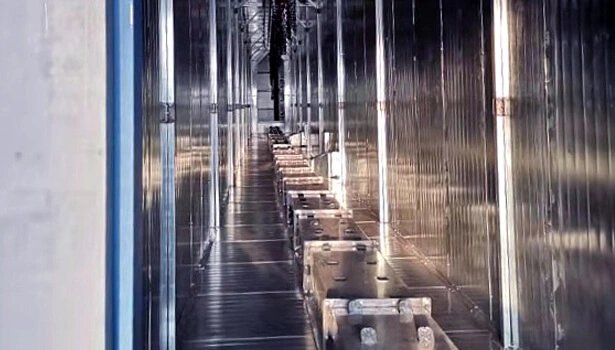
5. Financial Analysis: Total Cost of Ownership (TCO) for a Powder
System
6. Selection Checklist: What to Verify Before Purchase
Frequently Asked Questions (FAQ)
Q1: What is the typical lead time for a turnkey powder coating system for
sale, from order to production?
Q2: Can I integrate a used powder coating system into my existing plant, and
what risks exist?
Q3: What electrical and compressed air requirements are needed for a
mid-size inline powder system?
- Electrical: 480V/3-phase,
250–400A main breaker. Oven draws 60–120 kW; booth fans 15–30 kW; pretreatment
pumps 10–20 kW.
- Compressed air: 6–10 m³/min at 6–8 bar,
with air drying to -40°C dew point to prevent moisture in powder lines.
Always oversize the air compressor by 20% for future expansion.Q4: How do I calculate the correct conveyor speed for my powder coating
line?
Q5: What are the most common causes of orange peel in powder coating, and
how does system design help?
Q6: Can a powder coating system be used for both manual and automatic
spraying?
Q7: What is the typical floor space required for a complete powder coating
system for sale?