In any powder coating line, the Curing ovens perform the final and most decisive transformation: converting a deposited powder layer into a continuous, adherent, and chemically resistant film. This thermosetting reaction requires precise control of time and temperature. Under-cured coatings fail in salt spray tests within 200 hours; over-cured films become brittle and lose gloss. Despite their apparent simplicity, Curing ovens present complex engineering trade-offs between thermal uniformity, energy consumption, conveyor integration, and capital cost. This guide draws on field data from over 300 industrial installations to provide process engineers, plant managers, and procurement specialists with actionable criteria for selecting, optimizing, or troubleshooting these critical systems. HANNA has designed and commissioned Curing ovens ranging from compact batch units to 40-meter continuous conveyorized lines for automotive, architectural, and heavy equipment sectors.
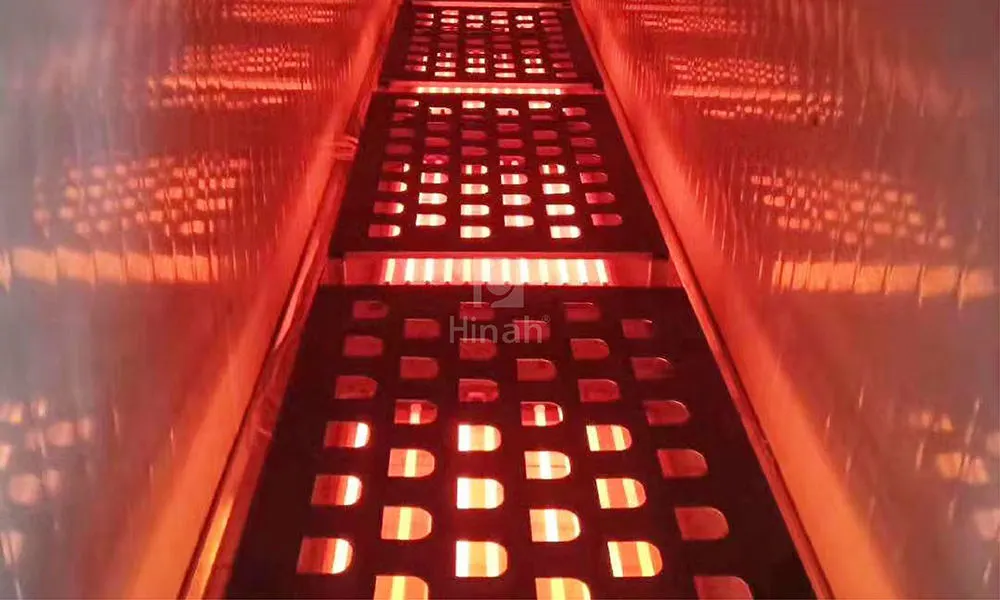
A complete understanding of powder coating chemistry helps specify correct dwell times and temperature profiles. The curing process inside Curing ovens proceeds through four overlapping stages:
Melt (100–130°C): The powder particles soften, coalesce, and begin to flow. Surface tension pulls them into a continuous film.
Flow and Wetting (130–160°C): The liquid coating spreads over the substrate, displacing air and creating intimate contact. Proper wetting is necessary for adhesion.
Cross-linking (160–210°C): Reactive groups (epoxy, polyester, hybrid) chemically bond into a three-dimensional polymer network. This irreversible thermosetting reaction provides mechanical strength, chemical resistance, and thermal stability.
Leveling (peak metal temperature hold): The coating viscosity reaches its lowest point, allowing surface tension to smooth out orange peel and create the final gloss level.
The peak metal temperature (PMT) must be maintained for a specified time—typically 5 to 15 minutes depending on the powder formulation. Most industrial Curing ovens use forced convection (recirculated hot air) because it delivers uniform heat transfer regardless of part geometry. However, direct gas-fired radiant tubes or short-wave infrared panels are sometimes added as boost zones to accelerate ramp-up on heavy-gauge parts.
Not all Curing ovens deliver the same results. Below are the critical design and operational parameters validated by HANNA’s engineering audits across multiple industries.
Vertical downflow design: Nozzle banks on both side walls and ceiling direct air downward at 3–5 m/s. This configuration minimizes temperature stratification, keeping the temperature difference between top and bottom of a 2m-high part within ±3°C.
Recirculation rate: 80–92% of air is recirculated. High recirculation reduces fuel consumption while maintaining stable oven pressure. Supply fan static pressure should be 600–1,200 Pa to overcome filter and duct resistance.
CFD modeling before fabrication: Finite element analysis identifies dead zones and hot spots. The acceptable variance is ≤ ±2°C across 90% of the working cross-section. Field verification uses a 20-point traversing thermocouple rack.
Mineral wool density ≥160 kg/m³, thickness 150–200 mm: Achieves external skin temperature ≤ ambient +15°C. Double-layer insulation with staggered joints prevents thermal bridging.
Labyrinth seals at conveyor openings: A three-stage curtain system (flexible silicone strips, air knife, and vestibule) prevents cold air infiltration where parts enter and exit. This reduces energy loss by 10–15%.
Independent PID-controlled zones: A typical 20m oven should have 4–5 zones, each with its own burner, recirculation fan, and PT100 sensors. Control accuracy should be ±1°C of setpoint.
Traversing thermal profiling: At least quarterly, a data logger with 6–12 thermocouples attached to a part travels through the oven, recording time-temperature curves. This data is used to validate PMT and adjust setpoints or line speed.
Continuous load compensation: The PLC monitors conveyor speed and part density (via weigh bridge or motor current) and automatically adjusts zone temperatures to maintain consistent curing conditions. This feature is standard on integrated powder coating plants from HANNA.
Energy consumption represents 50–70% of the operating budget for a powder coating line. Modern Curing ovens incorporate several recovery and control technologies that typically pay for themselves within 12–24 months.
Exhaust gas recuperators: A stainless steel crossflow or plate heat exchanger preheats fresh combustion air using oven exhaust gases (typically 180–230°C). This reduces gas consumption by 15–20% with a pressure drop of only 300–500 Pa.
Variable frequency drives (VFDs) on fans: During reduced production (e.g., weekends, night shifts), fan speed can be lowered to 40%, cutting electrical consumption by 65% while maintaining a minimum holding temperature of 80–100°C.
High-turndown modulating burners (20:1 ratio): These maintain optimal excess oxygen (3–5%) across a wide firing range, avoiding the inefficiency of on/off cycling. They also reduce NOx formation by 30%.
Flue gas condensation (for natural gas): Recover latent heat from water vapor in the exhaust. This advanced step adds 5–7% efficiency but requires corrosion-resistant alloys (e.g., 316L stainless steel) for the heat exchanger.
A real-world example: A midwestern US agricultural equipment coater replaced a 25-year-old radiant-tube oven with a Curing ovens system designed by HANNA featuring 200mm insulation, VFDs, and a recuperator. Annual natural gas use dropped by 165,000 therms (28%), electricity by 62,000 kWh, and PMT uniformity improved from ±7°C to ±2.2°C, reducing scrap from 8.5% to 1.8%.
Even minor variations within Curing ovens can ruin entire batches. Below are frequent defects, root causes, and corrective actions grounded in thermal process engineering.
Under-cure (poor adhesion, fails crosshatch test): Caused by insufficient PMT or shortened dwell time. Solution: Install a multi-point traversing thermocouple system to map actual part temperatures. Recalibrate oven controllers; increase zone setpoints by 5–10°C or reduce line speed (while checking overall production balance).
Over-cure (brittle coating, yellowing, low impact resistance): Excessive time at high temperature degrades polymer chains. Remedy: Verify air recirculation patterns; look for blocked nozzles or collapsed ducts causing localized hot spots. Use modulating burners instead of high/low firing to avoid temperature overshoot.
Orange peel and poor flow: Usually due to too rapid initial heating, which skins the surface before the powder fully flows. Correct by adding an infrared pre-heating zone at lower intensity (short wavelength, 1.2–1.6 μm) or reducing the temperature gradient in the first zone of the oven.
Edge pull-back (coating retracts from sharp edges): Sharp edges heat faster than flat surfaces, curing prematurely and pulling away. Apply a more gradual temperature ramp (3–5°C per second) using zoned control. Alternatively, reduce airflow velocity on edges by adding perforated deflectors.
Solvent popping (in hybrid or TGIC powders): Outgassing of volatiles trapped under the melting powder layer. Mitigate by extending the pre-heat zone (lower temperature, longer time) to allow volatiles to escape before skinning. Ensure fresh air makeup is at least 10–15% of recirculation volume.
Preventive maintenance schedules for Curing ovens should include monthly checking of nozzle alignment, quarterly airflow velocity profiling (hot-wire anemometer at 15–20 points), biannual insulation integrity surveys (infrared thermography of external panels), and annual thermocouple calibration.
Selecting the right oven technology depends on part geometry, throughput, and thermal mass variability. The table below compares common configurations.
Batch (walk-in) ovens: Ideal for job shops, low volumes, and oversized parts. Typical size: 3m x 3m x 5m. Heating can be convection or IR. Requires manual loading/unloading. Modular batch plants often include this type.
Continuous convection ovens: The most common for high-volume production (automotive, appliances). Length: 12–40m, with monorail or power-and-free conveyor. Zoned control allows different temperature profiles for mixed parts.
Infrared (IR) ovens: Use short, medium, or long-wave emitters. Provide very fast ramp rates (seconds to minutes) but limited penetration; suitable for thin, flat parts or as a boost zone before convection.
Hybrid (IR + convection): Combine fast IR ramp-up with convection hold. Reduces oven length by 30–40% and improves uniformity on mixed-thickness parts. HANNA specializes in hybrid designs for heavy metal fabrication.
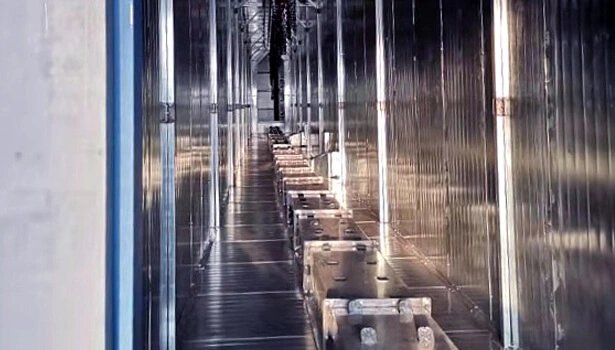
The curing oven does not operate in isolation. It must synchronize with the spray booth, pretreatment, and conveyor systems. Key integration points:
Conveyor type: For heavy parts (>500 kg), power-and-free or enclosed track conveyors are mandatory. Chain pins must be heat-treated alloy steel; bearings high-temperature grease (rated 250°C).
Expansion management: Over a 30m length, steel rails expand up to 35mm. Fixed expansion joints or “floating” supports prevent buckling. Conveyor controls should interface with the oven PLC so that a line stop automatically reduces burner firing to avoid over-curing stationary parts.
Cooling tunnel: After exiting the oven, parts need controlled cooling to below 40°C before manual handling or packaging. Forced air cooling tunnels with filtered ambient air are typical.
When planning a new line, consider the entire thermal sequence: dry-off oven (to remove moisture from pretreatment), then curing oven. Complete powder coating plants from HANNA include pre-engineered conveyor interfaces and zone-matched controls, reducing field installation time by 35% compared to separate vendor integration.
Q1: How do I determine the correct dwell time for my parts in a
curing oven?
A1: Dwell time depends on the powder manufacturer’s
technical data sheet (typically 5–15 minutes at PMT). But actual required time
varies with part thickness. The only reliable method is traversing thermocouple
profiling: attach probes to the thickest and thinnest sections of a production
part, run it through the oven, and adjust line speed until both reach the
specified PMT for the required duration. Curing ovens with zoned
control make this adjustment straightforward.
Q2: What temperature uniformity should I specify for a new curing
oven?
A2: For general industrial applications, specify ±5°C measured
across the working envelope (empty oven). For high-quality architectural or
automotive clear coats, demand ±3°C. Premium suppliers like HANNA offer ±2°C guaranteed uniformity when
using CFD-optimized ducting and zone control. Always require a validation test
with a 20-point thermocouple grid.
Q3: Can I convert an existing gas-fired oven to electric infrared to
improve ramp-up?
A3: Yes, a hybrid conversion is common and
effective. Install short-wave IR emitters (1.2–1.6 μm) in the first 2–3 meters
of the oven entrance. This pre-heats heavy-gauge parts quickly without
overshooting thin sections. Ensure electrical infrastructure can support an
additional 400–600 kW. Many retrofit powder coating
plants employ this approach.
Q4: How often should I perform thermal profiling on my curing
oven?
A4: For high-volume lines (24/7 operation), profile quarterly.
For moderate volume (single shift), profile bi-annually. Additionally, profile
after any maintenance that affects airflow: filter changes, fan belt
replacement, burner servicing, or duct cleaning. Keep historical profiles for
ISO 9001 traceability.
Q5: What are the signs that my oven insulation has
degraded?
A5: Elevated external surface temperature (above 45°C when
ambient is 25°C), increased energy consumption without change in production
volume, water condensation inside the oven after shutdown, and visible sagging
or rust staining on external panels. Infrared thermography of the oven exterior
will reveal “hot spots” where insulation has settled or become wet.
Q6: How do I calculate fresh air requirements for my curing
oven?
A6: Fresh air (makeup) is needed to remove volatiles from
powder outgassing. A general rule: 10–15% of total recirculation airflow. For
thick coatings (>150 μm) or powders with high outgassing (epoxy-polyester
hybrids), increase to 20%. Each cubic meter per second of 10°C air heated to
200°C adds roughly 230 kW of burner load, so always pair with a heat recovery
system.
Q7: What safety devices are mandatory on industrial curing
ovens?
A7: At a minimum: excess temperature limiter (independent
backup thermostat that cuts fuel at 250°C), flame supervision with UV scanner,
pre-purge timer (ensures 4 air changes before ignition), and explosion relief
panels (0.1 m² per 10 m³ of oven volume). If powder residues could accumulate,
install LEL (lower explosive limit) monitors with automatic shutdown.
Choosing or upgrading Curing ovens requires a partner who understands the interplay between thermal dynamics, material handling, and production economics. HANNA delivers engineered-to-order systems backed by CFD modeling, energy simulations, and global field support. Every curing oven includes a performance guarantee: ±2.5°C uniformity, 20% lower energy use than conventional designs, and full integration with your existing booth, conveyor, and pretreatment sections.
Stop compromising between throughput and coating quality. Contact our technical sales team to request a free thermal consultation, detailed quotation, or a virtual walkthrough of a reference installation in your industry.
Send your inquiry now: https://www.autocoatinglines.com/ – A HANNA process engineer will respond within 8 business hours with preliminary analysis questions and case studies relevant to your application.