
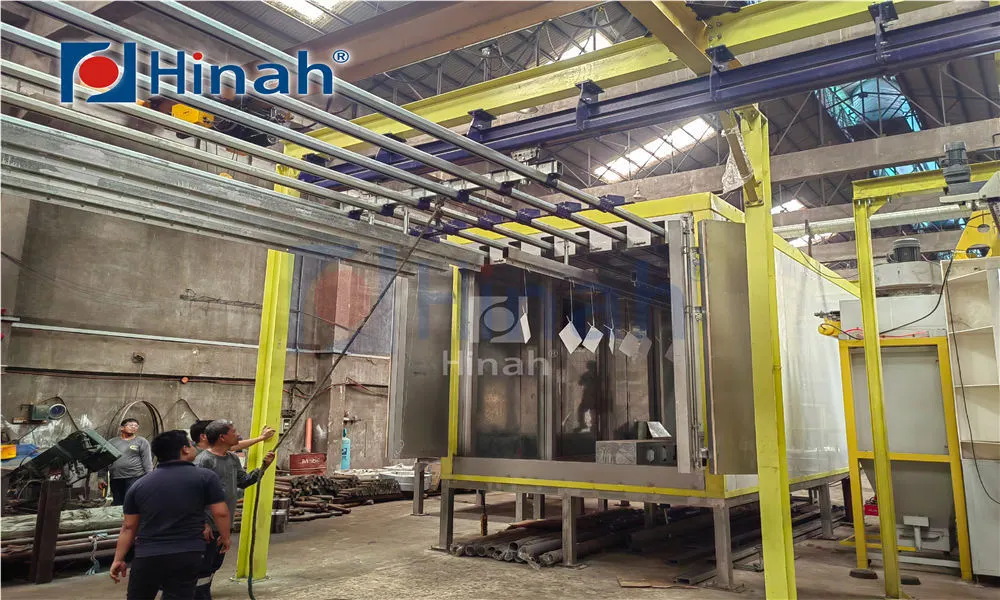
Industrial coating operations depend on the seamless integration of spraying, drying, and curing processes into a single, uninterrupted flow. A conveyor paint line serves as the backbone of such systems, enabling manufacturers to achieve consistent finish quality while maintaining high throughput. This article examines the engineering principles, process controls, and material handling strategies that define a well-designed conveyorized finishing system.
In modern manufacturing environments, the movement of workpieces through painting and curing stages determines both productivity and coating integrity. A conveyor paint line does more than transport parts; it establishes the rhythm of the entire finishing operation. The system must accommodate varying part geometries, weight distributions, and coating specifications while preserving the surface condition of each workpiece from pre-treatment to final inspection.
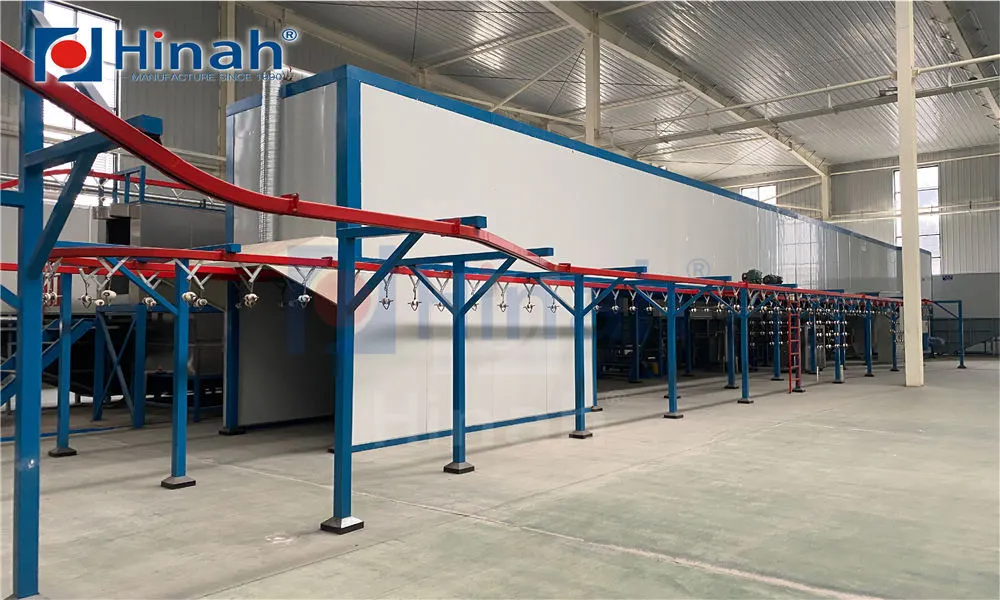
Conveyorized paint lines typically employ overhead monorail or power-and-free configurations. Overhead systems keep floor space clear and allow parts to be suspended in positions that optimize spray coverage. Power-and-free conveyors offer the additional benefit of accumulation zones, where parts can be buffered between process stages without halting the main line. This flexibility becomes particularly valuable when dealing with mixed production runs or varying cure times across different product families.
Engineering a conveyor paint line requires careful analysis of production volume, part size range, and coating chemistry. Each parameter influences the physical layout of the line, the selection of conveyor components, and the specification of auxiliary equipment such as spray booths, drying ovens, and curing furnaces.
The speed at which the conveyor travels directly affects the dwell time within each process zone. Spray booths require sufficient residency to apply the target film thickness, while curing ovens demand precise temperature exposure to achieve cross-linking of powder coatings or evaporation of solvents in liquid paints. Line speed is not an independent variable; it interacts with the conveyor pitch (distance between carriers) and the number of carriers in circulation.
For a given production target, the conveyor speed must be balanced against the required coating application rate and the thermal profile of the curing section. Faster speeds reduce per-part cycle time but may necessitate longer ovens or higher heat input to maintain the same cure schedule. Slower speeds allow for more compact equipment but limit throughput. The optimal configuration emerges from a trade-off analysis that considers floor space, energy consumption, and quality requirements.
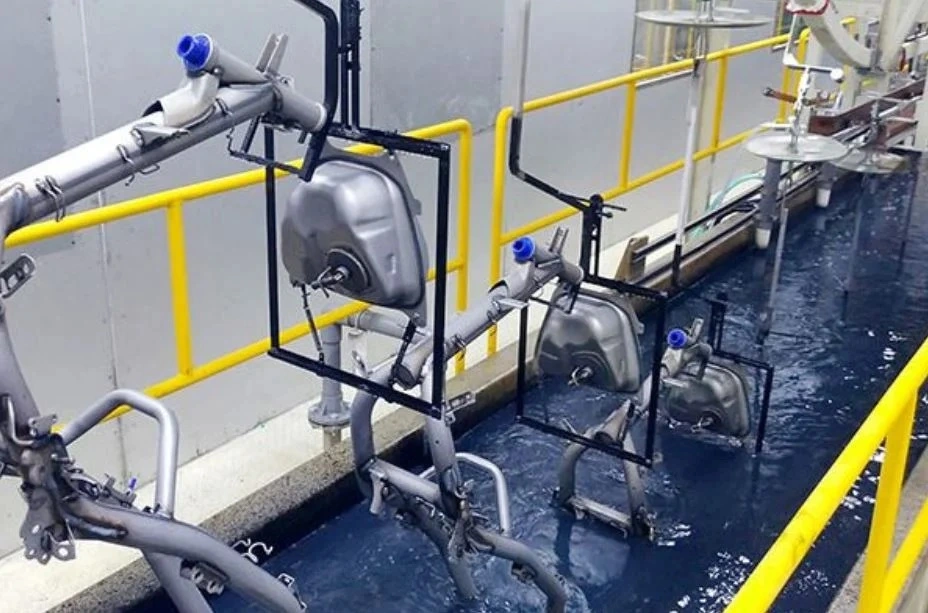
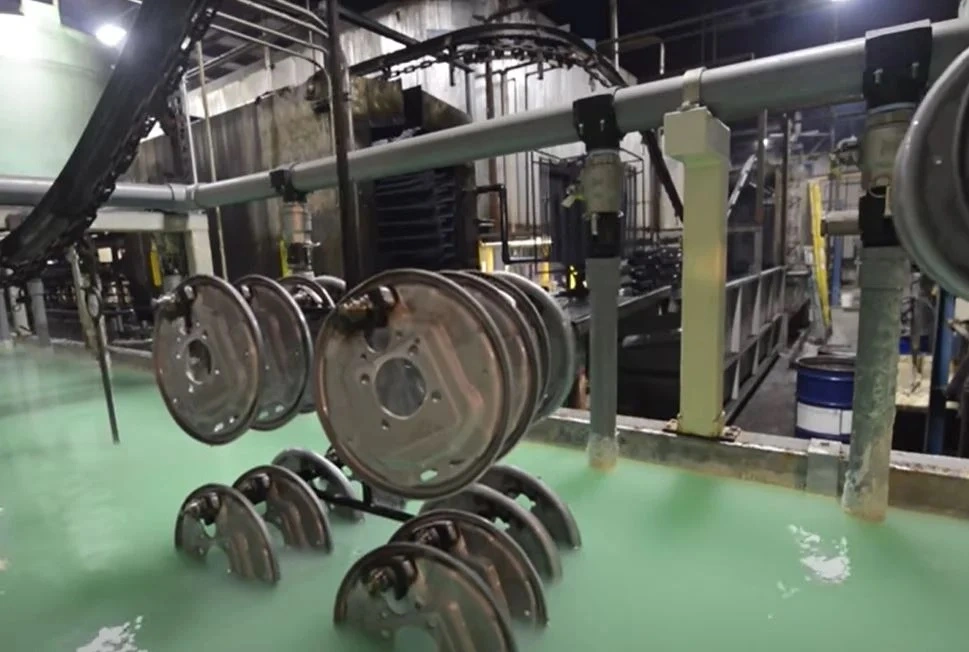
How parts are attached to the conveyor carriers has a direct impact on coating uniformity and transfer efficiency. Fixtures must provide stable support while exposing all coated surfaces to the spray pattern. Complex geometries with recessed areas or internal cavities require specialized hanging arrangements that allow paint particles to reach every surface. The selection of fixture materials also matters—certain alloys and coatings resist powder adhesion, reducing the need for frequent cleaning.
Carrier spacing is another critical factor. Insufficient spacing leads to overlapping spray plumes and uneven film build, while excessive spacing wastes booth capacity and reduces line efficiency. The spacing must accommodate the spray gun traverse pattern and the size of the part envelope, with additional clearance for part rotation or oscillation if employed.
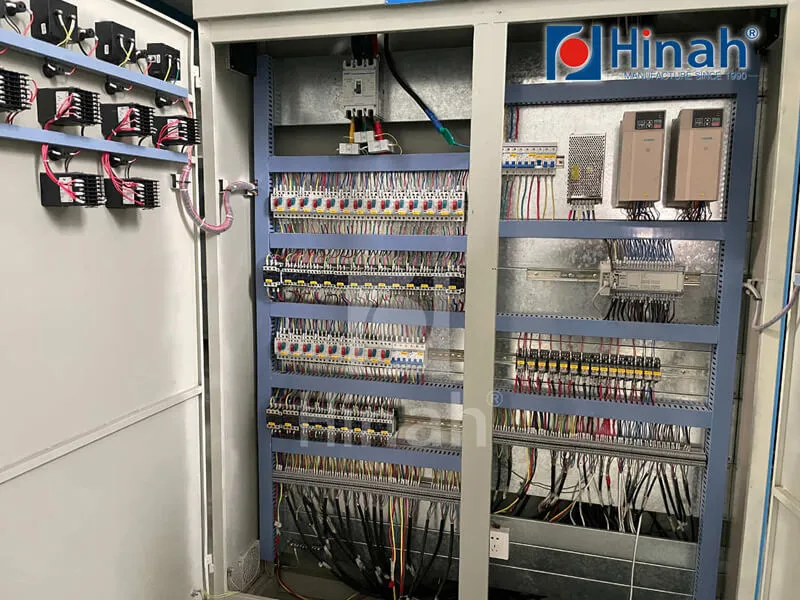
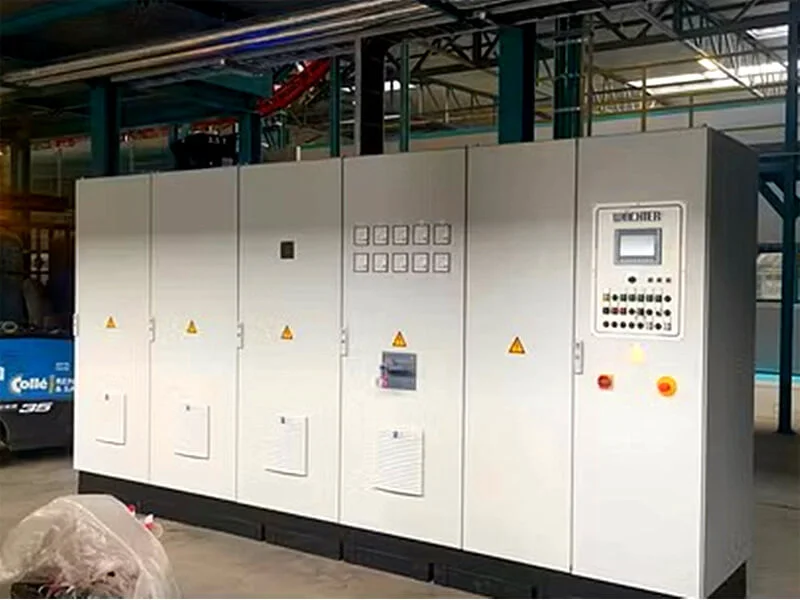
Maintaining process stability across a conveyor paint line demands real-time monitoring of multiple variables. The interplay between conveyor speed, spray gun parameters, oven temperature, and ambient conditions requires a control architecture that responds to deviations before they affect product quality.
Curing ovens along a conveyor paint line must deliver a precise thermal profile that matches the coating manufacturer's specifications. The temperature ramp rate, soak temperature, and hold time are all critical to achieving full cure without degrading the substrate or causing discoloration. Oven design incorporates air recirculation, zone partitioning, and insulation to maintain temperature uniformity across the width of the conveyor.
Thermal losses occur at the conveyor entry and exit openings, where continuous movement of carriers and parts disrupts the oven seal. Air curtains and vestibules mitigate these losses, but the conveyor chain itself can act as a heat sink, drawing energy away from the product. Systems that preheat carriers before they enter the oven help reduce thermal lag and improve consistency.
Spray booths integrated into a conveyor paint line rely on controlled airflow to contain overspray and maintain a clean environment around the parts being coated. The booth design includes supply air filtration, exhaust air handling, and recirculation systems that balance capture velocity with energy efficiency. For powder coating applications, the booth must also manage the collection and recycling of overspray powder through cyclone separators or cartridge filters.
The conveyor opening through the booth walls presents a challenge for airflow containment. Uncontrolled air leakage at these points can disrupt the booth's pressure balance, leading to powder migration into adjacent zones or contamination of the curing oven. Seals and baffles at the conveyor entry and exit help maintain the pressure differential, but they must be designed to accommodate the movement of carriers without causing drag or wear.
The efficiency of a conveyor paint line extends beyond the coating process itself. Material handling at the load and unload stations determines how smoothly parts enter and exit the system. Manual loading requires ergonomic consideration of carrier height and reach, while automated loading systems rely on precise alignment between part presentation and conveyor indexing.
Unload stations present similar challenges, with the added requirement of protecting freshly coated surfaces from contact damage. Parts must be transferred from the conveyor to downstream packaging or assembly operations without touching uncured or still-warm surfaces. Conveyor design that incorporates inclined sections or vertical curves can help manage part orientation during these transitions.
Buffer zones between process stages allow for accumulation of parts when downstream equipment is temporarily unavailable. These zones are particularly useful in powder coating operations where curing ovens may need to operate at a fixed speed regardless of upstream variations. The conveyor control system must manage these buffers without causing part-to-part contact or overloading the conveyor drive.
Throughout the entire line, the conveyor chain and trolley system must withstand the environmental conditions present in each zone. Spray booths expose components to paint overspray and cleaning solvents, while ovens subject them to elevated temperatures. Lubrication systems that deliver high-temperature grease to carrier wheels and chain pins are essential to maintain smooth operation over extended production runs.
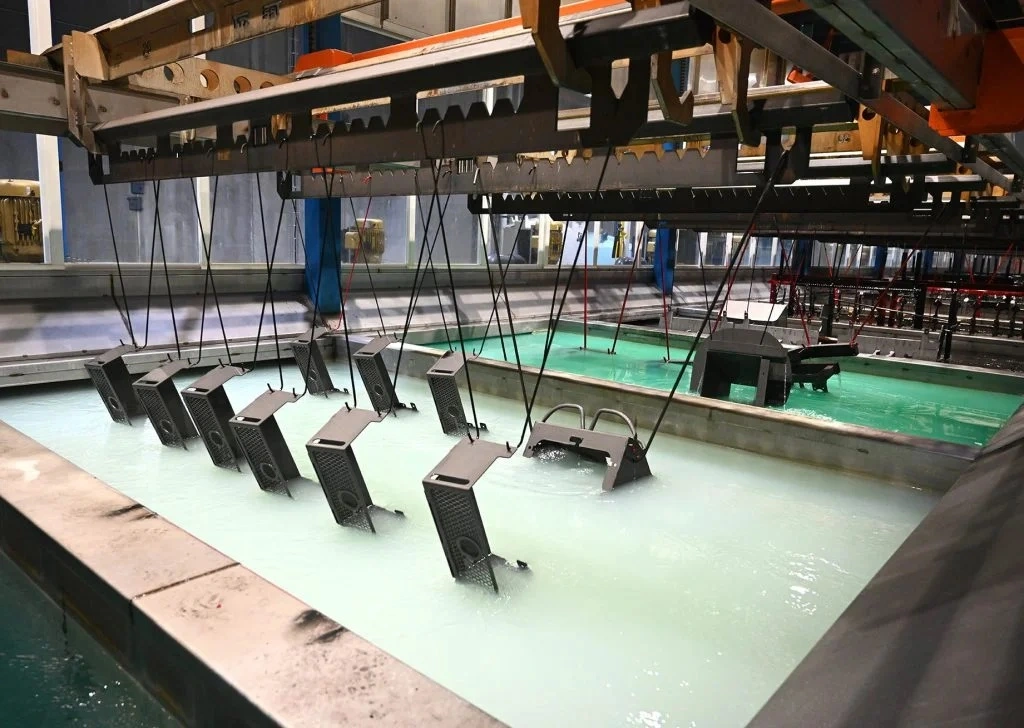
Different manufacturing sectors impose distinct demands on conveyor paint line design. The automotive industry, for instance, requires high-speed lines capable of processing thousands of parts per day with stringent aesthetic and corrosion resistance standards. Architectural aluminum finishing calls for lines that handle long, extruded profiles with consistent coating distribution across the entire length.
General industrial finishing, encompassing machinery, appliances, and consumer goods, often involves mixed production with frequent changeovers. Conveyor paint lines serving this segment benefit from quick-change fixtures, adjustable spray parameters, and oven zones that can be reconfigured for different cure schedules. The ability to switch between powder and liquid coating processes within the same line adds another layer of flexibility that many manufacturers find advantageous.
For operations dealing with heavy or bulky parts, the conveyor system must provide adequate load capacity and stability. Larger carriers, reinforced chain, and drive systems with higher torque ratings become necessary. Conversely, lines processing small, lightweight components can employ lighter-duty equipment with higher speed capabilities and tighter part spacing.
HHANNA has engineered conveyor paint line solutions across these diverse applications, developing modular platforms that adapt to varying part sizes and production volumes. The company's approach emphasizes process integration, where conveyor design, spray application, and thermal processing are treated as interconnected elements rather than standalone subsystems. This holistic perspective ensures that the line operates as a cohesive unit, minimizing waste and maximizing yield.
A well-executed conveyor paint line delivers consistent coating results regardless of production scale. The combination of precise speed control, optimized fixture design, and responsive process monitoring creates an environment where surface quality becomes a predictable outcome rather than a variable to be managed.
Facilities that have invested in conveyorized finishing systems consistently report higher first-pass yield rates and reduced rework compared to batch processing methods. The continuous flow eliminates the handling damage and contamination risks associated with moving parts between discrete processing stations. The resulting improvement in coating integrity translates directly to enhanced product durability and customer satisfaction.
As production demands evolve and coating technologies advance, the conveyor paint line remains a foundational element of industrial finishing. Its ability to accommodate new materials, higher throughput requirements, and stricter quality standards ensures its continued relevance in manufacturing environments worldwide. HHANNA continues to refine its conveyor systems in response to these changing requirements, incorporating feedback from real-world operations to enhance reliability and performance.
Q1: What factors determine the appropriate conveyor speed for a paint
line?
A1: Conveyor speed is determined by the required dwell time in
each process zone—spray application, flash-off, drying, and curing. The speed
must allow adequate time for coating application at the spray booth, followed by
sufficient residency in the oven to achieve full cure. The part geometry and
coating chemistry also influence speed selection, as complex shapes may need
slower movement for complete coverage, while certain powder coatings require
longer cure cycles at specific temperatures.
Q2: How does conveyor configuration affect coating
uniformity?
A2: Conveyor configuration affects coating uniformity
through carrier spacing, part orientation, and line path geometry. Consistent
spacing ensures that each part receives the same spray pattern exposure, while
proper orientation allows paint particles to reach all surfaces. The line path
must avoid abrupt changes in direction that could cause parts to sway or
collide, disrupting the spray application process.
Q3: What maintenance practices are essential for conveyor paint line
reliability?
A3: Regular inspection and lubrication of chain,
wheels, and bearings are essential. Cleaning of fixtures and carriers to remove
paint buildup prevents contamination and ensures consistent grounding for
electrostatic powder application. Oven temperature calibration and airflow
filter replacement should follow a scheduled program. Conveyor chain tension and
wear should be monitored to prevent unexpected downtime.
Q4: Can a conveyor paint line handle both powder and liquid coating
processes?
A4: Yes, with appropriate booth and oven configurations.
Powder coating requires electrostatic application equipment and a curing oven,
while liquid painting needs spray booths with solvent management and drying
zones. The conveyor itself can accommodate both processes, but the booth
sections must be equipped with the specific application and recovery systems
required by each coating type.
Q5: How does part weight influence conveyor paint line
design?
A5: Part weight affects carrier strength, chain load
capacity, and drive motor sizing. Heavier parts require sturdier carriers with
robust attachment points, reinforced conveyor chain, and higher torque drives.
The line structure and support system must also be designed to handle the
cumulative load of all parts on the conveyor. Proper load distribution across
the line prevents sagging and maintains smooth operation.
Q6: What control systems are typically integrated into a conveyor
paint line?
A6: Modern conveyor paint lines incorporate programmable
logic controllers (PLCs) that manage conveyor speed, zone temperature setpoints,
spray gun activation, and part tracking. Human-machine interface (HMI) panels
provide operators with real-time process data and fault diagnostics. Some
systems include vision inspection or thickness measurement devices that feed
back to the control system for automated adjustment of spray parameters.
Q7: How are conveyor paint lines adapted for different production
volumes?
A7: Low-volume lines may use variable-speed drives and
manual loading stations, while high-volume operations employ fixed-speed
conveyors with automated loading and unloading. Modular line designs allow for
expansion by adding conveyor sections, spray booths, or oven zones as production
grows. The control system can be scaled to accommodate additional equipment
without replacing the core conveyor infrastructure.
For detailed specifications and project consultation, contact the engineering team at HHANNA to discuss your conveyor paint line requirements.