


Engineering a Big Powder Coating Oven for Heavy Industrial Curing
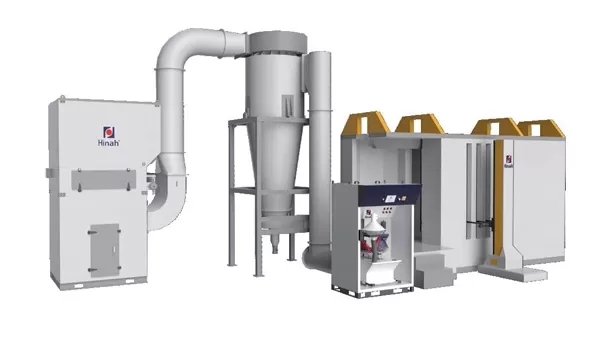
Manufacturing facilities finishing structural steel beams, agricultural machinery, commercial trailer frames, and architectural aluminum extrusions face a distinct thermodynamic challenge. Unlike small sheet-metal brackets that reach curing temperature within minutes on a compact conveyor line, heavy-gauge weldments and oversized fabrications possess immense thermal mass. Scaling up a standard curing box by simply increasing its physical dimensions leads to severe temperature stratification, prolonged dwell times, and inconsistent polymer cross-linking. Deploying a big powder coating oven requires deliberate engineering across fluid dynamics, combustion modulation, structural insulation, and material handling.
Thermosetting powder coatings—including epoxies, TGIC polyesters, polyurethane hybrids, and super-durable fluoropolymers—rely on a precise time-at-temperature profile to melt, flow out, and chemically cross-link. Most industrial formulations require the substrate itself to sustain 180°C to 200°C (356°F to 392°F) for 10 to 20 minutes. When a curing chamber spans 10 to 20 meters in length and exceeds 4 meters in height, maintaining tight temperature tolerances from floor to ceiling becomes the defining factor between durable corrosion protection and premature field failure.
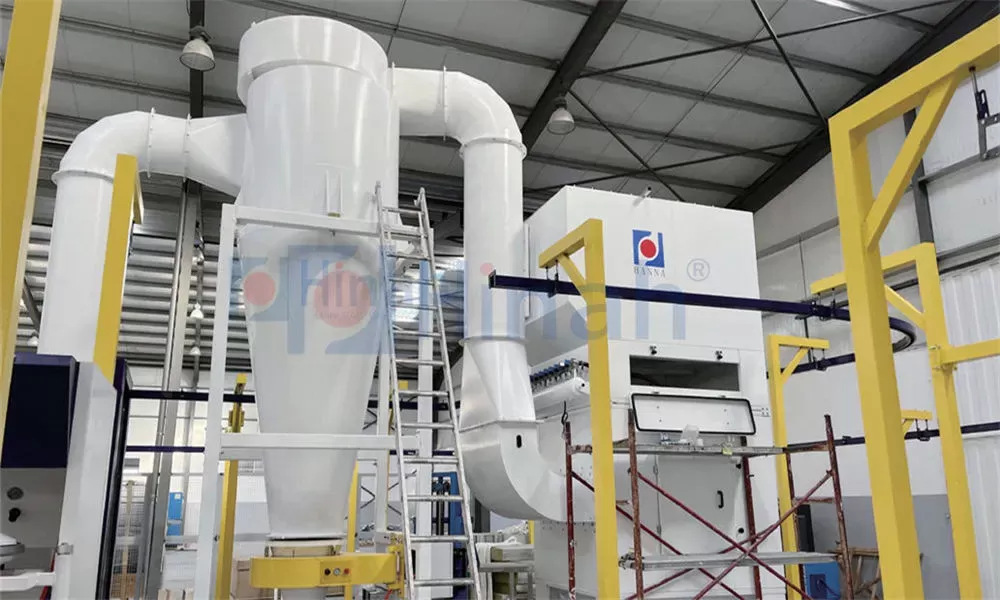
Thermodynamic Challenges When Scaling Up Curing Chambers
Expanding internal chamber volume alters how heat moves through air and transfers into metal. Convection curing depends on forced air circulation to strip away the stagnant boundary layer of cool air clinging to the workpiece surface. In large enclosures, natural buoyancy forces compete aggressively with mechanical fans. Heated air loses density and rises rapidly toward the roof deck, while cooler, denser air pools along the floor and around the lower sections of massive steel weldments.
Without engineered air distribution, vertical temperature gradients inside oversized chambers frequently exceed 20°C to 30°C. Under those conditions, thin-gauge upper flanges on a trailer chassis can experience over-baking—resulting in yellowing, gloss loss, and coating embrittlement—long before the thick lower axles reach gelation temperature. Mixed-load batches compound this issue when 3 mm sheet panels share the same curing cycle with 25 mm structural plate.
Chamber loading density also shifts moisture and volatile dynamics. Although powder coatings contain negligible solvents compared to liquid paints, large batches release measurable volumes of blocking agents, moisture, and trace outgassing vapors from cast iron or hot-rolled steel substrates during the ramp-up phase. Inadequate exhaust balance allows these volatiles to condense on cooler door seals or create surface defects such as pinholing and micro-blistering.
Airflow Architecture and Temperature Uniformity in a Big Powder Coating Oven
Solving thermal stratification requires precise airflow management rather than merely oversizing the burner capacity. High-performing batch and pass-through systems balance supply air velocity, static pressure, and return-air capture to sweep every cubic meter of the working envelope uniformly.
High-Volume Recirculation and Duct Design
Effective convection loops rely on high air-turnover rates, typically circulating the total chamber air volume four to eight times per minute depending on part geometry. Supply ducts positioned along the lower side walls or recessed into floor trenches inject heated air upward and inward, counteracting natural thermal buoyancy. Adjustable slotted nozzles or perforated stainless-steel plenums allow technicians to tune air throw across wide spans.
- Bottom-Up Supply Plenums: Directing conditioned air across the lower third of the chamber forces heat into dense structural bases and heavy cart fixtures before the air rises naturally toward top-mounted return plenums.
- Controlled Nozzle Velocity: Air speeds leaving the supply ducts must remain carefully regulated—typically between 500 and 1,000 feet per minute depending on distance to the part—to maximize convective heat transfer without blowing uncured, electrostatically charged powder off the metal before melt-flow occurs.
- Full-Length Return Ducting: Placing collection manifolds along the central ceiling ridge draws rising heat back into the combustion plenum, eliminating stagnant dead zones near the end doors.
- Variable Frequency Drives (VFDs): Integrating VFDs on main recirculation blowers enables soft starts and automated airflow reduction during initial ramp-up when dry powder particles are most vulnerable to dislodgement.
Achieving Tight Delta-T Across Large Loads
Industrial specifications for aerospace, rail, and heavy-equipment coatings routinely mandate a chamber uniformity of ±3°C to ±5°C (±5°F to ±9°F) once stabilized at curing temperature. Reaching this benchmark across a 15-meter span requires computational balancing of static pressure throughout the supply headers. Tapered duct cross-sections prevent velocity drop-off at the far end of long plenums, ensuring the back corners of the enclosure receive the exact same thermal mass flow as the zones nearest the burner box.
Systems engineered by HANNA utilize segmented air distribution plenums paired with precision-balanced backward-inclined centrifugal fans to maintain uniform static pressure along extended chamber lengths. This mechanical stability allows operators to load dense racks from wall to wall without reserving wide buffer zones for erratic hot spots.
Structural Construction, Insulation, and Thermal Break Engineering
Balanced airflow cannot sustain chamber stability if thermal energy escapes rapidly through the enclosure envelope. Large surface-area-to-volume ratios make structural thermal efficiency a primary determinant of ongoing natural gas or electricity expenditure. Poorly designed wall assemblies create cold spots on the interior skin, distort under repeated thermal expansion cycles, and radiate excessive heat into the surrounding plant floor.
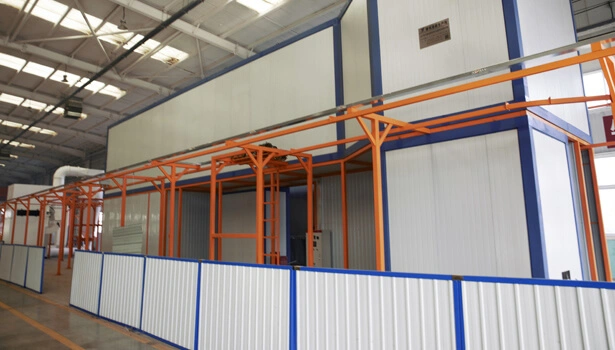
Modern heavy-duty curing enclosures rely on modular tongue-and-groove insulated panels fabricated with high-density mineral wool or rockwool insulation. While compact ovens often use 100 mm wall thicknesses, large industrial chambers benefit significantly from 150 mm to 200 mm insulation cores rated at 100 to 120 kg/m³ density. This higher density resists sagging over multi-year service lives and blocks conductive heat transfer far more effectively than lightweight fiberglass batts.
- Thermal Break Fastening: Through-bolts or continuous steel C-channels connecting the hot interior skin directly to the exterior cladding act as thermal bridges, wasting energy and creating exterior burn hazards. Staggered-seam panel locks and non-metallic or isolated structural standoffs preserve continuous insulation integrity.
- Interior Liner Metallurgy: Aluminized steel (1.2 mm to 1.5 mm gauge) provides superior oxidation resistance and heat reflectivity compared to standard galvanized sheet, which can flake or degrade under sustained operation above 200°C.
- Thermal Expansion Accommodation: A 15-meter steel structure expands roughly 30 mm when heated from 20°C to 200°C. Slip-joint panel connections, floating floor tracks, and flexible expansion bellows on external ductwork prevent weld cracking and door frame binding.
- Floor Insulation vs. Slab Heat Sink: Resting a large oven directly on bare concrete turns the building foundation into a massive heat sink, pulling heat out of the lower air zone and potentially spalling the concrete over time. Incorporating insulated floor panels rated for heavy forklift or rail-cart wheel loads cuts heat loss dramatically and speeds up morning warm-up times.
Heating Systems, Burners, and Energy Recovery
Generating thermal energy efficiently requires matching the heat source to both the substrate mass and the specific resin chemistry being cured. Direct-fired natural gas or LPG burners dominate large-scale industrial finishing because of their rapid response times, lower capital cost, and thermal efficiency approaching 90% to 95%. In a direct-fired configuration, the products of combustion mix directly with the recirculating air stream inside an insulated heater box.
Certain sensitive formulations—particularly bright whites, clear coats, and specific amine-cured epoxies—can exhibit slight yellowing or loss of gloss when exposed to elevated concentrations of nitrogen oxides (NOx) and carbon dioxide produced by direct gas combustion. Facilities running high volumes of architectural whites or automotive trim frequently specify indirect-fired gas heat exchangers. In an indirect system, combustion gases pass through sealed stainless-steel heat exchanger tubes while clean shop air circulates over the exterior of the tubes, keeping combustion byproducts completely isolated from the curing chamber.
Burner turndown ratio plays an equally vital role in temperature stability. During initial cold start-up with a 10-ton load of structural steel, the burner operates near 100% capacity to drive rapid heat recovery. Once the metal approaches setpoint, heat demand drops sharply to cover only radiation and exhaust losses. A burner equipped with a narrow turndown ratio will repeatedly cycle on and off, causing wide temperature swings and thermal shock to the heat exchanger. Modulating burners with 20:1 or 30:1 turndown ratios smoothly throttle fuel and combustion air down to a low simmer, holding the setpoint flat within a single degree.
Electric resistance heating banks and gas-catalytic infrared (IR) boosters offer viable alternatives where natural gas infrastructure is unavailable or where extremely heavy castings require accelerated surface gelation. Positioning short-wave or medium-wave IR emitter zones at the entrance of a pass-through chamber flashes the outer powder layer into a melted state within 60 to 90 seconds, allowing high-velocity convection zones immediately downstream to finish cross-linking without disturbing the powder film.
Exhaust heat recovery further lowers operating costs on large chambers. Air-to-air plate heat exchangers transfer sensible heat from the 200°C exhaust stack into incoming fresh make-up air, preheating ambient plant air before it ever reaches the burner box. In facilities operating multi-shift schedules, HANNA integrates modulating combustion trains and cross-flow exhaust recuperators that substantially cut annual fuel consumption while maintaining strict NFPA 86 ventilation compliance.
Material Handling and Control Automation for Large Batches
Moving multi-ton assemblies safely into and out of a heated chamber demands heavy-duty mechanical integration. Manual push-pull trolley racks become impractical once batch weights exceed a few thousand kilograms, pushing operations toward motorized floor tracks, automated transfer carts, or heavy-duty overhead power-and-free monorail conveyors.
- Flush-Floor Rail Systems: Inverted V-track or recessed channel rails allow heavy rolling fixtures to index cleanly into the oven without obstructing forklift traffic outside the doors. Automated winch or chain-drive pullers eliminate operator exposure to radiant heat during door opening cycles.
- Double-Ended Pass-Through Layouts: Placing insulated bi-fold or vertical-lift guillotine doors at both ends of the oven establishes unidirectional workflow. One batch loads from the spray booth side while the cured batch exits toward the cooling and unloading bay, cutting cycle downtime in half.
- Air Seal Curtains: For semi-continuous overhead monorail lines where doors remain open for extended intervals, high-velocity vertical air curtains mounted at the vestibule openings trap heated air inside the curing zone and block ambient plant drafts from disrupting interior thermal balance.
Control automation bridges mechanical capability with repeatable coating quality. Basic single-point thermostats positioned near the heater discharge misrepresent actual part conditions inside an oversized chamber. Modern PLC-based control architectures divide long enclosures into multiple independent heating zones, each monitored by dual Type-K thermocouples and controlled via PID loops.
Achieving reliable cross-linking inside a big powder coating oven depends on tracking Peak Metal Temperature (PMT) rather than relying solely on ambient air readings. Wireless thermal data loggers fitted with magnetic and clamp-on surface probes travel directly through the curing cycle attached to the thickest and thinnest points of a test workpiece. Recording real-time ramp rates and actual time-at-temperature profiles enables process engineers to verify cure completeness, prevent over-baking, and generate traceable quality documentation for industrial clients.
Troubleshooting Common Defects in Oversized Curing Operations
Even robust thermal equipment experiences finish defects if maintenance slips or loading practices drift away from engineering baselines. Recognizing the thermodynamic root cause behind visual or mechanical coating failures prevents wasted rework on massive parts that are notoriously difficult to strip and recoat.
Under-Curing on Thick Bottom Sections
When heavy base plates fail methyl ethyl ketone (MEK) solvent rub tests, exhibit poor impact resistance, or peel during cross-hatch adhesion testing while upper sections pass, heat transfer to the lower zone is insufficient. Common culprits include clogged bottom return grilles, collapsed floor-level air baffles, or loading carts so tightly together that air cannot pass between parallel steel plates. Verifying lower plenum airflow and extending the soak timer to account for heavy-section thermal lag resolves the defect.
Dust Contamination and Fiber Blow-Off
Specks embedded in the cured film or bare edges showing visible primer/substrate point to internal air turbulence or compromised filtration. Over time, charred powder flakes accumulate on interior duct ledges and heater baffles; excessive blower speed dislodges this debris and deposits it onto freshly melted surfaces. Implementing scheduled vacuum cleaning of plenum interiors, inspecting high-temperature HEPA or stainless mesh recirculation filters, and reducing fan VFD frequency during the first three minutes of the cycle eliminates particulate contamination.
Gloss Variation and Color Shift Across a Single Part
Noticeable gloss differences between the front and rear of a long architectural beam—or yellowing on light shades—typically stem from unbalanced burner flame geometry, leaky door perimeter gaskets pulling cold shop air across the front threshold, or excessive NOx buildup in direct-fired systems with choked exhaust dampers. Checking door compression seals, calibrating exhaust damper draft gauges, and tuning the air-fuel ratio on the burner restore uniform appearance across the full batch.
Frequently Asked Questions About Large-Scale Curing Systems
How do I calculate the required BTU capacity for a big powder coating oven?
Calculating total thermal load requires summing four distinct heat demands: the energy needed to raise the steel workpiece and racking weight from ambient to curing temperature (mass × specific heat × temperature rise), the heat absorbed by the oven's own interior steel walls and floor, conductive heat loss through the insulated panels, and the energy required to heat incoming fresh air replacing the exhaust stream. Peak BTU demand occurs during the initial ramp-up phase, so sizing the burner with a 15% to 20% safety margin above peak calculated load ensures brisk recovery times in winter months.
What is the difference between ambient air temperature and Peak Metal Temperature (PMT)?
Ambient air temperature measures the hot gases circulating inside the chamber, whereas Peak Metal Temperature tracks the actual surface temperature of the coated workpiece itself. Because thick metal absorbs heat slowly, air temperature inside the oven may reach 200°C within five minutes while a 20 mm steel plate lags behind at 140°C for another fifteen minutes. Coating manufacturers specify cure schedules based strictly on PMT, making oven thermal profiling essential before certifying any new part geometry.
Should a large batch curing oven have an insulated floor?
An insulated floor is strongly recommended for any batch chamber operating continuously or curing parts with heavy lower sections. Uninsulated concrete floors absorb massive amounts of thermal energy, prolonging warm-up cycles, increasing fuel consumption by up to 15%–25%, and creating cold zones near wheel tracks. Heavy-duty insulated floor panels capped with reinforced diamond plate or recessed rail channels withstand multi-ton cart loads while preserving thermal uniformity from floor to ceiling.
Direct-fired vs. indirect-fired gas burners: which suits heavy industrial powder curing?
Direct-fired gas burners offer superior thermal efficiency, faster heat recovery on heavy steel loads, and lower initial equipment cost, making them the standard choice for structural steel, agricultural machinery, black or dark-pigmented chassis, and general industrial fabrication. Indirect-fired systems isolate combustion gases inside a stainless-steel heat exchanger, making them preferable when curing bright white, pastel, or clear-coat finishes susceptible to combustion-gas yellowing, or when handling specialty coatings sensitive to trace moisture from natural gas burning.
How much exhaust airflow is needed for curing polyester and epoxy powders?
Exhaust volume is governed by safety standards such as NFPA 86, which dictate minimum continuous dilution ventilation to keep volatile organic compounds and blocking agents well below 25% of their Lower Explosive Limit (LEL). While exact CFM depends on total powder mass cured per hour and the specific resin chemistry, a typical industrial batch oven exhausts roughly 10% to 15% of its total recirculated air volume, paired with an automated pre-ignition purge cycle that exchanges the full chamber volume at least four times before the main burner lights.
What maintenance intervals keep circulation fans and burners operating at peak efficiency?
Daily visual checks should verify smooth conveyor/cart tracking and clean door seals. Monthly maintenance includes inspecting high-temperature fan bearings, checking drive belt tension or VFD fault logs, and cleaning combustion air intake filters. Every six months, technicians should inspect interior supply louvers for warped dampers, clean flame rods and ignition electrodes, verify high-limit safety interlocks, and run a multi-channel thermal profile to confirm chamber uniformity has not drifted.
Specifying Equipment for Your Facility
Selecting and configuring a big powder coating oven begins with an accurate audit of production parameters rather than approximate floor-space estimates. Engineers require clear baseline data to model airflow dynamics, structural load ratings, and burner modulation accurately:
- Maximum Workpiece Envelope: Exact length, width, height, and overhang clearances of the largest part or loaded rack.
- Thermal Mass Profile: Average and maximum steel or aluminum weight per batch, noting both the thinnest and thickest wall gauges cured simultaneously.
- Target Throughput: Desired cycles per shift, acceptable heat-up ramp time, and required dwell duration at Peak Metal Temperature.
- Material Handling Method: Preference for overhead power-and-free monorail, floor-mounted rolling carts, or dual-door pass-through configurations.
- Utility Infrastructure: Available natural gas or LPG supply pressure, three-phase electrical voltage capacity, and roof clearance for exhaust stacks.
When your operation is ready to upgrade curing capacity or design a new heavy-duty finishing line, contact the engineering team at HANNA with your part drawings, substrate weights, and daily production targets to initiate a technical consultation and receive a customized system specification and quotation.
Related News
Learn More + -
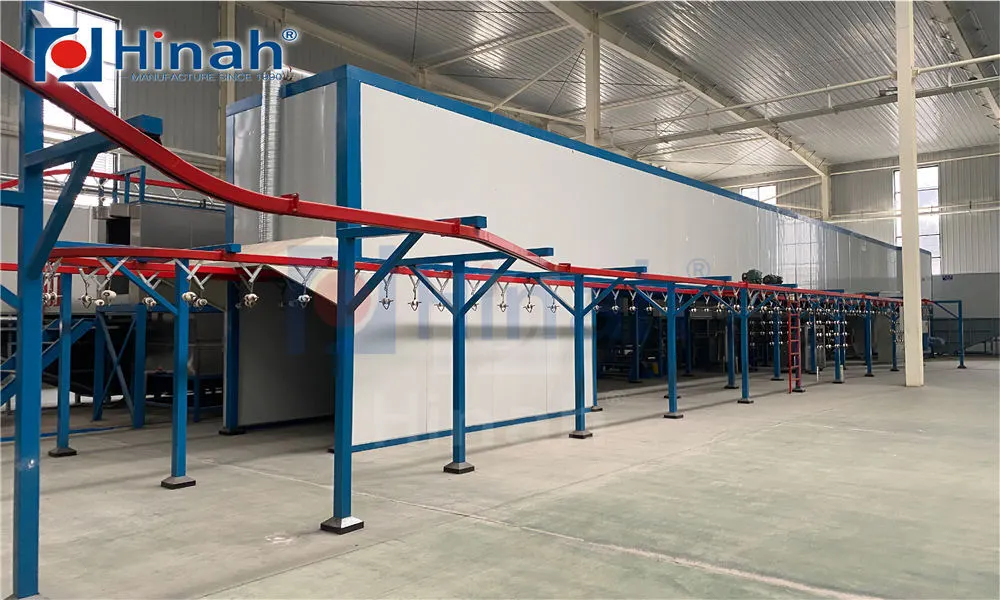
7 Essential Factors to Consider Before Buying a Big Powder Coating Oven
When it comes to industrial-scale finishing, a big powder coating oven is not just a purchase; it's a significant investment in your company's efficie ...View Details2026-11-06 -
7 Key Factors for Choosing a Big Powder Coating Oven: The Ultimate 2025 Industrial Guide
If you are in the metal finishing industry, you know that capacity is king. Small batches are fine for hobbyists, but when you land a contract for arc ...View Details2026-11-06 -
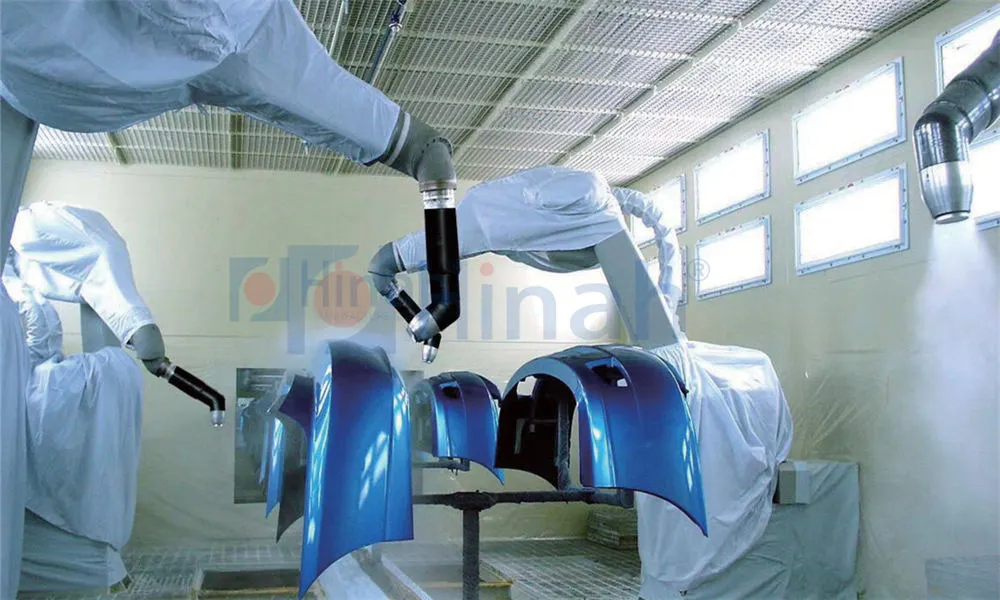
5 Key Decisions When Buying a Big Powder Coating Oven
Moving to larger coated products changes everything in your finishing line. The challenges of curing small parts don't prepare you for the complexitie ...View Details2026-11-06 -
Big Powder Coating Ovens: Engineering Thermal Uniformity for Oversized Industrial Components
When production demands include structural steel beams exceeding 12 meters in length, mining equipment chassis weighing several tons, or wind turbine ...View Details2026-11-06 -
Curing Ovens: Engineering Thermal Uniformity for Powder Coated Finishes
For any powder coating line, the oven is the final critical step that determines adhesion, corrosion resistance, and appearance. Curing ovens must br ...View Details2026-11-06 -
Engineering a Big Powder Coating Oven for Heavy Industrial Curing
Optimize airflow, thermal uniformity, and fuel efficiency in oversized powder curing ovens. Explore engineering specs for heavy industrial batch finis ...View Details2026-11-20