
In the realm of industrial finishing, the conveyor paint line stands as the pinnacle of efficiency and quality for powder coating applications. With over two decades of engineering experience, we at HANNA have designed, commissioned, and optimized countless systems that deliver consistent, high-performance results. This article dissects the technology behind modern conveyor paint line systems, delving into the intricate physics and chemistry that transform raw metal into durable, beautiful finished products. We will explore each critical stage—from soil removal to cross-linked curing—providing the technical depth required for B2B engineers and decision-makers.
A typical conveyor paint line is a synchronized sequence of automated stages. Understanding the interdependencies is crucial for troubleshooting and quality assurance. Below is a detailed textual diagram of the flow, with critical parameters highlighted.
Stage 1: Loading & Pretreatment Conveyor – Components are manually or robotically loaded onto overhead or floor conveyors. The chain speed (typically 1.5 to 6 m/min) dictates production rate.
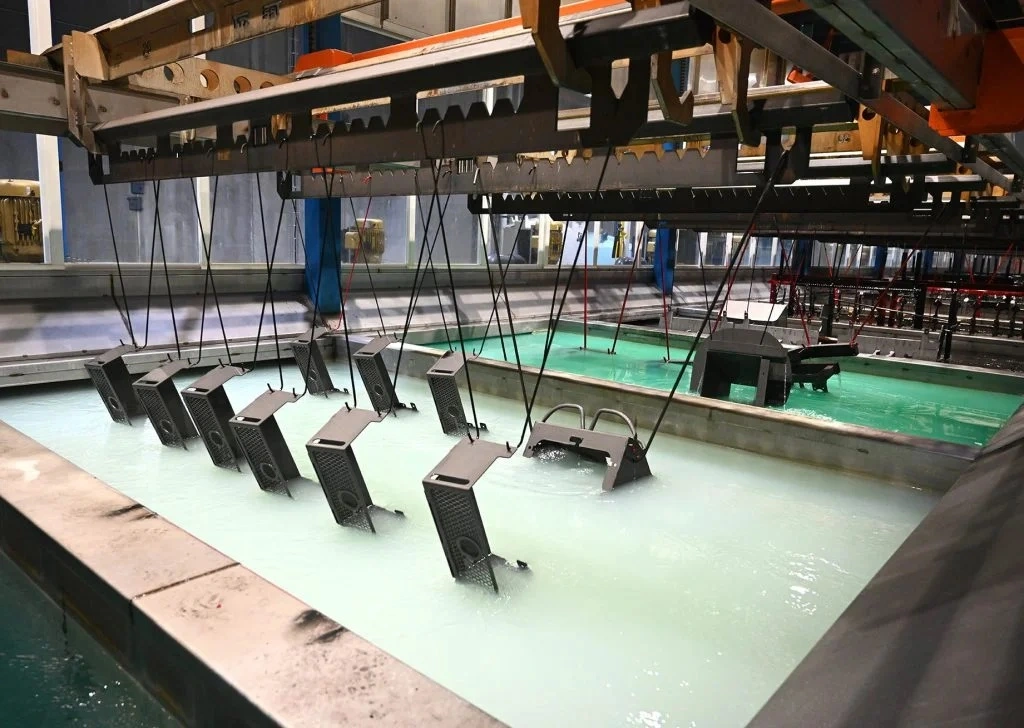
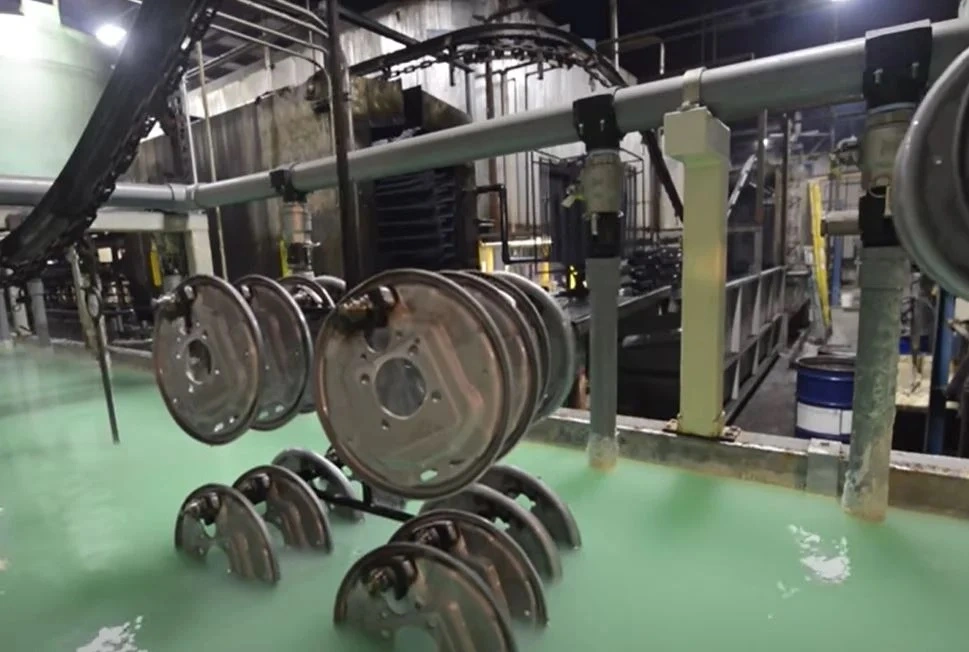
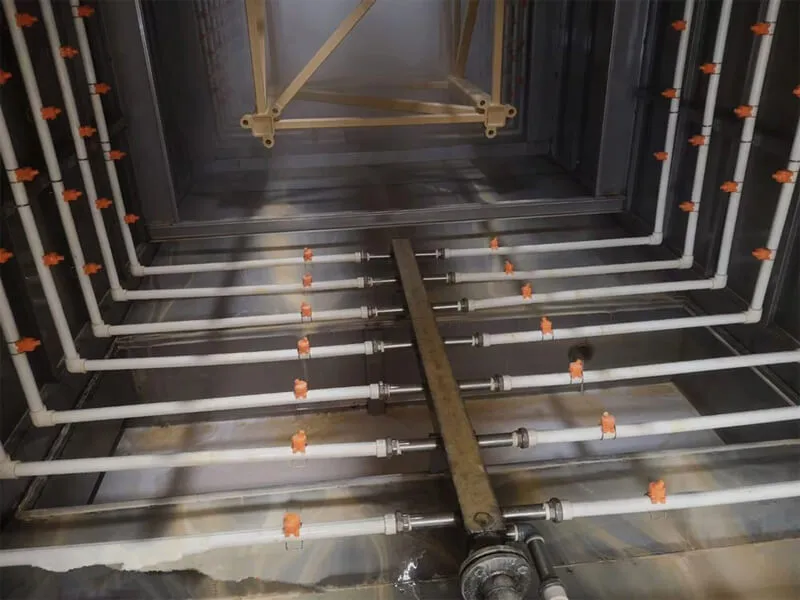
Stage 2: Multi-Stage Pre-treatment Zone
Alkaline Degreasing: Sprayed at 55-65°C with a contact time of 60-120 seconds to remove oils and machining lubricants.
Water Rinses (2 stages): Counter-flow rinses to remove residuals; conductivity controlled below 30 µS/cm.
Conversion Coating (Zirconium Nano-Ceramic or Iron Phosphate): Applied at ambient temperature for 45-90 seconds, creating a dense, amorphous layer (50-200 mg/m²) for enhanced corrosion resistance and adhesion.
DI Water Rinse: Final seal with deionized water (<10>) to prevent salt spotting.
Stage 3: Drying & Cooling – Components pass through a dry-off oven (100-120°C) to evaporate moisture, then air-cool to below 35°C before coating.
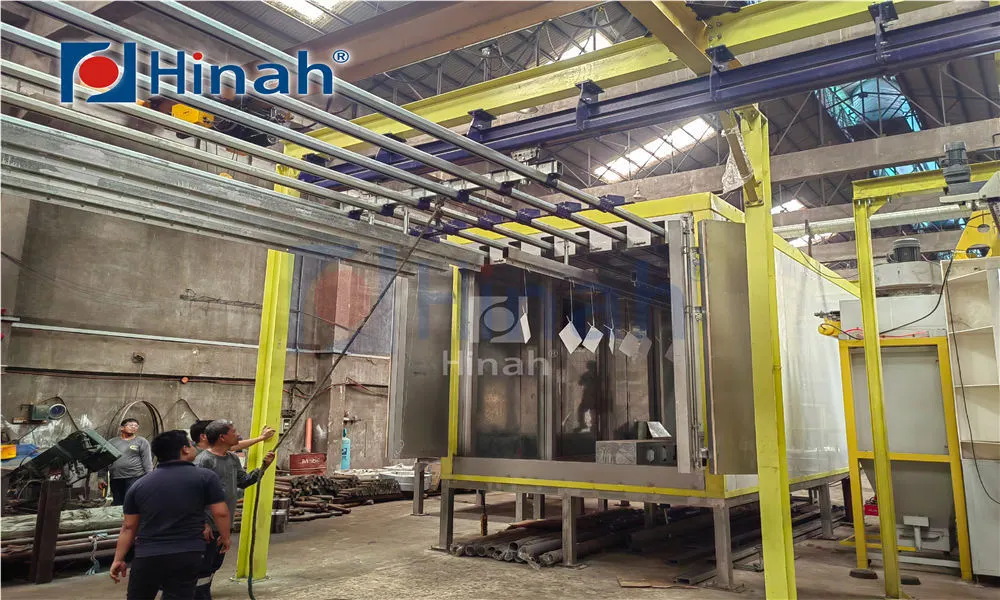
Stage 4: Powder Application Booth – Here, electrostatic spray guns (corona or tribo) charge powder particles. The conveyor carries grounded parts through the spray zone. Faraday cage effect is managed via gun positioning and air pressure.
Stage 5: Curing Oven – Parts enter a gas-fired or infrared curing oven. The substrate must reach the specified metal temperature (e.g., 180-200°C for polyester powder) and hold for the required dwell time (10-20 minutes) to ensure complete cross-linking.
Stage 6: Cooling & Unloading – Controlled cooling allows handling and prevents coating deformation. Final quality checks (thickness, adhesion, appearance) are performed.
The longevity of any powder coating is directly proportional to the quality of the pre-treatment. On a high-speed conveyor paint line, we typically employ multi-zone spray washers. Modern advancements have shifted from traditional iron phosphate to zirconium-based (Zr) nano-ceramic coatings. These provide a uniform, dense layer with significantly lower energy consumption (ambient temperature operation) and zero heavy metals. The resulting conversion coating increases the surface area for mechanical interlocking and provides a passive layer that inhibits under-film corrosion. Engineers must monitor the transfer efficiency of the Zr bath via titration, ensuring a consistent coating weight. Failure at this stage leads to catastrophic delamination, regardless of the quality of the epoxy or hybrid powder used later.
The application booth is where the conveyor paint line truly differentiates itself. Powder particles (typically a blend of epoxy and polyester powder for hybrid, or pure TGIC-free polyester for outdoor durability) are fluidized and conveyed to the electrostatic spray gun. Corona guns ionize the air at the tip (30-100 kV), charging the powder particles which are then attracted to the grounded substrate. A critical challenge is the Faraday cage effect—the tendency for charged powder to be repelled from recessed areas. To counteract this, we utilize:
Tribo (Friction) Charging Guns: Charge powder via collision with the gun wall, producing a higher charge-to-mass ratio and deeper penetration.
Optimized Air Management: Shaping air and reduced kV settings in corners prevent back-ionization and ensure wrap-around.
Part Grounding: Conveyor hooks must be regularly cleaned to ensure resistance to ground is below 1 megaohm. Poor grounding is the primary cause of poor transfer efficiency and the "orange peel" effect.
Modern conveyor paint line systems from HANNA integrate automatic gun-moving mechanisms that adjust to part profiles, ensuring uniform film thickness (typically 60-120 µm) even on complex geometries.
After application, the powder-coated part enters the curing oven. The goal is to melt, flow, and chemically cross-link the polymer chains. For polyester powder mixed with TGIC or HAA hardeners, the curing schedule is critical. The oven must bring the entire part's mass to the required curing temperature (e.g., 200°C metal temperature for 10 minutes). We differentiate between air temperature and part temperature; the conveyor speed must be adjusted based on the part's thermal mass. Under-curing results in poor corrosion resistance and mechanical properties, while over-curing can lead to yellowing and brittleness. Infrared (IR) boosters are often integrated at the entrance of the oven to rapidly bring the powder to its melt stage, reducing dust contamination and improving flow.
Compared to liquid painting or other finishing methods, a modern powder coating conveyor paint line offers distinct technical and economic benefits:
1. Zero VOC Emissions & Environmental Compliance: Powder coatings contain no solvents. They emit negligible volatile organic compounds (VOCs), eliminating the need for expensive abatement systems and ensuring worker safety. This aligns with global VOC-free mandates.
2. Superior Durability and Corrosion Resistance: The cross-linked thermoset polymers provide exceptional resistance to impact, chemicals, and salt spray. A properly cured epoxy base coat with a polyester powder topcoat can withstand over 1,000 hours of salt spray testing (ASTM B117) without blistering or creep.
3. Material Efficiency & Cost Savings: Over-sprayed powder is recoverable via a cyclone or cartridge filter system and can be re-introduced into the feed hopper. This yields a material utilization rate of >95%, drastically reducing waste compared to liquid paints which have a transfer efficiency of only 30-50%.
4. Uniform Film Build and Edge Coverage: Liquid paints tend to draw away from sharp edges due to surface tension, leading to thin spots. Powder, when cured, flows evenly and covers edges effectively, often eliminating the need for a primer and providing uniform protection. Advanced formulations overcome the Faraday cage effect to ensure coverage in recesses.
5. Operational Safety and Simplicity: There is no need to mix solvents or manage viscosity. Powder is a dry, inert material when not in contact with an ignition source. Automated conveyor paint line systems require less manual intervention, reducing the risk of human error and creating a cleaner shop floor.
To maintain a high-performance conveyor paint line, several technical parameters demand continuous monitoring:
The line speed is the master variable. It must be synchronized with the curing oven length and the required dwell time. For example, if a part requires 15 minutes at 200°C and the oven is 30 meters long, the maximum speed is 2 m/min. HANNA engineers often design variable frequency drives (VFDs) to allow fine-tuning based on product mix.
In a just-in-time manufacturing environment, quick color change is paramount. Modern conveyor paint line booths are designed with smooth walls and non-porous materials to facilitate rapid cleaning. The use of a cyclone and cartridge filter system allows for the separation of virgin and recovered powder, maintaining color consistency and reducing waste.
In-line testing is essential. We recommend:
Dry Film Thickness (DFT): Measured with eddy-current gauges; target tolerance ±10%.
Cross-hatch Adhesion (ASTM D3359): Ensures proper pretreatment and cure.
Impact and Pencil Hardness Tests: Validate mechanical properties.
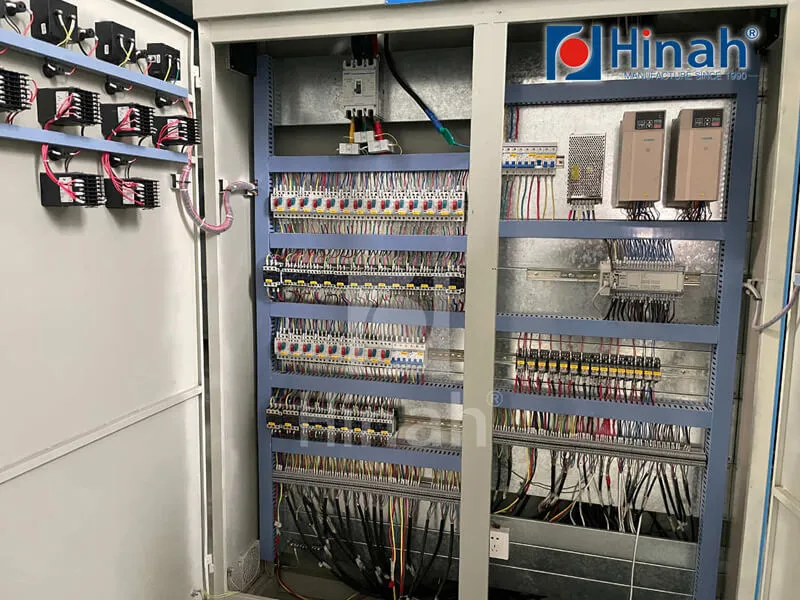
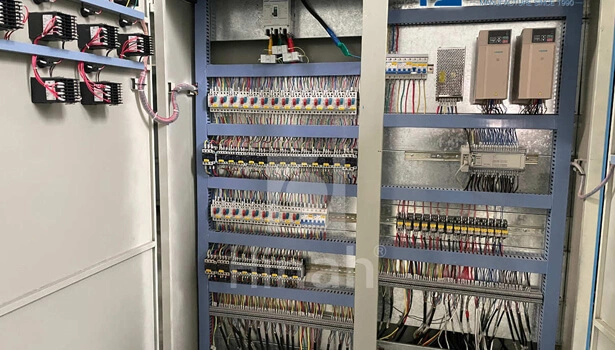
With hundreds of installations worldwide, HANNA has refined the engineering of the conveyor paint line to address the specific pain points of fabricators, automotive suppliers, and appliance manufacturers. Our systems are characterized by robust structural steel, energy-efficient oven designs (catalytic or direct-fired), and advanced PLC controls that log every process parameter. We understand that the interaction between the electrostatic spray gun and the conveyor ground is a science in itself; hence, our lines feature continuous hook cleaning systems to maintain electrical integrity. Whether your focus is on applying epoxy primers for maximum corrosion resistance or achieving a flawless decorative finish with metallic polyester powder, a HANNA-engineered line delivers precision and reliability.
The conveyor paint line remains the backbone of high-volume industrial powder coating. As we move towards Industry 4.0, these lines are becoming smarter—with predictive maintenance, real-time quality monitoring via AI vision systems, and even lower curing temperatures enabled by new resin chemistries. For the B2B engineer, the focus remains on the fundamentals: impeccable surface preparation, optimized electrostatic application, and precise thermal control. By partnering with an experienced integrator like HANNA, manufacturers can ensure their finishing line is not just a cost center, but a competitive advantage that delivers superior corrosion resistance, aesthetic excellence, and operational efficiency for decades to come.