


Large Powder Coating Oven Engineering: Thermal Uniformity and Cost Control
Heavy industrial fabricators processing structural steel beams, agricultural machinery chassis, transformer housings, and electric vehicle battery enclosures face thermal challenges that standard sheet-metal finishing lines never encounter. When cured film integrity determines corrosion resistance over decades of field exposure, thermal inconsistency inside the curing chamber becomes the primary bottleneck to production capacity and coating durability. Operating a large powder coating oven effectively requires balancing high-volume air recirculation against strict fuel economy and tight temperature tolerances across the entire working envelope.
Unlike light-gauge enclosures that reach cross-linking temperatures within minutes, heavy-walled weldments and thick castings act as massive heat sinks. If heated air fails to penetrate dense rack configurations or loses velocity across long spans, thick sections remain under-cured while adjacent thin brackets suffer over-baking, gloss loss, or pigment yellowing. Resolving these conflicting thermal demands starts with how heated air is generated, pressurized, and distributed throughout the chamber.
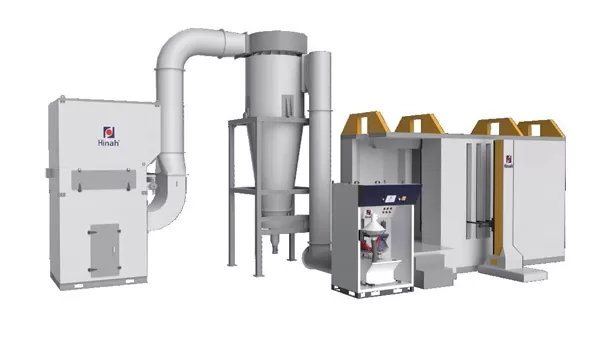
Thermodynamics and Airflow Architecture in Oversized Curing Chambers
Achieving uniform Part Metal Temperature (PMT) across a 10-to-20-meter chamber depends far more on convective mass transfer than on burner BTU rating alone. High-capacity industrial chambers rely on forced convection to strip away the insulating boundary layer of cool air clinging to cold metal substrates, accelerating conductive heat transfer into the steel core.
High-Volume Recirculation and Static Pressure Balancing
Inside expansive chambers, airflow dynamics dictate whether every square meter of coated surface enters the target cure window simultaneously. Conventional single-point supply fans often create turbulent eddies near the discharge plenum while leaving stagnant dead zones at the far corners or inside recessed structural channels. To prevent uneven cross-linking, engineering teams must calibrate total cubic feet per minute (CFM) circulation rates alongside static pressure distribution across full-length supply and return ductwork.
- Bottom-Up and Dual-Side Plenum Distribution: Positioning adjustable supply nozzles along the lower side walls directs high-velocity heated air upward through dense product loads, countering natural thermal stratification where hot air pools uselessly near the ceiling.
- Full-Length Adjustable Louvres: Precision damper blades along the supply ducts allow commissioning engineers to balance air velocity from front to back, compensating for pressure drops over long runs.
- Centralized Ceiling Return Ducts: Drawing cooler, denser air back into the combustion plenum from upper or opposed return headers completes a tight convective loop, maintaining consistent air turnover rates across the entire load zone.
Burner Modulation and Heat Exchanger Dynamics
Airflow uniformity must be paired with responsive thermal input to handle dramatic swings in batch weight. When a multi-ton steel load enters a preheated chamber, air temperature drops rapidly, demanding full burner capacity to restore setpoints without overshooting. Once the substrate approaches curing temperature, heat demand plummets to merely offsetting structural transmission losses and exhaust make-up air.
Standard on-off or high-low burners cause wide temperature oscillations that degrade sensitive resin chemistries. Proportional modulating gas burners equipped with turndown ratios of 10:1 or higher continuously match fuel flow to real-time thermal demand. For indirect-fired configurations where combustion byproducts must never contact delicate light-colored finishes, heavy-gauge 309S or 310S stainless steel heat exchangers prevent flue-gas discoloration while withstanding continuous thermal cycling. Drawing on decades of industrial thermal engineering, HANNA integrates dual-plenum airflow loops with high-turndown modulating combustion packages, holding chamber temperature variance within plus or minus 3 to 5 degrees Celsius across loaded zones.
Structural Design to Eliminate Thermal Bridging and Heat Loss
Generating uniform thermal energy solves only half the thermodynamic equation; retaining that energy within a cavernous steel enclosure requires eliminating conductive pathways through the chamber shell. Every uninsulated structural bolt, poorly sealed door seam, or warped frame member leaks expensive thermal energy directly into the plant floor while creating cold spots inside the curing zone.
Modern oversized curing enclosures utilize modular tongue-and-groove cassette panels rather than continuous welded plates. By separating the hot interior liner from the ambient exterior skin with high-density mineral wool insulation—typically 150mm to 200mm thick at densities of 120 kg/m³ or higher—panels block conductive heat transfer while absorbing acoustic resonance from high-horsepower circulation fans. Floating inner liner designs allow interior sheet metal to expand longitudinally when heated from 20 degrees Celsius to 220 degrees Celsius without buckling welds or tearing fasteners.
- Zero-Through-Metal Panel Joints: Offset interlocking seams lined with high-temperature ceramic fiber strips ensure that exterior cladding remains cool to the touch during peak production shifts.
- Insulated Door Perimeters and Latching Systems: Heavy-duty cam-action or spring-loaded compression latches press double-bulb silicone or fluoroelastomer gaskets tightly against thermally broken door frames, stopping convective steam and heat plumes from escaping.
- Floor Thermal Isolation: For floor-loaded chambers supporting heavy rail bogies, recessed insulated floor channels prevent intense radiant heat from cracking concrete slabs or creating localized cold air drafts beneath low-hanging parts.
Solving Heavy-Mass Material Handling and Substrate Mismatches
Once the insulated shell prevents conductive energy loss, plant throughput hinges on moving multi-ton assemblies into and out of the heated zone with minimal cycle interruption. Material handling architecture must match both maximum part weight and coating line layout.
Heavy fabricators generally choose among three primary transfer methods depending on batch variability and overhead crane access:
- Floor-Mounted Rail Trolleys: Heavy-duty steel bogies running on inverted angle iron or recessed V-groove tracks accommodate single workpieces exceeding 10 to 30 tons, allowing forklifts or bridge cranes to stage parts outside the chamber on parallel transfer carts.
- Power-and-Free Overhead Conveyors: Automated twin-track overhead systems enable continuous batch indexing or buffered accumulation, dropping heavy frames into stop-and-go curing cells without manual pushing.
- Drive-Through Double-Ended Configurations: Placing motorized bi-fold or vertical-lift doors at both ends allows a freshly coated cart to enter from the spray booth side immediately as a cured cart exits toward the cooling zone, slashing non-productive door-open dwell times.
Loading a large powder coating oven with mixed-gauge fabrications introduces a distinct metallurgical challenge known as thermal mass mismatch. A single agricultural frame frequently combines 25mm structural mounting plates with 2mm protective sheet-metal shrouds. Because thin steel heats rapidly while thick plates lag behind, rushing the cure cycle with excessive air temperatures over-bakes thin areas long before thick welds reach the 180-degree-to-200-degree cross-linking threshold.
Addressing this mismatch requires programmed staged heating ramps or hybrid infrared pre-gel boosters. Combining rapid-response catalytic or short-wave electric infrared emitters at the chamber entrance instantly gels powder on heavy flanges and prevents vertical sag, while controlled convection holds the soak temperature steady until heavy cores complete cross-linking. For porous cast iron or hot-rolled steel prone to outgassing pinholes, integrating a dedicated pre-heat burn-off dwell cycle drives trapped moisture and volatile oils out of substrate pores prior to electrostatic application.
Energy Recovery, Process Automation, and Emissions Control
Heating multi-ton steel loads to curing temperatures demands substantial energy input, making automated process control and waste-heat capture decisive factors in operating cost per square meter coated. Manual timers and single-point dial thermostats no longer satisfy either energy budgets or international coating specifications.
Programmable Logic Controller (PLC) architectures paired with touchscreen Human-Machine Interfaces (HMIs) allow operators to store hundreds of part-specific thermal recipes. When loading light aluminum extrusions versus heavy crane booms, selecting the appropriate recipe automatically adjusts target dwell duration, ramp rate, and damper positions. Pairing main recirculation blowers with Variable Frequency Drives (VFDs) further trims electrical draw by automatically reducing motor amperage as air density drops at elevated operating temperatures.
Exhaust management plays an equally decisive role in thermal efficiency. Industrial curing chambers require continuous fresh air make-up and controlled exhaust extraction to dilute volatile organic compounds (VOCs) and moisture released during resin cross-linking. Exhausting 200-degree air directly through the roof wastes significant fuel. Installing air-to-air plate or tubular heat exchangers captures thermal energy from outgoing exhaust streams to pre-heat incoming fresh make-up air before it reaches the combustion chamber. Meanwhile, automated air curtains positioned over entry and exit portals form an invisible laminar barrier whenever doors open, dramatically curbing convective heat spill into the factory.
Quality assurance standards such as ISO 12944, Qualicoat, and AAMA 2604 demand verifiable proof that every part achieved exact time-at-temperature curves. HANNA equips industrial curing systems with multi-zone thermocouple arrays and automated batch data-logging interfaces that record continuous thermal profiles, linking digital cure certificates directly to production lot numbers for downstream compliance audits.
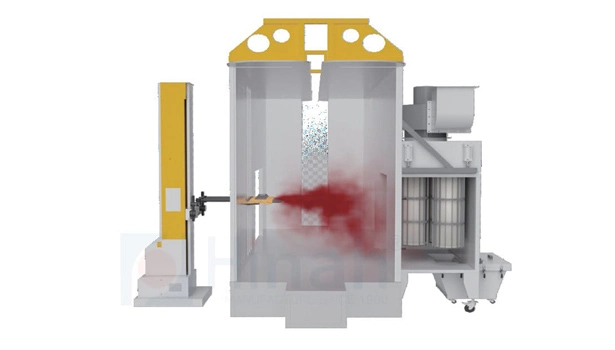
Key Engineering Parameters for Sizing a Large Powder Coating Oven
Translating thermodynamic performance into reliable capital equipment requires aligning chamber geometry and thermal output with concrete production data rather than generic floor-space estimates. Undersizing burner capacity creates chronic production bottlenecks during winter months, while oversizing chamber volume wastes energy heating empty air around small batches.
Before finalizing structural drawings or requesting equipment proposals, plant engineers should compile five core specification inputs:
- Maximum Envelope and Air Clearance: Define the length, width, and height of the largest fabricated assembly, adding 300mm to 500mm of perimeter clearance to ensure unobstructed convective airflow between product surfaces and interior supply ducts.
- Peak Hourly Steel Mass (kg/hr): Calculate the combined weight of parts plus heavy steel work-holding racks or carts entering per hour. Remember that steel fixtures absorb just as much thermal energy per kilogram as the finished product itself.
- Target Powder Chemistry and Cure Window: Specify whether production relies on fast-cure hybrids, standard TGIC polyesters, high-bake fluoropolymers, or thick-film functional epoxies, as required PMT ranges vary from 160 degrees Celsius to over 230 degrees Celsius.
- Available Plant Utilities: Verify natural gas line pressure, LPG vaporization capacity, diesel storage, or three-phase electrical transformer headroom. In facilities with constrained electrical service, fuel-fired systems deliver lower operating costs per million BTU.
- Loading Logistics and Plant Footprint: Confirm slab load-bearing limits for rail tracks, overhead crane hook heights, and staging space outside chamber doors for cooling and unloading.
Frequently Asked Questions on Large-Scale Curing Systems
How is temperature uniformity maintained across a 12-to-18-meter curing chamber?
Uniformity across long spans relies on multi-zone heating or split dual-fan recirculation systems combined with balanced plenum ducting. Instead of blowing air from one end to the other, engineers divide long chambers into independently controlled thermal zones—each featuring dedicated burners, circulation blowers, and thermocouples—while adjustable bottom-up air slots equalize static pressure along the full length.
What determines the choice between direct-fired and indirect-fired gas heating?
Direct-fired burners discharge combustion gases straight into the circulating airstream, delivering near-100 percent thermal efficiency and faster heat-up recovery for structural steel, dark industrial enamels, and functional coatings. Indirect-fired systems isolate combustion gases inside a stainless steel heat exchanger, preventing nitrogen oxides or trace sulfur compounds from yellowing bright white, clear, or pastel architectural finishes.
How can a facility cure thick castings alongside thin sheet metal without finish defects?
Operators should measure actual Part Metal Temperature on the thickest section using wireless multi-channel thermal profilers rather than relying solely on ambient air sensors. Utilizing lower air temperatures with high airflow velocity, extending soak times, or incorporating a zoned infrared pre-heat stage brings massive cores into the cure window gently without scorching thinner adjacent flanges.
What insulation specifications prevent excessive exterior wall temperatures at 220 degrees Celsius?
High-performance industrial chambers operating between 180 and 230 degrees Celsius require 150mm to 200mm of rigid, high-density rockwool or mineral wool rated at 120 kg/m³ or higher, housed inside interlocking panels with zero through-metal fasteners. Properly isolated walls typically stay within 15 to 20 degrees Celsius above ambient plant air temperature.
How do air curtains and heat recovery units affect annual operating costs?
Air curtains cut convective heat escape by up to 60 percent during frequent door-opening cycles, preserving chamber stability and shortening recovery times. Adding an exhaust air-to-air heat exchanger typically recovers 40 to 55 percent of exhaust thermal energy to pre-heat incoming make-up air, often achieving payback within 18 to 30 months on multi-shift production lines.
Which safety standards and interlocks govern fuel-fired industrial curing chambers?
Industrial gas-fired ovens are engineered in accordance with international standards such as NFPA 86 or EN 746-2. Mandatory safeguards include automated pre-ignition air purge cycles, differential pressure switches confirming circulation and exhaust fan operation, double-block-and-bleed shutoff gas trains, ultraviolet flame scanners, and independent high-limit thermal cutoff controllers.
Tailoring Thermal Equipment to Your Production Specifications
No single chamber blueprint fits every heavy fabrication shop, because part mass ratios, substrate alloys, shift schedules, and utility rates vary widely across industries. Designing an energy-efficient curing line requires running exact thermodynamic mass-balance calculations tailored to your heaviest assemblies and strictest coating standards.
The engineering specialists at HANNA partner directly with manufacturing directors, plant engineers, and coating contractors to model chamber airflow dynamics, optimize burner sizing, and design custom modular footprints for demanding industrial environments. To receive a detailed thermal calculation, utility consumption estimate, and custom layout proposal for your next large powder coating oven project, submit your maximum part dimensions, hourly steel throughput, target cure temperatures, and available energy utilities to our technical engineering team for a comprehensive equipment consultation.
Related News
Learn More + -
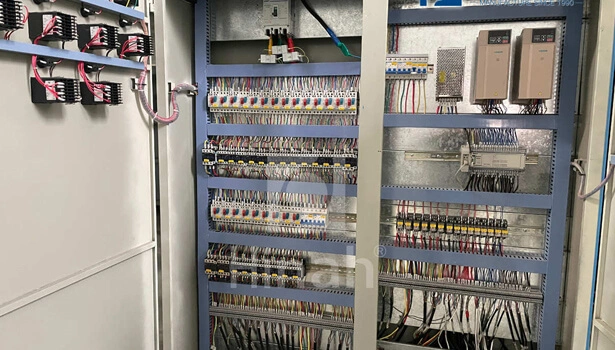
7 Essential Factors for Choosing a Large Powder Coating Oven in 2025
In the world of industrial finishing, the large powder coating oven is the unsung hero. It’s the critical piece of equipment that transforms a properl ...View Details2026-11-06 -
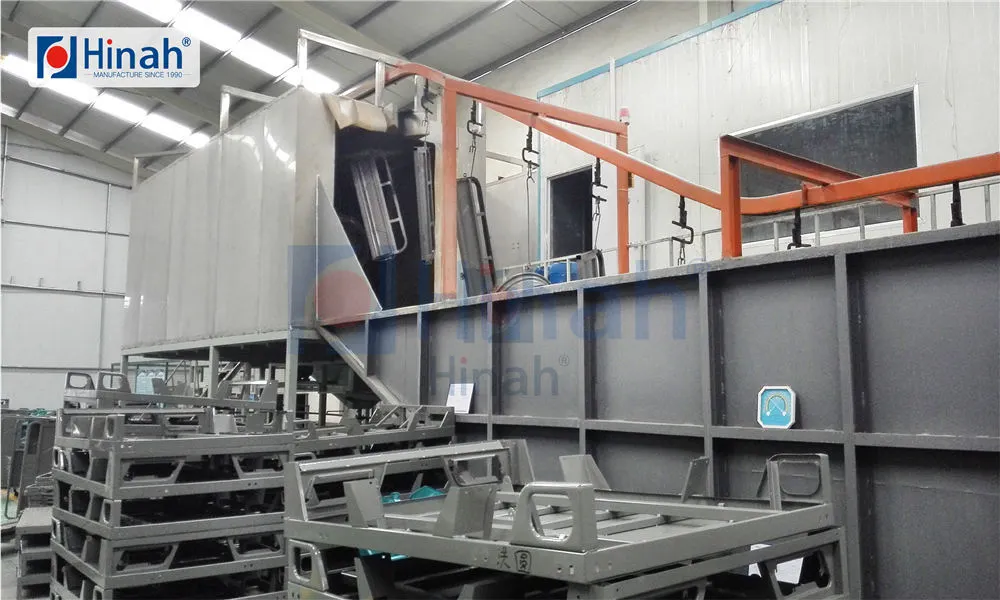
Large Powder Coating Oven: The Ultimate Guide for Industrial Use & Custom Solutions
If your production involves farm equipment, construction machinery, architectural aluminum, or heavy-duty industrial components, you understand the ch ...View Details2026-11-06 -
7 Critical Factors When Investing in a Large Powder Coating Oven
Scaling your powder coating operation means facing bigger challenges. Coating small parts is one thing, but when your projects involve truck frames, a ...View Details2026-11-06 -
Large Powder Coating Oven: Design, Selection, and Operation Guide
A large powder coating oven is a major investment for industrial finishing operations. It is the final, critical step that transforms a sprayed powder ...View Details2026-11-06 -
7 Critical Factors When Selecting a Paint Curing Oven for Industrial Finishing
7 Critical Factors When Selecting a Paint Curing Oven (2025 Technical Guide)The curing process is the decisive stage in any painting operation. It is ...View Details2026-11-06 -
Large Powder Coating Oven Engineering: Thermal Uniformity and Cost Control
Engineer a high-efficiency large powder coating oven with uniform airflow, zero thermal bridging, and lower fuel costs for heavy industrial finishing. ...View Details2026-11-13