
Selecting the right industrial curing oven is not just a purchase; it's a long-term commitment to the quality, efficiency, and profitability of your finishing operation. Whether you're curing powder coating, wet paint, or composites, the oven is the heart of the process.
A poorly designed oven leads to under-cured parts, energy waste, and production bottlenecks. This guide breaks down the ten most critical factors you must consider.
Not all ovens are the same. The technology dictates performance.
Convection Curing Ovens: The industry standard. Heated air is circulated around the parts using fans. Excellent for complex shapes, ensuring even temperature distribution. Ideal for most powder coating applications.
Infrared (IR) Curing Ovens: Use electromagnetic radiation to directly heat the part and coating. Extremely fast heat-up and cure times. Best for simple, flat geometries where shadowing isn't an issue.
Combination (Hybrid) Ovens: Merge IR and convection. IR sections provide rapid heat-up, followed by convection for soak time and temperature uniformity. This offers a balance of speed and quality.
Electric vs. Gas Heat: Electric ovens offer precise control and cleaner operation. Gas-fired ovens typically have lower operational energy costs but involve combustion management. The choice depends heavily on local utility costs and sustainability goals.
For powder coating lines, the industrial curing oven has non-negotiable requirements.
Temperature Uniformity: This is paramount. A high-quality oven must maintain temperature within ±5°C (±9°F) of the setpoint across the entire workload. Poor uniformity causes gloss variations and weak adhesion.
Airflow Design: Proper airflow ensures no dead zones. Vertical downflow is common, carrying heat evenly over the parts and helping to contain powder overspray within the air stream.
Part Density & Line Speed: Your oven length is calculated from the required cure time and conveyor speed. A high-density part load requires careful engineering to ensure heat penetrates to the core of every piece.
The price tag is only the beginning.
Capital Cost: Influenced by size, heating technology, insulation quality, and control sophistication. A custom industrial curing oven will cost more upfront than a standard model.
Operational (Energy) Costs: This is the lifetime cost. Superior insulation (e.g., 6-inch thick mineral wool), efficient burner systems, and heat recovery tech dramatically reduce monthly bills. This is where premium design pays back.
Maintenance & Downtime Costs: Robust construction with easy-access service panels reduces repair time. A cheap oven can become incredibly expensive through unplanned production stops.
Modern ovens are intelligent systems.
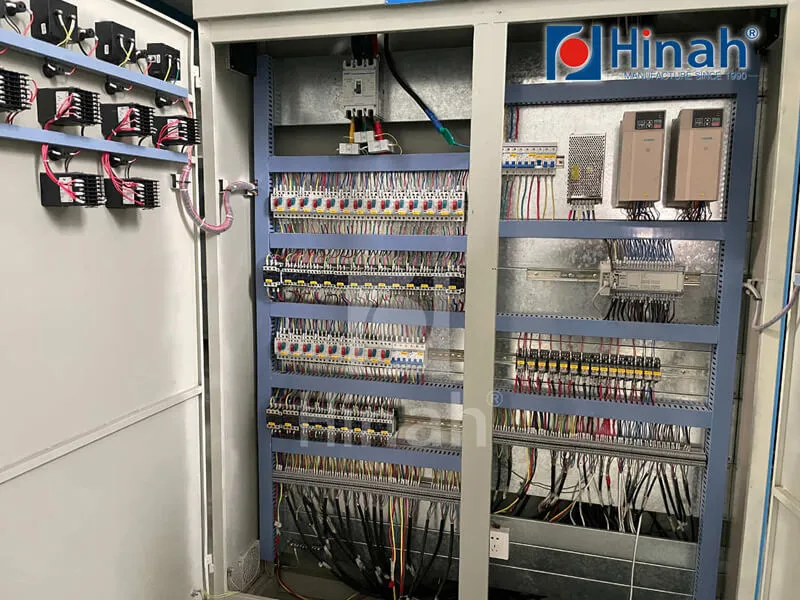
Smart Controls & Data Logging: Modern PLCs with touchscreen HMIs allow recipe storage, remote monitoring, and precise profiling. Data logging provides a cure certificate for each batch, crucial for automotive and aerospace specs.
Heat Recovery Systems: Capture waste heat from the oven exhaust to preheat incoming combustion air or makeup air. This can slash fuel consumption by 20-30%.
Emission Control: Integrated afterburners (thermal oxidizers) or filtration systems manage VOCs and particulates, ensuring environmental compliance.
Choosing a supplier is as important as choosing the oven technology.
Engineering Expertise: Look for a partner who asks detailed questions about your products, line speed, and facility. They should provide heat calculations and airflow simulations.
Customization Capability: Off-the-shelf rarely fits perfectly. The ability to create a custom industrial curing oven for unique part geometries or space constraints is vital.
Service & Support: Ensure they offer comprehensive commissioning, training, and readily available spare parts. Your oven is critical infrastructure.
For decades, HANNA has been a leader in finishing system integration. We understand that an industrial curing oven is not an isolated unit, but the core component of a synchronized line.
Our engineers specialize in designing ovens that deliver perfect cure profiles, maximize energy efficiency, and integrate seamlessly with your pretreatment and conveyor systems. From compact batch ovens to massive continuous lines, HANNA builds reliability and precision into every project.
We focus on creating value that lasts far beyond the installation date.
Q1: What is the most energy-efficient type of industrial curing oven?
A1: For most powder coating applications, a well-insulated gas-fired convection oven with a high-efficiency burner and heat recovery system offers the best balance of performance and operating cost. Electric infrared can be efficient for very specific, low-mass parts due to its direct heat transfer and minimal warm-up time.
Q2: How can I verify my oven's temperature uniformity?
A2: Conduct a Temperature Uniformity Survey (TUS). Multiple thermocouples are attached to a test rack representing your typical part load. The rack is run through the oven while data loggers record temperatures at various points. Reputable suppliers like HANNA perform this as part of commissioning.
Q3: Can I retrofit my old oven to be more efficient?
A3: Often, yes. Common retrofits include upgrading insulation, installing more efficient burners or heaters, adding heat recovery units, and modernizing the control system. An audit by a specialist can identify the most cost-effective improvements for your specific industrial curing oven.
Q4: Why would I need a custom industrial curing oven instead of a standard model?
A4: You need a custom industrial curing oven if your parts are exceptionally large, heavy, or dense; if your facility has unusual space limitations; or if your process requires a unique temperature profile or special atmosphere (like inert gas). Customization ensures optimal performance for your exact application.
Q5: How important is oven maintenance, and what does it involve?
A5: Critical. Neglected maintenance leads to high fuel costs, temperature drift, and failure. Basic tasks include: regularly cleaning air filters and circulation fans, checking and calibrating temperature sensors, inspecting door seals, and servicing burners or heating elements according to the manufacturer's schedule. A planned maintenance program prevents costly downtime.