

The powder coating curing oven is where the aesthetic and protective properties of a coating are finalized. It is not merely a heating chamber; it is a precision thermal reactor that must deliver controlled energy to initiate and complete the crosslinking of polymer chains. This article examines the heat transfer mechanisms, design configurations, energy management, and process validation essential for modern powder coating curing oven systems, with a focus on measurable quality outcomes and operational efficiency.
The Science of Curing: Beyond Simple Heating
Powder coatings consist of solid resin, hardener, pigments, and additives. When subjected to heat above the melting point (typically 140–220 °C), the particles melt, flow, and undergo a chemical crosslinking reaction. The powder coating curing oven must ensure that every area of the part reaches the required peak metal temperature (PMT) for the specified dwell time. Critical parameters include:
Heat-up rate: Affects flow and leveling; too rapid may cause solvent popping (outgassing), too slow may increase viscosity before flow completes.
Uniformity: ASTM/ISO standards require ±5 °C throughout the working zone to ensure consistent crosslink density.
Dwell time: Typically 10–20 minutes depending on coating chemistry and substrate mass.
HANNA has documented that optimizing these parameters can increase impact resistance by 15% and chemical resistance by 20% compared to marginal curing conditions.
Heat Transfer Mechanisms in Curing Ovens
Convection Heating
Convection ovens dominate the industry, using recirculated heated air to transfer energy. The convective heat transfer coefficient (h) depends on air velocity and temperature. In a well‑engineered powder coating curing oven, velocities of 3–6 m/s across the part surface achieve h‑values of 20–40 W/m²K. High‑velocity nozzles can increase this to 60 W/m²K, reducing cure time without raising temperature.
Direct‑fired: Combustion products mix with oven air—efficient but requires clean fuels to avoid contamination.
Indirect‑fired: Heat exchanger isolates combustion—recommended for sensitive colors or high‑gloss finishes.
Infrared (IR) and Hybrid Systems
IR ovens use electromagnetic radiation to directly heat the substrate, bypassing air heating. Medium‑wave IR (2–4 µm) is well absorbed by both dark and light powders. Hybrid systems combine an IR boost zone at the entrance with convection soak zones. Benefits include:
Rapid heat‑up of thick sections.
Reduced oven footprint (IR zones are shorter).
Energy savings by heating only the part, not the air.
HANNA’s hybrid designs have achieved 30% shorter overall oven lengths while maintaining ±3 °C uniformity.
Oven Configurations for Different Production Modes
Batch Curing Ovens
For low‑volume or large, heavy parts, walk‑in or overhead‑door batch ovens are common. A batch powder coating curing oven must recover temperature quickly after loading cold parts. Design features include:
High‑turnover fans (minimum 20 air changes/hour) to prevent stratification.
Adjustable baffles to direct airflow around stacked parts.
Programmable soak timers with audible alarms.
Continuous Conveyor Ovens
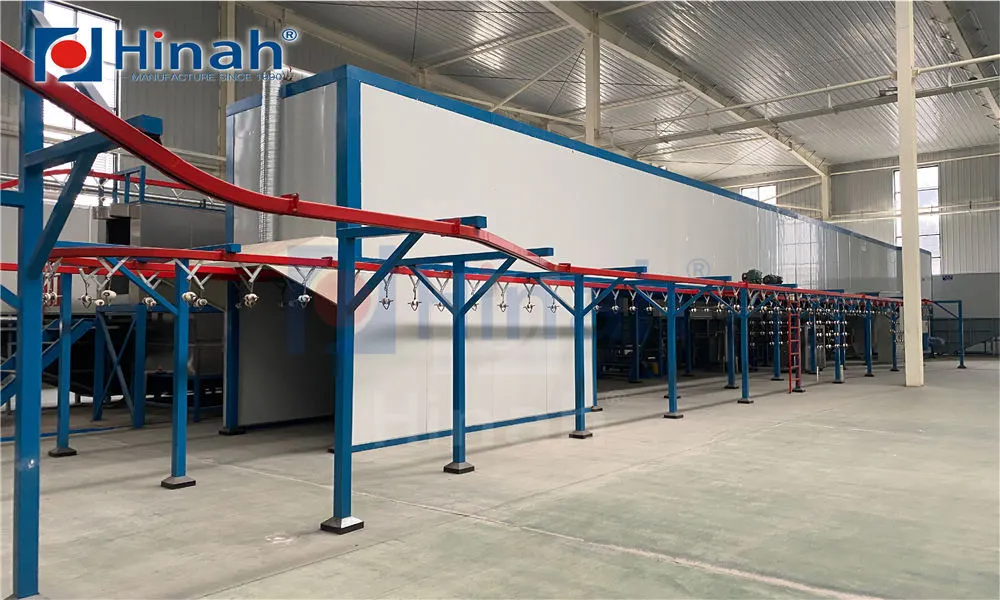
High‑volume lines use monorail or chain‑on-edge conveyors passing through a multi‑zone oven. Each zone can be independently controlled—for example, a high‑heat ramp zone followed by a hold zone. Key engineering aspects:
Air seals: At entry and exit to minimize heat loss—typically labyrinth or high‑velocity air curtains.
Zoning: 3–6 zones allow profiling of the cure curve.
Insulation: 100–150 mm mineral wool with U‑value
<0.3 w="">
Temperature Uniformity: Measurement and Validation
Achieving ±5 °C in a powder coating curing oven requires careful design and validation. The standard method is a temperature uniformity survey (TUS) using 9–20 thermocouples placed throughout the working volume, attached to a data logger that travels with the part. Factors affecting uniformity:
Airflow pattern: Computational fluid dynamics (CFD) modeling during design optimizes nozzle placement and return duct locations.
Part loading density: Overloading blocks airflow; maximum cross‑sectional area of parts should not exceed 50% of oven cross‑section.
Fan performance: Backward‑inclined fans with variable speed drives maintain constant flow even with filter loading.
Energy Efficiency and Sustainability
With energy costs representing a major operating expense, modern powder coating curing oven designs incorporate multiple efficiency features:
Heat recuperation: Exhaust air passes through a heat exchanger to preheat incoming combustion air or plant makeup air—recovering 30–50% of exhaust heat.
Variable frequency drives (VFDs): On recirculation fans, reducing speed during idle periods.
Insulation upgrades: 150 mm high‑density panels reduce skin temperature to ambient +10 °C.
Low‑NOx burners: Meeting environmental regulations while maintaining thermal efficiency.
HANNA offers energy audits that identify payback opportunities; typical projects see ROI within 2–3 years.
Industry‑Specific Curing Challenges
Heavy Mass Components
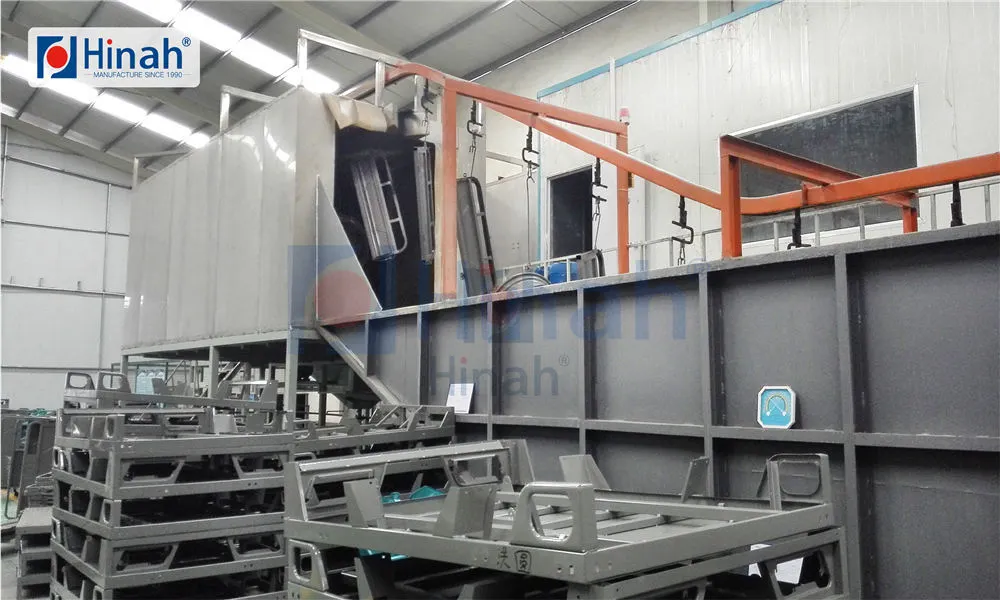
Agricultural and construction equipment parts may weigh several tons. The powder coating curing oven must have sufficient power to bring the thermal mass to temperature within the cycle time. Using IR preheat or high‑velocity convection on the leading edges of thick sections prevents under‑cure in shadows.
Temperature‑Sensitive Substrates
Aluminum alloys, composites, or assembled components with seals require lower cure temperatures. Low‑bake powder coatings (120–150 °C) are available, but oven control must be precise to avoid overheating. Electric infrared ovens with fast response are often preferred for such applications.
Architectural Aluminum Extrusions
Long profiles (up to 8 m) demand uniform temperature along the length. Horizontal airflow with adjustable nozzles, combined with vertical hanging, ensures every extrusion face receives equal convective heat. Qualification typically involves coating test coupons at top, middle, and bottom positions and measuring gloss and mechanical properties.
Process Control and Industry 4.0 Integration
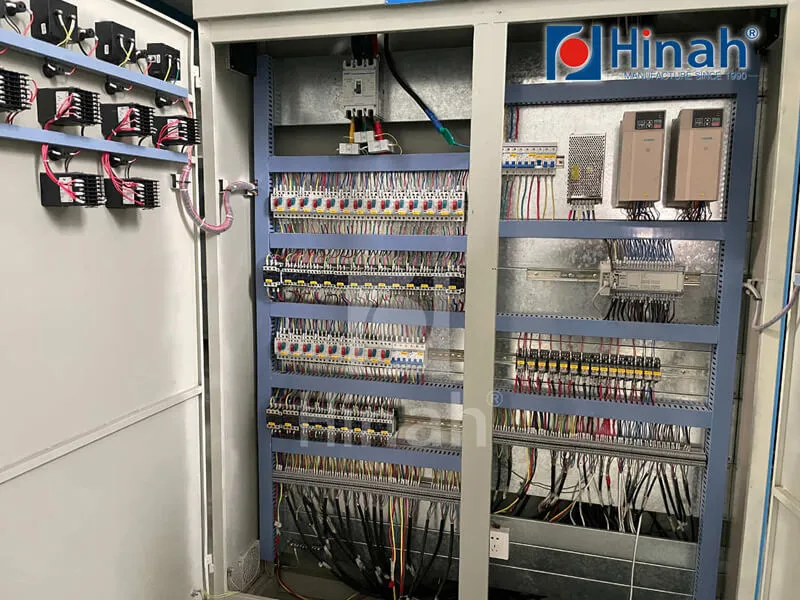
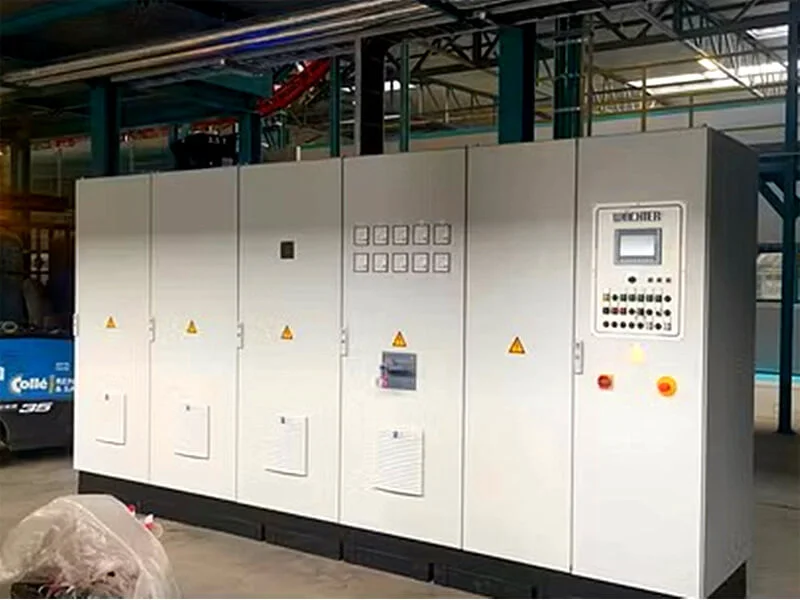
Modern curing ovens are intelligent nodes in the factory network. A powder coating curing oven equipped with a programmable logic controller (PLC) and human‑machine interface (HMI) can:
Store recipes for thousands of parts: temperature setpoints, soak times, and cooling parameters.
Log data for each batch: actual temperature profiles, energy consumption, and alarms—critical for ISO 9001 or automotive quality audits.
Communicate with MES (manufacturing execution system) to adjust oven parameters automatically based on incoming SKU data (RFID or barcode).
Predictive maintenance: Sensors on fan bearings and burner flame rods send alerts when performance degrades.
HANNA integrates these capabilities using open protocols (OPC UA, Modbus TCP), ensuring compatibility with existing plant systems.
Frequently Asked Questions
Q1: What is the difference between a curing oven and a drying oven for liquid paint?
A1: Liquid paint drying ovens primarily evaporate solvents (physical drying), while a powder coating curing oven initiates a chemical crosslinking reaction. Powder requires precise temperature control to achieve full polymerization; simply reaching a certain temperature is insufficient—the part must dwell at that temperature for the specified time.
Q2: How do I determine the correct cure time and temperature for my parts?
A2: Consult the powder manufacturer’s technical data sheet (TDS) for the nominal cure schedule. However, the actual part temperature lags behind air temperature. Conduct a temperature profiling study using a data logger and thermocouples attached to the part (thickest section, thinnest section, and a shielded area). Adjust oven setpoints until the part achieves the required PMT for the full dwell period.
Q3: What causes yellowing or discoloration in the curing oven?
A3: Yellowing is typically caused by over‑curing (excessive temperature or time), contamination from combustion products in direct‑fired ovens, or outgassing from the substrate (e.g., zinc‑rich primers). Solutions: verify oven uniformity, ensure clean combustion (indirect firing if needed), and confirm substrate cleanliness. Some white powders are more sensitive; consider low‑bake formulations.
Q4: Can I cure powder coating in an oven designed for liquid paint?
A4: Possibly, but there are risks. Liquid ovens may lack the uniformity (±5 °C) required for powder, and they may have lower maximum temperatures. Also, powder requires clean air; residual solvents in a liquid oven could contaminate the powder finish. A retrofit assessment by an expert—such as HANNA—is recommended before use.
Q5: How often should I perform a temperature uniformity survey (TUS)?
A5: Industry best practice is at least annually, or after any major change (burner replacement, duct modification, insulation repair). For critical applications (aerospace, medical), semi‑annual surveys are common. The TUS should be documented and compared to previous runs to detect drift.
Q6: What are the signs of an under‑cured coating?
A6: Under‑cured powder may exhibit poor adhesion (tape pull test), low impact resistance, solvent softening (MEK rub test), or reduced gloss. In severe cases, the coating may appear rough or powdery. If suspected, verify with differential scanning calorimetry (DSC) to measure residual cure.
Q7: How do I reduce energy costs in an existing curing oven?
A7: Low‑cost measures include: checking door seals, reducing exhaust volume to the minimum required for safety (often over‑exhausted), and installing VFDs on fans. Capital projects: heat recuperation, thicker insulation, and IR boost zones. A professional energy audit can prioritize investments with the fastest payback.
Q8: What safety systems are required for a powder coating curing oven?
A8: Per NFPA 86 (or equivalent), ovens must have: separate high‑limit temperature controller, airflow proving switches, purge cycle before ignition, flame supervision, and emergency exhaust in case of smoke. For powder lines, ensure the oven is grounded to prevent static discharge. HANNA systems are third‑party certified to these standards.
Mastering the operation of a powder coating curing oven is essential for producing finishes that meet mechanical and aesthetic specifications. By understanding heat transfer, airflow dynamics, and process control, manufacturers can achieve consistent results while optimizing energy use. With decades of thermal engineering experience, HANNA provides curing solutions that integrate seamlessly with coating lines, delivering measurable improvements in quality and throughput.