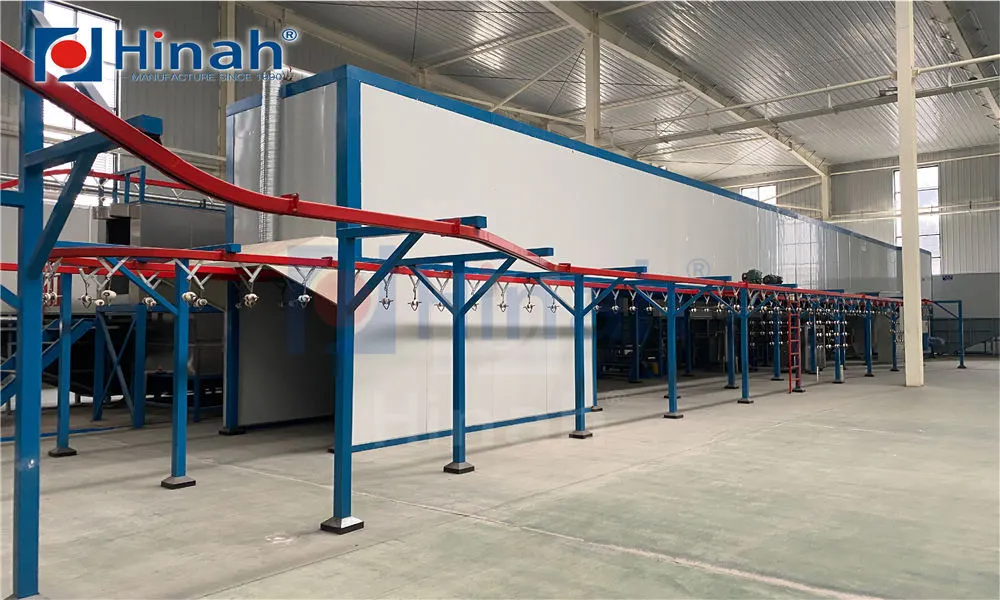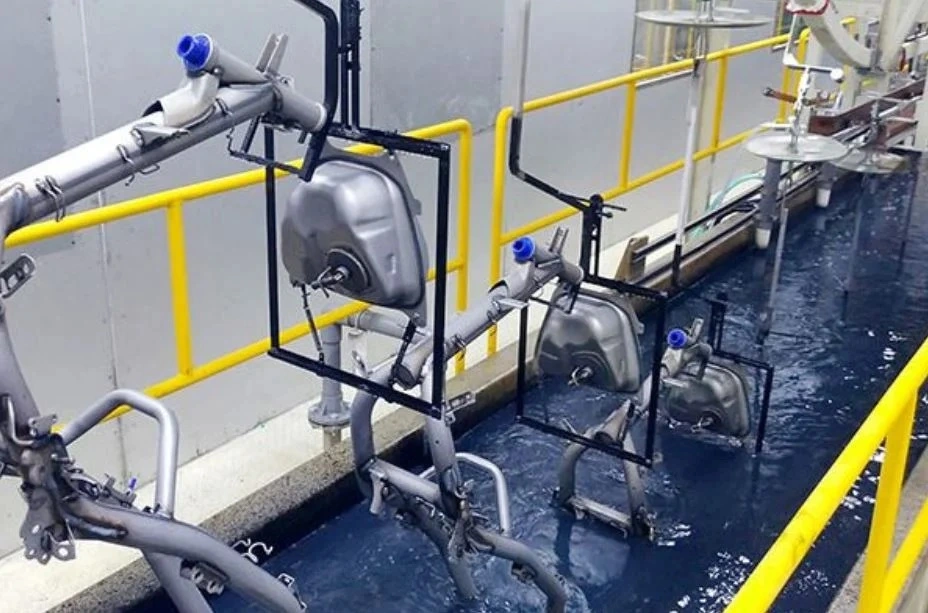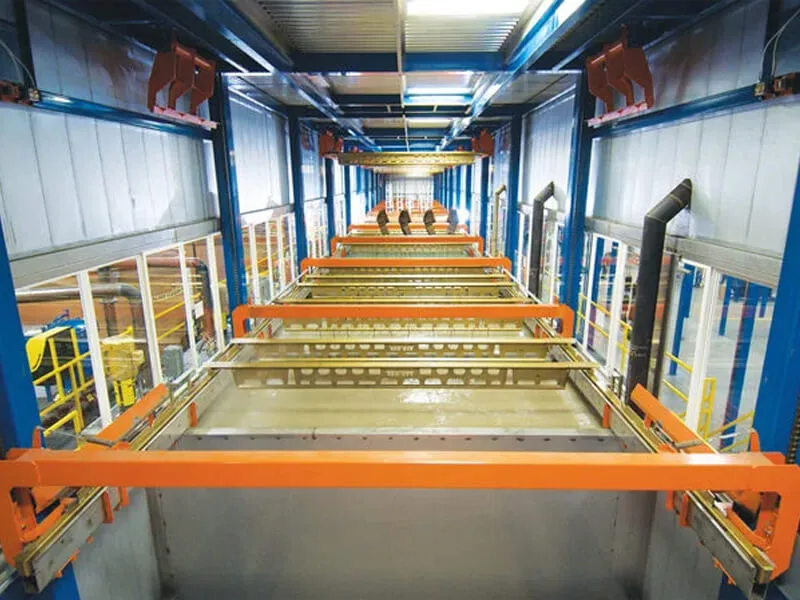

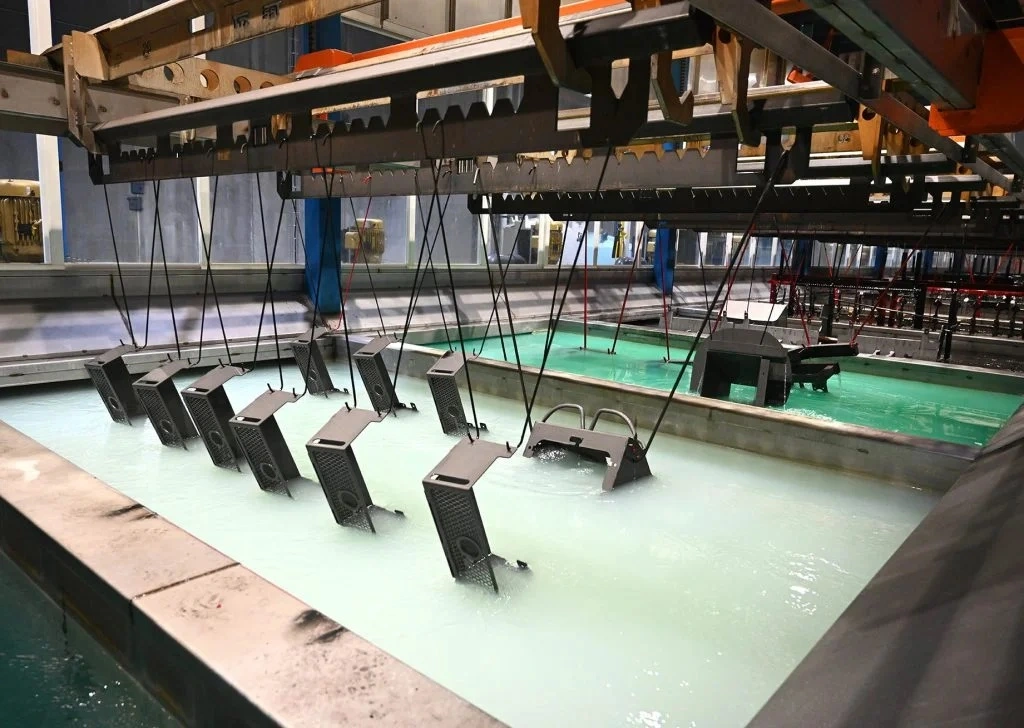
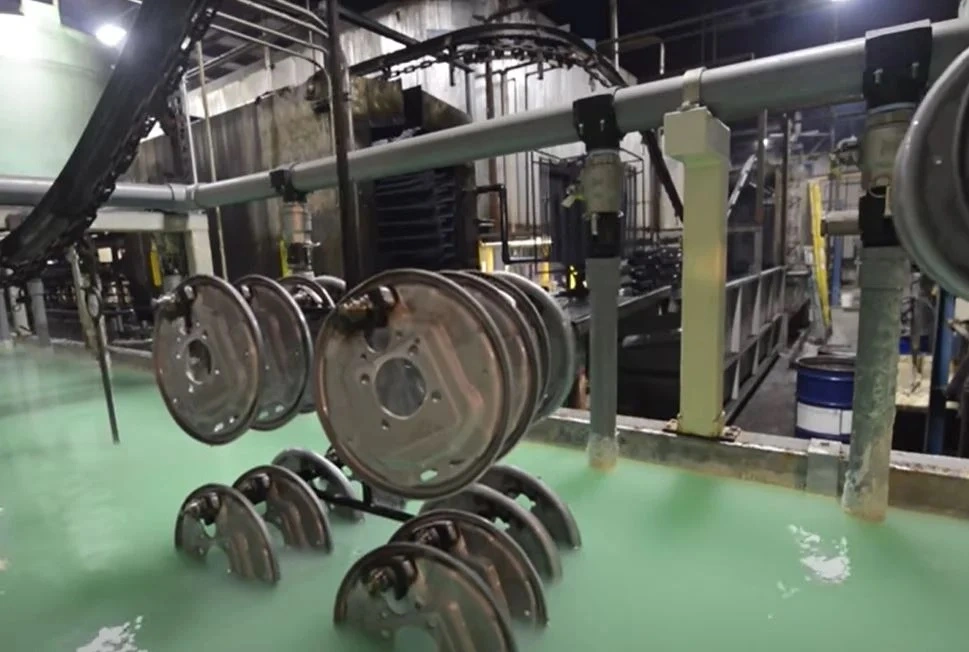

A powder coating booth and oven are not independent workstations—they are thermally and pneumatically linked stages in a continuous process. The booth must deliver a precisely charged cloud of powder to the grounded part, while the oven must provide the exact thermal profile to cure that powder into a durable film. When these two systems are engineered as an integrated unit, manufacturers achieve higher first‑pass yield, lower energy consumption, and consistent quality across mixed product runs. This article examines the technical interdependencies, design parameters, and operational strategies for optimizing a powder coating booth and oven as a unified system.
The Interdependency of Application and Curing
Many quality defects attributed to the oven actually originate in the booth. Conversely, booth performance can be compromised by oven‑induced airflows. A properly engineered powder coating booth and oven system accounts for:
Air pressure balancing: The booth is typically maintained at negative pressure to contain powder, while the oven is at positive or neutral pressure. Transitions between zones must avoid turbulence that disturbs uncured powder.
Temperature cross‑talk: Oven heat escaping into the booth can soften powder before it reaches the curing stage, causing "orange peel" or clogged filters.
Conveyor synchronization: The same conveyor that carries parts through the spray booth must deliver them to the oven with precise timing and spacing.
HANNA specializes in designing these interfaces to eliminate process gaps, ensuring seamless material flow from pretreatment to cooling.
Powder Coating Booth: Containing and Reclaiming the Spray
Booth Configuration Types
The booth is the primary enclosure for powder application. Its design directly affects transfer efficiency and operator safety. Common configurations for an integrated powder coating booth and oven line include:
Cartridge‑style booths: Most common for high‑volume production. Powder‑laden air passes through cartridge filters; clean air recirculates or exhausts. Automatic pulse cleaning maintains airflow.
Cyclone booths: Use centrifugal force to separate powder from air; ideal for frequent color changes because there are no filters to clean. Typically paired with a secondary absolute filter for final polishing.
Open‑face booths: For large, manually coated parts; rely on high air velocity (0.5–0.7 m/s) to contain overspray.
Airflow Management in the Booth
NFPA 33 requires a minimum air velocity of 0.5 m/s across all openings to contain combustible dust. However, optimal booth performance requires engineered airflow patterns that:
Direct overspray toward the recovery system without disturbing the spray pattern from the guns.
Maintain laminar flow (low turbulence) to prevent eddies that deposit powder on walls or conveyor tracks.
Provide adequate face velocity even with varying part sizes—achieved by variable frequency drives on exhaust fans.
Powder Recovery and Color Change
For lines that run multiple colors, the booth must allow rapid cleaning. Cyclone booths with dedicated collection drums can switch colors in 5–10 minutes. Cartridge booths require longer purge cycles unless equipped with quick‑change filter cartridges. The choice impacts overall line efficiency and should be matched to the oven’s scheduling flexibility—a fast‑changing booth paired with a slow‑recovery oven creates bottlenecks.
Powder Coating Curing Oven: From Powder Film to Solid Finish
The oven receives parts with a layer of uncured powder that is still mechanically removable. The powder coating booth and oven must be thermally coordinated so that parts enter the oven before ambient humidity or contamination can affect the powder layer.
Convection vs. Infrared (IR) Curing
Convection ovens (gas‑fired or electric) are the industry standard, providing uniform heating for complex geometries. IR ovens offer rapid heat‑up for flat or consistently shaped parts. Many integrated lines now use hybrid systems:
IR boost zone immediately after the booth rapidly gels the powder, preventing it from being disturbed by conveyor vibration or air currents.
Convection soak zone completes the crosslinking, ensuring through‑cure on thick sections.
This approach reduces oven length by 30–40% while maintaining quality.
Temperature Uniformity and Profiling
A high‑performance powder coating booth and oven system must guarantee ±5 °C uniformity in the oven. Factors influencing uniformity:
Airflow pattern: CFD‑optimized nozzles and returns.
Part loading density: Maximum 50% cross‑sectional area blockage.
Insulation integrity: 100–150 mm mineral wool with thermal breaks at seams.
Temperature profiling with traveling thermocouples is essential during commissioning and periodic requalification.
Energy Efficiency Measures
Ovens are energy‑intensive; integrating them with booth exhaust can yield savings. For example, warm air from the booth (if clean) can be used as makeup air for the oven burner, recovering 10–20% of energy. Other efficiency features:
Recuperative heat exchangers on oven exhaust.
Variable frequency drives on recirculation fans.
Automated doors or curtains to minimize heat loss during conveyor indexing.
Conveyor Integration: The Critical Link
The conveyor is the spine connecting booth and oven. For an integrated powder coating booth and oven, conveyor design must address:
Speed matching: Booth spray time and oven dwell time determine line speed. If oven requires 20 minutes and booth needs only 2 minutes, the conveyor may need to accumulate parts between stations or use a multi‑lane oven.
Grounding: Parts must remain grounded from the booth through the oven entrance to prevent electrostatic discharge that could ignite powder dust. Conveyor trolleys require periodic cleaning to maintain continuity.
Heat resistance: Bearings and chains in the oven section must withstand continuous high temperatures; specially lubricated or maintenance‑free designs are used.
Industry Applications and Case Examples
Automotive Components
A Tier 1 supplier producing suspension arms needed a powder coating booth and oven that could handle 120 parts per hour with zero defects. HANNA supplied a cyclone booth with automatic gun control and a three‑zone gas convection oven. The system achieved 98% first‑pass yield, with energy consumption 22% below the client’s baseline due to heat recuperation.
Architectural Aluminum Extrusions
An extruder coating 8‑meter lengths required a line with consistent appearance across long profiles. The solution: a side‑draft cartridge booth with vertical hanging, and a horizontal airflow oven with adjustable nozzle banks. Temperature profiling confirmed ±3 °C along the entire length, ensuring uniform gloss.
General Industrial Fabrications
A job shop coating mixed parts (small brackets to large frames) needed flexibility. A batch system with a walk‑in booth and a separate batch oven was integrated using a powered monorail with switching tracks. RFID tags on each carrier automatically selected the correct booth program and oven recipe.
Control Systems and Data Integration
Modern powder coating booth and oven lines are managed by a central control system that:
Tracks each part via RFID or barcode, retrieving coating parameters (gun settings, oven temperature, dwell time).
Monitors real‑time conditions: Booth airflow, filter pressure drop, oven zone temperatures, and conveyor position.
Logs data for quality management: each part’s cure profile can be archived and linked to mechanical test results.
Provides alarms for deviations (e.g., oven temperature out of range, low powder level in hopper).
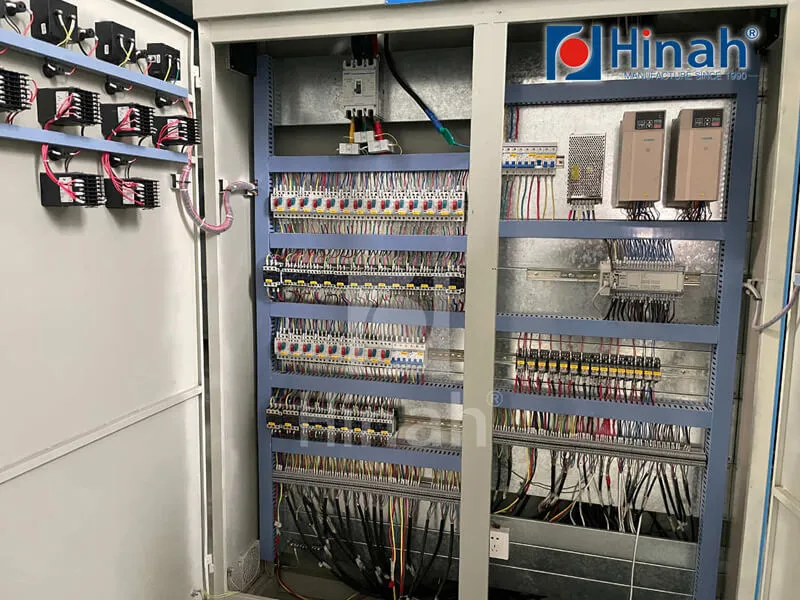
HANNA’s control architecture uses open protocols (OPC UA, Modbus) for easy integration with plant MES or ERP systems.
Frequently Asked Questions
Q1: What is the optimal distance between the spray booth and the curing oven?
A1: Ideally, the conveyor should move parts directly from booth to oven with minimal travel distance—typically 3–6 meters—to prevent contamination of uncured powder. If a longer distance is unavoidable, install a clean, temperature‑controlled tunnel to keep airborne dust away and maintain part temperature.
Q2: Can the same air handling system serve both the booth and the oven?
A2: No, due to safety and temperature differences. Booth air contains combustible powder dust and must be filtered and possibly returned to the plant (if clean) or exhausted. Oven air is hot and may contain combustion products. However, heat recovery from oven exhaust to preheat booth makeup air is possible with a heat exchanger.
Q3: How do I balance line speed between the booth and oven?
A3: Calculate the required dwell time in each zone. If oven time is longer, you have options: increase oven length, reduce conveyor speed (which reduces throughput), or use a multi‑lane oven where parts accumulate on multiple parallel conveyors. Batch ovens with indexing conveyors can also match high‑speed booth output.
Q4: What causes powder to blow off parts before entering the oven?
A4: This is usually due to air turbulence in the transition zone. Check for drafts from open doors, fans, or pressure imbalances. Ensure the booth exhaust is balanced so that air flows gently into the booth, not outward. Also verify that parts are adequately grounded—if charge dissipates, powder may not adhere firmly.
Q5: How often should filters in the booth be replaced?
A5: Cartridge filters typically last 1–2 years with proper maintenance (regular pulsing). However, if you notice decreased airflow, powder escaping into the plant, or pressure drop exceeding manufacturer limits, replace sooner. For cyclone booths, there are no filters to replace, but the cyclone itself should be inspected annually for wear.
Q6: What are the safety interlocks required between booth and oven?
A6: NFPA 86 and 33 require that the oven cannot operate unless the booth exhaust is functioning (to prevent powder accumulation). Similarly, if the oven temperature exceeds a safe limit, the powder feed should stop. Conveyor must have emergency stops accessible from both areas. HANNA systems include these interlocks as standard.
Q7: Can a powder coating booth and oven be retrofitted with automation?
A7: Yes. Many existing lines are upgraded by adding automatic guns, reciprocators, and PLC controls to the booth, and upgrading oven burners and controls. A thorough audit of conveyor condition, booth airflow, and oven insulation is needed first. HANNA offers retrofit packages with guaranteed performance improvements.
Q8: How do I validate that the integrated system is performing correctly?
A8: Perform a complete system qualification: (1) Booth airflow and filter efficiency test; (2) Temperature uniformity survey in the oven; (3) Coating thickness and cure tests on sample parts run through the entire line. Repeat annually or after major changes.
Integrating a powder coating booth and oven into a seamless finishing system requires expertise in fluid dynamics, heat transfer, and production sequencing. When both elements are engineered to complement each other, manufacturers benefit from higher quality, lower operating costs, and the agility to handle diverse product mixes. With decades of experience in turnkey finishing solutions, HANNA provides integrated lines that set the standard for reliability and efficiency in the powder coating industry.