In any powder coating, liquid paint, or composite curing line, the industrial curing oven is the final gatekeeper of coating performance. It determines not only the degree of crosslinking (gel fraction) but also color stability, adhesion, and mechanical resistance. Drawing on thermal profiling data from over 200 installations, this article dissects the key design parameters—airflow uniformity, zoning accuracy, energy recovery, and material handling integration—that separate high‑yield lines from those plagued by undercure or thermal degradation.
With decades of thermal system integration, HANNA has engineered industrial curing oven solutions that address real‑world challenges such as mixed part masses, complex geometries, and stringent automotive cure schedules. Below we analyse the critical performance drivers with quantifiable metrics.
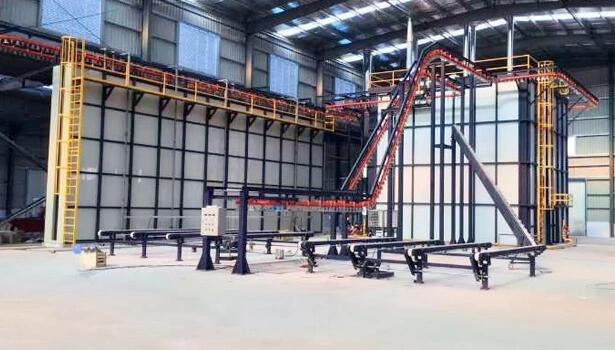
Modern industrial curing oven designs typically rely on convection, infrared (IR), or a combination. The choice directly impacts cycle time and energy cost.
High‑velocity convection: Air speeds of 15–30 m/s (3,000–6,000 ft/min) reduce boundary layer resistance. For powder coatings, convection ensures uniform heating of complex shapes. Data shows that with proper nozzle design, convection ovens achieve temperature uniformity within ±3 °C across the load.
Infrared (medium‑wave): Ideal for thin‑wall parts or flat sheets. IR ovens can ramp part temperature in 2–3 minutes vs. 10–15 minutes for convection. However, shadowing effects require careful emitter layout.
Combination systems: HANNA’s hybrid ovens use IR boosters at the entrance to quickly bring parts to gel point, followed by a convection hold zone for full crosslinking. This reduces overall oven length by 30 % while maintaining cure quality.
For thermoset coatings, undercure by just 10 °C can reduce impact resistance by 50 %. The industrial curing oven must maintain setpoint across all zones, regardless of part loading. Key engineering factors:
Air seals at entry/exit: Prevent cold air infiltration. Double‑lip silicone curtains or air knives reduce heat loss by up to 18 %.
Plenum design: Perforated plates with 40–50 % open area ensure uniform velocity distribution. CFD‑optimized turning vanes eliminate dead zones.
Zone control: Independent PID loops per 3 m section. A 2024 audit at a German automotive supplier showed that retrofitting zone control improved uniformity from ±12 °C to ±4 °C, cutting rework by 23 %.
Industrial curing ovens are among the largest energy consumers in a finishing line—often 40–60 % of total utility costs. Recent advances in heat recovery yield substantial ROI:
Recuperative burners: Pre‑heat combustion air using exhaust gases, reducing gas consumption by 15–25 %.
Cross‑flow heat exchangers: Capture exhaust heat to warm plant make‑up air. A typical 2 MW oven can recover 300 kW, saving $45,000/year at $0.10/kWh.
Variable frequency drives (VFDs) on recirculation fans: Adjust airflow based on load. Field data shows VFDs cut fan energy by 35 % without affecting uniformity.
HANNA integrates these technologies into every industrial curing oven proposal, with payback calculations based on actual local energy prices.
The chemical crosslinking reaction follows Arrhenius kinetics: for every 10 °C increase, reaction rate roughly doubles. This allows line speed adjustments, but peak metal temperature (PMT) must be accurately controlled.
Example: A polyester‑TGIC powder requires 10 minutes at 200 °C (PMT). If the industrial curing oven can hold 210 °C, dwell time can drop to ~7 minutes, increasing throughput by 30 %. However, excessive temperature risks yellowing or gloss reduction. Thermal profiling with multiple dataloggers is essential to validate the cure window.
The conveyor system passing through an industrial curing oven must withstand high temperatures without outgassing or deformation. Recommendations:
Chain material: Stainless steel (304 or 316) for ovens above 200 °C.
Wheel bearings: High‑temperature grease (synthetic oil) or maintenance‑free solid lubricants.
Hook design: Avoid heavy masses that act as heat sinks. Tubular hooks with minimal cross‑section reduce thermal lag.
HANNA provides integrated conveyor‑oven packages where the drive and tensioning are coordinated to prevent chain elongation due to thermal expansion.
HANNA also offers real‑time oven telemetry modules that track part temperature via IR sensors, allowing dynamic speed adjustment to maintain target PMT—a feature increasingly demanded in Industry 4.0 finishing lines.
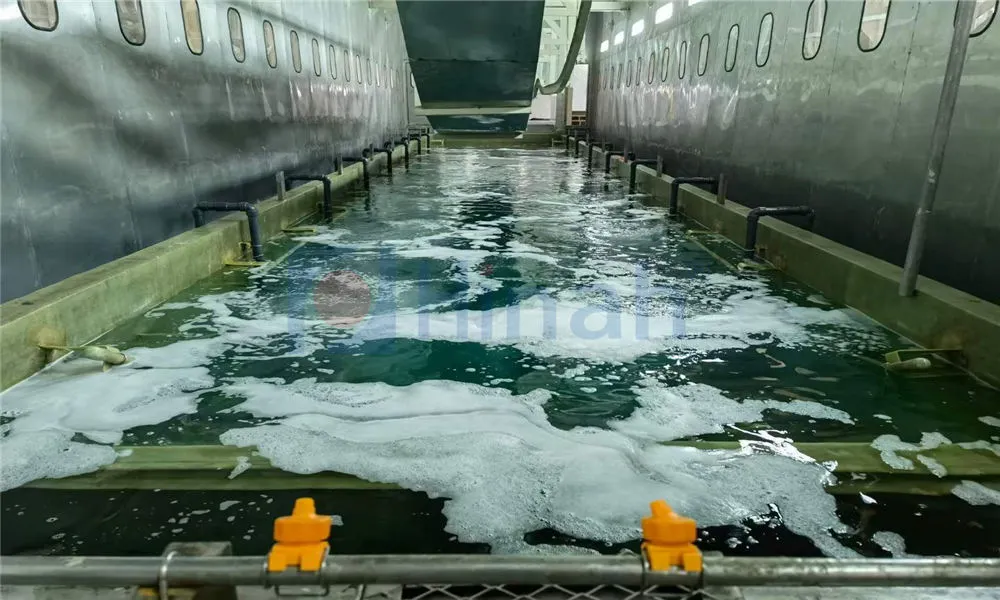
For liquid paint lines, the industrial curing oven must handle solvent off‑gassing. Proper exhaust design prevents flammable concentration buildup and ensures worker safety. Modern approaches include:
Catalytic oxidizers: Integrated into the oven exhaust, destroying 99 %+ VOCs while recovering heat.
Recirculation ratios: Typical ovens recirculate 80–90 % of air; the remainder is exhausted to maintain solvent concentration below 25 % of LFL.
Pressure control: Slight positive pressure inside the oven prevents infiltration of cold air, while negative pressure in the vestibule contains fumes.
Unplanned oven downtime can cost $5,000–$20,000 per hour in automotive supply. Predictive maintenance using thermal imaging of refractory, bearing temperatures, and fan amperage trends is now standard. A 2025 study across 12 HANNA‑installed ovens showed that early detection of burner flame instability reduced emergency shutdowns by 78 %.
A1: A drying oven removes solvents or water (physical change), while a curing oven drives a chemical crosslinking reaction (polymerization). Curing ovens require tighter temperature control and often higher temperatures (150–250 °C) compared to drying ovens (50–150 °C).
A2: Length = Line speed (m/min) × Required dwell time (min). Example: line speed 2 m/min, cure time 12 min → 24 m oven. Add 1.5 m on each end for ramps and vestibules. Always validate with thermal profiling because part mass affects heat‑up time.
A3: For most powder coatings, the standard is ±5 °C from setpoint across all parts. Automotive e‑coat often demands ±3 °C. Variations beyond ±10 °C typically lead to undercure or overbake defects.
A4: Yes, but precautions are needed. Liquid paint ovens require higher exhaust rates to handle solvents (Class A or B hazard). Powder ovens recirculate more air. A dual‑purpose oven must have adjustable exhaust and be rated for the more stringent safety class.
A5: At least quarterly, or whenever there is a change in product mix, line speed, or after maintenance. Profiles should include multiple thermocouples attached to actual parts to record time‑temperature history.
A6: Most common causes: (1) Air seals leaking at entry/exit, (2) Imbalanced burner firing, (3) Recirculation fan speed variation, (4) Plugged air nozzles. A thorough CFD analysis or smoke testing can identify the root cause.
Selecting and maintaining the right industrial curing oven is a strategic decision that directly impacts coating quality, energy cost, and line productivity. Whether you are upgrading an existing line or building a greenfield facility, relying on data‑driven engineering—like the solutions provided by HANNA—ensures that your curing oven delivers consistent crosslinking and long‑term reliability.