Choosing the right paint line conveyor systems is a critical decision for any finishing operation. These systems form the backbone of your production line, moving parts through every stage of the process. The correct conveyor impacts your quality, efficiency, and long-term operational costs.
This article explains the main types of paint line conveyor systems used in industrial finishing. We will cover key selection criteria to help you make an informed decision for your specific application.
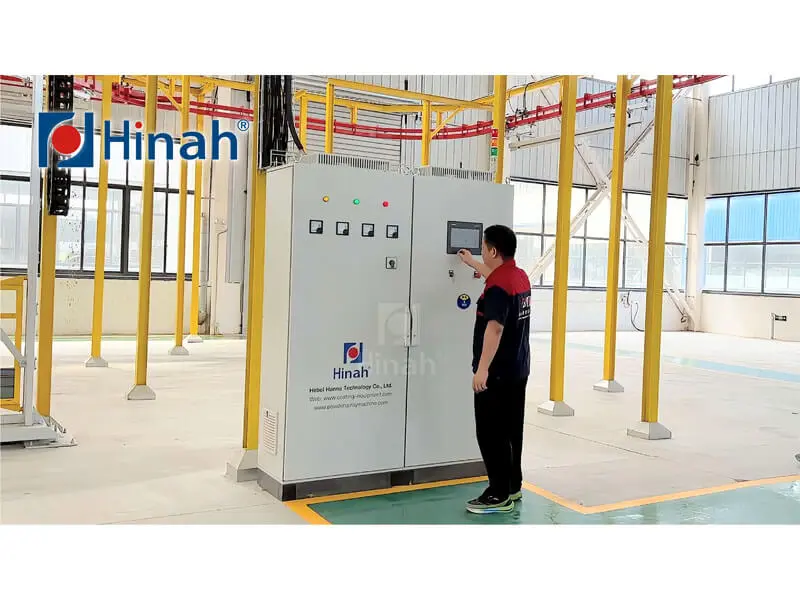
In any coating process, consistency is vital. Paint line conveyor systems provide this consistency by ensuring parts move through pre-treatment, application, and curing at a controlled, repeatable pace.
A well-designed system directly affects transfer efficiency and finish quality. It positions parts correctly for manual or automatic sprayers and ensures accurate dwell times in ovens.
Without reliable paint line conveyor systems, bottlenecks, uneven coating, and production delays are common. Your conveyor choice supports your entire operation's capacity and profitability.
Different applications require different transport solutions. The main categories are defined by their path and placement.
These are the most widely used systems in industrial painting and powder coating. They transport parts suspended from trolleys on an overhead I-beam track.
These systems operate at ground level, carrying parts on a belt, chain, or trolley that runs along the floor.
Selecting among paint line conveyor systems requires a detailed analysis of your products, processes, and facility.
Your parts and finishing specifications are the primary drivers.
Your physical plant sets practical limits and opportunities.
Modern paint line conveyor systems offer features that enhance control, efficiency, and integration.
A conveyor does not work in isolation. It must be perfectly matched with other line components.
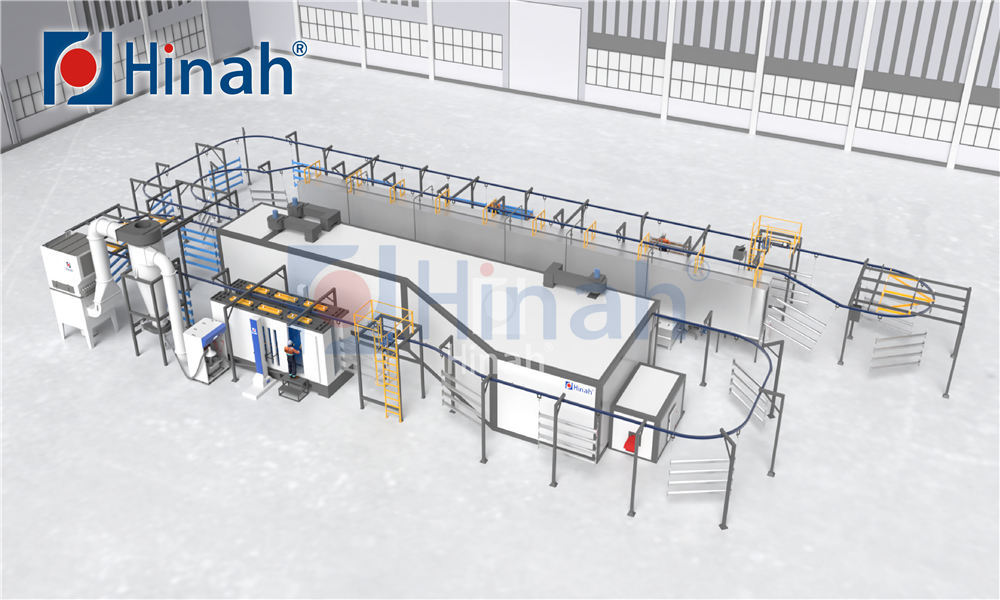
Partnering with an experienced manufacturer like HANNA ensures your paint line conveyor systems are designed for performance and durability. HANNA engineers complete systems where the conveyor is fully integrated with ovens, washers, and spray booths.
We analyze your entire operation to recommend the optimal conveyor type and layout. HANNA focuses on robust construction, selecting high-quality chains, drives, and controls to minimize downtime.
Our team provides support from initial concept through installation and training. This holistic approach ensures your conveyor system becomes a reliable asset, not a source of problems.
Investing time in selecting the right paint line conveyor systems pays long-term dividends in productivity and finish quality. By understanding your options and partnering with a knowledgeable supplier like HANNA, you build a solid foundation for an efficient and reliable finishing line.
Q1: What is the main advantage of a Power & Free (P&F) conveyor over a continuous monorail?
A1: A Power & Free conveyor allows carriers to stop, accumulate, and switch between lines independently. This provides flexibility for different process times, baking cycles, or manual workstations, while a continuous monorail moves all parts at a single, constant speed.
Q2: How do I protect the conveyor chain and trolleys in high-temperature curing ovens?
A2: Protection includes using high-temperature grease in trolley bearings, specifying heat-resistant chain types, and sometimes installing cooling plenums or thermal barriers at oven entry/exit points. HANNA designs these protections based on your specific oven temperatures.
Q3: Can a single paint line handle products of very different sizes and weights?
A3: Yes, but it requires careful planning. The conveyor system must be rated for the maximum load. Adjustable hanger designs or different fixture types can accommodate varied products. A Power & Free system is often ideal for such mixed-model production.
Q4: What regular maintenance do paint line conveyors require?
A4: Essential maintenance includes scheduled lubrication of chains and bearings, inspection of wear strips and trolley wheels, checking drive motor alignment and tension, and cleaning of guide rails to prevent buildup that could disrupt movement.
Q5: How does HANNA approach the design of a new conveyor system for an existing facility?
A5: HANNA begins with a detailed site survey. We measure spatial constraints, utility locations, and workflow patterns. Our proposal includes 2D/3D layout drawings to visualize the system in your space, ensuring it fits physically and operationally with your current setup.