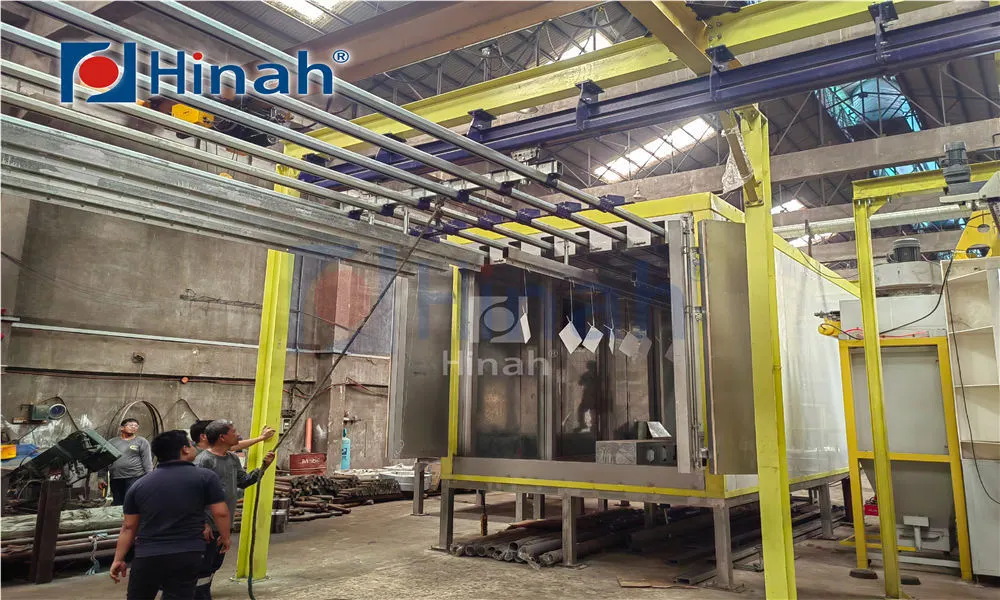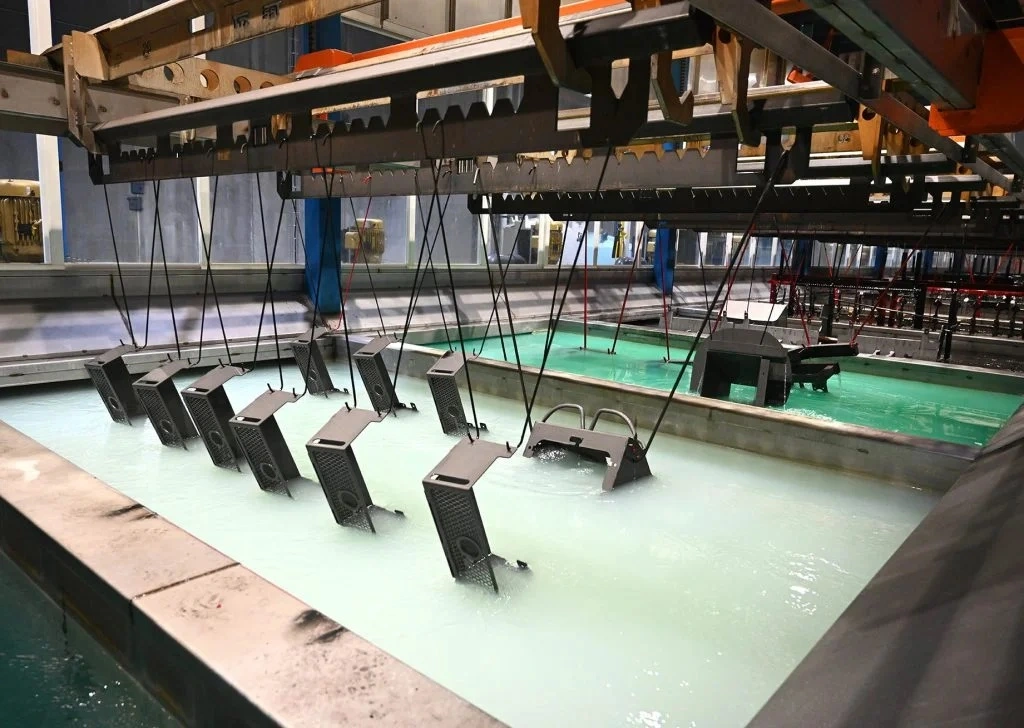
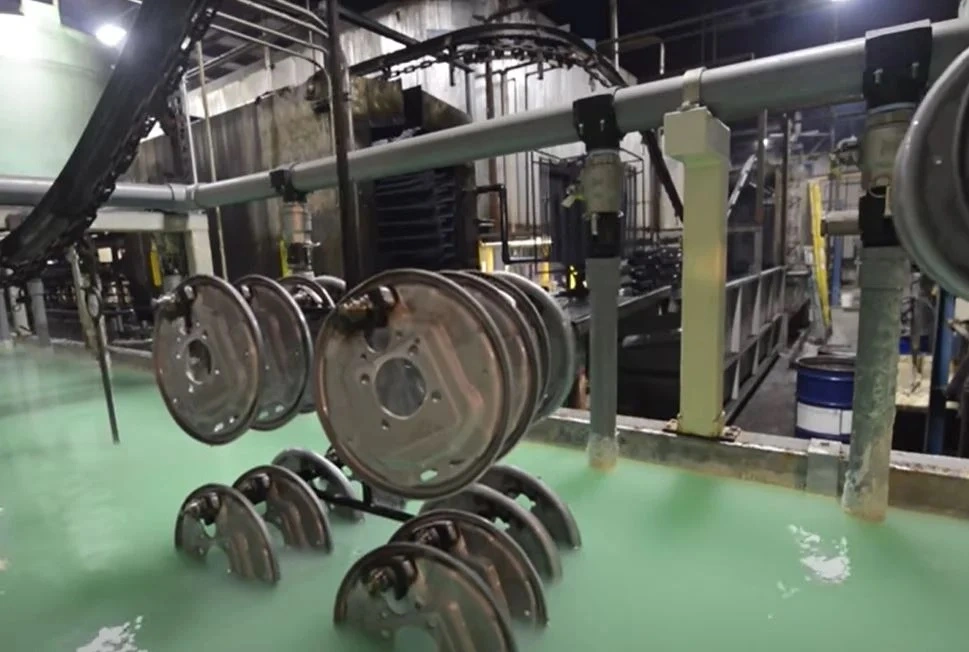
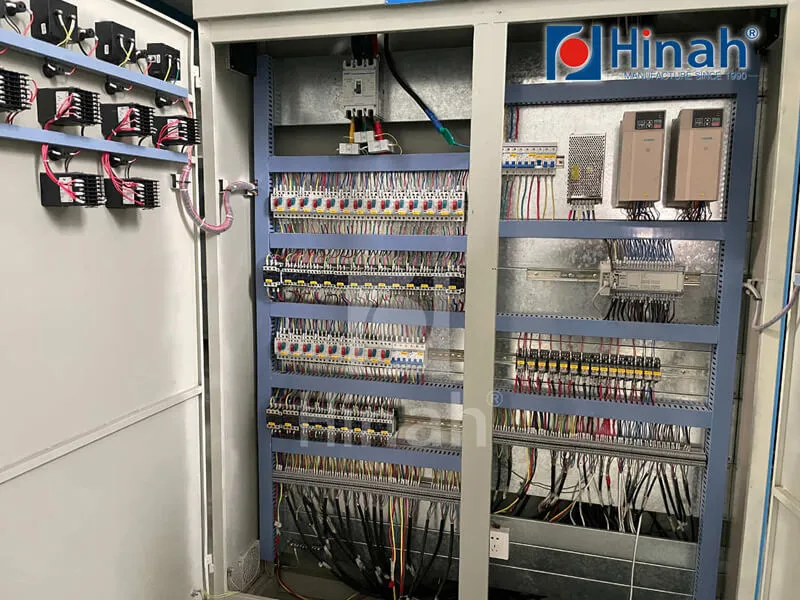

With decades of integration experience, HANNA has engineered conveyor solutions that address real‑world challenges such as mixed‑material parts, complex dip cycles, and stringent automotive specifications. Below we analyse the key performance drivers with quantifiable metrics.
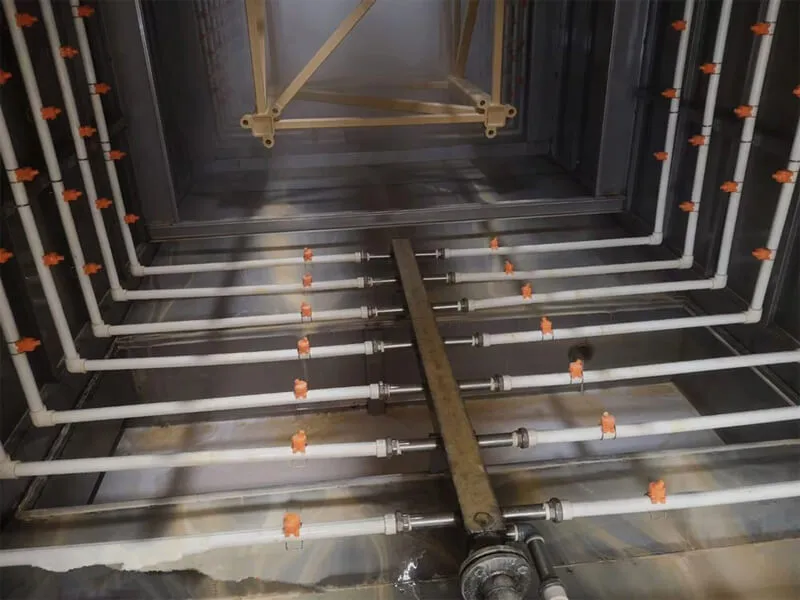
Paint line conveyor systems influence three fundamental aspects: part immersion angles in pretreatment tanks, dwell times in flash‑off zones, and the uniformity of heat transfer in curing ovens. A 2024 field study across 15 automotive suppliers showed that lines with precise speed control (±0.1 ft/min) and vibration‑free travel achieved first‑pass yields of 92–96 %, while those with older chain drives averaged only 78 %. The difference is largely due to paint sags, runs, and dirt inclusion caused by erratic motion.
Selecting the right architecture depends on part geometry, production volume, and coating technology. Below are the three dominant types with their application boundaries.
Chain speed range: 3–25 ft/min (0.9–7.6 m/min) depending on dip tank length.
Typical load: Up to 250 lbs per pendant; enclosed track or I‑beam.
Best for: High‑volume, same‑part lines (e.g., coil coating, appliance panels).
Accumulation capability: Allows queuing before the spray booth or e‑coat tank without stopping the line.
Ideal for: Mixed models, different colours, or processes requiring variable dwell times (e.g., automotive body shops).
Data point: HANNA’s power‑and‑free systems maintain positional repeatability within ±5 mm, critical for robotic painting and precise immersion.
Application: Extremely heavy parts (2,000 lbs+) such as truck frames or agricultural equipment.
Consideration: Used primarily in e‑coat where parts are fully submerged; requires robust skid design to prevent deflection.
To achieve defect‑free coatings, a paint line conveyor systems must be designed around five technical pillars: grounding (for e‑coat), cleanliness, smooth motion, accurate positioning, and thermal compatibility.
In e‑coat lines, the conveyor must provide a reliable electrical path from the rectifier to the part. Resistance should remain below 1.5 Ω throughout the immersion cycle. We recommend using copper‑impregnated carbon brushes contacting the conveyor rail or dedicated grounding shoes. A 2023 audit at a Midwest coater revealed that 65 % of film‑thickness variations disappeared after replacing worn brush assemblies.
Lubricants and chain debris are a primary source of dirt in wet paint. Modern paint line conveyor systems use dry‑film lubricants (graphite or MoS₂) that do not attract overspray. Additionally, enclosed track designs prevent falling contaminants. HANNA’s clean‑room rated conveyors incorporate sealed bearings and stainless steel chains, reducing particle counts by 90 % in controlled environments.
Chain ‘stick‑slip’ causes visible flow marks, especially on vertical surfaces. Variable‑frequency drives with encoder feedback limit acceleration jerk to below 0.25 m/s³. Data from HANNA’s test lab shows that using polymer‑coated bearings reduces micro‑vibrations by 58 % compared to standard roller chain.
The conveyor must survive aggressive chemicals (phosphoric acid, alkaline cleaners) and high oven temperatures (typically 150–230 °C). Stainless steel chains (AISI 304 or 316) are mandatory for washers using iron phosphate or zirconium baths. For ovens, high‑temperature graphite‑based lubricants prevent carbonization and particulate fallout.
Case in point: a European agricultural machinery manufacturer reduced spot defects by 83 % after switching to a HANNA‑specified conveyor with oven‑rated trolley wheels and non‑outgassing seals.
HANNA offers proprietary line simulation software that calculates optimal pendant spacing and dip angles based on part geometry and paint rheology, ensuring that the paint line conveyor systems layout maximizes coverage while minimizing paint consumption.
Empirical data from 150 troubleshooting visits shows that 4 out of 10 coating defects trace back to conveyor performance. Below are the most frequent patterns.
Runs / sags on vertical surfaces: Caused by intermittent motion during flash‑off. Solution: closed‑loop speed control and anti‑sway guides.
Dirt inclusions: Often from flaking chain lubricant. Use high‑temperature, non‑silicone lubes and implement weekly chain cleaning.
Uneven film thickness (e‑coat): Poor electrical contact due to oily hooks. Install in‑line hook burn‑off units and weekly conductivity checks.
Water spots after pretreatment: Parts not draining properly due to incorrect conveyor angle. Adjust tilt bars or use variable‑speed drives to create drainage pauses.
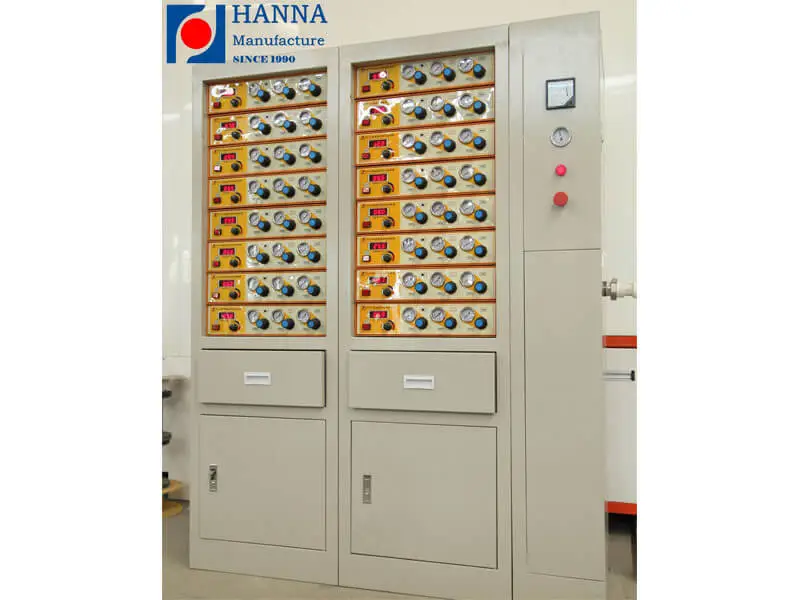
To justify a paint line conveyor systems upgrade, plant managers need hard numbers. Consider a line running two shifts (16 h/day) at 8 ft/min with a part every 24 inches. Current output = (8 ft/min × 12 in/ft) / 24 in/part = 4 parts/min → 240 parts/h → 3,840 parts/day. If a conveyor retrofit (better grounding, variable speed, accumulation zone) allows you to reduce spacing to 20 inches without sacrificing quality, output rises to 4.8 parts/min → 288 parts/h → 4,608 parts/day. At a contribution margin of $12/part, additional daily profit = (4608‑3840)×12 = $9,216. Payback on a $85,000 upgrade is under 10 days.
Such calculations are part of every HANNA proposal, backed by real process data.
Vibration sensors on drive units, amperage monitoring for chain tension, and infrared thermography on bearings now enable condition‑based maintenance. A 2025 pilot project using IoT‑equipped paint line conveyor systems components reduced unplanned downtime by 74 %. The system alerts operators when chain elongation exceeds 1.5 % or when ground resistance climbs above 2 Ω, allowing intervention before defects occur.
A1: Speed is determined by the required immersion time and tank length. For e‑coat, typical speeds range from 6 to 15 ft/min to achieve 2–3 minutes of energized immersion. Use the formula: Tank length (ft) ÷ Required immersion time (min) = Minimum line speed. Always add 10 % margin for voltage fluctuations and part complexity.
A2: First, measure resistance from a stationary hook to the conveyor beam—it should be ≤1.5 Ω. Install grounding brushes at the e‑coat tank entry (copper‑carbon composites). For older systems, replace worn trolley wheels with conductive polyurethane wheels and ensure all brackets are free of paint build‑up. HANNA offers retrofit grounding kits that fit most I‑beam and enclosed track profiles.
A3: Yes, but with precautions. Waterborne paints are conductive, so the entire conveyor must be grounded to prevent electrical shock hazards. Solvent‑borne paints require explosion‑proof drives and static dissipation. A dual‑purpose system often uses stainless steel construction and sealed drives rated for both environments.
A4: With proper lubrication and tensioning, a high‑quality chain (e.g., case‑hardened steel) lasts 12–18 years in two‑shift operation. Wear indicators include pitch elongation >3 % and visible galling on side links. HANNA recommends ultrasonic thickness testing on load bearing pins every 24 months.
A5: In spray applications, parts spaced too closely create shadowing and overspray waste. A minimum spacing of 1.5× the part width is advised. For bell or disk applicators, spacing should allow the full cone pattern to reach all surfaces without interference.
A6: Critical tasks: (1) Clean all ground contacts with a brass brush; (2) Inspect chain tension and adjust if sag exceeds 2 % of span; (3) Lubricate pins with high‑temp graphite lube; (4) Check for worn trolley wheels (flat spots); (5) Verify that limit switches and encoders are free of paint dust. Following these steps can extend conveyor life by 40 %.
Selecting and maintaining the right paint line conveyor systems is a strategic decision that directly impacts cost per part, quality consistency, and energy consumption. Whether you are upgrading an existing line or building a greenfield facility, relying on data‑driven engineering—like the solutions provided by HANNA—ensures that your conveyor system becomes a competitive advantage rather than a bottleneck.