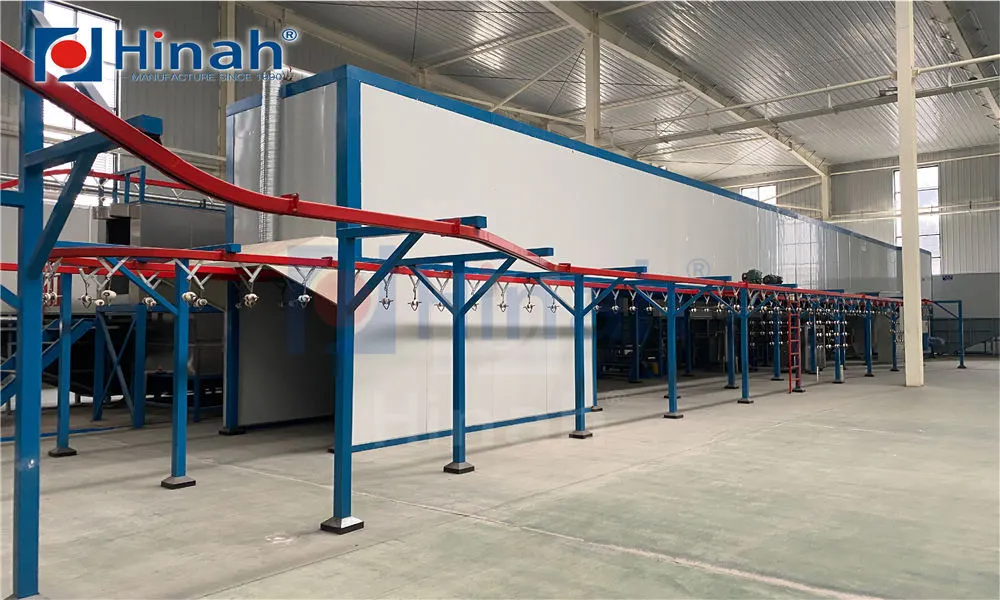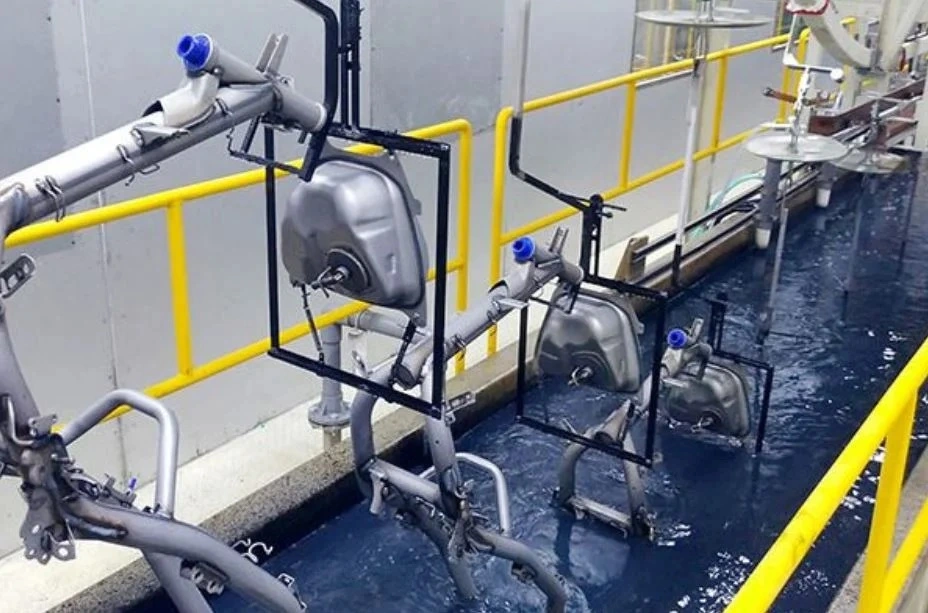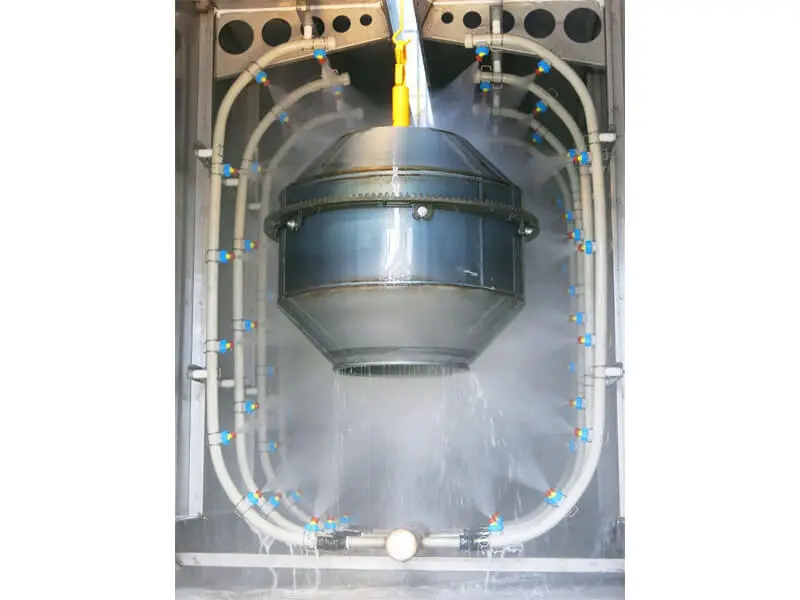
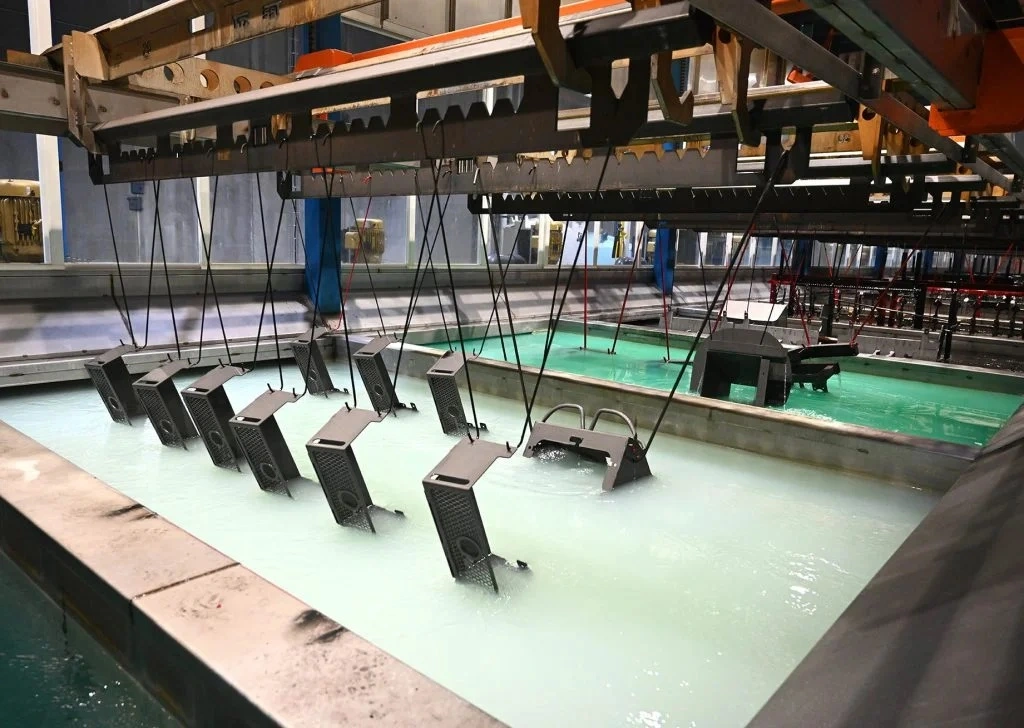
When a finishing shop manager searches for a powder coating booth for sale, the decision often reduces to price and physical dimensions. However, experienced coating engineers know that the real cost of ownership lies in recovery system design, filter loading behavior, and cross-contamination risk during color changes. This guide walks through seven technical evaluation criteria, helping you avoid the common pitfalls of undersized or poorly configured booths. We reference proven configurations from HANNA, whose modular booth series consistently delivers 98% powder reclaim efficiency in high-mix production.
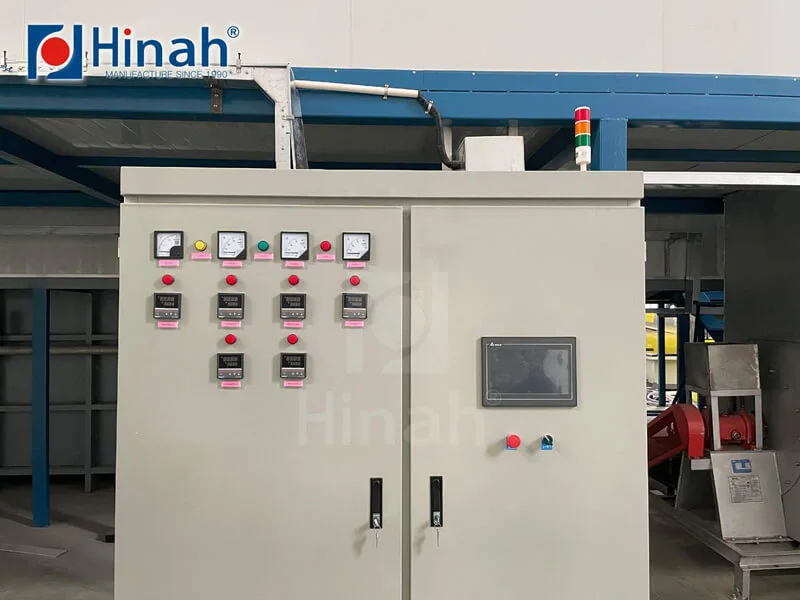
The first decision when sourcing a powder coating booth for sale is the basic architecture. Open-face booths (also called “walk-in” or “bench” booths) are suitable for low-volume, manual spraying of small parts. However, for any automated or high-throughput line, a fully enclosed booth with interlocked access doors is mandatory to contain overspray and maintain face velocity (typically 0.6–1.0 m/s). Enclosed booths also allow integration of powder recovery systems without air turbulence interference. Key trade-offs:
Open-face booths: Lower initial investment ($4,000–$12,000), but transfer efficiency rarely exceeds 65% due to airflow disruption from operator movement.
Enclosed booths: Higher upfront cost ($18,000–$65,000 depending on size), yet they enable 85%+ transfer efficiency with proper electrostatic guns and allow unattended automated spraying.
Modular panel booths: A middle ground – welded aluminum frames with acrylic panels. Easy to expand or relocate.
For shops running 400+ parts per shift, an enclosed powder coating booth for sale with a cartridge recovery module pays for itself within 12 months through powder savings alone. HANNA’s enclosed booth series includes a self-balancing air plenum that maintains constant face velocity even as filters load, a feature rarely found in generic booths.
Two dominant recovery technologies dominate the powder coating plant market. Each affects your operating procedures differently:
Cartridge filter booths: Use pleated non-stick filter cartridges. They achieve 95–98% reclaim efficiency for most powders. Best for single-color or low-color-change operations. Cleaning is via reverse pulse jet. A good powder coating booth for sale with cartridge system will include a pulse controller with adjustable timing (e.g., pulse every 15–30 seconds at 6 bar).
Cyclone + secondary filter booths: Use centrifugal separation to reclaim coarse powder (down to 10 microns). Cyclones are excellent for high-volume, same-color runs because they require no filter media for primary recovery. However, they are less efficient with fine powder (10–30% loss to after-filter). Ideal for thick-film applications (>80 µm).
Hybrid systems (cyclone + cartridge): Best of both worlds but occupy more floor space. These are often specified in job shops where both smooth and textured powders are used.
When evaluating a powder coating booth for sale, ask for the manufacturer’s data on reclaim efficiency at 20 µm particle size. Many budget booths drop below 85% efficiency with fine tribo-grade powders, leading to high consumables cost.
Proper booth airflow is not just about capturing overspray – it directly influences film uniformity and worker safety. NFPA 33 and OSHA standards require a minimum face velocity of 0.5 m/s across the opening. However, for high-density powders (e.g., polyester TGIC > 1.6 g/cc), 0.7–0.9 m/s is recommended to prevent powder “rain-out” inside the booth. Key design parameters:
Cross-draft vs. downdraft: Cross-draft booths (air flows horizontally from back wall to exhaust) are simpler but can disturb powder cloud patterns. Downdraft booths (air flows through a grated floor) offer superior containment for large parts but require a pit or raised platform.
Filter loading compensation: A high-quality powder coating plant uses a variable frequency drive (VFD) on the exhaust fan, linked to a differential pressure sensor. As cartridges load, fan speed increases automatically. Without this, face velocity can drop by 40% between cleaning cycles.
Make-up air conditioning: If your booth exhausts more than 1,000 CFM, you must supply conditioned make-up air. Failure to do so can cause negative pressure in the shop, drawing in dust and humidity.
Before purchasing any powder coating booth for sale, request a CFD airflow simulation or at least a factory-tested fan curve. HANNA provides a cloud-based airflow calculator for each of its booth models, ensuring local code compliance.
Powder-air mixtures are combustible. Any powder coating plant handling organic powders (epoxy, polyester, acrylic) must comply with NFPA 68 (explosion venting) and NFPA 69 (deflagration suppression). When searching for a powder coating booth for sale, verify these five safety elements:
Explosion relief panels: Sized to 0.1 m² per 1 m³ of booth volume. Panels must be certified for 0.5 psi burst pressure and directed to a safe outdoor area.
Grounding continuity: Every booth panel, filter housing, and powder hose must have electrical continuity to true earth (resistance < 1 ohm).
Spark detection system: Optional for booths but mandatory if connected to a common duct with multiple spray stations. It triggers abort gates and CO₂ suppression.
Pressure-resistant construction: Booth walls should be at least 14-gauge steel with reinforced seams for deflagration containment.
Emergency exhaust dampers: Automatically open upon detection of a pressure wave, preventing structural failure.
Many low-cost powder coating booth for sale listings omit explosion venting to cut price – this is a liability risk that can void your insurance. HANNA’s standard booth line includes ATEX-compliant venting and third-party pressure testing reports.
For job shops running 5–10 color changes per shift, the booth’s internal design dramatically affects throughput. Key attributes to look for in a powder coating booth for sale:
Smooth, non-stick interior surfaces: Powder does not adhere well to polished stainless steel (Ra < 0.8 µm) or white nylon panels. Avoid painted steel – powder will cling and cause cross-contamination.
Quick-release filter cartridges: Tool-less cartridge removal (twist-and-pull handles) can cut changeover time from 45 minutes to 12 minutes.
Floor sweep system: A pneumatic or vacuum-assisted floor collection tray prevents loose powder from migrating between batches.
Modular wall panels: Some booths allow partial disassembly to access hard-to-clean corners. This is especially useful for textured or metallic powders.
In one automotive parts supplier, switching to a HANNA fast-change powder coating booth for sale reduced weekly color change downtime from 14 hours to 3.5 hours – a direct capacity gain of over 500 parts per week. The booth’s V-ring seals between panels prevented powder from lodging in crevices, a common frustration with welded booths.
The ongoing operating cost of a powder coating plant is dominated by filter replacement. Typical cartridge filters cost $180–$350 each, and a large booth may hold 24–48 cartridges. Consider these media factors:
Cellulose/polyester blend: Lowest initial cost but absorbs moisture and fails after 300–500 hours in high-humidity environments.
Spun-bond olefin (e.g., Tyvek®): Better release of fine powder, lasts 800–1200 hours, but cannot be cleaned with aggressive pulsing.
Nanofiber-coated polyester: Highest efficiency (H12 class), surface-loading design allows 2000+ hours of service. Recommended for lines reclaiming fine-texture powders.
Aluminum mesh (cyclone after-filters): Washable and reusable, but efficiency rarely exceeds 80% for sub-10 µm particles.
When you purchase a powder coating booth for sale from a reputable supplier, ask for the filter’s minimum efficiency reporting value (MERV) rating. For powder coating, MERV 15 or higher is recommended to prevent fugitive emissions. HANNA equips its booths with MERV 16 nanofiber cartridges as standard, with a published lifecycle of 2,500 operating hours.
A booth is not a standalone appliance. Before finalizing any powder coating booth for sale, audit your facility for:
Floor flatness: A 3-meter booth requires floor levelness within ±3 mm. Uneven floors cause panel misalignment and air leaks.
Compressed air quality: Powder recovery pulses need dry, oil-free air (ISO 8573-1 Class 2.4.2). Budget for a refrigerated air dryer if not already present.
Electrical supply: Most booths require 480V 3-phase for the exhaust fan and pulse controller. Single-phase models are rare above 8 ft width.
Ductwork routing: The distance between booth and dust collector should be < 15 meters to maintain transport velocity (18–20 m/s). Elbows must have a minimum radius of 2× duct diameter.
Spare parts availability: Verify that replacement cartridges, differential pressure gauges, and door seals are stocked locally. Avoid booths with proprietary filter dimensions that force you to buy from one source.
HANNA’s pre-purchase site evaluation includes a 12-point facility checklist and a 3D laser scan of the proposed location, ensuring that your selected powder coating booth for sale fits not only the floor space but also the utility infrastructure.
Q1: What is the typical price range for a professional powder coating
booth for sale?
A1: For a basic 8 ft (2.4 m)
open-face manual booth with cartridge recovery, prices range from $8,000 to
$15,000. A fully enclosed 12 ft automated booth with cyclone recovery, explosion
venting, and VFD-controlled fan typically costs $32,000–$68,000. Large custom
booths for tractors or industrial tanks exceed $110,000. Always request a total
installed cost including ductwork, electrical disconnects, and freight.
Q2: How do I calculate the correct booth size for my largest
part?
A2: The part’s bounding box must have at
least 0.6 m clearance on all sides for spray gun access and air circulation. For
a part that is 1.5 m wide, 2 m high, and 0.8 m deep, the minimum internal booth
dimensions are 2.7 m (W) × 3.2 m (H) × 2.0 m (D). Also ensure the conveyor
opening height matches part height plus 300 mm. HANNA’s powder coating
plant configurator automates this calculation.
Q3: Can a used powder coating booth be a good
investment?
A3: Yes, but only if you inspect the
filter plenum for corrosion, verify that explosion panels are not expired (most
have a 10-year service life), and test the pulse controller functionality. Used
booths often lack modern features like automatic pressure-based fan control. If
you find a powder coating
booth for sale that is 5+ years old, budget 20–30% of the new price
for retrofitting new cartridges and control upgrades.
Q4: What is the expected filter replacement frequency in a
high-volume line?
A4: With nanofiber cartridges and
proper pulsing, expect 1,500–2,000 production hours before replacement.
Cellulose cartridges may fail after 400 hours. A pressure differential gauge
reading above 2.5 kPa (when clean) indicates that the media is blinded. Many
shops schedule filter change during annual plant shutdowns to avoid unplanned
downtime.
Q5: Are there any energy-saving features to look for in a modern
booth?
A5: Yes. Look for an electronically
commutated (EC) fan motor that adjusts speed based on real-time differential
pressure, saving 35–50% fan energy. Also, a “standby mode” that reduces exhaust
to 20% when no spraying occurs for 5 minutes. Some booths from HANNA include a
heat recovery coil that pre-heats make-up air using waste heat from the curing
oven – this can lower natural gas consumption by 12–18% in cold climates.
Q6: What documentation should a supplier provide with a powder
coating booth for sale?
A6: Minimum required:
factory test report for face velocity uniformity, filter efficiency certificate
(MERV rating), NFPA 68 venting calculations signed by a professional engineer,
electrical schematic, and a commissioning checklist. For global shipments, also
request CE or UKCA declarations. HANNA provides a full digital dossier including
3D CAD models and spare parts lists with every booth delivery.
Selecting the right powder coating booth for sale goes beyond comparing brochure prices. Evaluate the recovery system’s efficiency at fine particle sizes, verify explosion protection engineering, and calculate the total cost of filter ownership over three years. A booth with superior airflow design and fast-color-change features will deliver a return on investment through lower powder waste and higher uptime. For shops that process multiple colors daily or run automated lines, investing in a modular, fully enclosed booth from a specialized manufacturer like HANNA ensures both regulatory compliance and process predictability.
Ready to specify a powder coating booth for your exact part mix and throughput targets? Submit your part dimensions, production volume, and typical powder types to receive a custom recommendation, layout drawing, and a 5-year cost projection.
Request an engineer-reviewed quotation: Click here to
send your booth inquiry →
For urgent projects, call +86 186 3393 1770 or
email neil@autocoatinglines.com with “Booth Spec Sheet” in the
subject line.