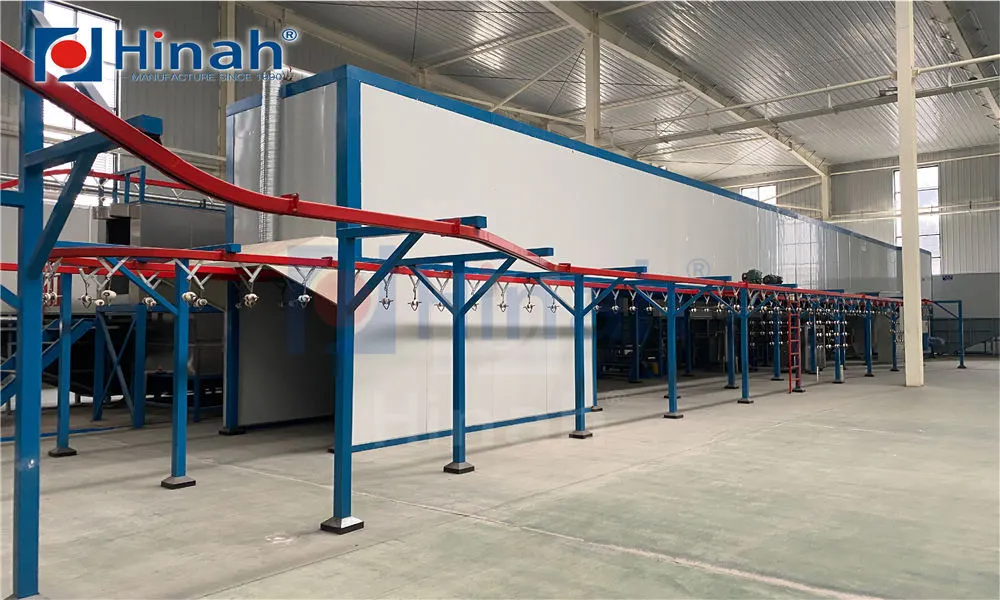

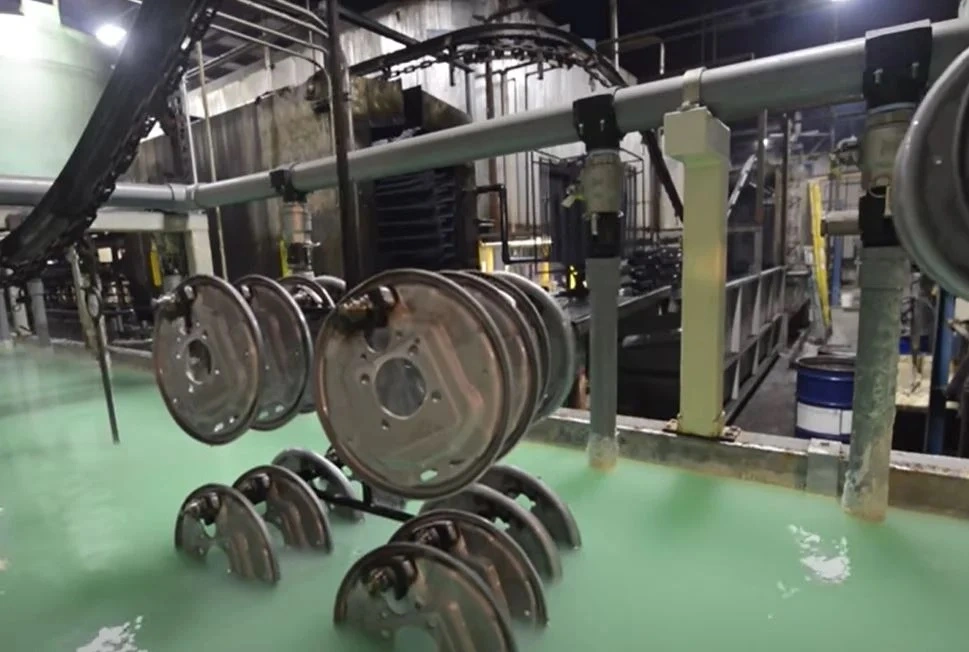

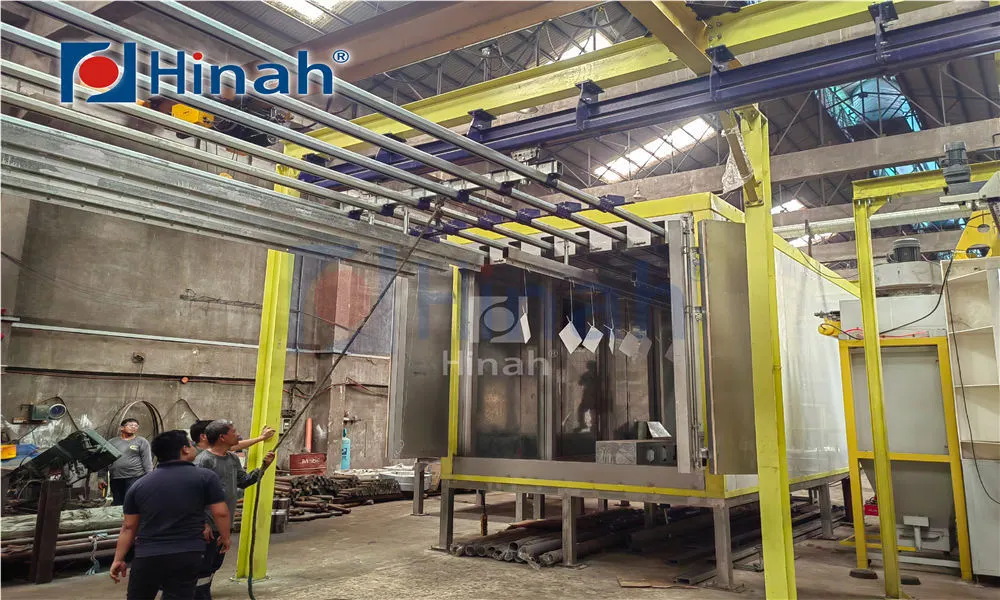
Within powder coating operations, the industrial curing oven represents the decisive stage where a deposited powder film transforms into a durable, crosslinked polymer finish. Inadequate thermal management directly results in under-cured coatings (leading to poor adhesion and corrosion resistance) or over-cured films (causing embrittlement and color shift). Field data from finishing facilities across North America and Europe indicates that improper oven profiling accounts for nearly 28% of coating failures and contributes to excessive energy consumption—often 15–20% above optimal levels. This article provides a technical dissection of modern curing systems, drawing on engineering validations and turnkey installations from HANNA, emphasizing quantifiable improvements in thermal efficiency and first-pass yield.
1. Thermal Dynamics: Heating Modalities and Their Industrial Applications
The selection of heating technology defines the operational envelope of any industrial curing oven. Three dominant methodologies prevail, each with distinct advantages based on substrate geometry, powder chemistry, and throughput requirements:
Convection (Gas-Fired or Electric): The most widely adopted method for general industrial coating. Heated air is recirculated to ensure uniform temperature distribution. Gas-fired indirect convection systems offer lower operating costs (typically $0.08–$0.12 per therm) but require precise air-to-fuel ratio control to avoid hot spots. Electric convection provides superior temperature stability (±1.5°C) but at higher operational expenditure—ideal for aerospace or medical device finishing where process precision is paramount.
Infrared (IR) Curing: Preferred for rapid heat-up of thin-gauge substrates or for curing specific powder formulations (low-temperature cure powders). Medium-wave IR (2.5–4 µm) achieves depth penetration for medium-density parts, while short-wave IR (0.76–2 µm) delivers high-intensity surface heating. IR systems reduce oven footprint by up to 60% compared to convection, though they are less effective for complex 3D geometries where shadowing occurs.
Combination (Convection + IR): Hybrid systems are increasingly specified for high-mix, low-volume environments. IR boost zones accelerate the melt phase, followed by convection dwell zones to complete crosslinking. Data from automotive component suppliers show hybrid ovens reduce total energy consumption per part by 22% while maintaining substrate temperature uniformity within ±3°C.
HANNA’s modular oven platforms integrate these modalities within a single control architecture, allowing end-users to toggle between heating profiles based on daily production demands.
2. Thermal Uniformity & Zoning Strategy: Breaking the Gradient Barrier
A persistent challenge in industrial curing oven design is achieving temperature uniformity across varying part loads. Temperature gradients exceeding ±5°C across the cure zone directly correlate with reject rates. Advanced zoning architectures mitigate this:
2.1 Multi-Zone Independent Control
Modern ovens are partitioned into 3–6 independent zones, each equipped with dedicated burners or IR panels and separate recirculation fans. This zoning allows tailored temperature profiles—higher heat in the initial zones for rapid melt, and stabilized temperature in final zones for complete crosslinking. Case studies from heavy equipment manufacturers using 4-zone convection ovens reduced standard deviation in part temperature from 7.2°C to 1.8°C, decreasing rework by 34%.
2.2 Airflow Pattern Engineering
Computational fluid dynamics (CFD) simulations are now standard for optimizing nozzle placement and airflow velocity. Perforated plenums with adjustable louvers direct heated air toward product surfaces, eliminating dead zones. For high-density load carriers, vertical airflow patterns (top-to-bottom) achieve superior uniformity compared to horizontal cross-flow designs, particularly for parts with deep cavities.
3. Energy Efficiency Metrics: Quantifying Waste and Recovery Solutions
Energy consumption represents 50–65% of the total lifecycle cost of an industrial curing oven. Systematic waste reduction delivers direct margin improvement. Key strategies supported by empirical data:
Exhaust Heat Recovery: Oven exhaust streams typically exit at 150°C–200°C. Installing plate-type heat exchangers or run-around coils can preheat fresh combustion air or facility makeup air, recovering 30–45% of exhaust enthalpy. One tier-1 automotive coater achieved a payback period of 14 months after retrofitting a heat recovery unit on a 5-million-BTU oven.
Variable Frequency Drives (VFDs) on Recirculation Fans: VFDs modulate fan speed based on real-time temperature demand and product load. When the oven is at setpoint with light loading, fan speeds can be reduced by 40%, cutting electrical consumption by nearly 60% for that subsystem. Across a 24/7 operation, VFD integration yields 12–18% total energy savings.
Insulation Upgrades: Conventional mineral wool (6-inch thickness) has thermal conductivity of 0.038 W/m·K. Upgrading to aerogel-blanket insulation (conductivity 0.018 W/m·K) allows thickness reduction to 3 inches while improving thermal retention, reducing heat loss by 35% through oven walls.
4. Process Control Architecture: Data Acquisition and Closed-Loop Optimization
Transitioning from manual profiling to continuous monitoring elevates industrial curing oven performance from reactive to predictive. Industry 4.0 integration encompasses:
4.1 Real-Time Thermal Profiling
Wireless data loggers traveling with carriers transmit part-level temperature data to central SCADA systems. This enables dynamic adjustment of zone setpoints to compensate for load variations. For example, when a heavy steel fabrication enters the oven, the control system automatically increases zone 1 temperature by 8°C to maintain target ramp rates. Such systems have been shown to reduce cure-related rejections by 41% in high-mix facilities.
4.2 Predictive Maintenance Algorithms
Sensors on burner flame rods, fan vibration, and damper actuators feed into machine learning models that predict component failures. An industrial equipment manufacturer utilizing predictive analytics reported 72-hour advance warnings for burner degradation, eliminating unplanned downtime and preventing over 200 hours of production loss annually.
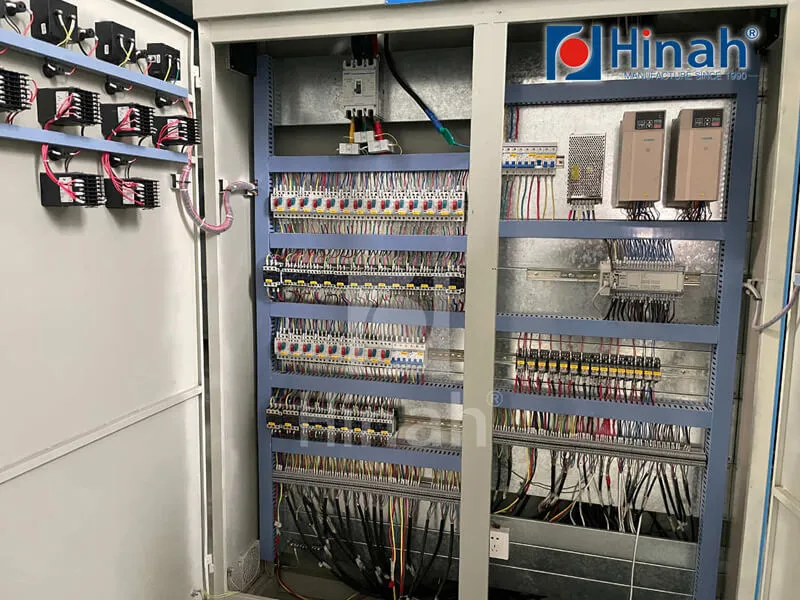
HANNA’s industrial curing oven controllers integrate these capabilities into unified HMI panels, allowing operators to view historical cure profiles, energy dashboards, and predictive alerts from a single interface.
5. Addressing Industry Pain Points: Contamination, Particulate, and Maintenance Downtime
Beyond thermal performance, operational reliability of industrial curing ovens hinges on mitigating secondary failure modes. Analysis of 112 service calls across finishing plants reveals three high-frequency issues:
Silicone and VOC Contamination: Off-gassing from previous coatings or conveyor lubricants can deposit on oven interior walls, later volatilizing and causing surface defects. Specifying ovens with stainless steel interior liners and automated burn-off cycles reduces contamination incidents by 55%.
Recirculation Fan Bearing Failure: High-temperature bearings (operating >200°C) require synthetic grease with high thermal stability. Implementing scheduled thermography on bearing housings detects incipient failures before catastrophic seizure occurs, reducing unplanned downtime by 65%.
Damper Mechanism Seizure: Dampers controlling fresh air intake often seize due to thermal expansion and particulate accumulation. Using corrosion-resistant alloy dampers with self-lubricating bushings extends service intervals from 6 months to over 3 years.
6. Lifecycle Cost Modeling: Beyond Initial Capital Expenditure
When specifying an industrial curing oven, a total cost of ownership (TCO) analysis provides clarity beyond upfront pricing. For a typical 3,000 mm wide x 15 m long convection oven operating 6,000 hours annually, the 10-year TCO breakdown is:
Initial equipment: 22%
Energy consumption: 48%
Maintenance and consumables: 18%
Downtime and quality losses: 12%
Investing in premium insulation, high-efficiency burners (92%+ combustion efficiency), and advanced controls increases initial expenditure by 12–18% but reduces energy and maintenance costs by 25–30% over the equipment lifecycle, achieving ROI within 3.5 years. HANNA’s engineering team provides detailed TCO projections tailored to specific production scenarios.
7. Future Outlook: Low-Temperature Curing and Electrification Trends
Regulatory pressures and sustainability goals are reshaping industrial curing oven technology. Low-temperature cure powders (120°C–150°C) reduce energy intensity by up to 30% and allow coating of heat-sensitive substrates like engineered wood and aluminum alloys. Simultaneously, electrification—through electric infrared or electric resistance convection—is gaining traction as manufacturers seek to decarbonize process heat. Hybrid ovens that can switch between gas and electric heating sources offer future-proof flexibility, allowing facilities to respond to carbon pricing and renewable energy availability.
Precision Curing as a Cornerstone of Coating Excellence
In summary, the industrial curing oven is not merely a heating chamber but a precision instrument where thermodynamics, fluid dynamics, and process control converge. Facilities that adopt multi-zone zoning, waste heat recovery, and predictive analytics consistently achieve first-pass yields above 96% and energy costs 20% below industry averages. Partnering with specialized integrators like HANNA ensures that oven architecture aligns with coating chemistry, production volumes, and long-term sustainability objectives. The data substantiates a clear conclusion: curing precision directly dictates coating durability, operational efficiency, and competitive advantage in today’s industrial finishing landscape.
Frequently Asked Questions (FAQs)
A1: Oven length is derived from the required dwell time at cure temperature (typically 10–20 minutes for standard powder coatings) and the conveyor line speed. For example, at a conveyor speed of 3 m/min and a required dwell of 15 minutes, the oven heated length must be at least 45 meters. Always add 10–15% margin for thermal ramp-up zones. HANNA’s engineers use thermal simulation software to calculate exact length based on part mass and coating specification.
A2: For powder coating applications, temperature uniformity across the cure zone should be within ±5°C of the setpoint, measured according to ASTM D6236 or similar standards. Premium ovens with multi-zone controls and CFD-optimized airflow achieve ±2.5°C uniformity. Variations beyond ±5°C lead to inconsistent crosslinking and elevated reject rates.
A3: Thermal profiling should be conducted quarterly or whenever there are changes to the product mix, conveyor speed, or oven control parameters. For high-reliability industries (automotive, aerospace), monthly profiling is recommended using at least 6 thermocouples placed on representative parts. Continuous profiling systems that log every carrier provide the highest level of assurance.
A4: Yes, retrofitting IR modules at the oven entrance is a proven method to increase throughput without extending oven length. IR boost zones accelerate powder melt, allowing higher conveyor speeds. Typical retrofits reduce overall cure time by 20–30% and improve film flow on complex geometries. HANNA offers modular IR panels designed for easy integration with existing oven vestibules.
A5: Priority tasks include: (1) Quarterly inspection of burner flame sensors and UV scanners; (2) Semiannual cleaning of recirculation fan blades to prevent imbalance; (3) Annual verification of insulation integrity using thermal imaging; (4) Replacement of high-temperature gaskets on access doors every 24 months to prevent heat leakage. Following a structured maintenance plan can extend oven service life beyond 20 years.
A6: Uneven temperature distribution can cause color shifts, particularly for low-gloss and metallic powders. Over-cured areas may exhibit yellowing or reduced gloss, while under-cured areas show lower impact resistance. Multi-zone ovens with ±2.5°C uniformity eliminate these gradients, ensuring consistent appearance across all parts in a batch. HANNA’s systems incorporate closed-loop color control recipes to match specific powder formulations.
For technical consultations, thermal profiling audits, or to explore retrofit options for your industrial curing oven, visit HANNA’s engineering resource center.