
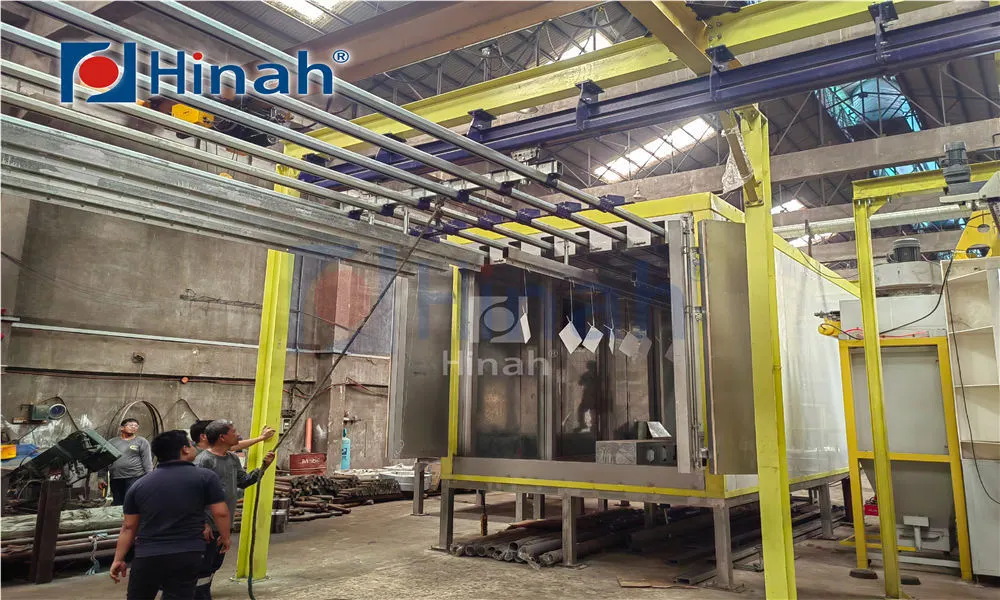
For production engineers and plant managers operating high-throughput finishing lines, rejection rates directly impact throughput, material utilization, and rework labor. Among the available technologies, automated powder coating systems have emerged as a reliable answer to variability issues that plague manual or semi-automatic setups. This article dissects the technical architecture, application-specific challenges, and measurable performance improvements delivered by modern automated powder coating lines, drawing on operational data from real-world manufacturing environments.
Powder coating, by its nature, offers advantages in material efficiency and environmental compliance compared to liquid painting. However, these benefits are fully realized only when the application process is precisely controlled. Automated powder coating systems address this by integrating closed-loop feedback, advanced spray controls, and intelligent material handling. The discussion that follows examines the core subsystems, common production pain points, and the quantifiable improvements that make automation a strategic investment for finishing operations.
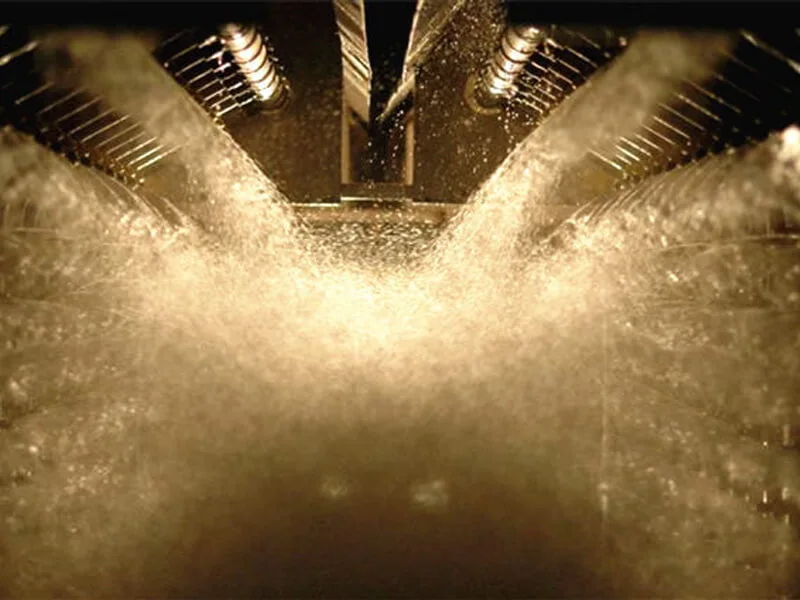
Understanding the performance envelope of automated powder coating systems requires a clear view of their major components. Each subsystem contributes to the overall consistency and efficiency of the coating process.
At the heart of any powder coating line is the electrostatic spray gun array. In automated configurations, these guns are mounted on reciprocators or robotic arms that follow programmed trajectories. Key parameters include:
Overspray in powder coating is not waste; it is a recoverable resource. Automated lines incorporate cyclones or cartridge-style recovery units that separate uncharged powder from the exhaust air. The recovered material is sieved and returned to the feed hopper, often blended with fresh powder in a controlled ratio. This closed-loop approach achieves material utilization rates exceeding 95%, a figure that manual booths rarely match. The recovery system also influences color integrity, as cross-contamination between colors is managed through dedicated changeover protocols.
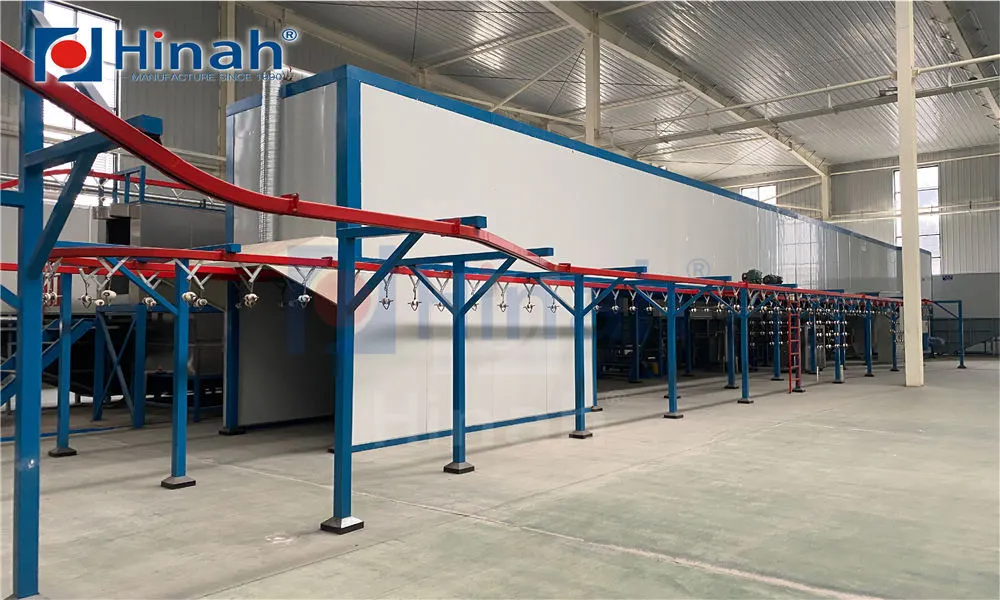
The conveyor system defines the rhythm of the entire line. Overhead monorail or power-and-free conveyors transport parts through the spray booth, curing oven, and cooling zones. In automated powder coating systems, conveyor speed is synchronized with spray gun traversal and powder output. Encoder feedback ensures that each part receives the same dwell time in the spray zone, a prerequisite for uniform film build.
Manufacturing operations that transition from manual to automated powder coating often do so to resolve persistent quality and productivity issues. The following pain points are notably mitigated by intelligent system design.
Variation in film thickness is the primary driver of rejection in powder coated parts. Manual operators, regardless of skill level, introduce variability through gun angle, standoff distance, and traversal speed. Automated systems replace these human factors with deterministic motion profiles and adaptive control. Thickness gauges positioned after the spray booth provide feedback to the powder flow controller, adjusting the feed rate to compensate for drift. The result is a film thickness distribution with a standard deviation of less than ±5 microns across a production run, a level of precision that manual booths cannot sustain over multiple shifts.
In high-mix, low-volume production environments, color changeover time is a significant source of downtime. Manual changeovers require purging hoses, cleaning guns, and replacing powder in the hopper—a process that can take 20 to 40 minutes. Automated powder coating systems reduce this interval through quick-release powder paths, self-cleaning feed lines, and automated purge sequences. Some configurations allow color change in under eight minutes, enabling manufacturers to accept smaller batch sizes without sacrificing overall equipment effectiveness.
The Faraday cage effect occurs when electrostatic charges concentrate on external surfaces, preventing powder from penetrating into corners, box sections, or inner flanges. This phenomenon is particularly problematic in automotive wheel rims, extruded aluminum profiles, and appliance housings. Automated systems counter this through:
These techniques are not theoretical; they are embedded in the control software of modern automated powder coating systems, allowing operators to store and recall recipes for each part family.
While the underlying principles remain consistent, the implementation of automated powder coating lines varies across industries. Each sector presents unique geometric, throughput, and quality demands.
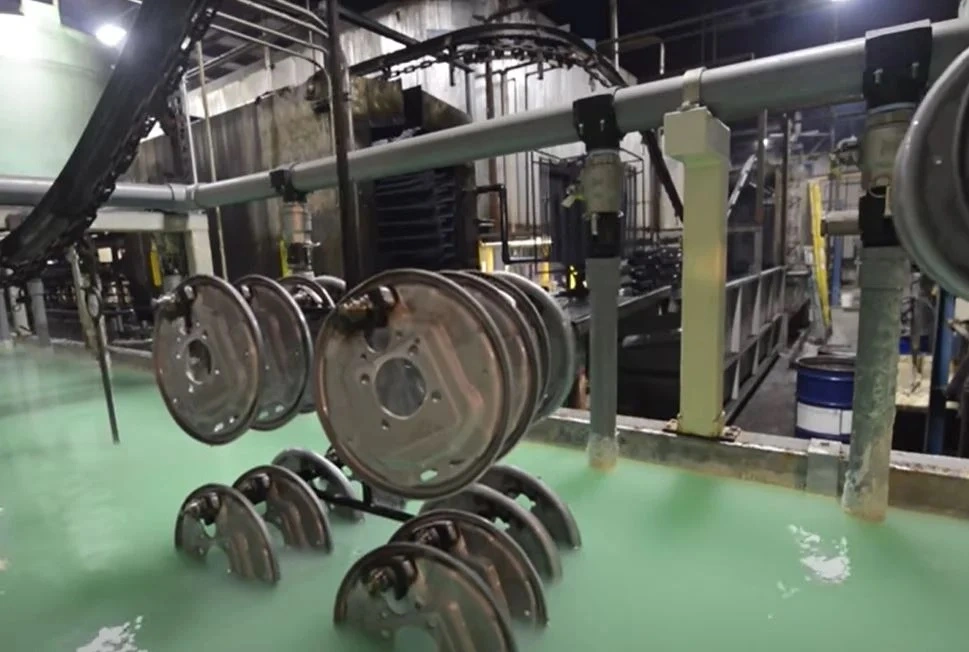
Wheels, suspension parts, and underhood components require corrosion resistance and cosmetic appearance. The high production volumes in automotive supply chains make automation a practical necessity. Conveyor speeds often exceed 8 meters per minute, with multiple reciprocating guns arranged in a tunnel configuration. The curing oven profile is precisely controlled to achieve full crosslinking without over-baking, which can cause embrittlement. HANNA has engineered several such lines for tier-1 suppliers, focusing on gun positioning algorithms that minimize shadowing on wheel spoke designs.
Refrigerator panels, washing machine tops, and electrical cabinets demand a smooth, defect-free finish with consistent gloss levels. These parts are typically flat or have shallow draws, making them amenable to high-speed reciprocators. The primary challenge lies in managing the powder cloud to avoid orange peel and pinholes. Automated systems equipped with profiling sensors adjust the gun-to-part distance in real time, maintaining the optimal spray gap as the conveyor moves. This level of control is difficult to achieve with fixed-mount guns.
Extruded aluminum sections for windows, doors, and curtain walls require a durable, weather-resistant coating. The elongated geometry of these profiles demands a different approach to automation. Horizontal reciprocators traverse the length of the profile, while vertical oscillators ensure edge coverage. The powder recovery system must handle the high air volume generated by the extended booth length. HANNA offers modular booth designs that accommodate profile lengths up to 8 meters, with integrated profile tracking that adjusts spray parameters as the part enters and exits the booth.
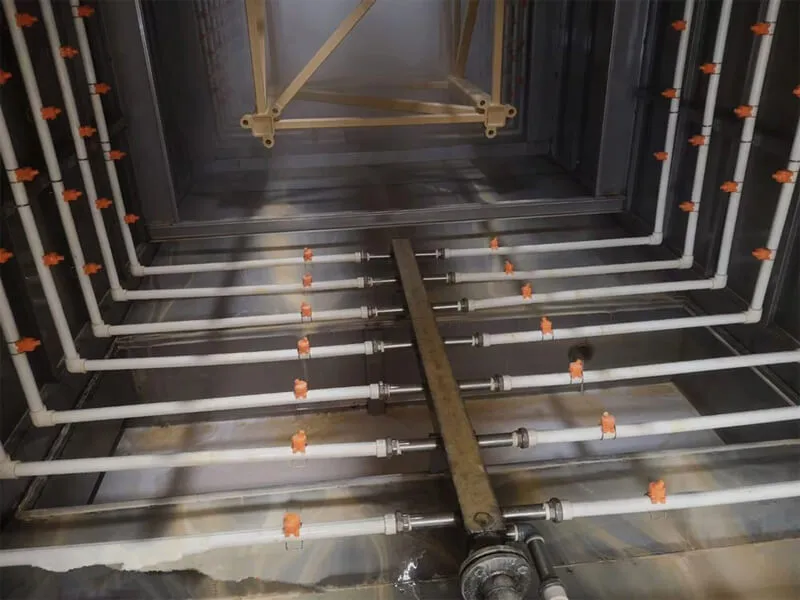
The decision to install automated powder coating equipment is typically justified by a combination of quality and productivity metrics. While specific figures vary by application, the following performance indicators show consistent improvement after automation.
These improvements are not automatic; they require proper system configuration, operator training, and routine calibration. However, the underlying technology provides the foundation for consistent, repeatable performance that manual methods cannot replicate.
For production teams evaluating new finishing equipment, the choice of automation partner is as important as the hardware itself. HANNA provides comprehensive system integration, from booth design to conveyor layout and curing oven sizing. Their engineering team conducts on-site audits to match system capabilities with production goals.
The transition to automated powder coating systems represents a shift from reactive quality control to proactive process control. When the spray booth, recovery unit, and conveyor operate as a synchronized system, the variability that plagues manual lines is systematically eliminated. Manufacturers who have made this transition consistently report not only lower rejection rates but also improved employee safety and reduced environmental footprint, as the enclosed booths and efficient recovery minimize airborne powder.
Q1: What is the typical payback period for an automated powder coating system?
A1: While payback depends on production volume and current rejection rates, most manufacturers see a return within 18 to 24 months through reduced rework, lower powder consumption, and increased throughput. The exact period is calculated based on your specific part mix and line utilization.
Q2: Can automated powder coating systems handle multiple part sizes without manual adjustments?
A2: Yes. Modern systems use part recognition via barcode or laser profiling to recall spray recipes automatically. The gun positioning, flow rate, and voltage adjust to each part as it enters the booth, enabling mixed-model production with minimal operator intervention.
Q3: How do automated systems prevent cross-contamination during color changes?
A3: Automated color change sequences include purging of powder feed lines, cleaning of gun internals, and flushing of the recovery cyclone. Some systems feature dedicated hoppers for high-frequency colors, reducing the need for full cleanout between every batch.
Q4: What maintenance is required to keep an automated powder coating line running reliably?
A4: Routine maintenance includes cleaning of gun nozzles, inspection of electrode tips, calibration of powder feed rates, and replacement of filter cartridges in the recovery unit. Most systems provide diagnostic alerts that indicate when service is due, preventing unexpected breakdowns.
Q5: Are automated powder coating systems suitable for small-batch, high-mix production?
A5: Absolutely. The programmability of automated lines makes them ideal for frequent changeovers. Fast color-change features and recipe storage allow operators to switch between part types and colors with minimal downtime, making automation viable even for job shops with diverse product portfolios.
Q6: How does automation affect the curing process in powder coating?
A6: Automation extends to the curing oven through temperature profiling and conveyor speed control. By maintaining consistent dwell times and temperature gradients, the system ensures full crosslinking of the powder film, resulting in consistent hardness, adhesion, and gloss across all parts.
For detailed specifications, system layout consultation, or to discuss your specific production requirements, please contact our engineering team. HANNA provides turnkey solutions for automated powder coating lines, from initial feasibility studies to commissioning and operator training. Submit your project parameters for a tailored system proposal.