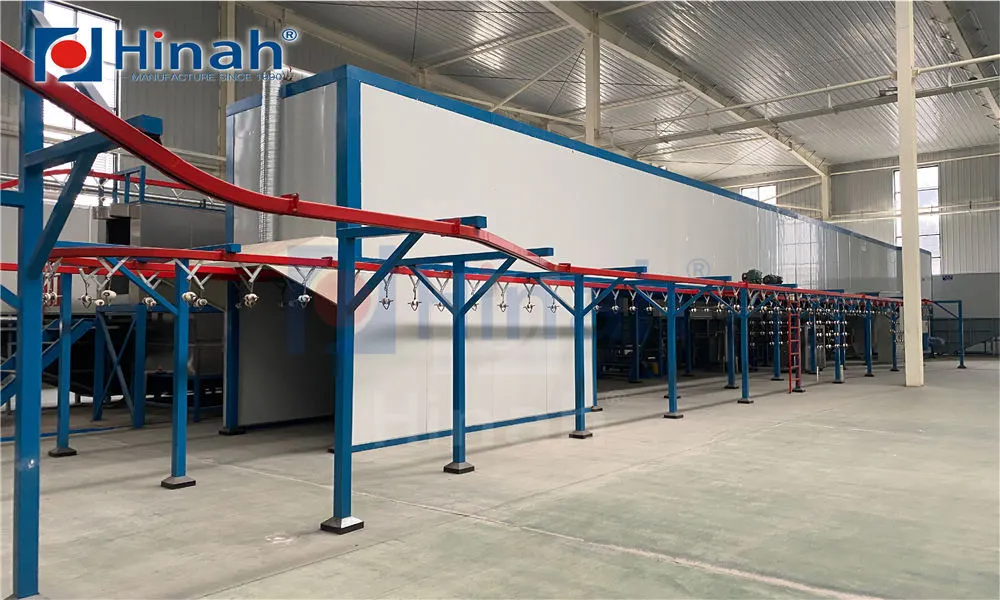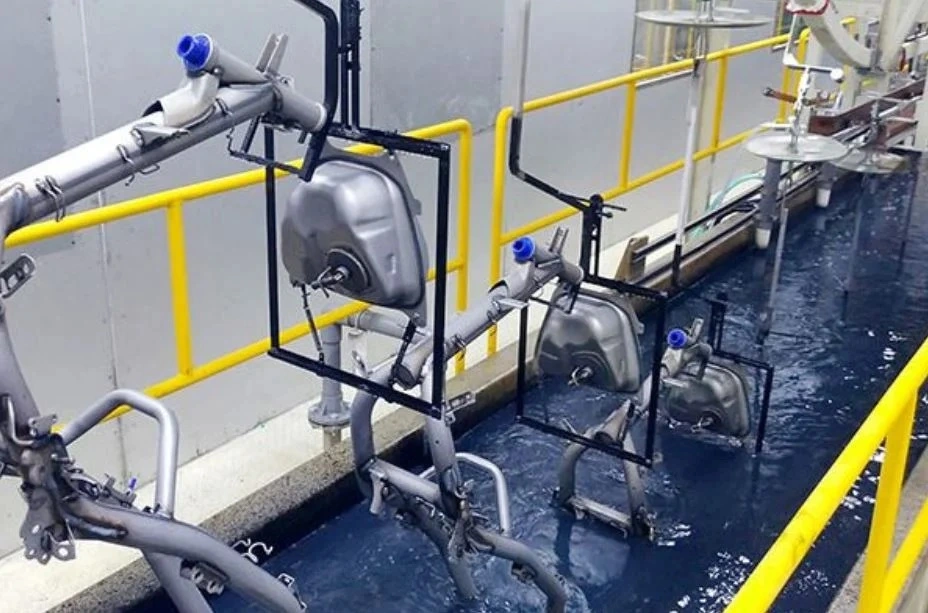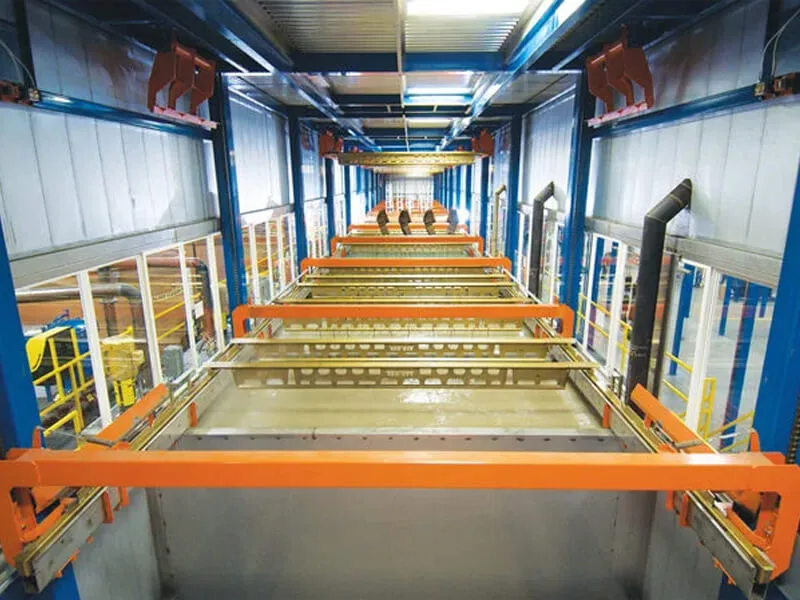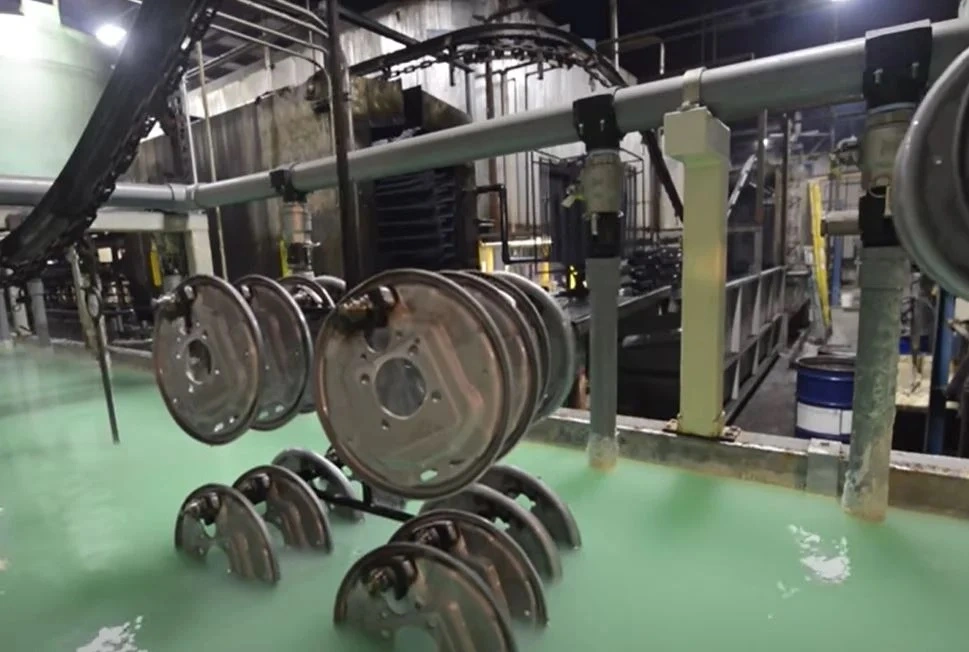

In high-volume industrial coating operations, the powder booth serves as the central processing zone where powder application, overspray containment, and recovery converge. While many production managers focus on gun technology or powder chemistry, the booth itself determines whether a system achieves 70% or 95% first-pass transfer efficiency. This article examines the engineering principles that separate high-performance powder booths from commodity enclosures, with particular attention to airflow management, filter selection, and recovery system integration.
For operations processing thousands of parts daily, the difference between an optimized powder booth and a standard design often appears in rejection rates, maintenance intervals, and powder consumption metrics. A well-engineered booth does not simply contain overspray—it actively guides particle behavior, maintains consistent cloud density, and preserves powder quality through multiple recovery cycles. These outcomes depend on quantifiable design parameters that facility engineers and production planners can measure and validate.
Before examining specific performance variables, establishing the operational mandate of a powder booth clarifies why design choices carry substantial consequences. The booth must accomplish four simultaneous objectives without compromising any single parameter:
Overspray containment: Capturing airborne powder particles before they settle on floor surfaces, conveyor systems, or adjacent equipment. Containment efficiency directly affects facility cleanliness and cross-contamination risk when switching powder chemistries.
Powder recovery: Separating reusable powder from exhausted air stream and returning it to the feed system. Recovery efficiency determines material utilization rates and waste disposal volumes.
Worker protection: Maintaining airborne particle concentrations below occupational exposure limits through proper extraction velocity and filtration.
Coating quality preservation: Preventing contamination from entering the spray zone while maintaining consistent temperature and humidity conditions that affect powder flow characteristics.
Each function imposes conflicting requirements on booth design. Maximizing recovery efficiency demands high air velocity through filters, but excessive velocity disrupts powder cloud formation at the spray zone. Balancing these competing demands requires understanding the relationship between booth geometry, extraction airflow, and powder particle behavior.
The extraction airflow pattern inside a powder booth determines where overspray particles travel after leaving the gun nozzle. In properly designed systems, airflow moves uniformly from the operator side toward the exhaust plenum, carrying particles directly into the recovery system. However, velocity gradients—variations in airspeed across the booth cross-section—cause particles to accumulate in low-velocity zones or escape through openings.
Booth manufacturers typically design extraction velocities between 80 and 120 feet per minute at the face of the exhaust opening. Velocities below this range allow particles to settle on walls and floor surfaces, creating cleaning burdens and potential contamination sources. Velocities above this range pull powder from the spray cloud before it reaches the substrate, reducing transfer efficiency and increasing powder consumption. Powder booth designs that incorporate adjustable velocity controls enable operators to tune extraction rates for specific part geometries and powder formulations.
Computational fluid dynamics (CFD) modeling has become standard practice for validating airflow distribution in custom booth configurations. CFD analysis reveals dead zones near corners and around part hangers, allowing engineers to reposition exhaust ports or add airflow deflectors. Production facilities processing mixed part sizes benefit from booths with modular exhaust sections that can be reconfigured as production requirements shift.
Maintaining negative pressure inside the powder booth relative to the surrounding workspace prevents powder migration into adjacent areas. Typical booth designs operate at -0.05 to -0.10 inches of water column. Loss of negative pressure—often caused by worn door seals, damaged filter gaskets, or conveyor belt openings—allows powder to escape through unintended paths. Regular pressure monitoring with manometers or electronic pressure transducers provides early warning of seal degradation before visible powder accumulation appears outside the booth.
Conveyor openings present particular sealing challenges because they must accommodate moving hangers while maintaining pressure differentials. Brush seals, inflatable gaskets, and labyrinth passages all serve to restrict airflow through these openings without impeding conveyor movement. The selection of seal type depends on conveyor speed, part geometry, and the powder type being applied.
Filter cartridges represent the most frequently replaced component in a powder booth recovery system, making media selection a significant operational expense. Cartridge filters for powder recovery typically use pleated polyester or cellulose-based media with membrane coatings that facilitate powder release during pulse-jet cleaning. The filtration efficiency rating—often expressed as MERV (Minimum Efficiency Reporting Value) or HEPA classification—determines the particle size fraction captured and the concentration of fine particles returned to the feed system.
Recovery efficiency directly impacts material costs. A powder booth operating at 90% recovery returns 90 pounds of every 100 pounds sprayed to the feed hopper, while 80% recovery loses 20 pounds per 100 pounds to waste. For a facility spraying 500 pounds daily, the difference represents approximately 50 pounds of daily powder waste—material that must be purchased, stored, and eventually disposed. Recovery efficiency depends on filter media characteristics, pulse-jet cleaning parameters, and the particle size distribution of the specific powder formulation.
Pulse-jet cleaning uses compressed air bursts directed backward through the filter media to dislodge accumulated powder. Cleaning frequency, air pressure, and pulse duration must be optimized for each powder type and booth configuration. Overly aggressive cleaning shortens filter life by mechanically fatiguing the media, while insufficient cleaning increases pressure drop and reduces extraction velocity.
Modern powder booth control systems monitor differential pressure across the filter bank and initiate cleaning cycles only when required, rather than operating on fixed timers. This demand-based cleaning extends filter life by 30-50% while maintaining consistent extraction performance. Some systems incorporate pressure trend analysis to predict filter replacement intervals, allowing maintenance planning without production interruptions.
The interior surfaces of a powder booth should resist powder adhesion to minimize cleaning frequency and prevent cross-contamination. Stainless steel, powder-coated steel, and engineered polymer panels each exhibit different adhesion characteristics. Stainless steel offers the lowest powder adhesion among metallic surfaces, but its cost and weight make it impractical for large booths. Polymer panels with anti-static properties reduce powder attraction through surface charge dissipation.
Surface finish also influences cleaning efficiency. Smooth surfaces allow powder to be removed with air jets or wiping, while textured surfaces trap particles in microscopic valleys. Booth designs that incorporate curved corners rather than sharp angles eliminate hard-to-clean areas where powder accumulates. These design considerations become particularly important in job shops that change powder colors multiple times per shift, where cleaning speed directly affects productivity.
Powder booth configurations range from simple open-face designs to fully enclosed systems with automated part handling. The selection of booth type depends on production volume, part size range, and color change frequency.
Open-face designs provide operator access from one side while the exhaust system draws airflow across the spray zone. These booths suit manual spraying operations and facilities with limited floor space. However, open-face booths require higher extraction velocities to maintain containment, which increases filter loading and energy consumption. HANNA offers modular open-face booths with adjustable extraction grilles that allow operators to direct airflow patterns based on part geometry.
Fully enclosed booths separate the spray zone from the surrounding environment with solid panels and filtered supply air. These configurations provide superior containment and are mandatory for operations using powder formulations with low ignition energy thresholds. Enclosed booths also maintain consistent temperature and humidity conditions, which improves powder flow stability and reduces application variability. The trade-off involves higher initial investment and more complex part handling systems.
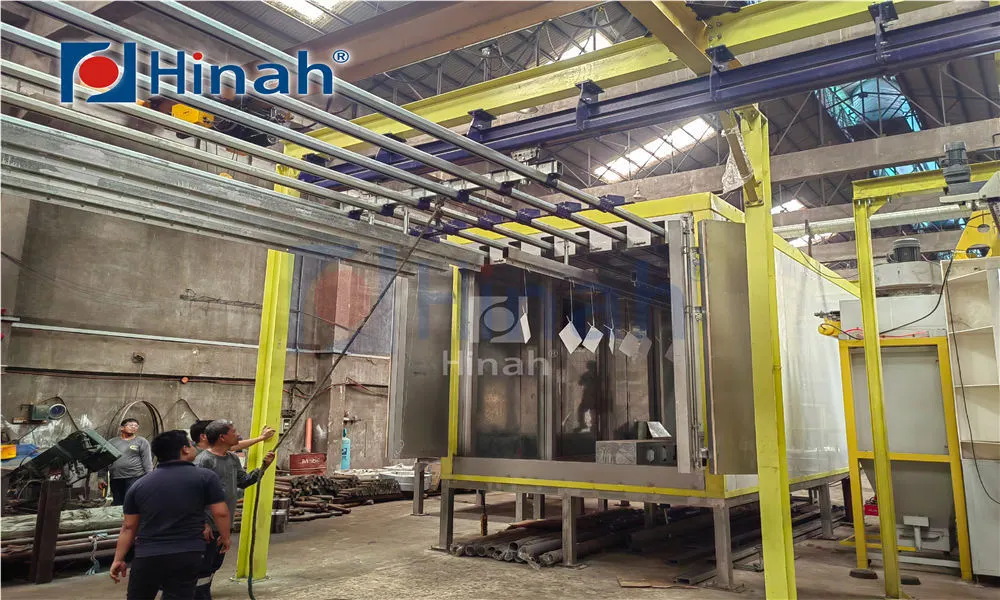
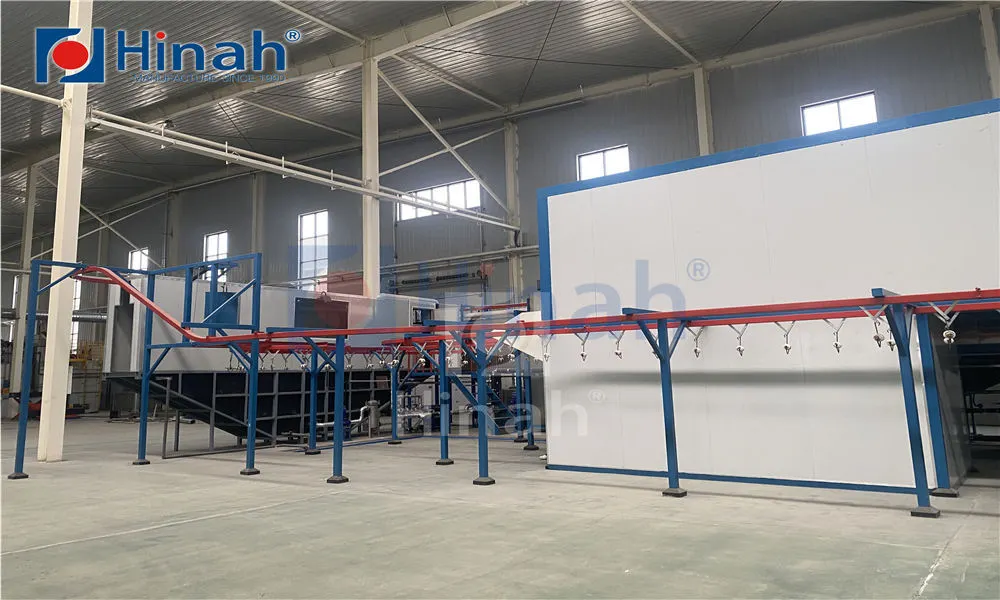
Pass-through booths integrate with overhead or floor-mounted conveyors, allowing continuous part movement through the spray zone. These booths typically include automatic gun systems that apply powder as parts pass through the spray pattern. The booth length determines the available application time, which influences line speed and throughput. Pass-through powder booth designs incorporate entry and exit vestibules to prevent airflow disruption caused by conveyor openings.
Regular maintenance directly influences powder booth performance and service life. The following maintenance activities should be scheduled and documented:
Daily cleaning: Wipe interior walls and floor surfaces to remove accumulated powder. Inspect conveyor openings and door seals for damage.
Weekly inspection: Check filter pressure drop readings and compare to baseline values. Verify pulse-jet cleaning system operation and compressed air supply pressure.
Monthly verification: Measure extraction airflow velocity at multiple points across the booth opening. Calibrate pressure sensors and airflow measurement devices.
Quarterly replacement: Change filter cartridges based on pressure drop trends or scheduled intervals. Inspect gaskets and sealing surfaces for compression set or cracking.
Annual evaluation: Conduct airflow visualization testing to identify changes in booth airflow patterns. Consider CFD validation if production requirements have changed.
Facilities that maintain detailed maintenance records can correlate specific maintenance activities with performance metrics such as transfer efficiency, powder consumption, and first-pass yield. This data enables continuous improvement of maintenance procedures and supports decisions regarding booth upgrades or replacement.
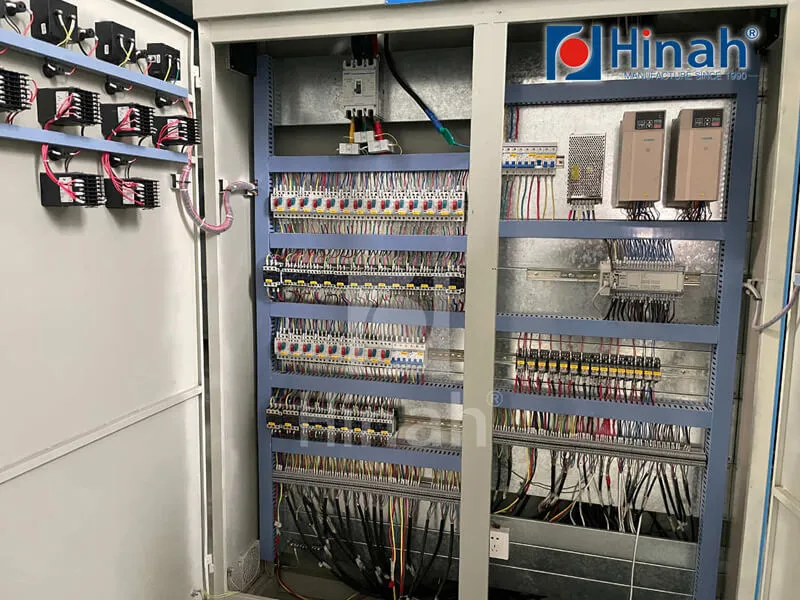
The powder booth does not operate as an isolated component. Booth performance interacts with powder feed systems, gun controllers, and environmental conditions. Proper integration ensures that booth airflow does not interfere with powder delivery or application parameters.
For example, high extraction velocities can create negative pressure at the spray gun nozzle, altering powder flow rate and pattern shape. Gun controllers that incorporate pressure compensation algorithms adjust feed air pressure based on booth pressure readings, maintaining consistent powder delivery regardless of extraction fluctuations. Similarly, humidity control within the booth prevents powder clumping and feed line blockages that degrade coating quality.
HANNA integrated systems provide coordinated control of booth airflow, filter cleaning, powder feed, and gun operation through a central control platform. This integration allows operators to store booth configuration parameters for different part families, reducing setup time and minimizing variation between production runs. The platform also logs performance data for analysis and process optimization.
A1: Most powder booths operate with extraction velocities between 80 and 120 feet per minute measured at the exhaust opening face. The optimal velocity depends on powder density, part geometry, and coating thickness requirements. Heavier metallic powders often require velocities at the higher end of this range to prevent settling, while fine particle powders may require lower velocities to maintain cloud stability. Facilities should conduct velocity mapping to confirm uniform distribution across the booth cross-section.
A2: Relative humidity influences powder flowability, electrostatic charging, and coating adhesion. Optimal humidity ranges from 40% to 55% for most powder formulations. High humidity promotes powder agglomeration and reduces electrostatic charge retention, resulting in uneven coating thickness and reduced transfer efficiency. Low humidity increases static charge buildup, causing powder to adhere to booth walls and creating potential for electrostatic discharge. Booth designs that include humidity control systems maintain consistent conditions regardless of ambient weather variations.
A3: Filter replacement frequency depends on powder type, production volume, pulse-jet cleaning parameters, and filter media selection. Typical cartridge filters last 6 to 18 months in continuous production environments. Operators should monitor differential pressure trends—replacement becomes necessary when cleaning cycles no longer restore pressure to baseline values, or when pressure drop exceeds the filter manufacturer's maximum rating. Regular analysis of spent filters provides insight into powder particle size distribution and can inform media selection changes.
A4: Multi-color operation is possible but requires careful booth design and cleaning protocols. Booth designs with smooth interior surfaces, quick-release filter cartridges, and dedicated recovery hoppers for each color minimize changeover times. Some facilities use modular booths that allow swift replacement of filter banks and powder contact surfaces. Color change times range from 15 minutes for simple manual changeovers to 2 hours for fully automated systems with thorough cleaning cycles. Facilities should evaluate the trade-off between color change flexibility and production efficiency.
A5: Powder booths handling combustible powders require explosion venting systems, fire suppression equipment, and grounding provisions to dissipate static charge. Explosion vents direct overpressure away from occupied areas, while suppression systems detect and extinguish combustion events before they propagate. All metallic components in the booth should be bonded and grounded to prevent static accumulation. The booth structure and filters should comply with National Fire Protection Association (NFPA) standards or local regulatory requirements for powder handling operations.
A6: Part geometry affects powder cloud distribution, overspray generation, and extraction effectiveness. Long, narrow parts require deeper booths to allow adequate spray distance, while wide parts require broader air flow distribution. Parts with recessed surfaces may require additional gun positions or custom nozzle configurations to achieve consistent coating coverage. Booth engineers should consider the full range of part sizes and shapes when designing custom booth layouts to avoid application limitations.
A7: Indicators include structural corrosion or degradation, declining recovery efficiency despite filter replacement, excessive powder accumulation on booth surfaces, increasing energy consumption for the same extraction performance, and incompatibility with new powder formulations or regulatory requirements. Facilities should conduct lifecycle cost analysis comparing refurbishment expenses against new booth performance specifications and productivity improvements.
Validating booth performance requires systematic measurement and analysis. The following methods provide quantitative data for optimization decisions:
Transfer efficiency testing: Measure powder applied to substrate versus total powder consumed. Testing with standardized part geometries and consistent application parameters reveals changes in booth performance over time.
Airflow velocity mapping: Use thermal anemometers or vane anemometers at multiple grid points across the booth opening. Velocity maps identify areas of low extraction that permit powder escape.
Particulate concentration monitoring: Install real-time particle counters in the spray zone and adjacent work areas. Concentration data validates containment effectiveness and identifies leakage sources.
Filter pressure drop tracking: Record initial pressure drop after filter installation and track increases over time. Pressure trends indicate cleaning system effectiveness and predict replacement intervals.
Color change time measurement: Document the time required for complete color changes, including cleaning, filter replacement, and powder system purge. This metric directly affects production scheduling and machine utilization.
Measurement frequency should align with production volatility. High-mix, low-volume facilities require more frequent validation to ensure booth settings remain appropriate for changing part requirements.
For facilities seeking to upgrade existing powder application systems or install new powder coating lines, HANNA provides engineering consultation, booth design, and integration services. The company's approach emphasizes performance validation, operator training, and maintenance planning to ensure sustained booth performance over the equipment lifecycle. Contact HANNA to discuss specific production requirements and receive a detailed proposal for powder booth systems that meet throughput, quality, and operational objectives.
Powder booth selection represents a long-term investment that influences production efficiency, material costs, and coating quality. Engineering decisions based on airflow dynamics, filter media performance, and booth configuration provide measurable returns through reduced powder consumption, fewer rejects, and improved production flexibility. Facilities that prioritize systematic evaluation and maintenance of their powder booths consistently outperform those that treat the booth as a passive containment enclosure.
For detailed specifications, engineering drawings, and performance data on powder booth configurations suitable for your production environment, submit an inquiry to the HANNA engineering team. Include production volumes, part size ranges, powder types, and desired transfer efficiency targets to receive a customized proposal addressing your specific operational requirements.