Industrial painting equipment encompasses far more than spray guns and booths. In a modern powder coating line, every component – from the pretreatment system to the conveyor – directly influences the performance of the industrial powder coating oven. A mismatch in line speed, contamination control, or curing uniformity can slash first-pass transfer efficiency by 20% and increase rework costs. Below, we analyze seven critical equipment interactions backed by field data from HANNA’s global installations.
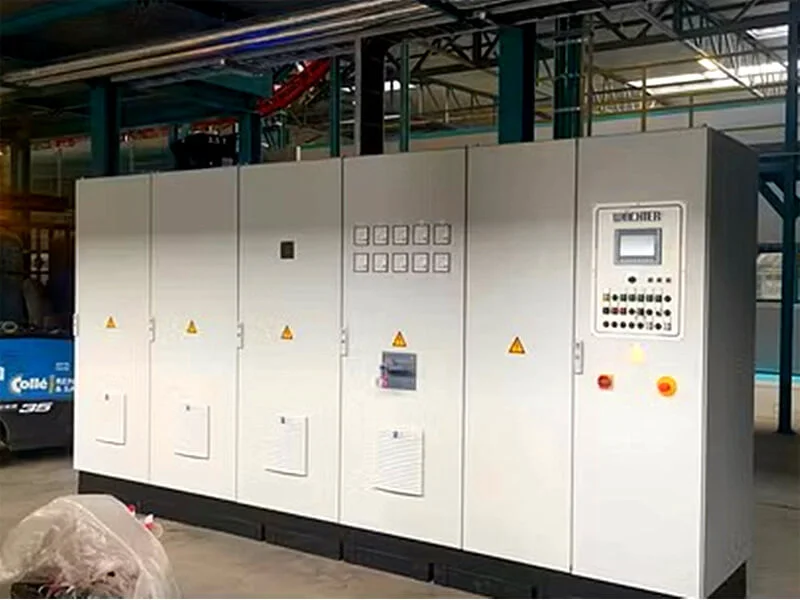
The conveyor is the nervous system of any painting line. Its speed determines how long parts spend in the industrial powder coating oven. If the conveyor runs too fast, the powder never reaches full cross-linking density; too slow, and throughput collapses. Modern variable-frequency drives (VFDs) allow precise speed adjustment, but the control logic must integrate with oven temperature profilers. HANNA recommends using closed-loop feedback where oven exit temperature modulates conveyor speed – this avoids under-cure even when part mass varies.
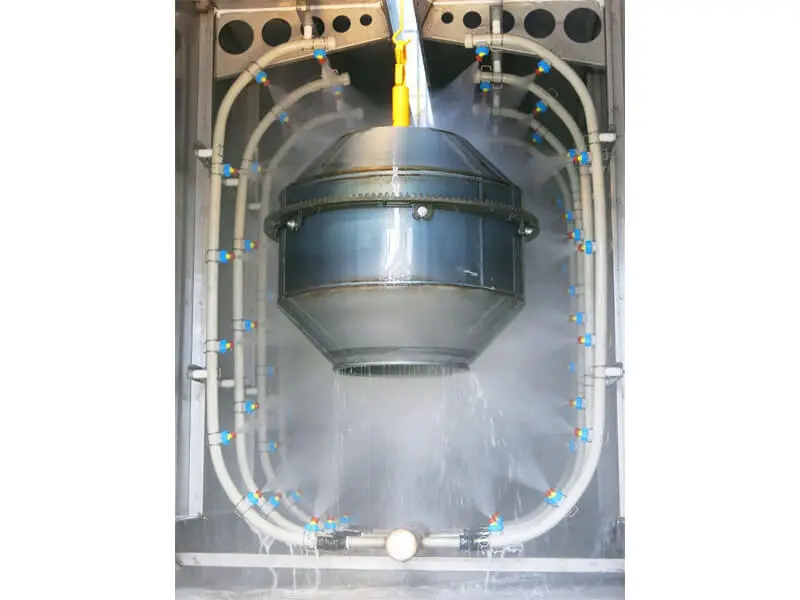
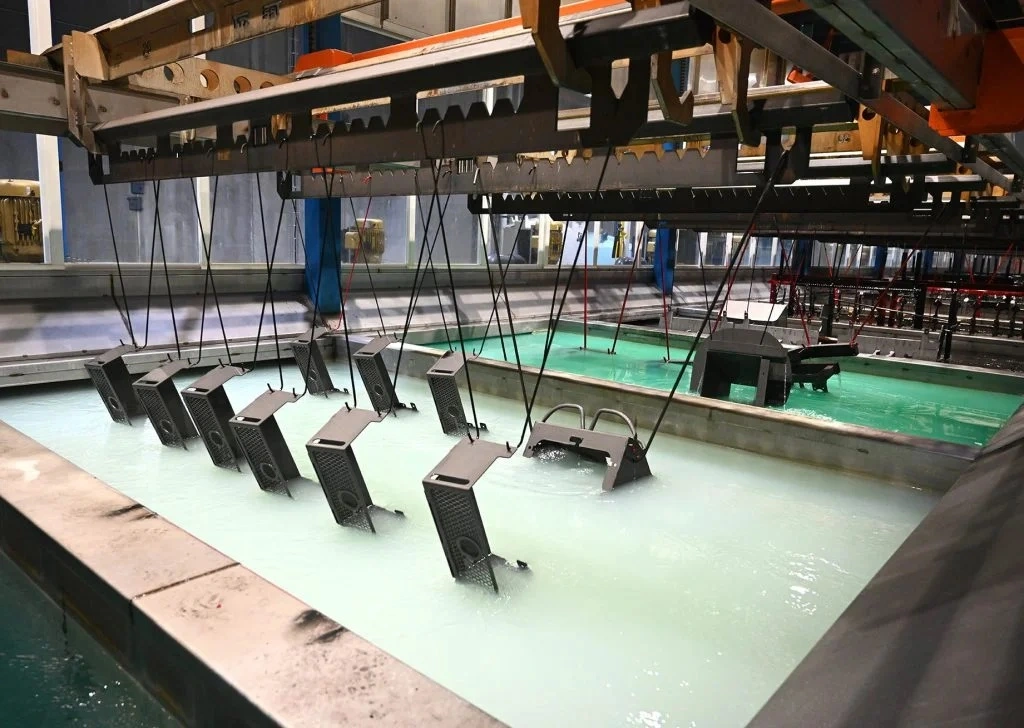
Pretreatment equipment (washer stages, iron/zinc phosphate baths, or nano-ceramic systems) removes oils and oxides. However, insufficient rinsing leaves residues that pyrolyze inside the industrial powder coating oven, forming discoloration and poor adhesion. Data from 200 line audits showed that 34% of oven fouling originated from carryover of pretreatment chemicals. Installing reverse-osmosis (RO) final rinse and blow-off sections reduces this risk and extends oven cleaning intervals from months to years.
The spray booth and recovery system dictate how much powder lands on the part versus being reclaimed. High-efficiency cyclones with cartridge filters can achieve 95% powder utilization. But when reclaim is mixed with virgin powder excessively, particle size distribution shifts – finer particles burn faster in the industrial powder coating oven, potentially causing orange peel. Booth airflow must also be balanced to prevent powder drift toward oven entry, which causes sintering on nozzles and burners.
Choosing between direct-gas-fired and indirect-fired industrial powder coating oven designs impacts both product quality and operating cost. Direct-fired ovens are 10–15% more fuel-efficient because combustion products enter the chamber. However, for high-gloss or clearcoat finishes, indirect-fired (or electric) ovens eliminate risk of soot contamination. HANNA offers hybrid systems where oven zoning switches between direct and indirect depending on the production schedule.
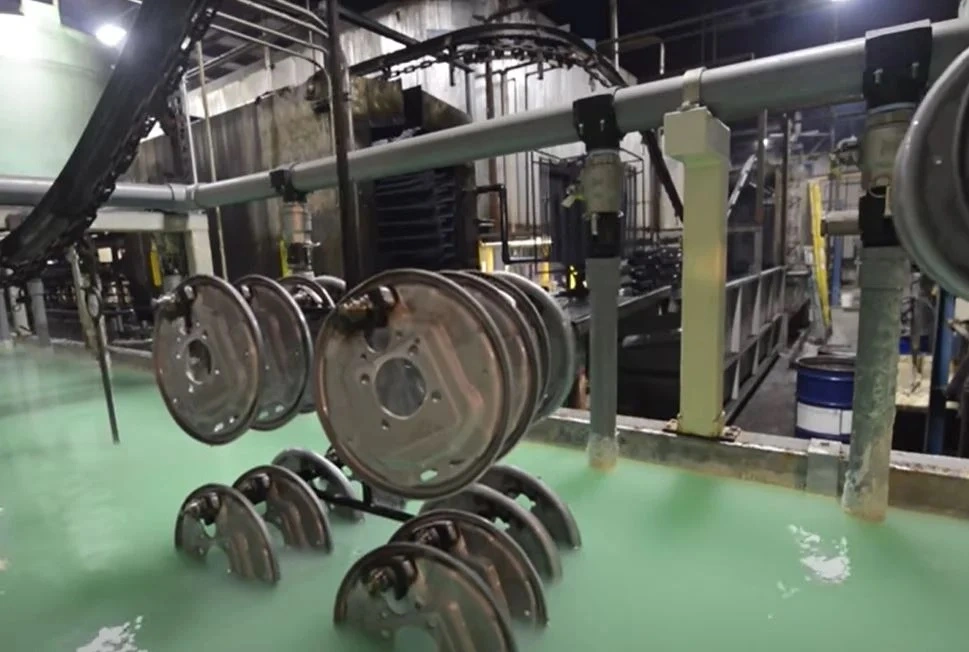
The hooks, racks, and fixtures that carry parts through the industrial powder coating oven act as heat sinks. Heavy fixtures delay oven recovery after loading, causing temperature droop. Using thin-walled stainless steel or high-temperature composites reduces this thermal mass. In a recent truck-wheel line, HANNA redesigned the racks to be 40% lighter – oven setpoint recovery time dropped from 12 minutes to 5, increasing usable production time by 7%.
Industrial painting equipment must include properly sized exhaust and AMUs. For every cubic meter of air exhausted from the spray booth and oven, conditioned make-up air must be supplied. If the AMU is undersized, oven negative pressure pulls in unfiltered shop air, introducing dust and causing temperature stratification. The ratio between oven exhaust and booth exhaust should be calculated using mass-flow balancing to maintain consistent oven inlet velocity.
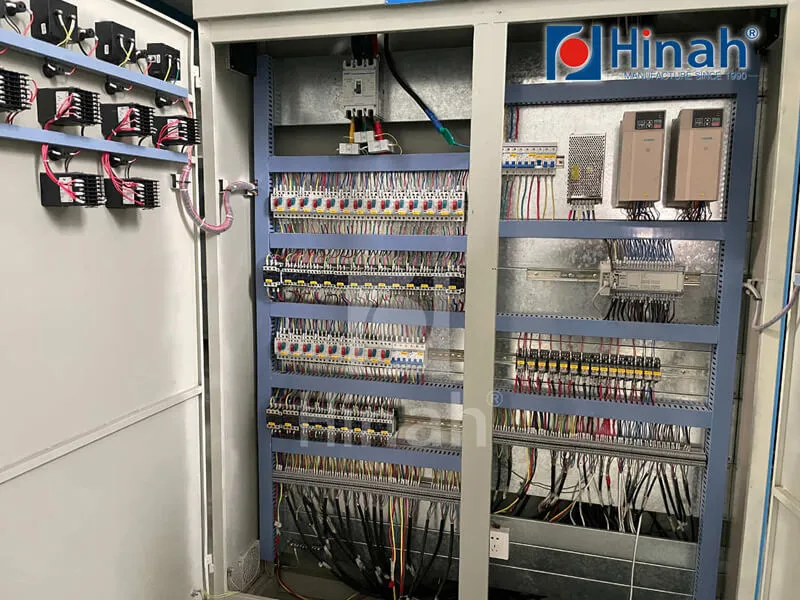
Modern industrial powder coating oven controls are part of the broader industrial painting equipment ecosystem. PLCs with IoT connectivity allow real-time monitoring of temperature, pressure, and energy consumption. When oven data is integrated with upstream equipment (washer temperatures, booth humidity), predictive algorithms can warn of issues before they cause rejects. For example, a gradual drop in oven zone 2 temperature might indicate a failing burner, which can be scheduled for maintenance during off-hours.
Viewing each piece of equipment in isolation leads to suboptimal lines. The pretreatment system, conveyor, booth, and industrial powder coating oven must be engineered as one thermodynamic and mechanical system. HANNA uses discrete-event simulation to model the entire line – from part entry to exit – ensuring that bottlenecks are eliminated and energy consumption per part is minimized. A holistic design often reduces total installed cost by 12–18% compared to piecemeal procurement.
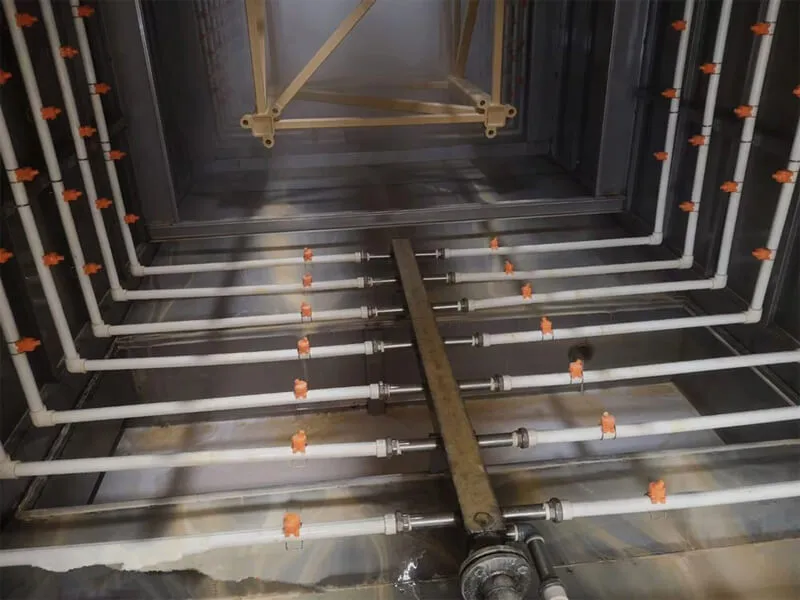
A Tier-1 supplier faced frequent rejects due to inconsistent cure in their batch industrial powder coating oven. The investigation revealed that their pretreatment stage had inconsistent nozzle pressure, leaving varying levels of moisture on parts. As parts entered the oven, the moisture evaporated unevenly, creating local temperature drops. By upgrading the washer controls and adding an infrared pre-dry tunnel, HANNA helped the client achieve ±1.5°C uniformity across the oven and reduce rework from 8.3% to 1.1%.
Preventive maintenance schedules for industrial painting equipment should be synchronized. When the industrial powder coating oven is down for thermocouple calibration, it is also the ideal time to clean booth filters and lubricate conveyor chains. Integrated maintenance planning can reduce total downtime by up to 25%. Digital tools that track equipment runtimes help trigger maintenance based on actual usage rather than calendar days.
Q1: How does spray booth air velocity affect the industrial powder coating oven?
A1: High booth velocity (above 0.7 m/s) can blow uncharged powder off parts, which then accumulates in the oven entry vestibule. This accumulation can ignite or cause recirculation blockages. Booth velocity should be matched to part geometry – heavy parts tolerate higher velocities, while complex shapes need lower velocities to avoid Faraday cage effects.
Q2: Can I use the same industrial painting equipment for liquid paint and powder?
A2: Hybrid lines are possible but require careful design. Liquid paint booths need explosion-proof motors and water-wash systems, while powder booths need dry filters and grounding. The industrial powder coating oven for liquid-cured parts must handle solvent flash-off before curing; otherwise, solvent popping occurs. Separate ovens are often more practical.
Q3: What pretreatment equipment is essential before a powder coating oven?
A3: Minimum requirements are a cleaning stage (alkaline or acidic) and a conversion coating stage (iron phosphate, zirconium, or silane). For aluminum, a chrome-free sealer is recommended. Rinsing between stages must be counter-flow or RO to prevent contamination entering the oven.
Q4: How do I calculate the correct conveyor speed for my oven?
A4: Measure the oven's heated length (L in meters) and the required cure time (t in minutes) from the powder supplier's technical data sheet. Conveyor speed (m/min) = L / t. Example: oven heated length = 30 m, cure time = 15 min → speed = 2 m/min. Always add a safety margin for heavier parts – consult HANNA for thermal modeling.
Q5: Why does my industrial powder coating oven show temperature drops when new racks enter?
A5: This is thermal loading. Each rack and part absorbs heat energy, temporarily cooling the oven air. To compensate, the oven's burner control system must have sufficient turndown ratio and fast response. Using PID loop tuning and adding thermal mass (like ceramic baffles) can stabilize the profile.
Q6: What is the most common industrial painting equipment failure that affects oven performance?
A6: Exhaust fan failure in the washer or booth. When booth exhaust fails, overspray particles enter the oven and bake onto walls and heaters, reducing heat transfer and creating fire risk. Weekly inspection of fan belts and pressure differential switches is critical.
Q7: How can I improve energy efficiency of my painting line without replacing the oven?
A7: Install variable-speed drives on all exhaust fans, add insulation to washer tanks and oven walls, and use high-emissivity coatings on oven interior panels. Also, ensure that the conveyor is not carrying excessive open space – use part carriers designed to maximize load density. HANNA offers retrofits that can cut energy use by 20-30% with payback under 18 months.
The performance of your industrial powder coating oven is inseparable from the quality of the surrounding industrial painting equipment. From pretreatment chemistry to conveyor controls, each element must be calibrated to work in unison. Investing in a system-level design, rather than standalone machines, delivers higher throughput, lower rework, and extended equipment life. For detailed engineering assistance, contact HANNA to discuss your specific line requirements.