Selecting an industrial powder coating oven is one of the most significant investments for a finisher. It's the cornerstone of quality, throughput, and profitability. A well-chosen oven delivers durable, consistent finishes. A poor choice leads to rejects, bottlenecks, and energy waste.
At HANNA, we've engineered ovens for countless applications worldwide. This guide breaks down the ten key factors you must consider to make an informed decision and achieve the perfect cure every time.
An industrial powder coating oven is not just a hot box. It's a precision thermal processing chamber designed for the chemical cross-linking of powder coatings.
The process involves heating coated parts to a specific metal temperature for an exact duration. This transforms the powder into a smooth, continuous, and tough film. The precision of this process directly dictates the final product's durability, appearance, and performance.
Whether you're curing tractor parts or bicycle frames, the principle is the same. But the execution varies dramatically. Understanding this role is the first step to specifying the correct industrial curing oven for your needs.
The heating method is the heart of your system. Each has distinct advantages for an industrial powder coating oven.
Convection Ovens use circulated hot air. They are the most versatile, excellent for complex, three-dimensional parts with nooks and crannies. Heat transfer is even and forgiving. HANNA's convection ovens are known for exceptional temperature uniformity, essential for large or dense loads.
Infrared (IR) Ovens use radiant energy. They cure coatings from the outside in, offering blistering speed for flat or simple-shaped parts. They are less effective on complex geometries where shadows can prevent even curing.
Hybrid Systems combine both technologies. They often use IR for a rapid initial "flash-off" and convection for a thorough, uniform final cure. For many high-production lines, a hybrid industrial oven represents the optimal balance of speed and quality.
The energy source impacts your bottom line and operational flexibility. Electric ovens are clean, simple to install, and offer precise control. Natural gas ovens typically have lower operating costs in many regions and faster heat recovery.
Advanced HANNA industrial ovens often feature high-efficiency burners, superior insulation, and heat recirculation designs. These features drastically reduce energy consumption, regardless of fuel type. Always calculate total lifecycle costs, not just the purchase price.
Your production volume and workflow determine the configuration.
Batch Ovens (or walk-in/cabinet ovens) are perfect for job shops, large single items, or low-to-medium volume. Parts are loaded, cured in a cycle, and unloaded. HANNA’s custom batch ovens can be built to extraordinary sizes for massive components.
Conveyorized Ovens are for continuous, high-volume production. Parts move on a conveyor through distinct zones (preheat, cure, cool-down). This integration with your powder coating booth creates a seamless, automated finishing line. Throughput is constant and efficient.
An undersized industrial powder coating oven cripples capacity. An oversized one wastes space and energy. You must account for part dimensions, racking, and necessary clearances.
Consider future needs. A HANNA custom industrial oven can be designed with modular expansion in mind. Our engineers also focus on the line layout—minimizing the distance between the spray booth and oven entrance to prevent contamination and save floor space.
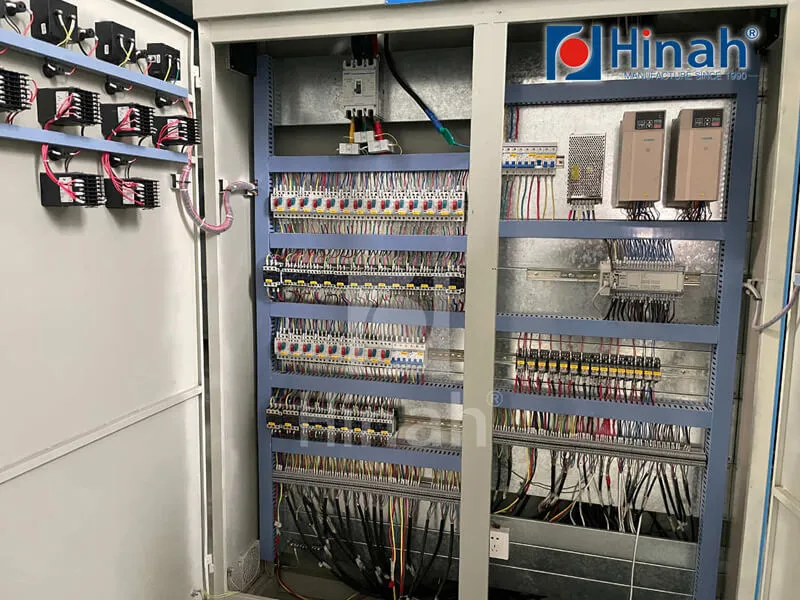
Consistency is non-negotiable. Modern industrial curing ovens require sophisticated controls. Digital PID controllers maintain temperature within ±5°F or better. Data logging capabilities are now standard for quality traceability.
Airflow design is equally critical. Balanced, turbulent airflow ensures every part in the load reaches the required metal temperature. HANNA designs patented airflow patterns that eliminate cold spots, ensuring complete curing even on the most challenging loads.
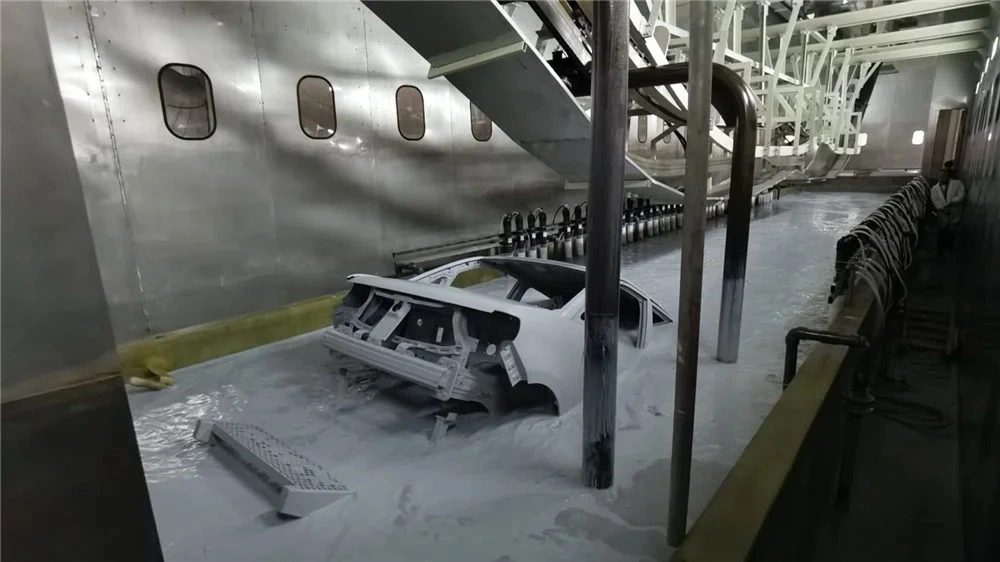
An oven is a long-term asset. Construction quality dictates its lifespan and maintenance costs. Look for heavy-gauge steel frames, commercial-grade insulation (like mineral wool), and durable interior finishes.
Doors, seals, and hinges endure constant stress. HANNA uses robust, insulated doors with high-temperature seals to contain heat and ensure safety. An industrial powder coating oven is a workhorse; it must be built like one.
Your new oven must communicate with the rest of your system. This includes mechanical integration with conveyors and electrical/control integration with the upstream booth and downstream handling.
Choosing a single-source supplier like HANNA for both your booth and industrial powder coating oven eliminates interface headaches. We ensure seamless communication between all components for optimized, trouble-free operation.
Industrial ovens are high-temperature equipment. Safety features are paramount: emergency stop buttons, over-temperature protection, proper ventilation for cure by-products, and compliance with NFPA, OSHA, and local codes.
Proper exhaust is crucial. It removes volatiles and maintains a safe environment. Every HANNA industrial curing oven is designed with integrated safety systems and guidance for compliant installation.
While standard models exist, most demanding applications benefit from customization. A custom industrial powder coating oven from HANNA solves your specific challenges.
We can tailor the heat profile, internal configuration, airflow, and controls for your unique parts and powders. This bespoke approach maximizes your first-pass yield, throughput, and return on investment. Don't force your process to fit a generic oven; let HANNA build the oven that fits your process.
The future of the industrial powder coating oven is connected. IoT-enabled ovens provide real-time performance data, predictive maintenance alerts, and remote troubleshooting. Energy management systems are becoming smarter, further driving down costs.
HANNA is at the forefront, integrating smart controls that allow for recipe management, energy monitoring, and seamless integration into Industry 4.0 smart factory networks.
Choosing an industrial powder coating oven is a complex technical decision with long-term consequences. Partnering with an experienced, engineering-focused company makes all the difference.
HANNA doesn't just sell ovens; we deliver thermal solutions. From initial consultation to installation, training, and lifetime support, we are committed to the success of your finishing operation. Our global track record in providing reliable, high-performance industrial curing ovens is your assurance of quality.
Q1: What is the typical temperature range for an industrial powder coating oven?
A1: Most common powder coatings cure between 300°F to 450°F (149°C to 232°C) part metal temperature. However, some specialty powders require temperatures outside this range. A HANNA industrial oven can be designed to meet virtually any curing profile.
Q2: How can I reduce the energy consumption of my existing powder coating oven?
A2: Focus on maintenance and upgrades. Ensure door seals are tight, calibrate temperature sensors, and clean airflow passages. Consider retrofitting with higher-efficiency burners, adding insulation, or installing a heat recovery system. HANNA offers energy audit services to identify savings.
Q3: Can one industrial oven cure different types of powder on different runs?
A3: Absolutely, but with careful process control. You must purge the oven at the correct temperature between runs to avoid cross-contamination. Using the oven's programmable controllers to store different cure recipes for each powder type streamlines this changeover.
Q4: Why is temperature uniformity so critical in a curing oven?
A4: Non-uniform temperature leads to under-cure or over-cure. Under-cured coatings are soft, have poor adhesion, and fail prematurely. Over-cured coatings can become brittle, discolored, or lose their mechanical properties. Uniformity ensures every part meets specification.
Q5: What are the advantages of choosing a custom HANNA oven over a standard model?
A5: A custom industrial powder coating oven from HANNA is optimized for your specific parts, production rate, and facility constraints. It delivers higher first-pass yield, greater energy efficiency, and a better fit for your workflow, providing a faster return on investment than a compromise with a standard unit.