
Thinking about a conveyor paint line? It’s the single biggest upgrade for your finishing shop. Moving from batch work to a continuous, automated flow changes everything. Throughput soars. Consistency becomes guaranteed. Your bottom line improves.
But a poorly planned line is a costly nightmare. This guide walks you through the 7 essential steps to get it right. We’ll cover design choices, cost factors, and why partnering with a specialist like HANNA from the start is your smartest move.
Let’s build your roadmap to a perfect conveyorized finishing system.
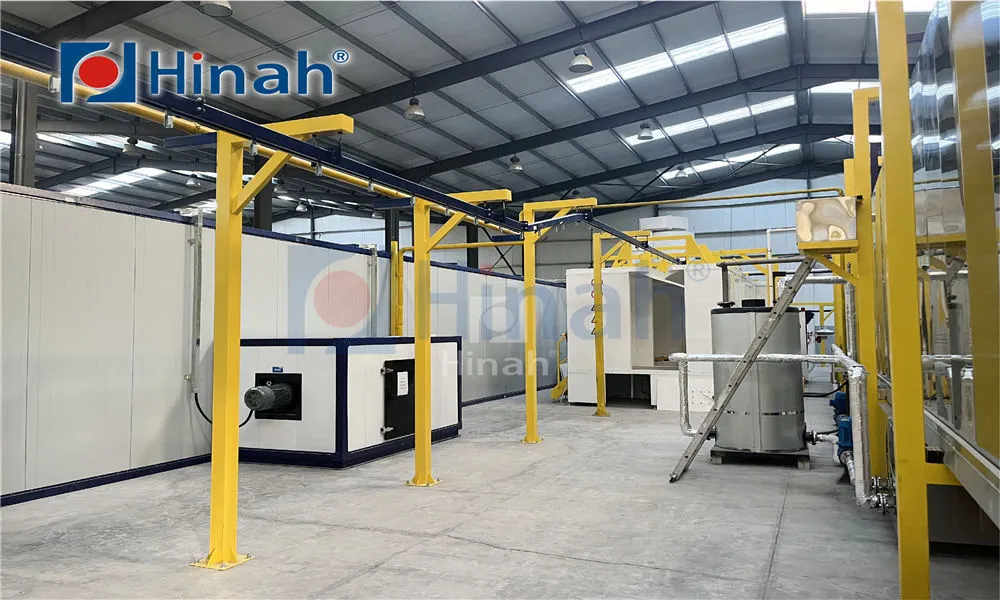
Start with the end in mind. Why do you need a conveyor paint line? Be specific.
Is it to double your daily output? To eliminate manual handling bottlenecks? To achieve automotive-grade finish consistency? To reduce labor costs?
Next, nail down your numbers. Calculate your target throughput in parts per hour. Consider your largest and smallest part dimensions. Know your required coating type—powder, wet paint, or both?
This clarity is your project’s foundation. It guides every technical decision for your industrial paint conveyor system.
This is your first major fork in the road. Each type suits different needs.
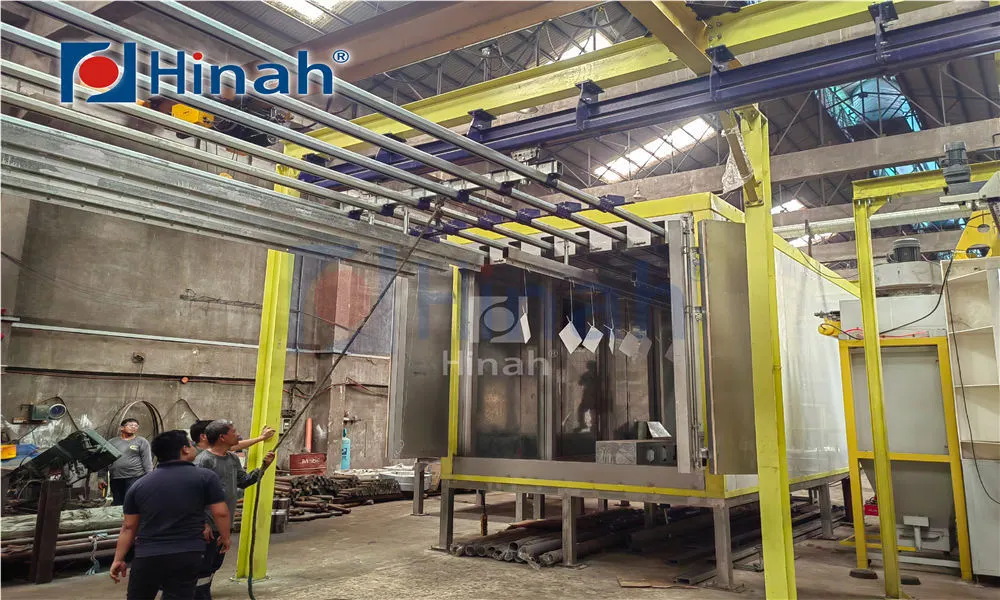
Overhead Monorail Conveyors are the most common. Parts hang from trolleys on an I-beam track. They use ceiling space brilliantly, keeping floors clear. Perfect for a vast range of parts that can be hooked. Ideal for facilities with space constraints.
Floor Conveyors (like chain-on-edge or belt systems) carry parts at ground level. They handle massive, bulky items that can’t be hung—think automotive frames, large sheet metal, or heavy castings. They use more floor space but offer immense stability.
Some advanced custom conveyor paint lines from HANNA even combine both for complex workflows.
This is the core engineering challenge. Your line is a chain of process zones: pre-treatment, drying, coating, curing, cooling.
Each zone needs a specific dwell time. The conveyor speed must be calculated so every part gets exactly the right time in each stage.
For example, if your oven requires a 12-minute cure at 400°F, the conveyor section inside the oven must be long enough to provide that 12-minute journey at your chosen line speed.
Getting this math wrong means uncured parts or wasted oven space. HANNA engineers excel at this precise balancing act for a seamless conveyorized paint system.
How parts are presented to the spray guns is critical. You need custom racks, hooks, or fixtures.
Good fixture design minimizes touch points (to reduce marks), ensures a solid electrical ground for electrostatic application, and rotates or positions the part for optimal gun access.
Poor fixturing is the top cause of inefficiency and rework. Investing in smart, custom-designed fixtures maximizes the value of your entire automated paint line.
A conveyor paint line is a symphony of integrated stations. Each must be perfectly timed with the next.
Loading/Unloading Station: Ergonomically designed for safety and speed.
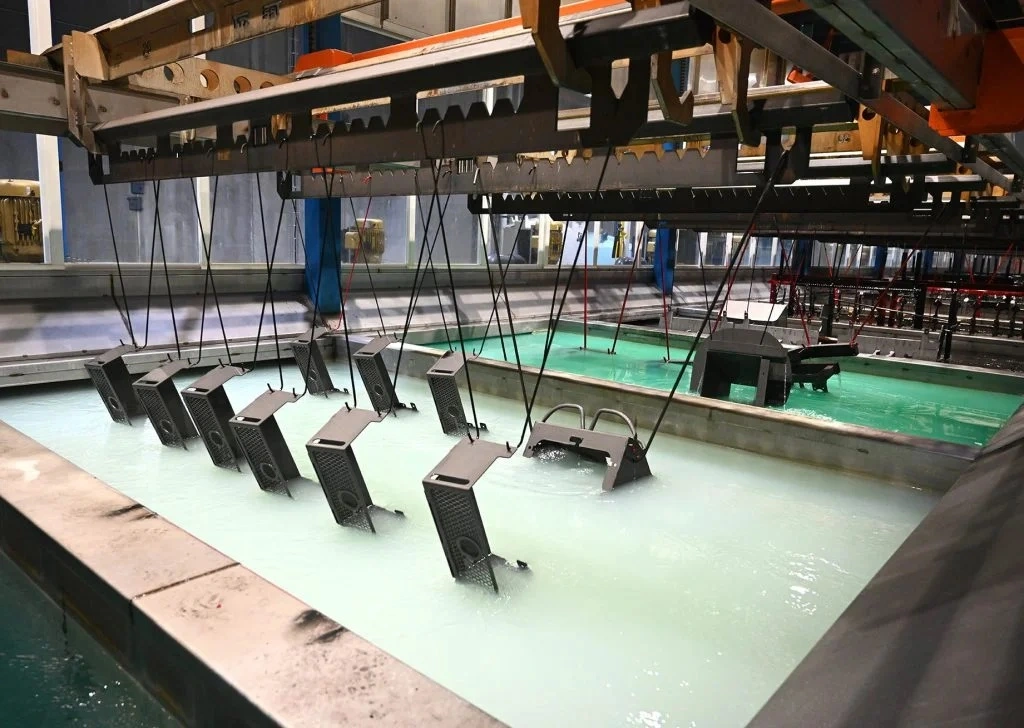
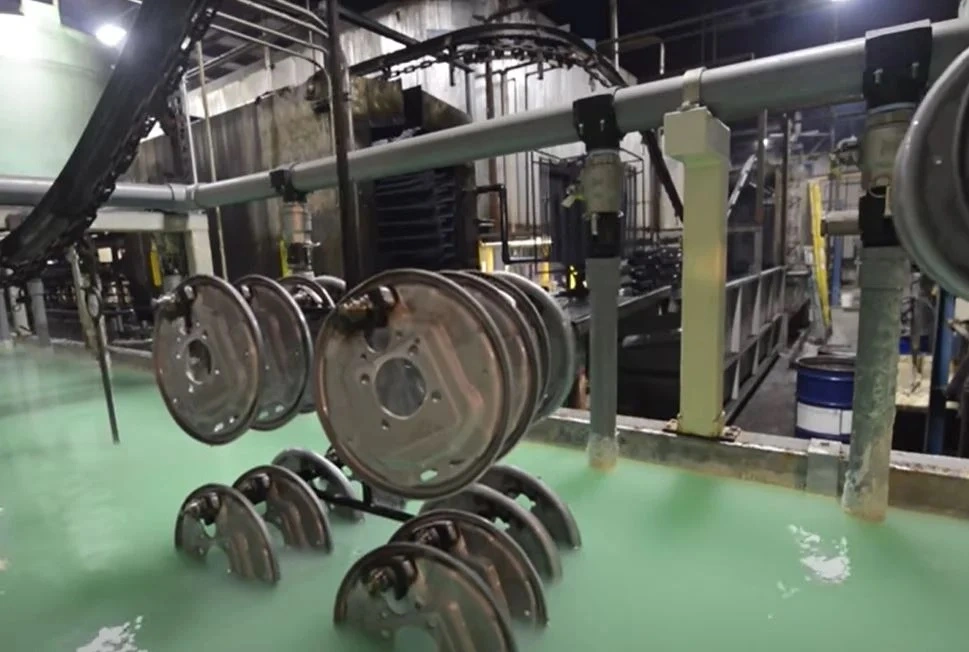
Pre-Treatment Stage: Typically a multi-stage spray washer (clean, rinse, phosphate, final rinse). The conveyor must be compatible with this wet environment.
Dry-Off Oven: Removes all moisture before the coating booth.
Application Booth: Designed around the conveyor path. For powder, this includes high-efficiency recovery. For liquid, it’s overspray exhaust.
Cure Oven: Precision temperature control is non-negotiable. Infrared or convection?
Cooling Zone: Allows parts to handle before packaging.
The conveyor is the thread that ties it all together.
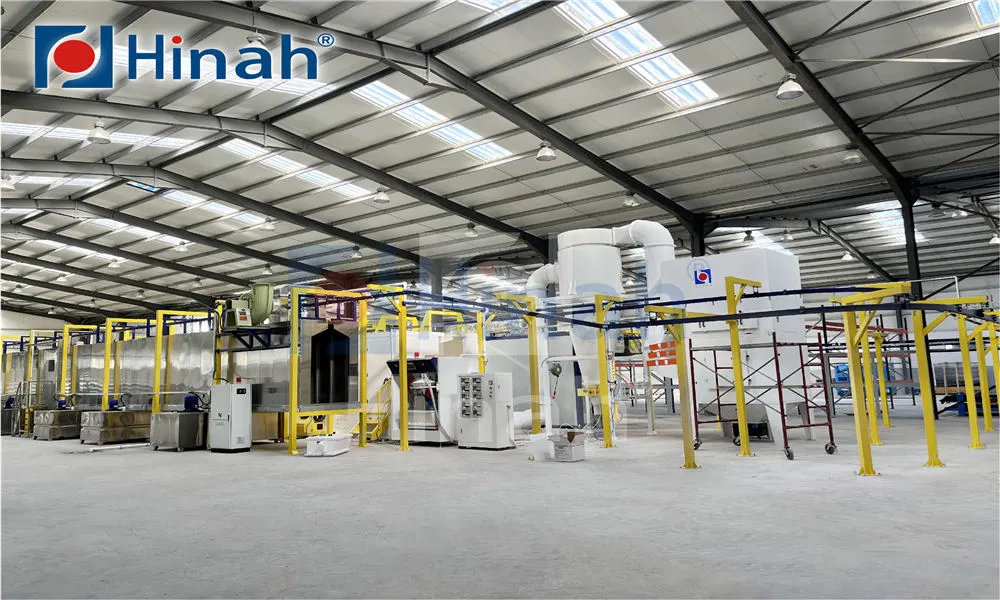
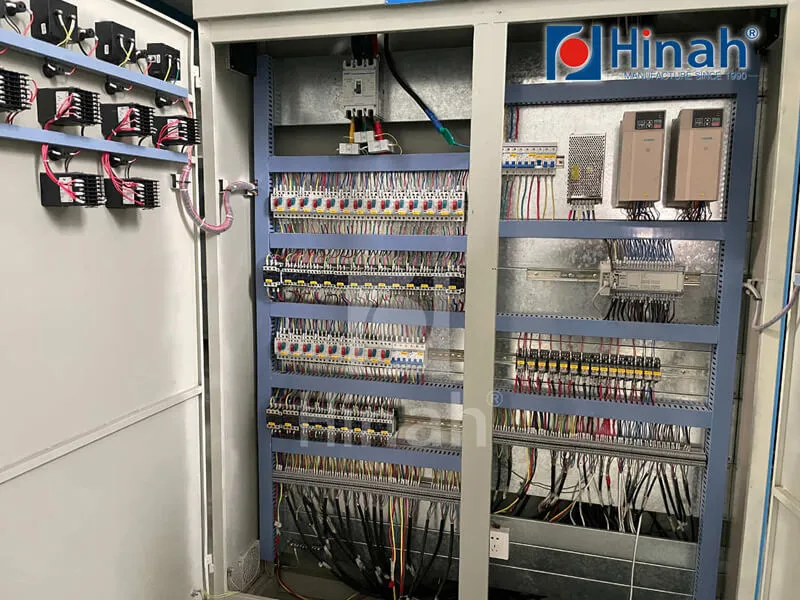
The control system is the brain of your industrial paint conveyor. Modern PLC (Programmable Logic Controller) panels manage everything: speed, oven temps, booth airflow.
Think about the future. Will you add robotic sprayers next year? Design the control system and booth access for that upgrade now. A modular HANNA system makes this easy.
Good controls provide data—tracking production rates, identifying bottlenecks, and ensuring repeatability shift after shift.
Let’s talk numbers. A basic conveyor paint line starts around $150,000. A large, fully automated system can exceed $1 million.
Key cost drivers:
Conveyor Length & Complexity: More feet, lifts, or turntables add cost.
Oven Size & Tech: Curing ovens are a major expense.
Automation Level: Manual spray vs. robotic applicators.
Customization: A standard line costs less than a fully custom conveyor paint line.
Don’t just look at the price tag. Calculate the Return on Investment (ROI). A HANNA-designed line boosts output, slashes labor per part, cuts reject rates, and saves material. This ROI often pays for the line in 2-4 years.
Designing a conveyorized paint system isn’t about buying parts. It’s about engineering a solution. That’s where HANNA stands apart.
We are system integrators. We don’t just sell ovens or conveyors; we design the complete process flow. Our team handles everything from the initial facility audit to final commissioning and training.
We ask the right questions upfront to prevent costly mistakes later. Our expertise ensures your conveyor paint line is not just equipment, but a reliable engine for your growth.
Investing in a conveyor paint line is a strategic decision that defines your shop’s future capability. By following these 7 steps—from clear goal-setting to smart partnering—you de-risk the project and set the stage for success.
Remember, the goal is a line that runs smoothly for years, adapts to new challenges, and delivers consistent, premium finishes. That’s the result of thoughtful design and expert partnership.
Ready to take the first step? Contact HANNA today. Let’s discuss your project and build a custom conveyorized finishing system that powers your productivity for the next decade.
Q1: What is the typical maintenance schedule for an overhead conveyor paint line?
A1: Daily: visual inspection and chain lubrication. Weekly: check trolley alignment and clean intake screens. Monthly: inspect drive motors, reducers, and tensioners. Annually: a comprehensive audit by a HANNA service technician. Preventive maintenance is far cheaper than unplanned downtime.
Q2: How much floor space do I really need to install a conveyorized system?
A2: It varies widely. A compact powder coating conveyor paint line might fit in 5,000 sq. ft. A large, multi-stage system with ovens can require 15,000+ sq. ft. Critical factors are line length, oven sizes, and part buffer zones. A HANNA site plan will provide an exact footprint.
Q3: Can I coat different-sized parts on the same conveyor line?
A3: Yes, absolutely. This is where variable-speed drives and programmable controls shine. You can run smaller parts at a higher speed and larger parts slower to maintain proper cure time. Smart fixture design is key to handling the variety efficiently on one industrial paint conveyor.
Q4: How do I control dust and contamination in a powder coating conveyor line?
A4: Design is everything. Use positive pressure in pre-treatment and dry-off areas. Ensure excellent powder booth airflow to contain overspray. Install air seals or curtains at booth entries/exits. Regular, disciplined housekeeping of the entire conveyorized paint system is also mandatory.
Q5: Is it possible to automate a manual spray booth into a conveyor line later?
A5: Yes, this is a common growth path. The feasibility depends on your facility layout (ceiling height, floor space). Often, you can install the conveyor and ovens first, using manual spray in an open booth, then later upgrade to automated guns. HANNA specializes in these phased, scalable expansions.