If you're serious about powder coating, the spray booth isn't just a corner of your shop—it's the mission control center for quality. A well-designed spray booth powder coating system is what separates amateur results from professional, durable finishes.
Choosing the right booth impacts everything from your transfer efficiency and material costs to operator safety and final product quality. This guide will walk you through the types, critical design elements, and how to select the perfect system, featuring expert insights from HANNA.
Think of your powder coating spray booth as a controlled environment. Its primary job is to contain the overspray, provide clean, consistent airflow for application, and protect the operator. A poor booth design leads to contaminated finishes, wasted powder, and potential health hazards.
Investing in the right spray booth for powder coating is a direct investment in your finish quality and bottom line. It's the foundation upon which everything else is built.
Not all booths are created equal. The right choice depends on your production volume, part size, and color change frequency.
1. Open Face (Non-Reclaim) Booths
This is the most basic and affordable powder coating enclosure. It has a rear wall with exhaust filters but is open on the front and sometimes sides. Overspray is pulled into the filters and disposed of.
Best for: Low-volume shops, hobbyists, or operations with very infrequent color changes.
Drawback: High powder waste, as material is not recovered.
2. Dry Filter (Cartridge Filter) Recovery Booths
The industry standard for most job shops and mid-volume operations. Overspray is collected on fine cartridge filters. A pneumatic pulsing system cleans the filters, and the powder falls into a reclaim hopper for reuse or disposal.
Best for: Frequent color changes, high-mix environments. Modern systems like those from HANNA allow for color changes in 15-20 minutes.
Advantage: Excellent powder recovery rates (often over 95%), reducing material cost.
3. Cyclone Recovery Booths
Overspray is spun in a cyclone separator; reusable powder falls into a collection drum, while fine particles are filtered out. These systems are extremely durable and efficient for single-color, high-volume production.
Best for: Dedicated, high-volume lines running one or a few colors for long periods.
Drawback: Color change is slow and inefficient, making them unsuitable for custom spray booth powder coating work.
When evaluating a spray booth powder coating system, look beyond the basic shell. These engineering details make all the difference.
1. Airflow Pattern: Crossdraft vs. Downdraft
Crossdraft: Air enters from the front (or sides) and exits at the rear. Simpler and more common. Requires excellent operator technique to avoid pulling overspray onto the freshly coated part.
Downdraft: Air enters from the top and is pulled down through a grated floor. Creates a cleaner "rainfall" effect, minimizing contamination. Often used for higher-end finishes and larger, complex parts. HANNA engineers both types to suit specific application needs.
2. Filtration Media & Recovery Efficiency
The quality of the cartridge filters is paramount. Look for high surface area, fire-retardant media with high powder release characteristics. A good system maximizes recoverable powder and minimizes waste. The efficiency of your powder coating spray booth directly affects your material spend.
3. Lighting and Visibility
This is frequently overlooked. Shadow-free, bright LED lighting is essential for the operator to see coverage, texture, and potential defects in real-time. Proper illumination is a hallmark of a professional-grade spray booth powder coating setup.
4. Construction and Safety Features
The booth should be constructed from non-porous, grounded materials (like powder-coated steel) that are easy to clean. Critical safety features include:
Proper grounding for all components.
Explosion-relief panels or vents.
Integrated fire suppression systems (often optional but recommended).
Compliant electrical classifications for hazardous areas.
5. Ergonomic Access and Part Handling
Consider how parts enter and exit. Will you use a conveyor? A manual cart? Overhead hoist? The booth opening, interior width, and height must accommodate your largest parts with room for the operator to move. This is where custom spray booth design becomes invaluable.
While modular booths work for many, some operations need a tailored solution. A custom powder coating enclosure from HANNA is designed around your unique workflow.
Consider a custom booth if you:
Coat unusually large or long parts (e.g., architectural extrusions, pipelines).
Have severe space constraints in your facility.
Require integration with a complex automated conveyor system.
Need specialized ventilation or environmental controls.
Operate an extreme high-volume production line.
A custom spray booth design optimizes every inch for your productivity, ensuring maximum efficiency and a faster return on investment.
The spray booth powder coating price range is vast. A small open-face booth may cost a few thousand dollars. A large, automated downdraft booth with high-end recovery can exceed $100,000.
Key cost drivers:
Size and Configuration: Larger and downdraft designs cost more.
Recovery System: Cartridge filter systems add cost but save on powder.
Level of Customization: A fully custom spray booth design requires more engineering.
Safety and Compliance Features: Meeting specific insurance or regulatory standards adds expense.
View this as a capital investment. A higher-quality booth from HANNA reduces operational waste and downtime, paying for itself over time.
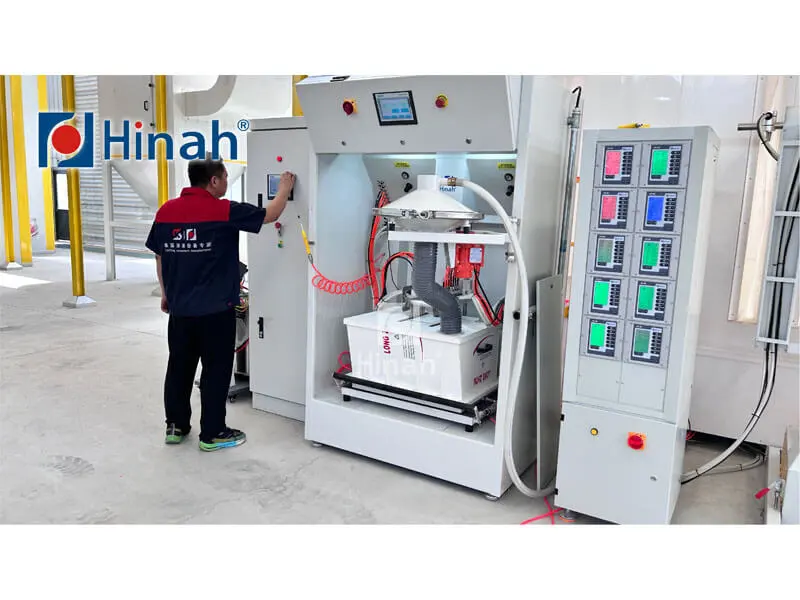
At HANNA, we don't just build enclosures; we engineer powder application environments. Our decades of experience mean we understand airflow dynamics, powder physics, and operator workflow intimately.
A HANNA powder coating spray booth is built for performance and longevity. We use robust materials, precision-engineered filtration, and intelligent layouts. Whether you choose a standard model or a fully custom powder coating enclosure, you get a system designed to maximize your transfer efficiency and finish quality.
Our team works with you to analyze your needs, ensuring your spray booth powder coating investment delivers results from day one.
Analyze Your Production: List your part sizes, shapes, volumes, and required color change speed.
Audit Your Space: Measure your available floor space, ceiling height, and utility access points.
Set a Realistic Budget: Factor in not just the booth cost, but installation, utilities, and maintenance.
Consult with Experts: Talk to application engineers from HANNA. They can spot needs you may have missed.
Prioritize Future Growth: Choose a system that can scale or adapt with your business. Modular HANNA designs offer this flexibility.
Maintenance is Non-Negotiable
To protect your investment, regular maintenance is key. Daily cleaning of walls and floors prevents cross-contamination. Filter cartridges must be inspected and replaced per the manufacturer's schedule—never wait until they are completely clogged.
Schedule annual check-ups of the electrical, pneumatic, and safety systems. A well-maintained HANNA spray booth will deliver consistent, reliable performance for over a decade.
Your spray booth powder coating system is the cornerstone of a successful finishing operation. It directly controls your environment, your efficiency, and your end product's quality.
By understanding the different booth types, focusing on critical design elements like airflow and filtration, and partnering with an experienced provider like HANNA, you make an informed decision.
Don't just buy a booth; invest in a powder application solution designed for your success. Contact HANNA today to discuss your requirements and explore the optimal spray booth powder coating system for your shop.
Q1: How often should I change the cartridge filters in my powder coating spray booth?
A1: There's no single answer—it depends on usage. Monitor the pressure differential gauge. When the static pressure drop across the filters reaches the manufacturer's recommended maximum (often indicated by a red zone on the gauge), it's time to change them. For a busy shop, this could be weekly; for lower volume, monthly.
Q2: Can I convert an old liquid paint spray booth for powder coating use?
A2: It is possible but often not advisable or cost-effective. Liquid booths are designed for wet overspray and use different filtration (often water wash). They typically lack the proper dry filtration, grounding, and powder recovery systems. Retrofitting usually requires such extensive modification that a new powder coating enclosure from HANNA is a better long-term investment.
Q3: What is the ideal lighting level (in lux or foot-candles) inside a spray booth for powder coating?
A3: Industry best practice recommends a minimum of 1,000 lux (approximately 100 foot-candles) at the work surface. However, for detailed work and optimal color matching, 1,500-2,000 lux is preferable. HANNA booths are designed with strategically placed, high-output LED fixtures to eliminate shadows and meet these standards.
Q4: Why is proper grounding so critical in a powder coating spray booth?
A4: Powder coating relies on electrostatic attraction. The booth itself, the part, and the operator must all be at the same electrical potential (grounded) to ensure the powder is attracted to the part, not the booth walls. Improper grounding reduces transfer efficiency, creates safety hazards from static discharge, and can lead to poor wrap and coverage.
Q5: Is a downdraft booth always better than a crossdraft booth for powder coating?
A5: Not always. Downdraft booths are excellent for minimizing contamination and coating large, complex parts, but they are more expensive to build and operate due to their complex underfloor plenum. Crossdraft booths are more cost-effective, simpler, and perfectly suitable for a vast range of applications. The experts at HANNA can help you determine which airflow pattern is right for your specific parts and budget.